
The invite said “wheelchair accessible.” Guests arrive to a stepped lobby and a lift with no sign. Someone is already asking a marshal for the long way round.
“Accessible” without a route is a hope, not a note.
Accessibility note English APAC is the plain invite line that names step-free access: the ramp, the lift, who to ask.
Street-smart APAC English: short sentences a tired operator can say out loud.
It sits with our venue directions text English APAC, which gets people to the right gate, and our parking advisory text English APAC, which should name a drop-off for anyone who should not walk far. When help is needed on the day, pair it with our first-aid point announcement English APAC.
What goes in an accessibility note English APAC?
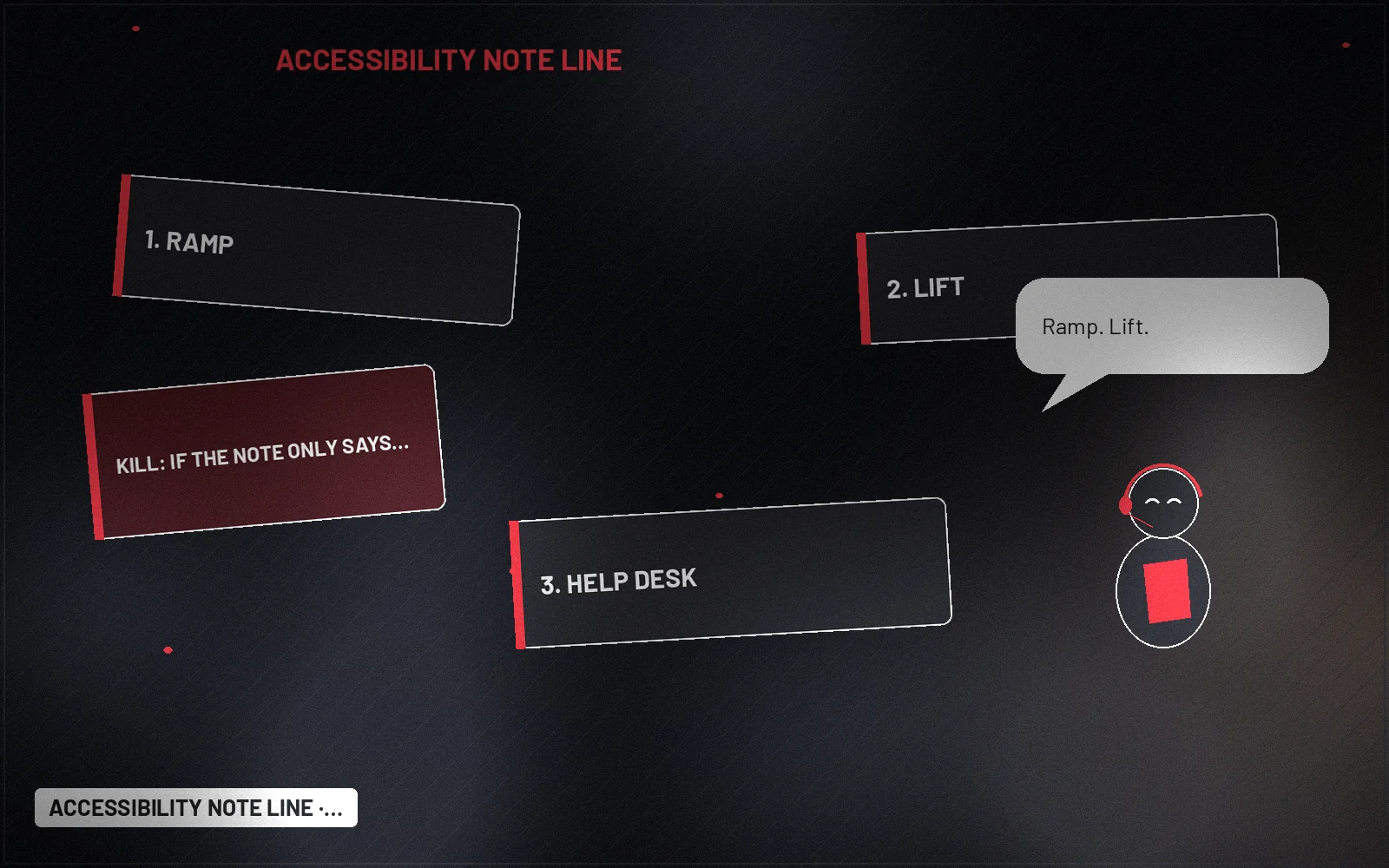
Three things. The step-free route, the lift if there is one, and who to ask.
Accessibility note (illustrative):
“Step-free entrance: the ramp at the side gate, left of the main stairs.”
“Lift: beside the help desk on the ground floor, to Hall B.”
“Need help on the day? Ask the help desk, or any marshal in a teal vest.”
Name places guests can see, not floor-plan codes. If there is no lift, say so and name the ground-floor room instead of hoping people invent a route.
Why say who to ask?
Because a route without a person still leaves someone stuck at the stairs. The help desk, or one named role, is the line guests can use without explaining their body to a stranger in the queue.
Put the same line on the invite, the confirmation and the day-of SMS. Marshals should know the same three lines so the gate and the page never disagree.
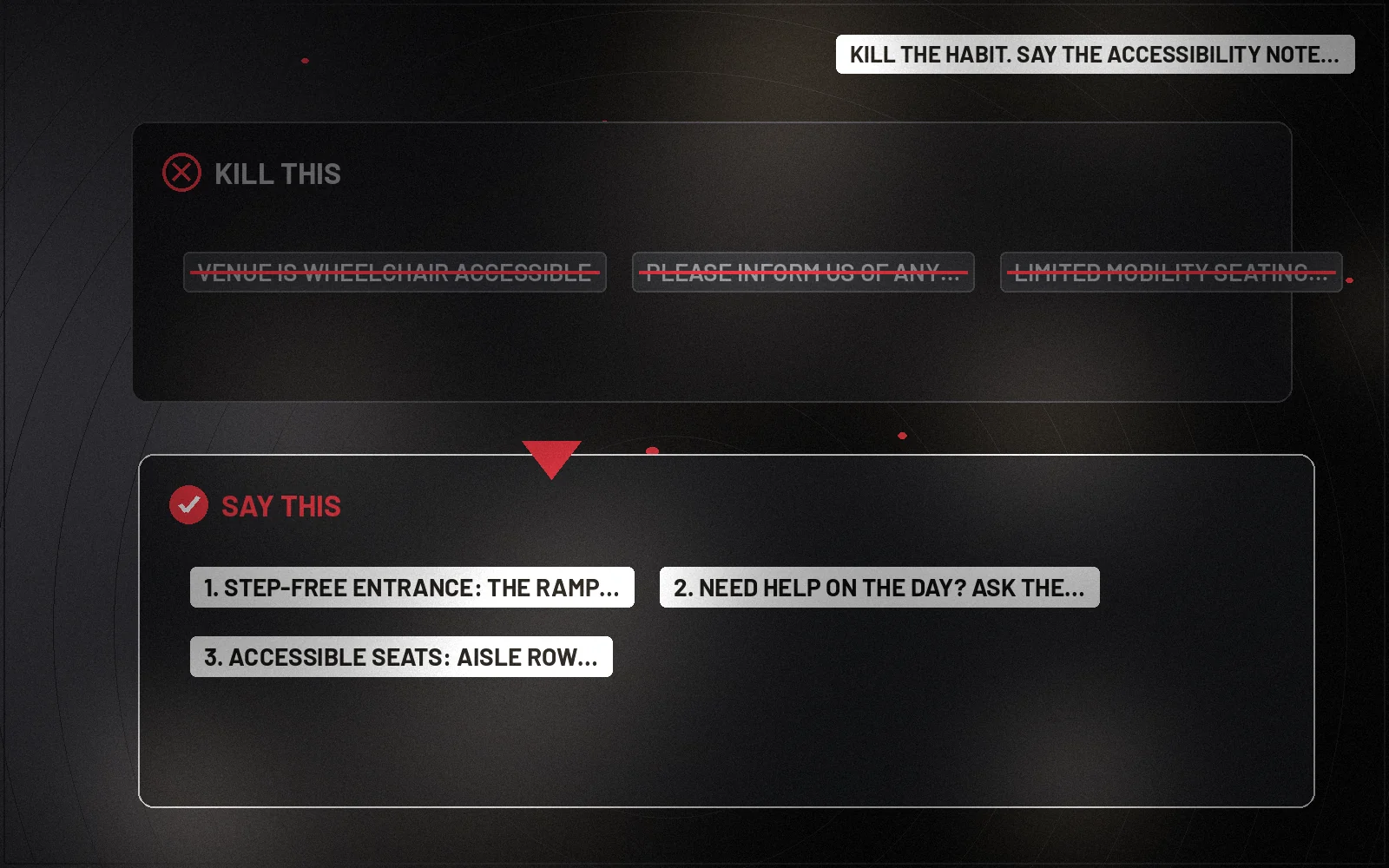
| Kill this | Say this (illustrative) | Why |
|---|---|---|
| Venue is wheelchair accessible. | Step-free entrance: the ramp at the side gate. | A place, not a claim |
| Please inform us of any special needs. | Need help on the day? Ask the help desk. | Who to ask, not a form lecture |
| Limited mobility seating available upon request. | Accessible seats: aisle row, left side, near the lift. | Where the seats are |
| See the floor plan for PWD access. | Lift: beside the help desk, to Hall B. | Words guests can use |
| We are an inclusive event!!! | Ramp, lift, help desk. Text Ana if you need a walk-through. | Facts, not a slogan |
How do you check the note before you send it?
Walk the route yourself, or send someone who uses a wheelchair or a cane. Time the path from the drop-off to the seat. If a door is heavy, a ramp is steep or a lift needs a key, put that in the note or fix it before doors open.
If the only step-free path is through a loading bay, say so. Guests would rather know than discover it under a spotlight.
Where should the note appear?
On the invite, the confirmation, the event page and a short day-of text. Keep the first line lock-screen short. If a guest asks for more detail, send a photo of the ramp and the lift door, not a long PDF.
Do not invent medical advice. The note is about places and people, not about what a guest’s body can do.
How does this play out in PH and SG?
Same three lines. Different buildings.
Philippines desk. Covered courts and barangay halls often have one ramp that is easy to miss from the main road. Name the gate, the ramp side and the person in the vest. Put the note in the Viber or WhatsApp confirmation so it travels with the invite forward.
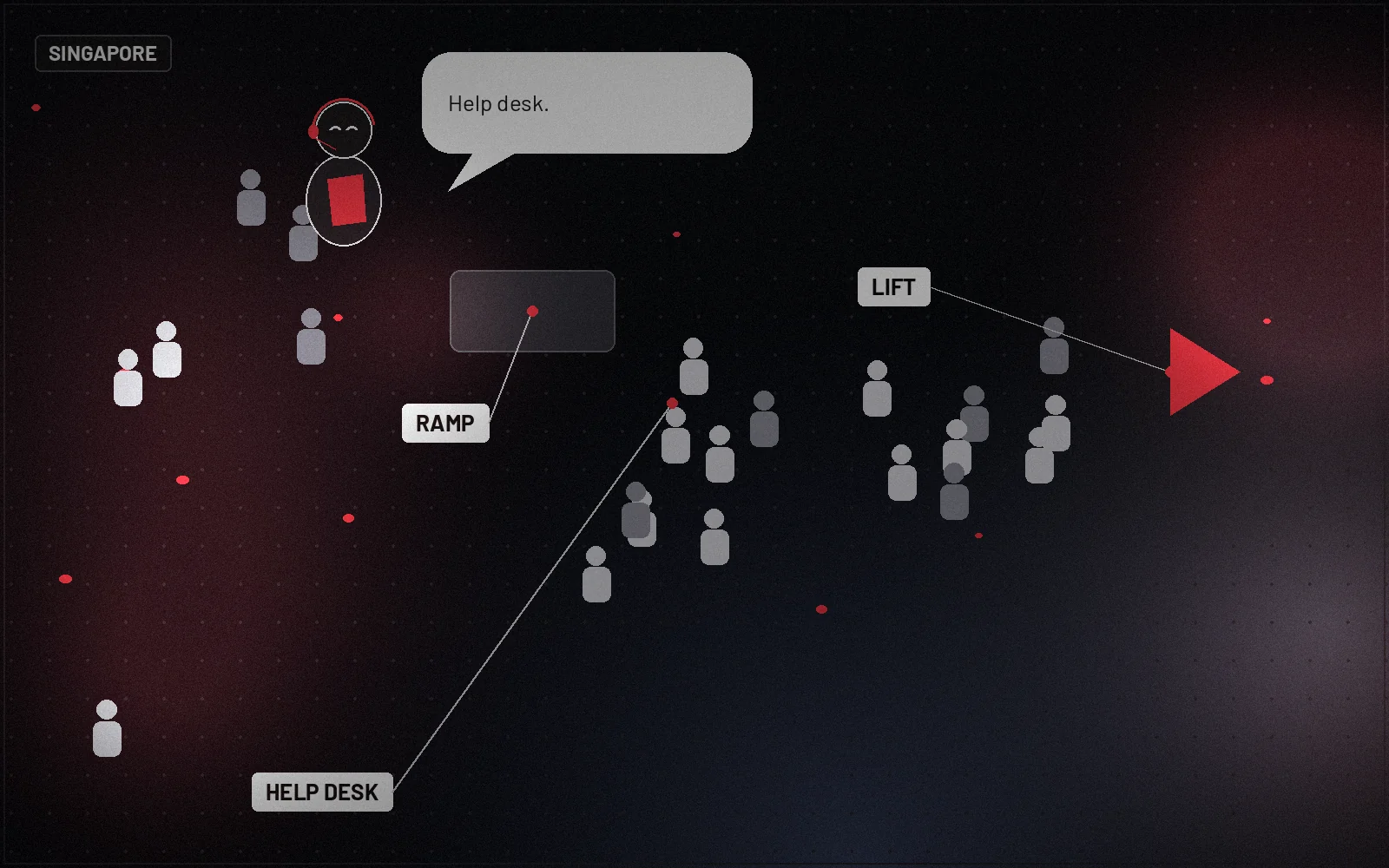
Singapore and wider APAC desk. Multi-level venues often have a public lift and a service lift. Name the one guests may use, and say if a marshal must unlock it. Keep the first line short for guests reading on a train.
Paste-ready lock
Paste-ready lock (illustrative):
“Step-free entrance: (the ramp or gate you can point to).”
“Lift: (where it is), to (the room).”
“Need help on the day? Ask (the help desk or named role).”
Proof boundary: communications craft, not legal advice; not medical advice. Counsel checks local access rules and venue terms.
Monday field kit
- Ramp, lift, who to ask. One line each.
- Walk the route before you publish the note.
- Put the same lines on the invite and the day-of text.
- Brief marshals so the gate matches the page.
- Kill rule: if the note only says “accessible” with no place, do not send it.
What to do this week
- Walk and time the step-free path from drop-off to seat.
- Draft the three lines and test them with one guest who needs them.
- Add the note to the invite and confirmation templates.
- Mark the help desk on the marshal brief.
- Take one clear photo of the ramp and lift for follow-up replies.
FAQs
What is an accessibility note English APAC?
It is the plain invite line that names step-free access: the ramp, the lift, who to ask. Guests should be able to use it before they leave home.
What if the venue has no lift?
Say so in the second line and name the ground-floor option. Do not leave guests to discover stairs on the day.
Should the note ask guests to disclose a disability?
Only ask for what you need to prepare a seat or a route, and say why. Keep the public note about places and who to ask, not about a form.
Neuwark Communications plans event and field messaging as part of our services, including Philippines Local Presence. Need a second pair of eyes on venue lines? Talk to us at Contact. More language companions live in Insights.
Communications craft, not legal advice. Counsel checks local access rules and venue terms before you publish the note.
Related: Venue directions text English APAC · Parking advisory text English APAC · First-aid point announcement English APAC · Check-in greeting English APAC