
Halfway through the concert, someone near the back needs help. Heads turn, phones go up. Nobody knows where the first-aid tent is.
The time goes into finding help, not getting it.
First-aid point announcement English APAC is the short line that tells a crowd where the first-aid point is and how to flag help for someone who needs it.
Street-smart APAC English: short sentences a tired operator can say out loud.
Our lost-and-found announcement English APAC uses the same help desk and calm PA voice. Anything that happens gets a line in the incident log English APAC.
What goes in a first-aid point announcement English APAC?
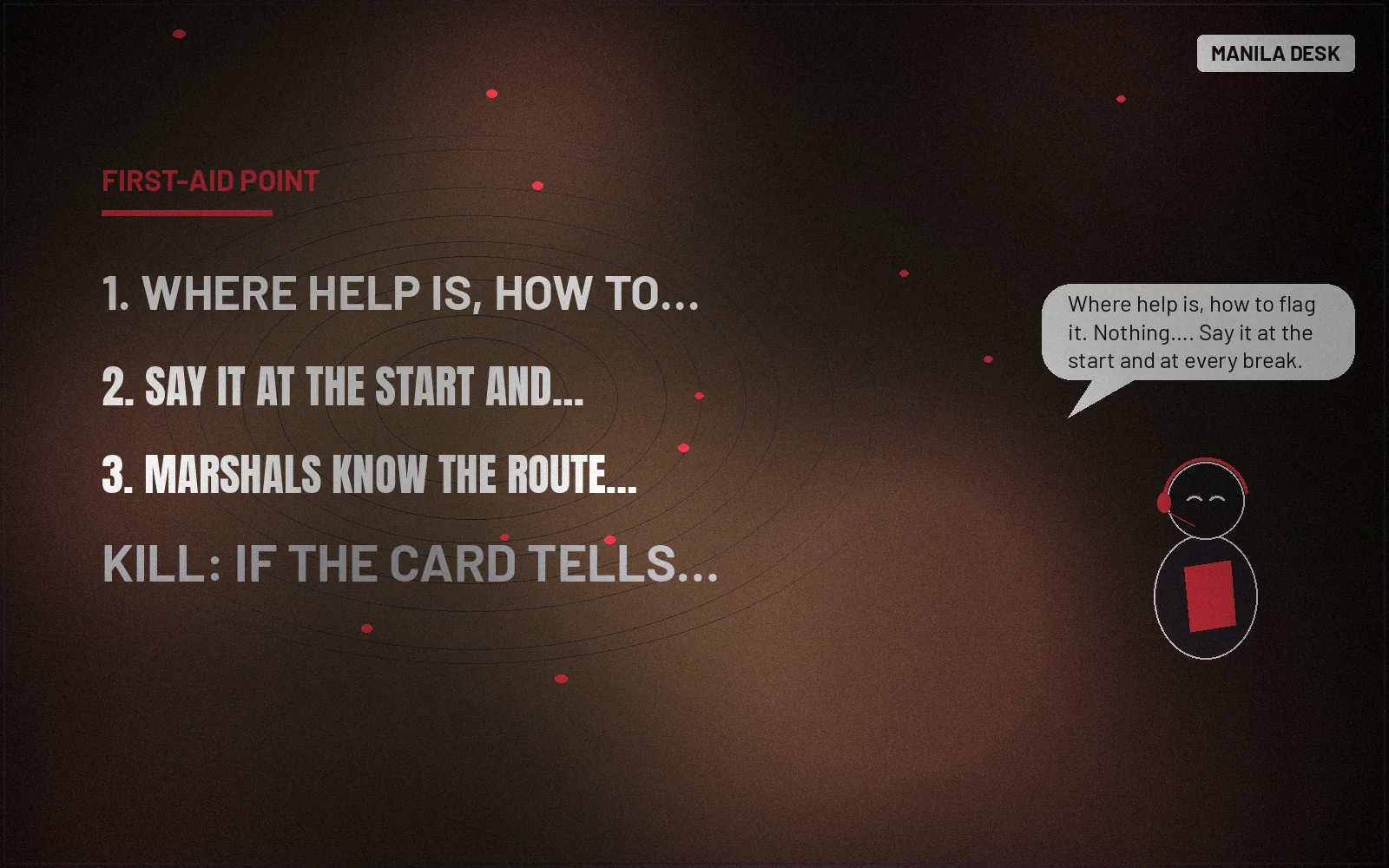
Two things. Where help is, and how to flag it.
First-aid point announcement (illustrative):
“The first-aid point is the tent beside the main gate, under the teal flag.”
“If you or someone near you needs help, raise your hand or tell any marshal in a teal vest.”
“Please keep a path clear for the team.”
Why not tell people what to do for the person?
The PA cannot see the person, and the comms desk is not trained to treat anyone. The announcement brings trained help faster. That is its only job.
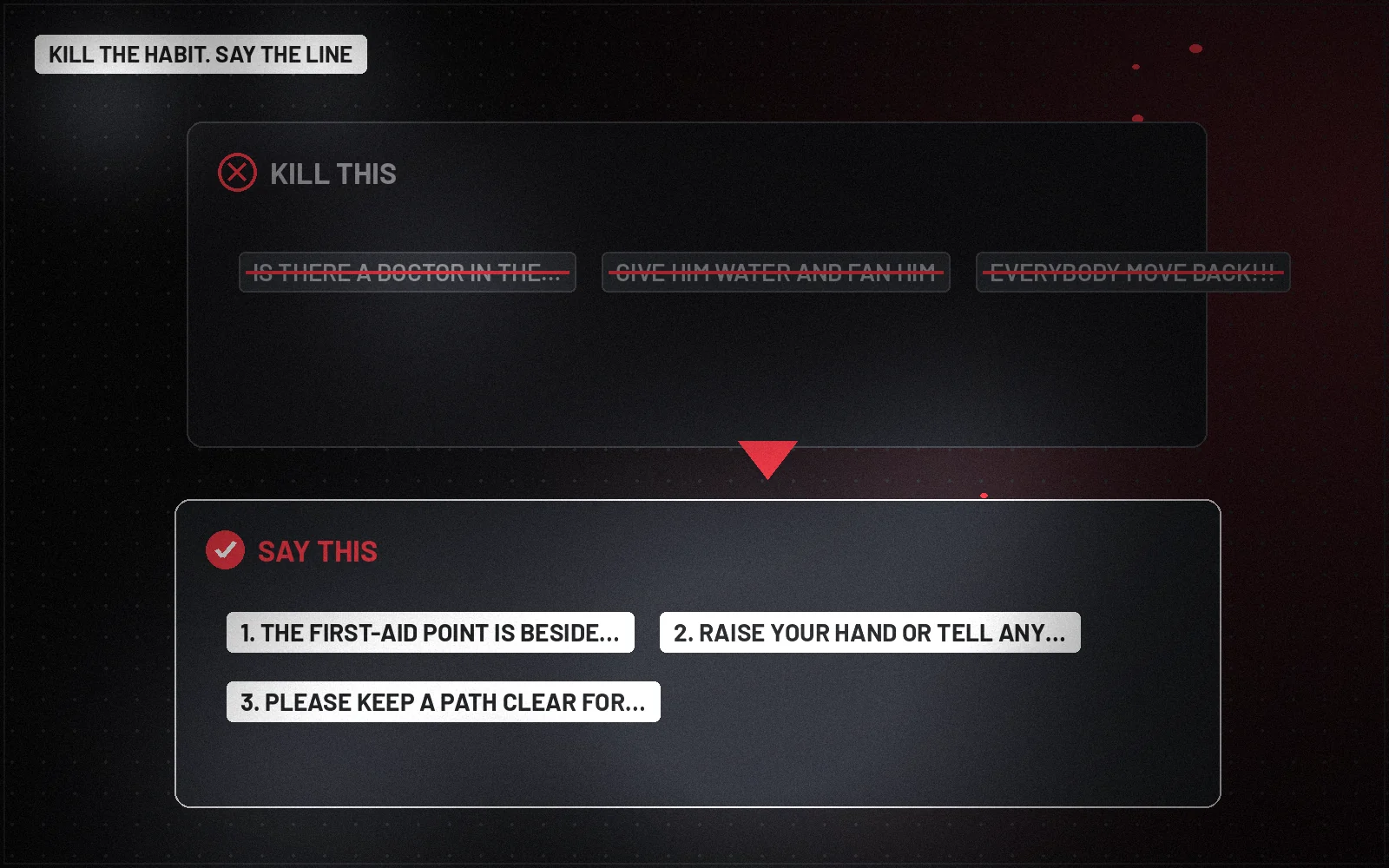
| Kill this | Say this (illustrative) | Why |
|---|---|---|
| Is there a doctor in the crowd?! | The first-aid point is beside the main gate. | Calm, and a place |
| Give him water and fan him | Raise your hand or tell any marshal. | Flag help, do not treat |
| Everybody move back!!! | Please keep a path clear for the team. | One clear ask |
When should you announce it?
At the start, at each break, and whenever the crowd changes. Say it as routine, like the exits. During an incident, the stage says less, and follows the medical lead’s call.
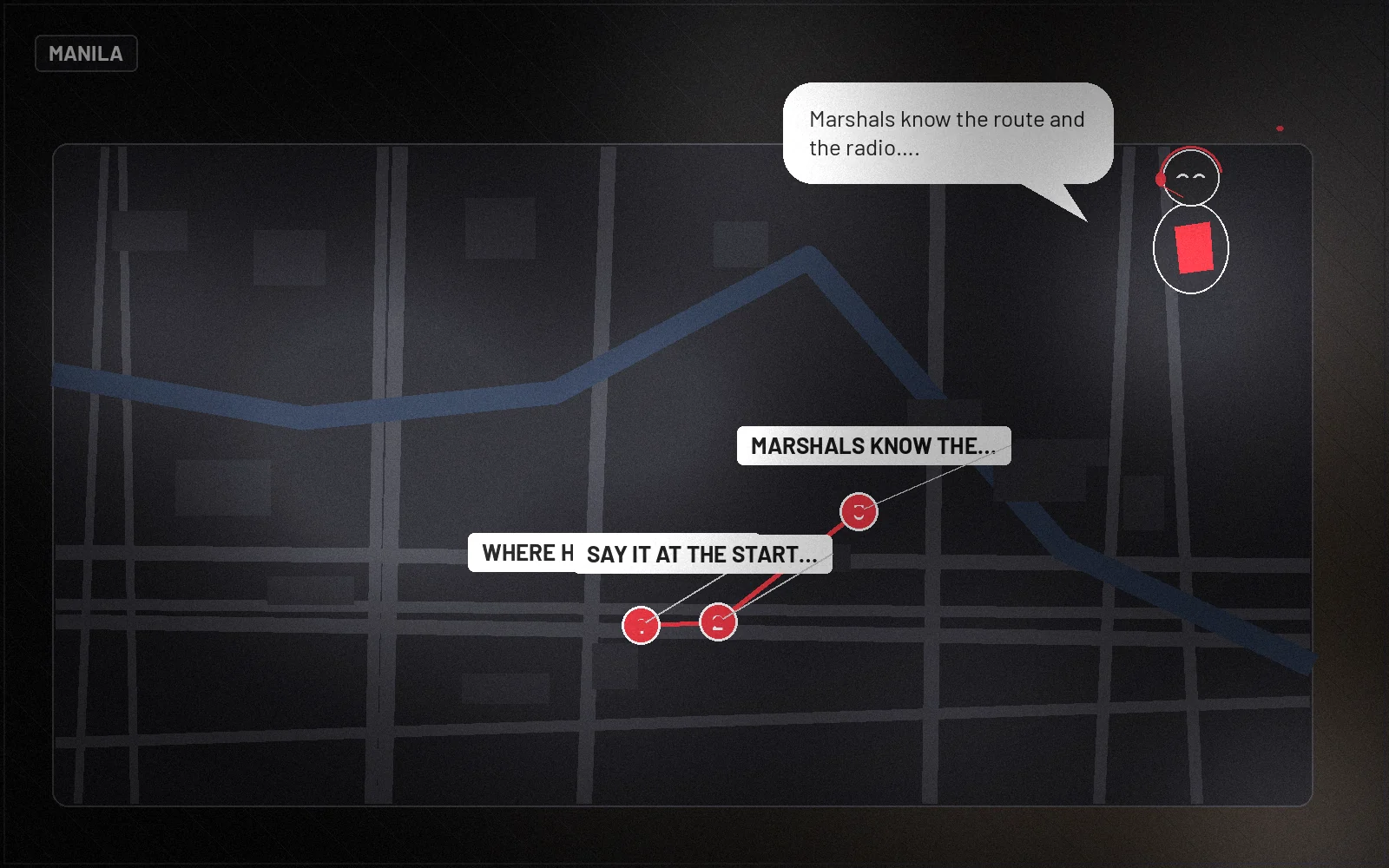
Marshals carry radios and know the route. The flag is a raised hand or a word to the nearest marshal, who radios the place in one line.
Radio line (illustrative):
“First aid to back left, near the sound desk. One person, sitting down.”
How does this play out in PH and SG?
Same two things. Different crowds.
Philippines desk. In Manila courts and plazas, the PA competes with the crowd. Announce during breaks, in English and the crowd’s language, and send the lines with a map pin to the Viber or WhatsApp group.
Singapore and wider APAC desk. Many venues have their own first-aid room and procedure. Use the venue’s words for it, follow its procedure, and keep the phone version lock-screen short.
Paste-ready lock
Paste-ready lock (illustrative):
“The first-aid point is at (a place people can see).”
“If you or someone near you needs help, raise your hand or tell any marshal.”
“Please keep a path clear for the team.”
Proof boundary: communications craft, not legal advice, and not medical advice. The medical lead owns every care decision.
Monday field kit
- Where help is, how to flag it. Nothing more.
- Say it at the start and at every break.
- Marshals know the route and the radio line.
- Kill rule: if the card tells people how to treat someone, cut that line.
What to do this week
- Agree the first-aid point with your medical lead and the venue.
- Write the announcement card and the radio line.
- Walk the route from the far corner to the first-aid point.
- Brief marshals on the raised-hand flag.
FAQs
What is a first-aid point announcement English APAC?
It is the short line that tells a crowd where the first-aid point is and how to flag help for someone who needs it. It is not medical advice.
Should the MC give first-aid instructions?
No. The MC points to help. Trained staff decide what anyone needs.
What if someone posts about an incident online?
Do not share details or footage. Log it, tell the event lead, and let counsel and the medical lead decide what is said.
Neuwark Communications sets up event operations and crisis protocols as part of our services, including Crisis & Rapid Response. Crowd can’t find the first-aid tent? Talk to us at Contact. More language companions live in Insights.
Communications craft, not legal advice. Not medical advice either: your medical lead and the venue check the first-aid plan and privacy rules first.
Related: Lost-and-found announcement English APAC · Incident log English APAC