
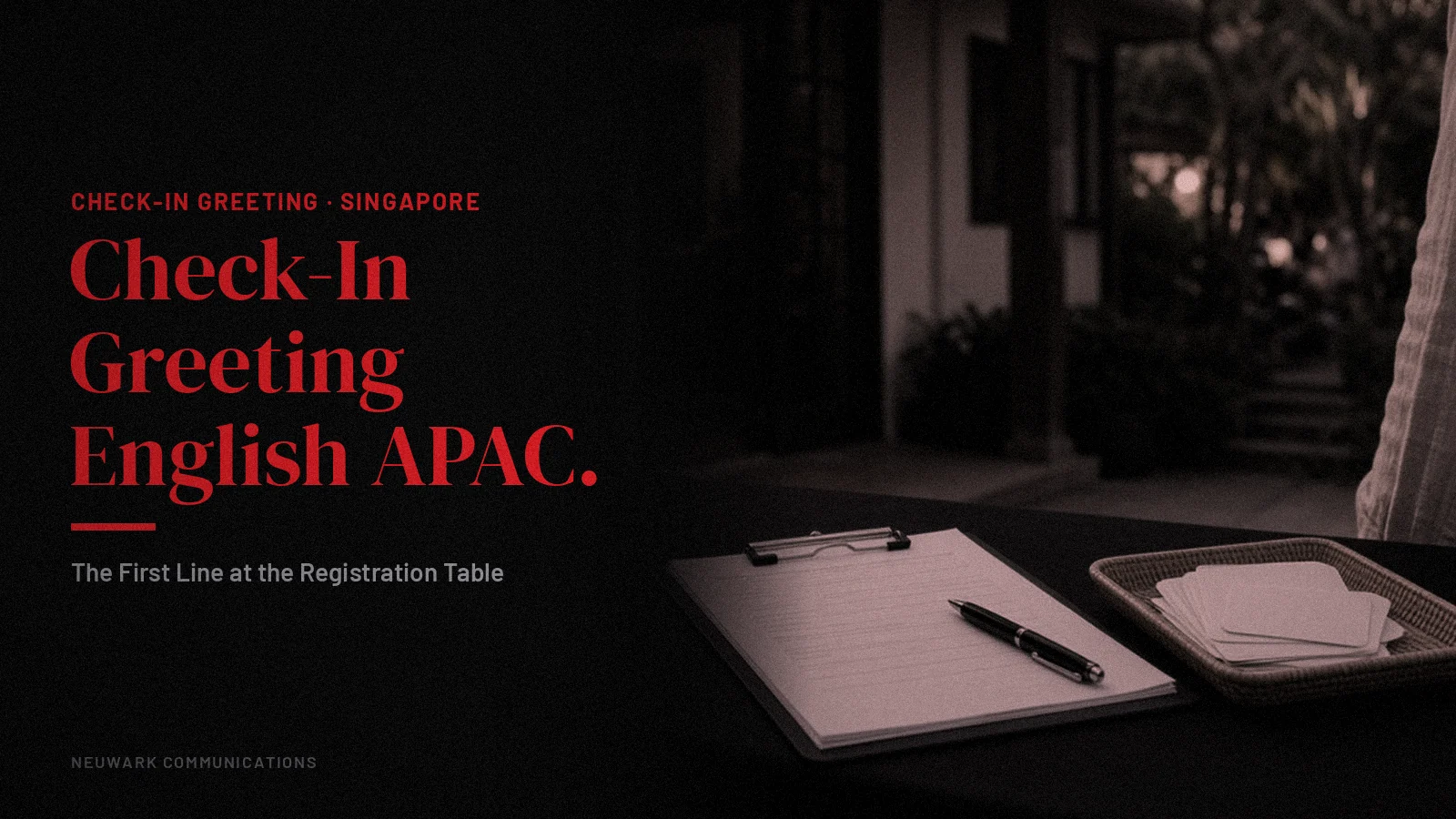
The guest reaches the table. The volunteer, eyes on the clipboard, says “Name?”
Then “Spell it?” Then “You’re not on the list.” The guest has been there half a minute and already feels like a problem.
Check-in greeting English APAC is the first line a volunteer says at the registration table: a welcome, the guest’s name, and the one next step.
Street-smart APAC English: short sentences a tired operator can say out loud.
It picks up where our briefing RSVP confirmation English APAC leaves off. If cameras are rolling, the photo consent line English APAC gets said at this table too.
What does a check-in greeting English APAC sound like?
Welcome, name, next step. Eyes up first, clipboard second.
Check-in greeting (illustrative):
“Good evening, welcome. Can I have your name?”
“Thanks, Ms Lim, you’re on the list. Here’s your name card.”
“Seats are inside on the left. Water is at the back.”
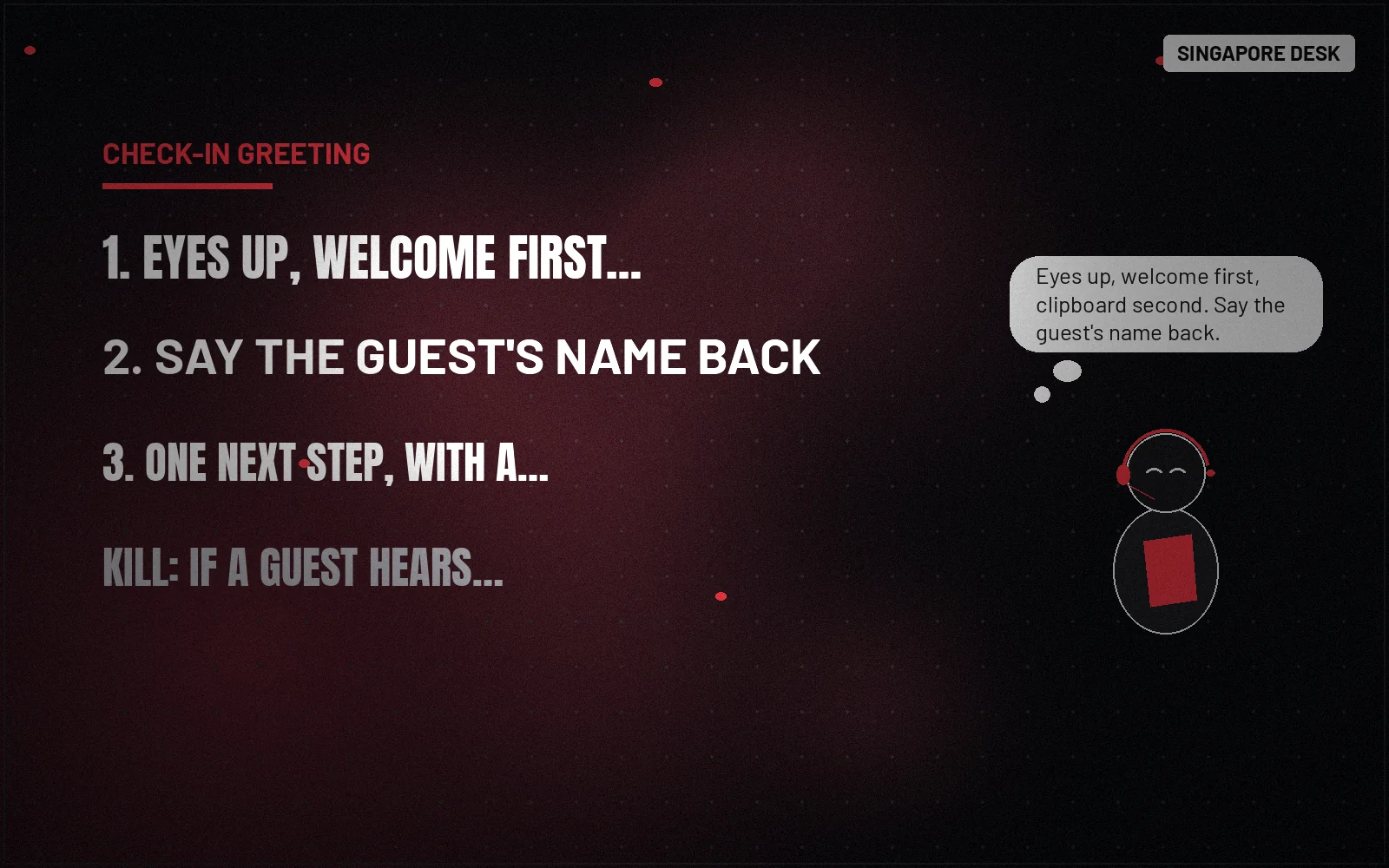
The welcome comes before the clipboard. The name goes back to the guest. The next step points them somewhere.
Why does “Name?” go wrong?
Because it sounds like a checkpoint. The guest hears suspicion before welcome.
| Kill this | Say this (illustrative) | Why |
|---|---|---|
| Name? | Good evening, welcome. Can I have your name? | Welcome first |
| You’re not on the list. | Let me check another way. One moment. | No blame at the door |
| Fill this out. | Could you add your name here? It takes a minute. | A request, not an order |
| Next! | Seats are inside on the left. | A next step, not a dismissal |
| Silence while searching the list | Bear with me, I’m finding you now. | Fill the pause |
What if the guest is not on the list?
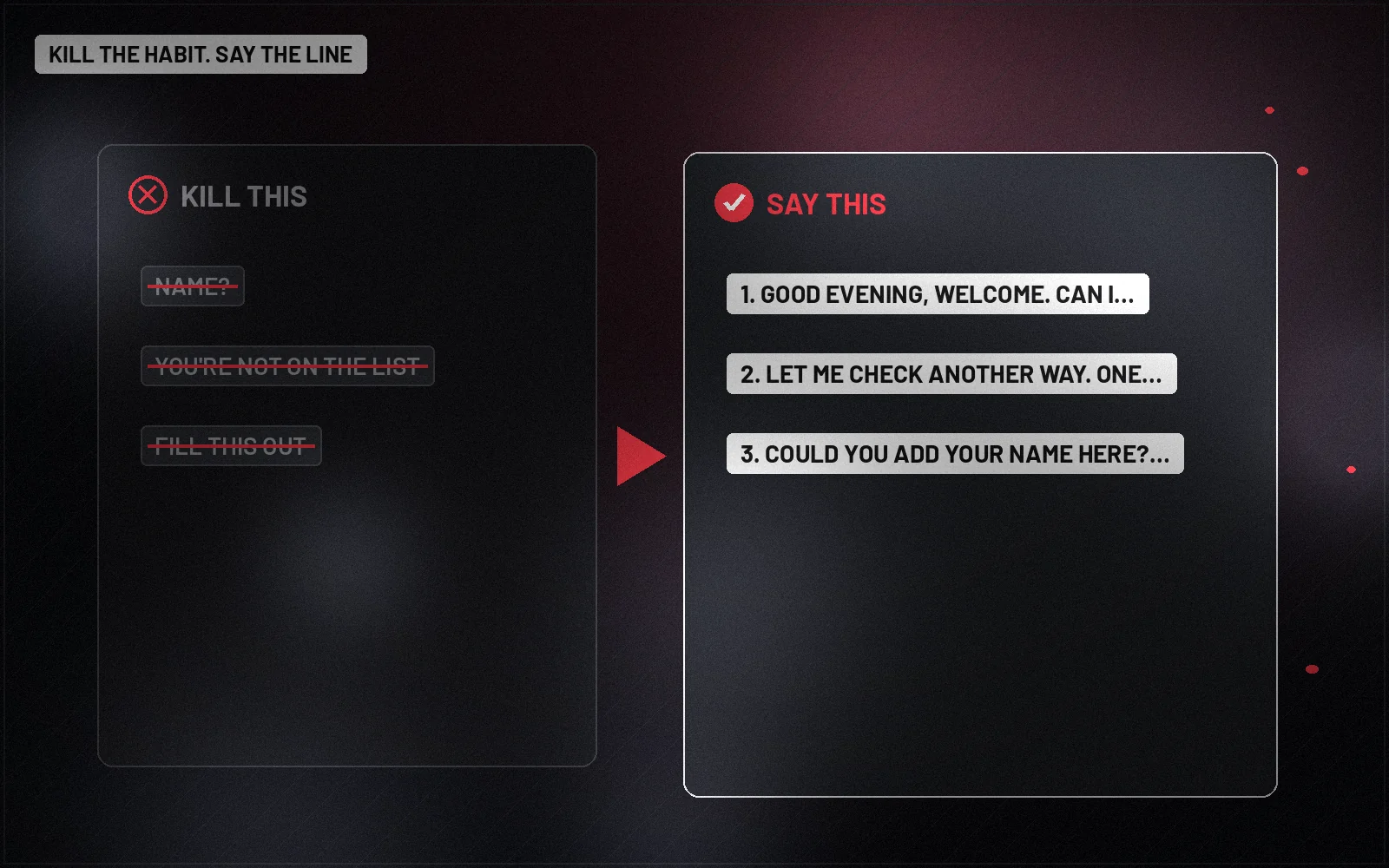
Stay warm and fix it, do not argue it. Have a walk-in line and one person with authority to decide.
Not-on-list line (illustrative):
“I don’t see you here yet, no problem. Let me add you now, or my lead can help in a second.”
If the event has a real capacity limit or a security list, the lead handles it away from the queue, kindly. The volunteer never says no at the table.
How do you keep the queue moving?
One line per guest, one next step, and a second volunteer for problems. A short greeting keeps the queue short.
Split the table: pre-registered and walk-ins, or names by first letter. Move any problem to the side with the lead. Never solve one guest’s problem while the whole queue waits.
How does this play out in PH and SG?
Same three parts. Different formality.
Philippines desk. Use “po” or the local greeting where it fits, and Ma’am or Sir if that is how guests expect to be addressed. Keep it warm. Plan a walk-in line, because people bring friends.
Singapore and wider APAC desk. Guests often expect a precise, efficient check-in, sometimes on a tablet. Keep the human greeting even when the check-in is digital. If unsure how a name is pronounced, ask.
Paste-ready lock
Three lines to tape inside every registration clipboard.
Paste-ready lock (illustrative):
“Good evening, welcome. Can I have your name?”
“You’re all set. Here’s your name card. Seats are inside on the left.”
“No problem, let me add you now.”
Monday field kit
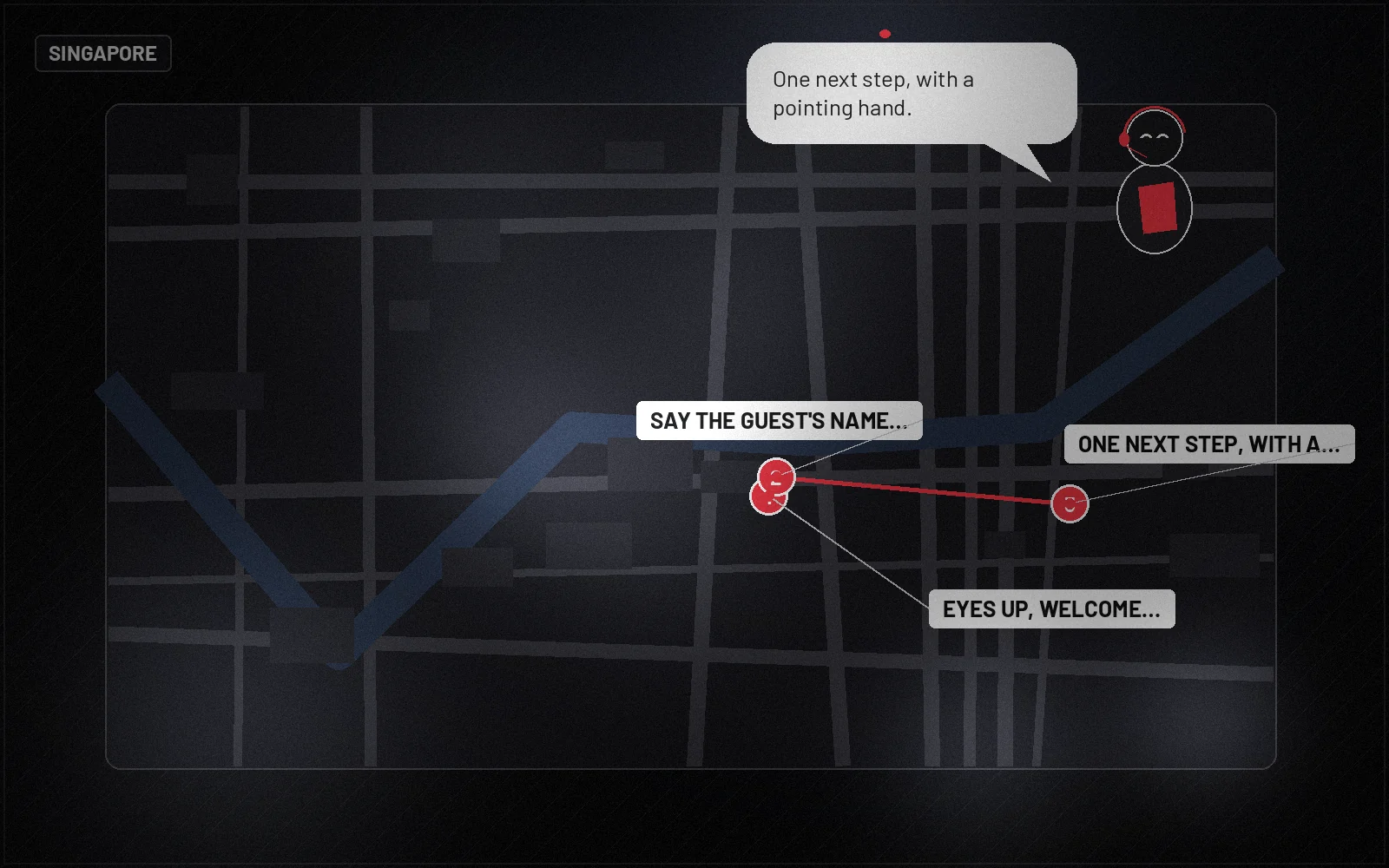
- Eyes up, welcome first, clipboard second.
- Say the guest’s name back.
- One next step, with a pointing hand.
- Problems go to the lead, away from the queue.
- Kill rule: if a guest hears “you’re not on the list” at the table, retrain before the next event.
What to do this week
- Write the three-line greeting on a card for every clipboard.
- Name a lead for walk-ins and problems.
- Set up a separate walk-in line.
- Rehearse the not-on-list line with each volunteer.
Kill rule: if the queue stalls on one guest, move that guest to the lead at once.
FAQs
What is check-in greeting English APAC?
Check-in greeting English APAC is the first line a volunteer says at the registration table: a welcome, the guest’s name, and the one next step. It works because guests remember how the door felt. It does not replace security checks the venue requires.
Should volunteers ask for ID?
Only if the venue or event rules require it, and then with a reason. Say why before you ask.
What data should check-in collect?
Only what the event needs. Counsel confirms the consent and data rules before any sign-in sheet or tablet form is used.
What if a guest is upset at the table?
Thank them, walk them to the lead, and keep the queue moving. Never argue at the table.
Neuwark Communications trains event and volunteer teams as part of our services, including Philippines local presence. If your registration table feels like a checkpoint, talk to us at Contact. More language companions live in Insights.
Communications craft, not legal advice. Counsel checks election-period, consent and platform rules, plus sign-in data and venue security rules, before a check-in flow is used.
Related: Briefing RSVP confirmation English APAC · Photo consent line English APAC