
Doors were meant to open at four. At 4:20 the line reaches the corner, and nobody at the front knows why.
People start guessing. Someone pushes forward. A volunteer shouts “konting tiis lang po!” and the line gets louder.
Queue update announcement English APAC is the short line read to a waiting queue: where things stand, when the next update comes and what to have ready.
Street-smart APAC English: short sentences a tired operator can say out loud.
It buys time for the registration table, where our check-in greeting English APAC takes over. On stage, the same plain timing habit runs through our run-of-show cue English APAC.
What goes in a queue update announcement English APAC?
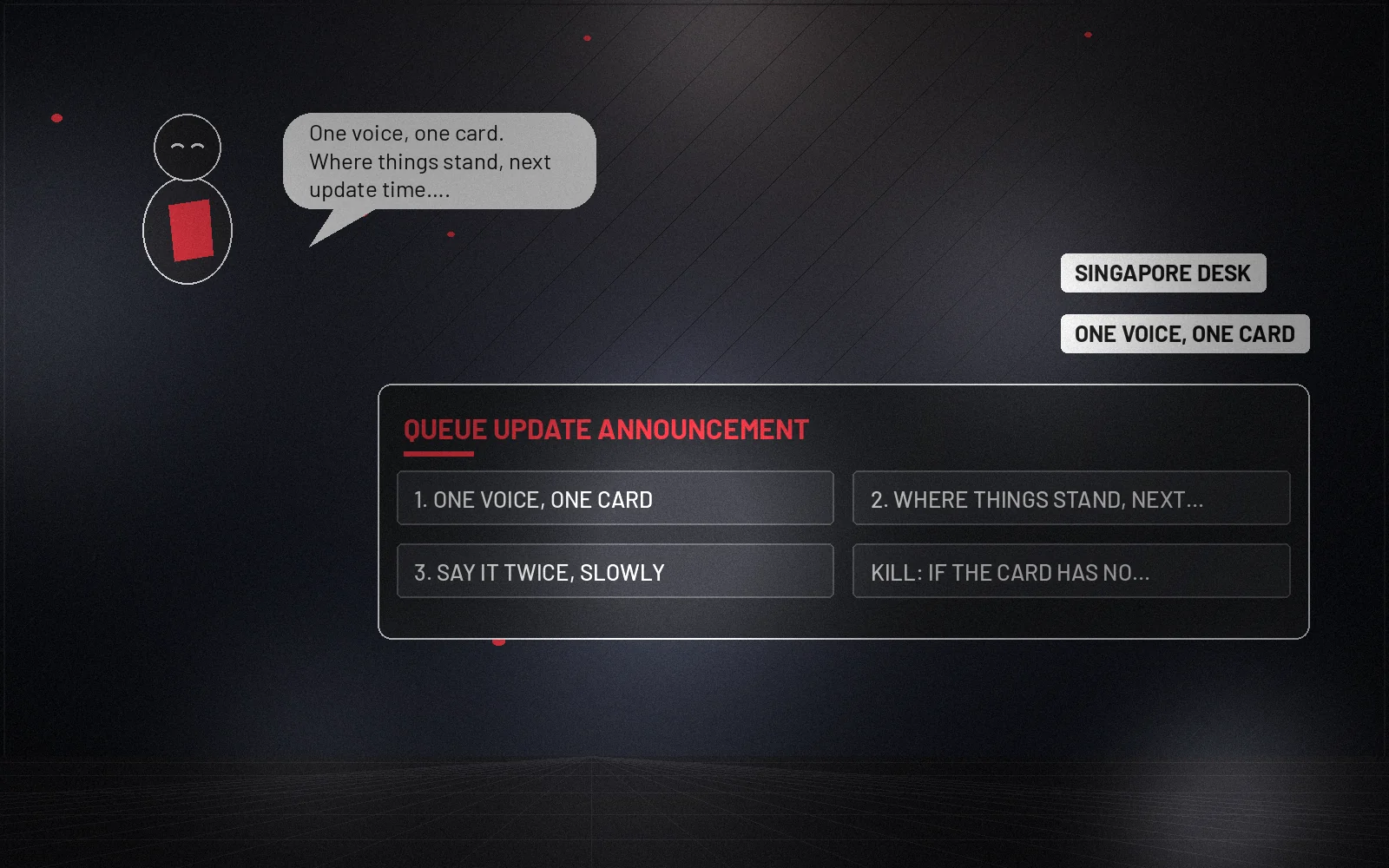
Three parts. Where things stand, when you will update next, what to have ready.
Queue update (illustrative):
“Good afternoon. Doors open in about ten minutes.”
“Next update at 4:30.”
“Have your name or QR code ready for check-in.”
Say it slowly, then say it again. The back of the line hears it the second time.
Why does a time check calm a queue?
Because waiting with no word is what makes a line restless. A time tells people when they will hear more, so they stop asking the volunteer beside them.
Keep the promise. If you said 4:30, speak at 4:30, even if nothing has changed.
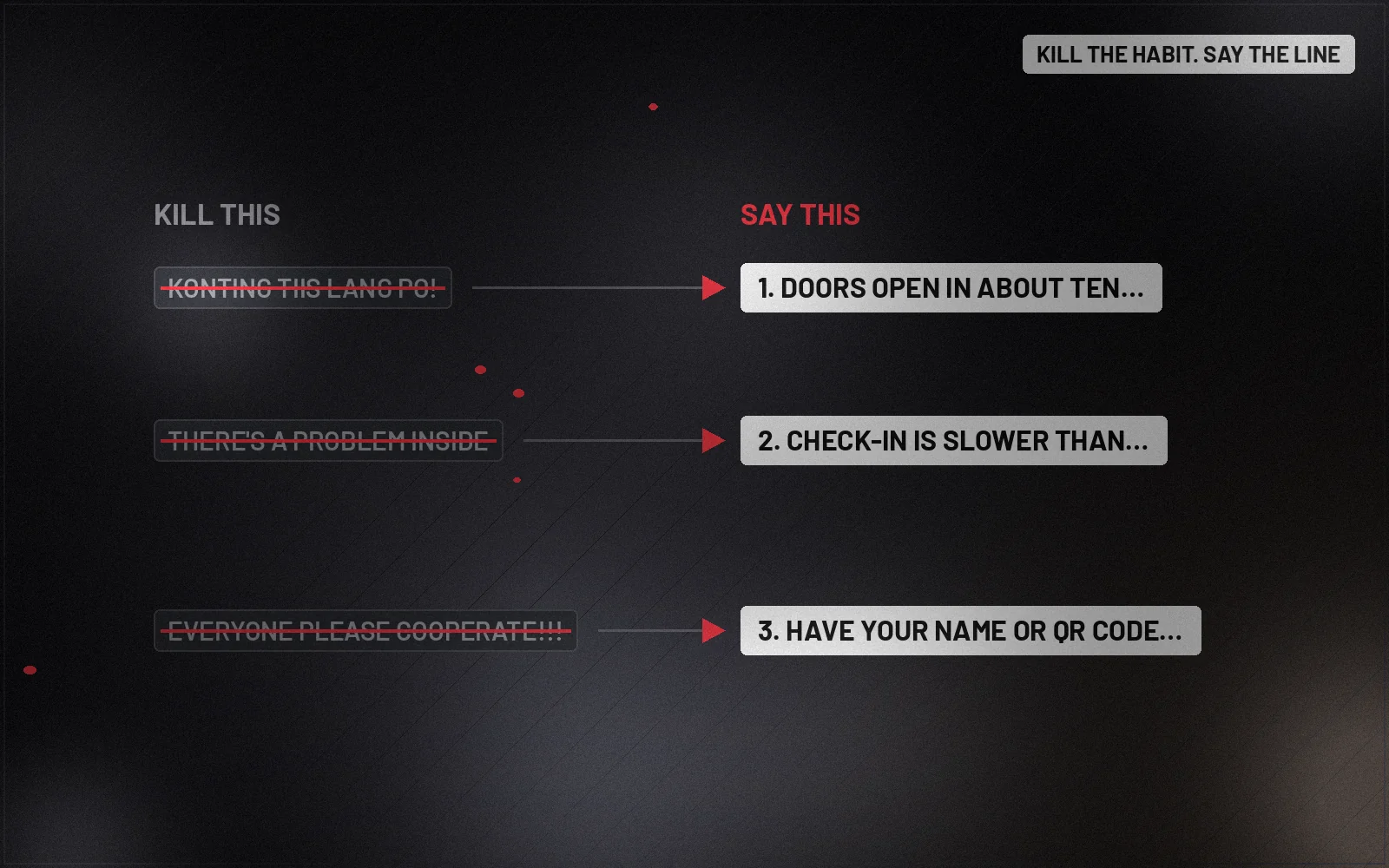
| Kill this | Say this (illustrative) | Why |
|---|---|---|
| Konting tiis lang po! | Doors open in about ten minutes. | A time, not a plea |
| There’s a problem inside | Check-in is slower than planned. | Plain and true |
| Everyone please cooperate!!! | Have your name or QR code ready. | One thing they can do |
| We’ll tell you when we know | Next update at 4:30. | A time for the next word |
Who makes the announcement?
One voice with one card. The queue lead reads from an index card written with the registration desk, not from memory.
The card holds the three parts and the next update time. The desk radios the queue lead when the time changes. Volunteers along the line repeat the card word for word.
Should the update go to phones too?
Yes, if guests are already in a group chat or broadcast list. Send the same words as the announcement, so the line and the phones match.
Do not post a different estimate online. Two numbers start an argument.
How does this play out in PH and SG?
Same three parts. Different queues.
Philippines desk. Queues often form outdoors or under a covered court, in the heat. Say where water or shade is, if there is any, and give the update in English and in the language most of the line speaks.
Singapore and wider APAC desk. Queues may form in shared spaces where the venue manages crowd flow. Follow the venue’s instructions, keep announcements short and polite, and tell the line if the queue moves.
Monday field kit
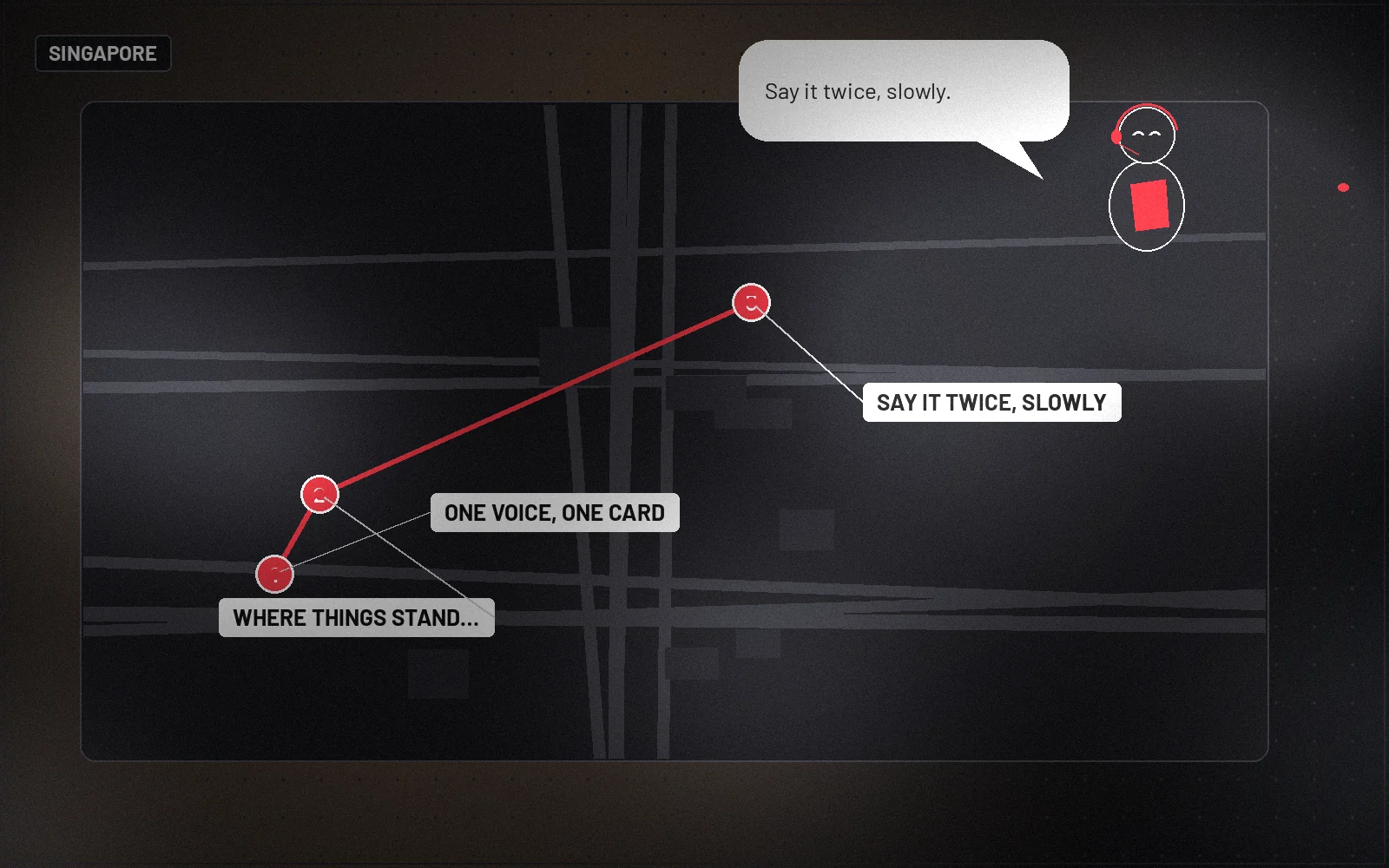
- One voice, one card.
- Where things stand, next update time, what to have ready.
- Say it twice, slowly.
- Same words on the PA and in the group chat.
- Kill rule: if the card has no time on it, rewrite it before you speak.
What to do this week
- Write three queue cards: before doors, delay, doors open.
- Name the queue lead for your next event.
- Agree how the desk and the queue lead reach each other by radio.
- Read one card aloud from the back of an empty room.
FAQs
What is a queue update announcement English APAC?
It is the short line read to a waiting queue: where things stand, when the next update comes and what to have ready. It replaces guessing with a time.
How often should we update the queue?
At the time you promised, every time. Pick a gap you can keep, and say it out loud.
Should we explain why there is a delay?
In a few plain words, if it helps. “Check-in is slower than planned” is enough. Do not blame guests or other teams.
Neuwark Communications shapes event messaging and spokesperson lines as part of our services, including Strategy & Messaging. If your queues get louder every time someone says “konting tiis”, talk to us at Contact. More language companions live in Insights.
Communications craft, not legal advice. Counsel checks consent, contact-data, venue and crowd-safety rules before you announce or message guests.
Related: Check-in greeting English APAC · Run-of-show cue English APAC