
The speaker finishes. Silence. The emcee looks at the wings. The sound desk looks at the emcee.
Someone on the radio says “Okay, go na, go.” Three people go. The video plays over the next speaker’s walk-on.
Run-of-show cue English APAC is the short, fixed line a stage manager says to move the event to the next segment: who is up, what changes and the word go.
Street-smart APAC English: short sentences a tired operator can say out loud.
It moves the stage between the moments scripted in our rally mic check English APAC and townhall ground rules English APAC pieces.
What does a run-of-show cue English APAC sound like?
Standby, then go. Who and what, then the word go, always in that order.
Cue (illustrative):
“Standby segment four: video, then Ana to the podium.”
“Sound, standby video. Lights, standby podium.”
“Video, go.”
Standby warns. Go executes. Nobody moves on standby. Everybody moves on go.
Why say standby before go?
Because people need a beat to get ready. A go without a standby gets a late or wrong response.
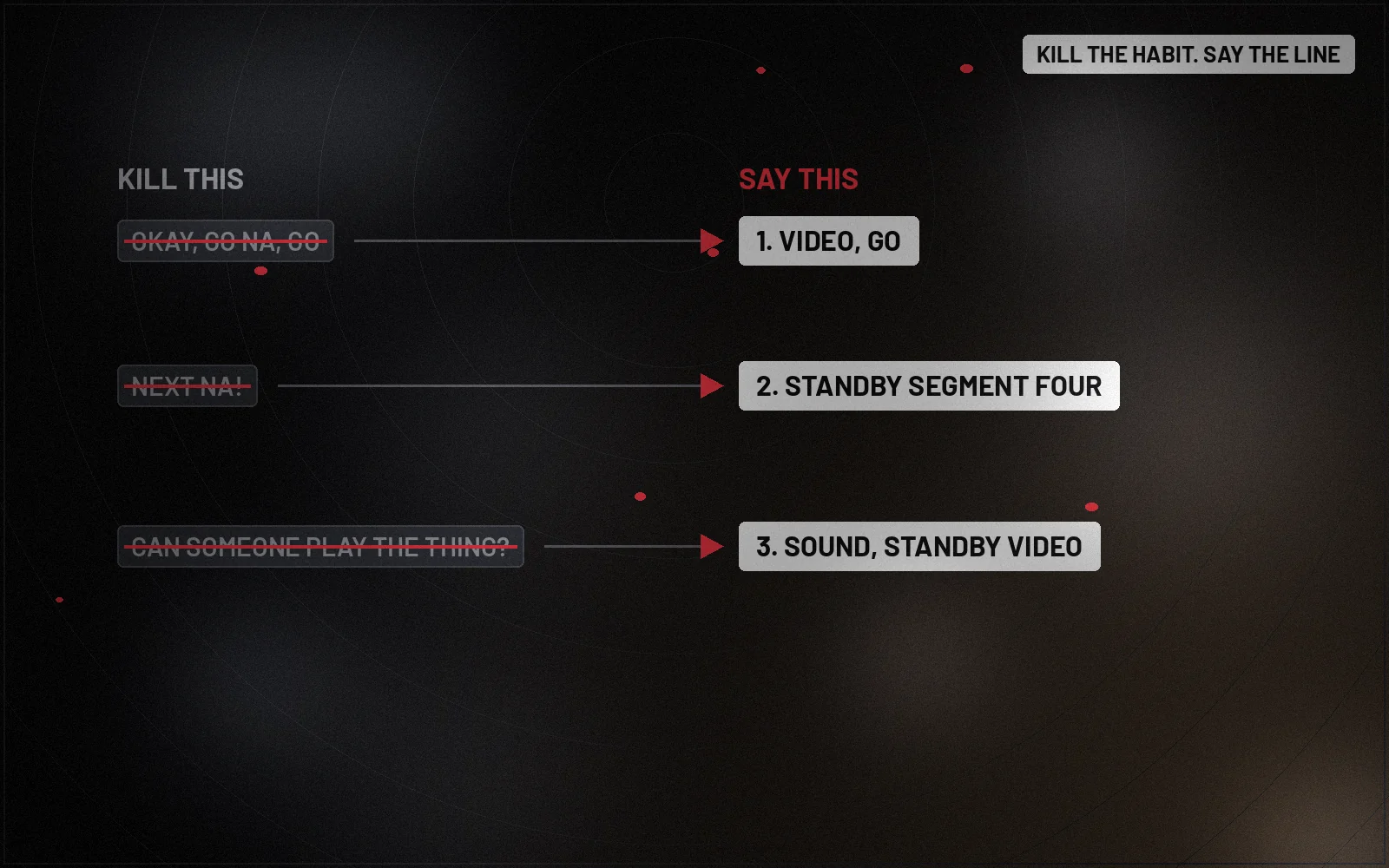
| Kill this | Say this (illustrative) | Why |
|---|---|---|
| Okay, go na, go | Video, go. | One department, one go |
| Next na! | Standby segment four. | Warns first |
| Can someone play the thing? | Sound, standby video. | Names who and what |
| Wait, wait, wait | Hold. Hold on segment four. | A clear stop |
| Hand waves from the wings | Spoken cue on the radio, then the hand signal | Everyone hears it |
Who calls the cues?
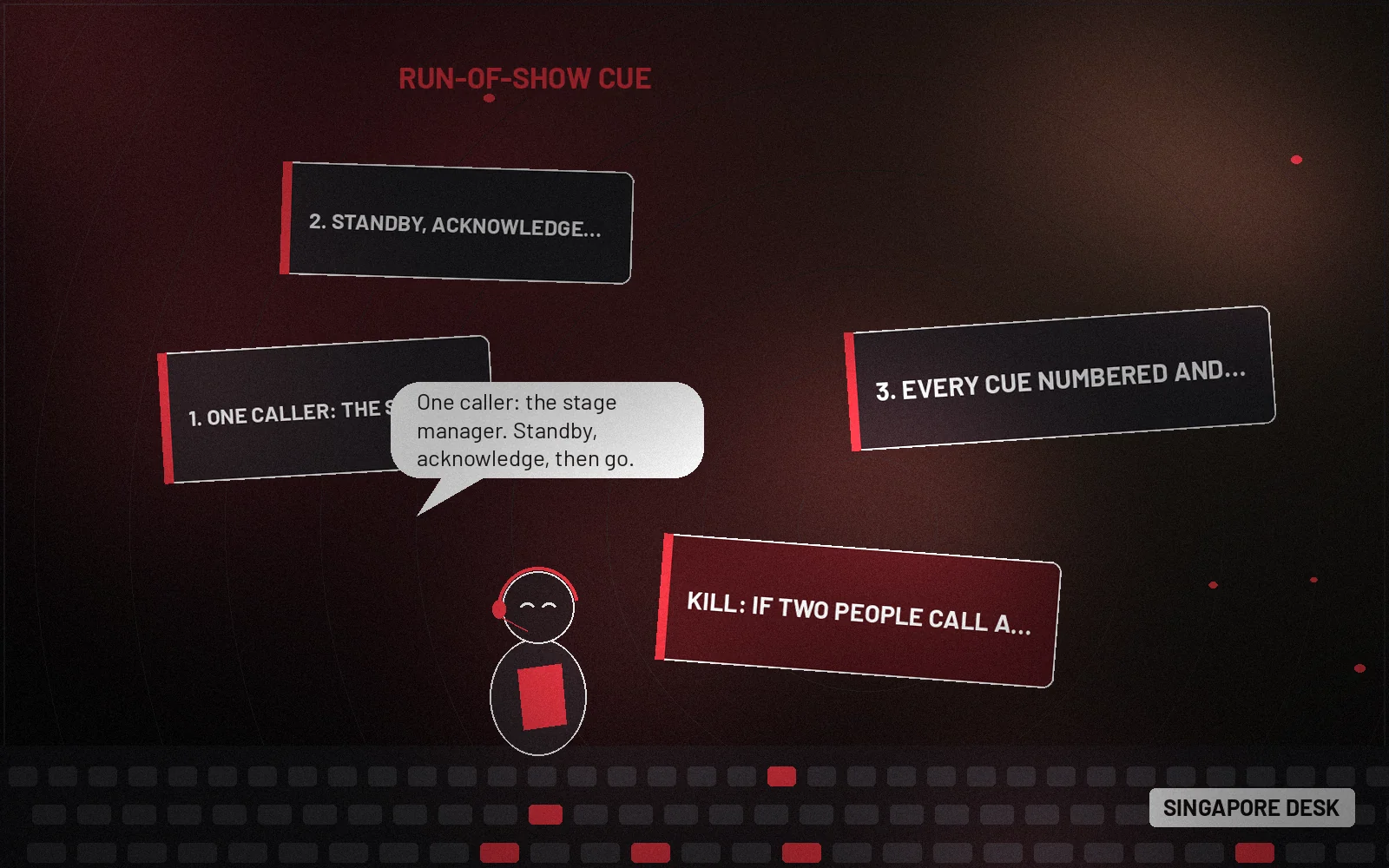
One person: the stage manager. Everyone else listens and acknowledges.
Departments answer standby with their name: “Sound.” “Lights.” Then they wait for go. Nobody else calls cues on the channel, including the principal’s staff. If the plan changes, the request goes to the stage manager, who calls it.
Where do the cues live?
In the run sheet, numbered and in order. Every cue is written before doors open.
The run sheet lists segment number, time, who, what and the exact cue words. Tape a copy to the stage monitor, the sound desk and the emcee stand. Changes go on one master copy that gets reprinted, not scribbled on three different sheets.
What happens when something goes wrong?
Call a hold, fix it, then restart from standby. Never jump straight to go.
Hold line (illustrative):
“Hold, hold. Video is not ready. Sound, standby walk-in music.”
Once the problem is fixed, the stage manager calls standby again and waits for every department to answer before the go. The audience sees a short pause, not three people guessing. Log what broke in the run sheet notes so the next show does not repeat it.
How does this play out in PH and SG?
Same cue order. Different crews.
Philippines desk. Covered-court and plaza events often use local sound and light crews who may not use the same cue words. Brief them before doors, in the language they use, and agree two words: standby and go. Keep the run sheet in English so the cue words match on every copy.
Singapore and wider APAC desk. Venues often supply their own technical crew with established calling habits. Ask how they call cues and adapt your run sheet to their words instead of forcing yours.
Paste-ready lock
Three lines for the top of every run sheet.
Paste-ready lock (illustrative):
“Standby segment four: video, then speaker to the podium.”
“Video, go.”
“Hold. Hold on segment four.”
Monday field kit
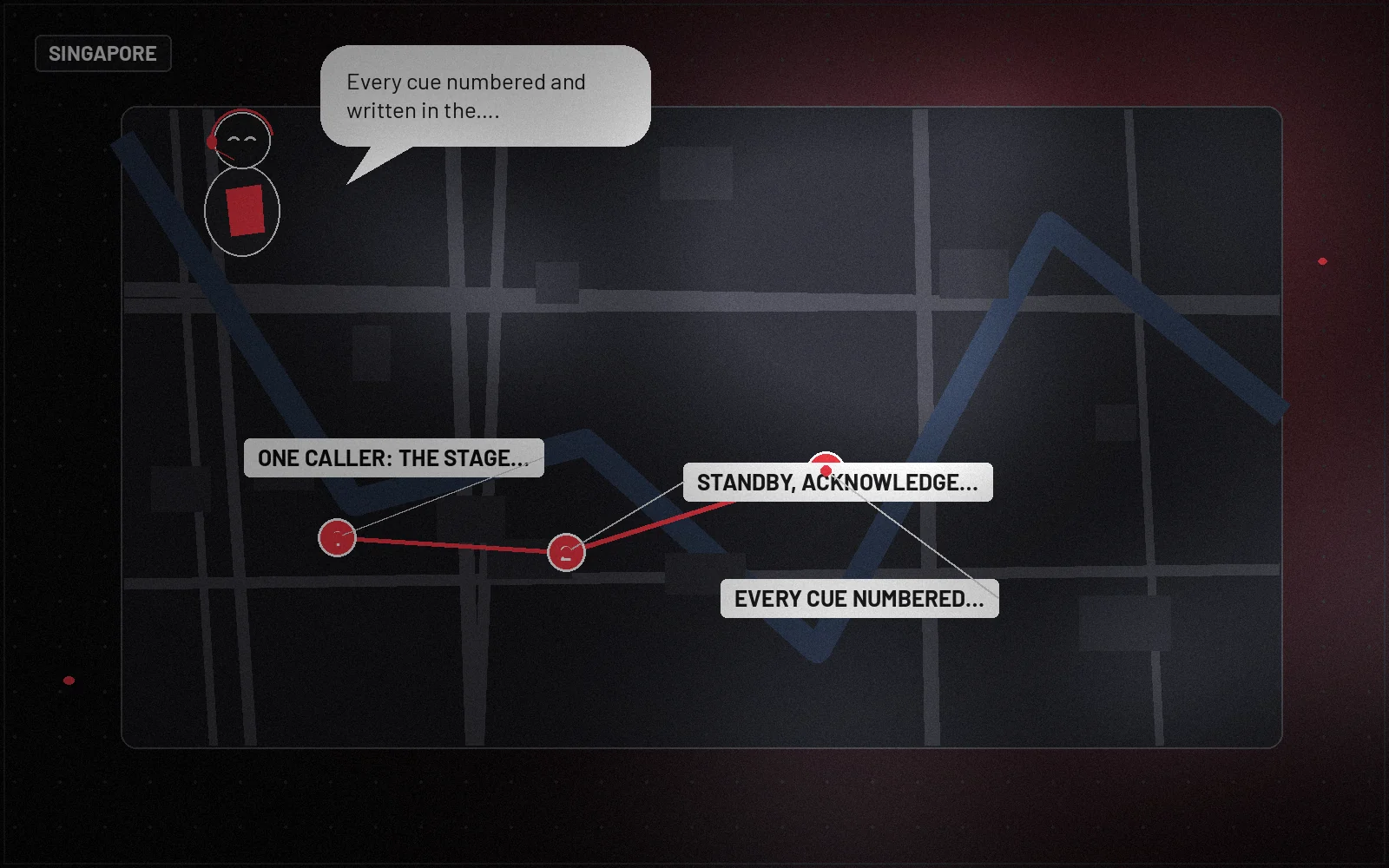
- One caller: the stage manager.
- Standby, acknowledge, then go.
- Every cue numbered and written in the run sheet.
- One master run sheet, reprinted when it changes.
- Kill rule: if two people call a go on the channel, hold, and reset with one caller.
What to do this week
- Number every segment in your next run sheet.
- Write the exact cue words for each one.
- Brief sound, lights and the emcee on standby and go.
- Run one rehearsal calling only the cues.
Kill rule: if a segment has no written cue, write one before the rehearsal.
FAQs
What is run-of-show cue English APAC?
Run-of-show cue English APAC is the short, fixed line a stage manager says to move the event to the next segment: who is up, what changes and the word go. It works because crews move on one clear word. It does not replace the run sheet.
What if the principal runs over time?
The stage manager agrees with the lead whether to cut a later segment, then calls the change. Nobody signals from the floor.
Should the emcee hear the cues?
Yes, if they are on comms. If not, give them a printed run sheet and one visual signal.
Which words should a run-of-show cue English APAC use?
Standby, go and hold cover most events. Agree any others with the crew before doors open.
Neuwark Communications plans live events and stage programmes as part of our services, including Creative & Brand. If your segments keep colliding, talk to us at Contact. More language companions live in Insights.
Communications craft, not legal advice. Counsel checks election-period, consent and platform rules, plus venue, permit and safety conditions, before a run of show is final.
Related: Rally mic check English APAC · Townhall ground rules English APAC