
A policy forum in Quezon City, two minutes before the keynote. The emcee says, “Please, everyone, turn off your phones, it is very rude.” Forty phones stay on, and the first one rings during the opening line.
Phone-silence line English APAC is the short emcee line before the start: phones on silent, why it helps, and thank you.
Street-smart APAC English: short sentences a tired operator can say out loud.
It sits in the opening notes of our run-of-show cue English APAC, and it often comes just before the no-recording line English APAC when a session is off the record.
Quick answer: A phone-silence line English APAC is the emcee’s short request before the programme: please put your phone on silent, one reason that helps the room, and thank you. Ask for silent, not off, say it warmly once, and give people a moment to do it before the first speaker starts.
What goes in a phone-silence line English APAC?
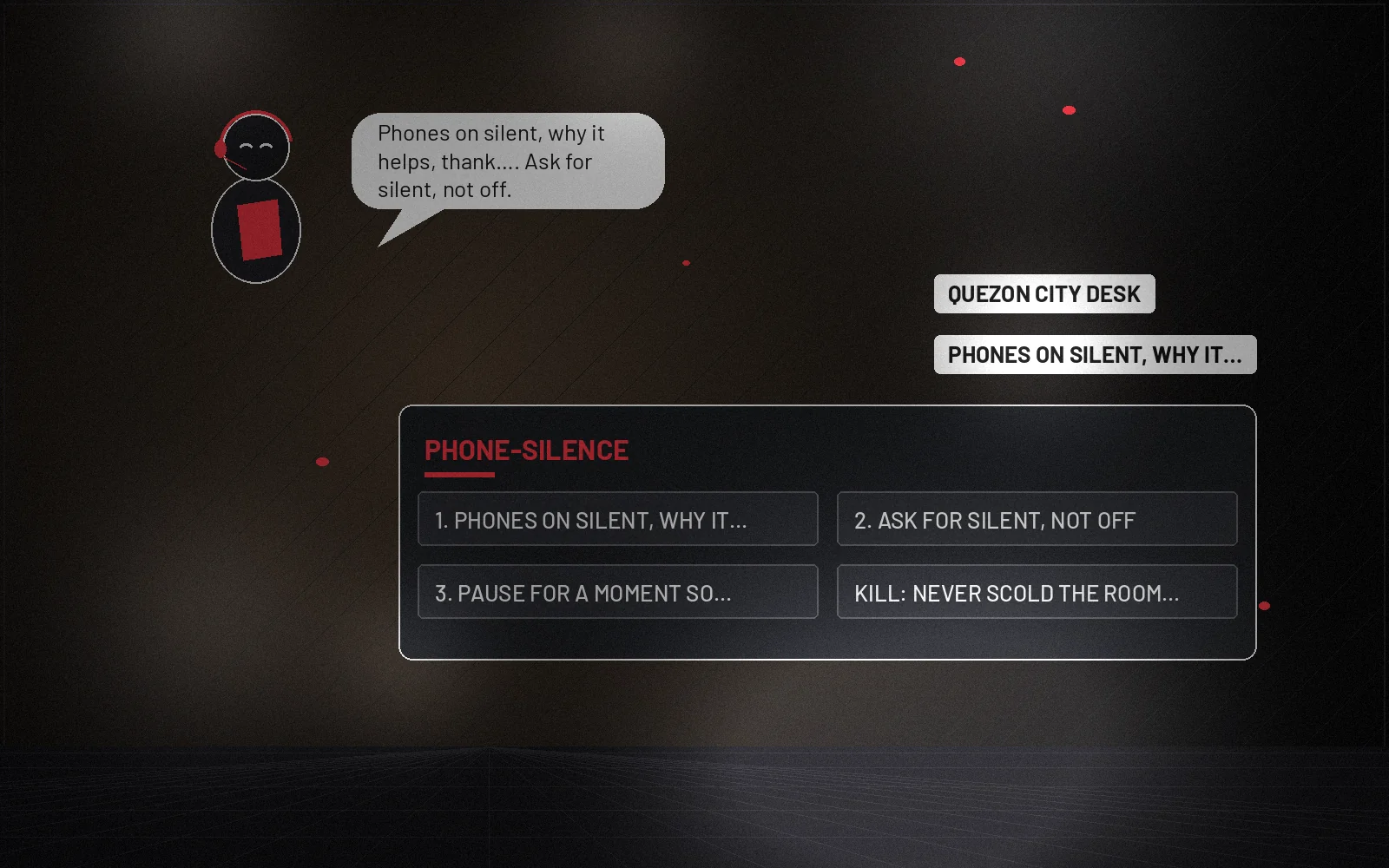
Three parts. Phones on silent, why it helps, thank you.
Phone-silence line (illustrative):
“Before we start, please put your phone on silent.”
“That way everyone can hear our speakers clearly.”
“Thank you. We’ll begin in one minute.”
Ask for silent, not off. Many guests need their phone for tickets, work or family, and they will ignore a request they cannot keep.
How do I ask an audience to silence their phones politely?
Give a reason that is about the room, not about manners. “So everyone can hear the speakers” works. “It is very rude” makes people defensive. Then pause and let them do it. A short pause is good event language; it shows you mean it.
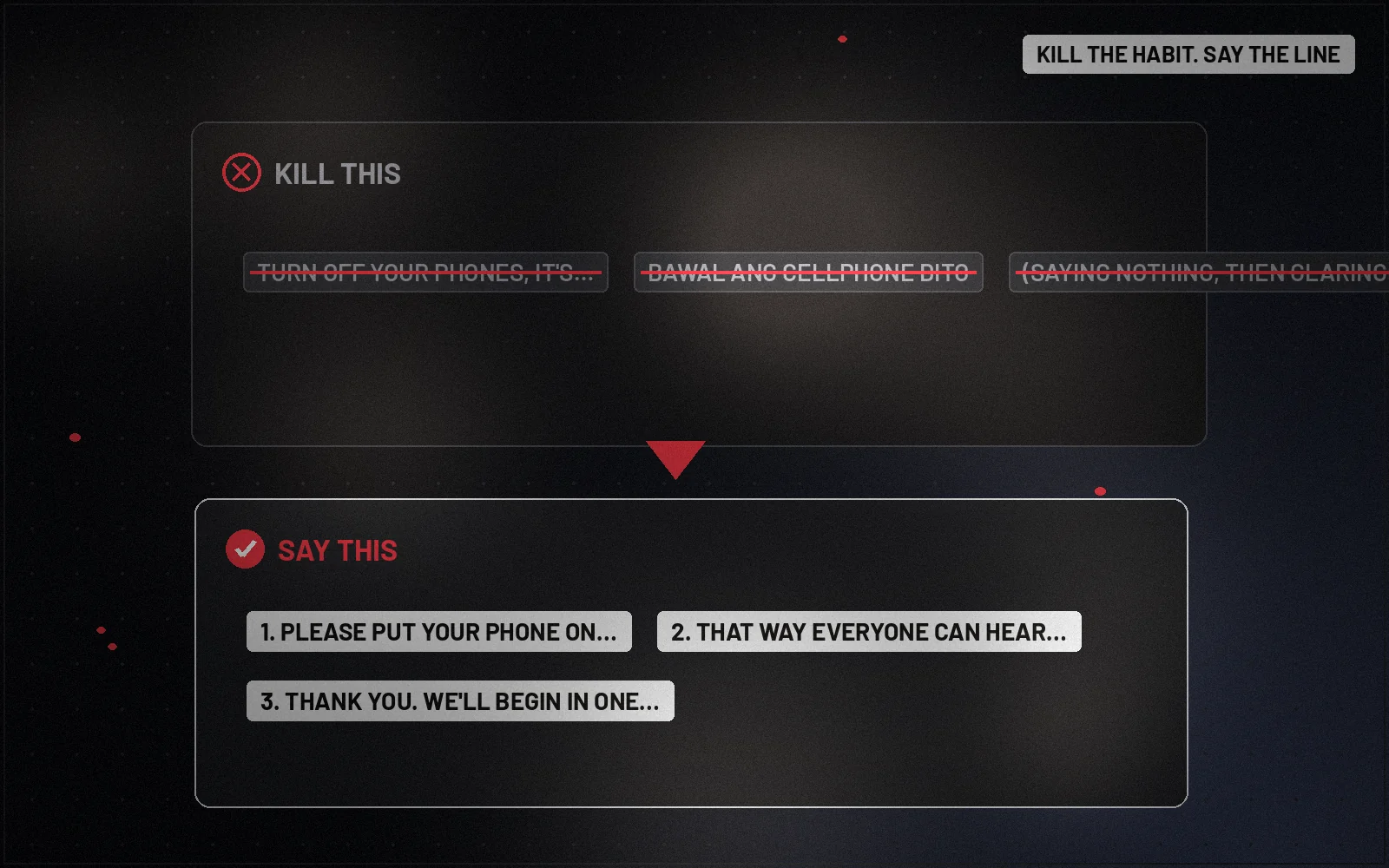
| Kill this | Say this (illustrative) | Why |
|---|---|---|
| Turn off your phones, it’s very rude. | Please put your phone on silent. | Silent is a request people can keep |
| Bawal ang cellphone dito. | That way everyone can hear our speakers clearly. | A reason about the room |
| (saying nothing, then glaring at a ringing phone) | Thank you. We’ll begin in one minute. | A pause to do it |
| I said silent po! | (carry on calmly) | One ask, no scolding |
| No photos, no phones, no videos! | (use the no-recording line separately, if needed) | One request at a time |
What if a phone rings during the programme?
Ignore it, unless it keeps going. The speaker carries on, and the emcee does not comment. If it disrupts a session, the emcee repeats the line kindly at the next break: “A quick reminder to keep phones on silent. Thank you.”
Should the phone-silence line cover photos and recording?
No. Keep phones on silent as one request. If the session is off the record, use a separate no-recording line straight after. Two clear asks land better than one long list.
How does this play out in PH and SG?
Same three parts. Different rooms.
Philippines desk. At Philippine forums and town halls, many guests are reachable only by phone, including officials and their staff. Ask for silent, say the line in English or Filipino, and never ask officials to switch off.
Singapore and wider APAC desk. At Singapore conferences, the line is often expected and short. Keep it in plain English, say it once before the opening, and repeat it only after a break.
Paste-ready lock
Speakable lock (illustrative): “Before we start, please put your phone on silent so everyone can hear our speakers clearly, and thank you.”
Monday field kit
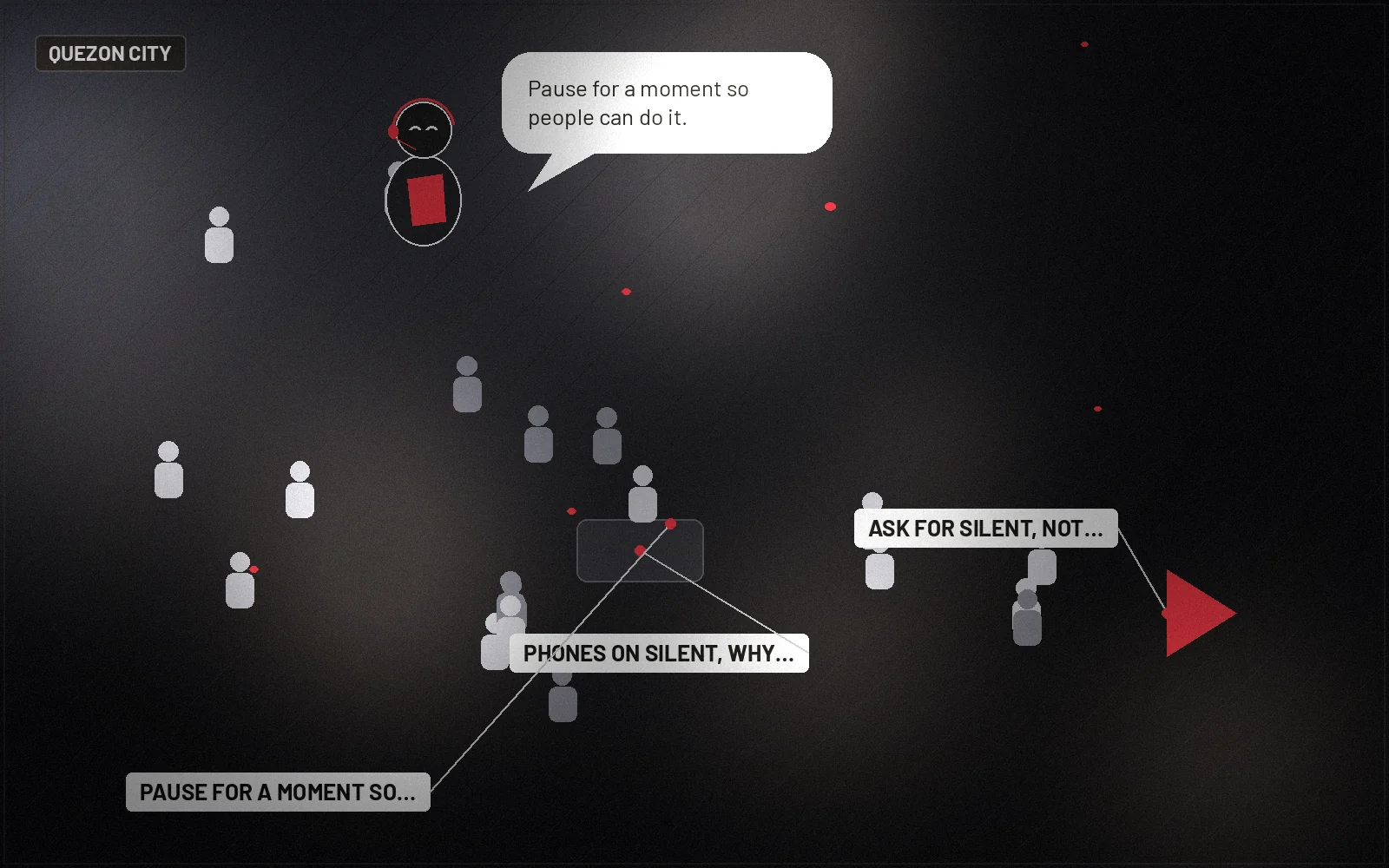
- Phones on silent, why it helps, thank you.
- Ask for silent, not off.
- Pause for a moment so people can do it.
- One reminder after breaks, not during talks.
- Kill rule: never scold the room about phones; give one reason and say thank you.
What to do this week
- Write the line into the emcee’s opening notes.
- Decide if the session also needs a no-recording line.
- Add the reminder to the after-break script.
- Brief speakers not to react to a ringing phone.
FAQs
What is a phone-silence line English APAC?
A phone-silence line English APAC is the short emcee line before the start: phones on silent, why it helps, and thank you. It asks for silent, not off.
How do you ask an audience to silence their phones?
To ask an audience to silence their phones, give one reason about the room and say thank you. Then pause so people can do it.
What should the emcee do if a phone rings?
If a phone rings, the emcee should ignore it unless it keeps going. A kind reminder at the next break is enough.
Should the phone line also ban photos and recording?
The phone line should not also ban photos and recording in the same breath. Use a separate no-recording line straight after if the session needs one.
Neuwark Communications builds event and campaign communications as part of our public affairs and crisis and rapid response work. More street-smart lines live in Insights.
Related: Run-of-show cue English APAC · No-recording line English APAC
Talk to us about your next event script.
Illustrative lines only. Communications craft, not legal advice.