
A background briefing in a Singapore meeting room near the river, kopi on the table. The host starts talking policy straight away. Ten minutes in, a reporter asks, “Wait, is this on the record?”
Nobody is sure, and half the notes are already written.
No-recording line English APAC is the short opening line for a closed session: recording is off, what that covers, what people can still use.
Street-smart APAC English: short sentences a tired operator can say out loud.
It sits with our press Wi-Fi line English APAC, which gets reporters online, and our photo consent line English APAC, which covers cameras. This line covers recording and attribution, and it comes first, before anyone speaks.
Quick answer: A no-recording line English APAC is the opening sentence of a closed briefing that says recording is off, what that covers, and what people may still use, such as notes without names. The organiser agrees the ground rules in advance; the host says them before anyone speaks and gets a clear yes from the room.
What goes in a no-recording line English APAC?
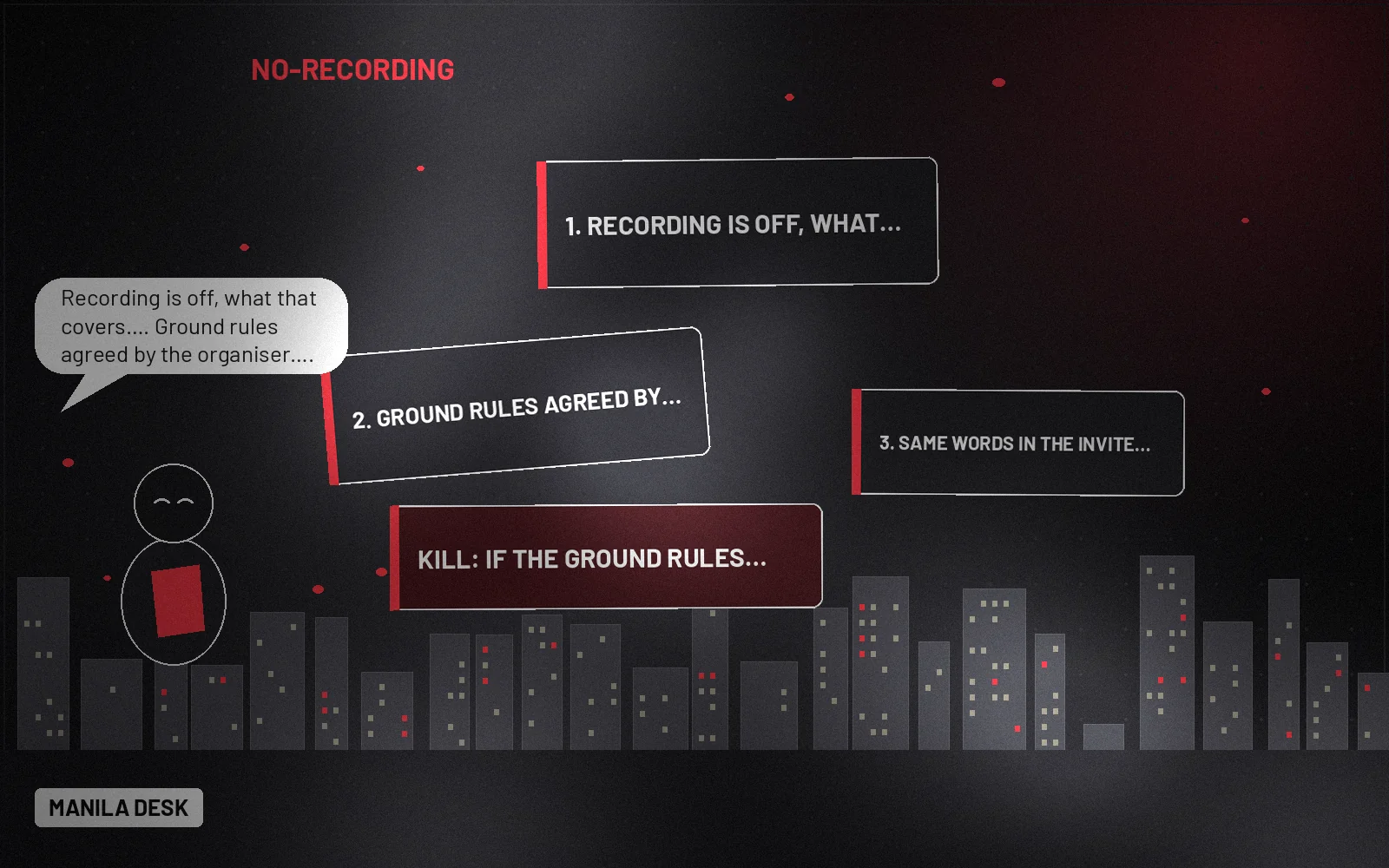
Three parts. Recording is off, what that covers, what people can still use.
No-recording line (illustrative):
“Before we start: this session is not recorded. Please keep phones face down and recorders off.”
“What is said here is not for quotation with names.”
“You may use the information without naming anyone. Is everyone okay with that?”
The last question matters. A ground rule nobody agreed to is only a wish.
Why say it before anyone speaks?
Because a rule announced after something is said does not change what is already in the notebooks. Say it first, get agreement, then start. If the session runs in parts, say it again at the start of each part.
| Kill this | Say this (illustrative) | Why |
|---|---|---|
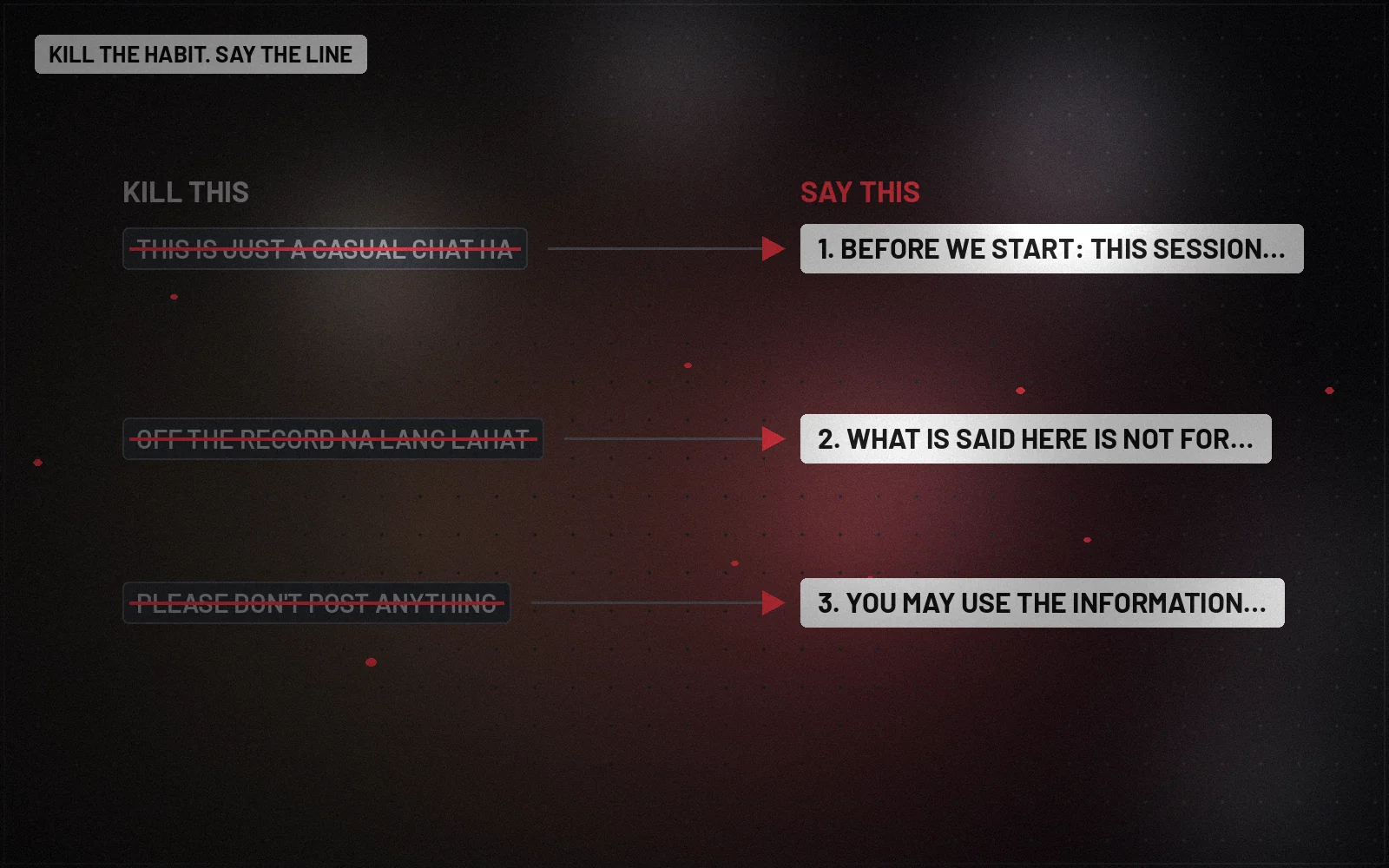
| This is just a casual chat ha. | Before we start: this session is not recorded. | Clear, not vague |
| Off the record na lang lahat. | What is said here is not for quotation with names. | Says what it covers |
| Please don’t post anything. | You may use the information without naming anyone. | Says what they can still do |
| (saying nothing and hoping) | Is everyone okay with that? | Gets a clear yes |
| Oops, that part was off the record. | (ground rules said at the start, not after) | You cannot rewind a notebook |
Who decides the ground rules?
The organiser, before the session, with the spokesperson. Not the host on the day, and not a single reporter. Write them down in one or two lines, put them in the invitation, and repeat them at the start.
“Off the record” means different things to different people. Say what you mean in plain words instead of relying on the label.
How do you make “no recording” visible?
A tent card with a crossed-out microphone icon on the table, phones face down, and no recording equipment on your own side of the table either. If your team is taking notes for an internal record, say so, and say who will see them.
What if someone records anyway or a quote gets out?
Raise it privately with the person, calmly, and point to the ground rules they agreed to. Anything beyond that is for the organiser and counsel, not the host in the room. Do not threaten consequences you cannot back up.
How does this play out in PH and SG?
Same three parts. Different newsrooms.
Philippines desk. At a Manila briefing, reporters may be filing to group chats during the session. Put the ground rules in the Viber or WhatsApp invite as well as on the tent card, and repeat them in English and Filipino if the room needs it.
Singapore and wider APAC desk. At a closed session near Marina Bay or in a hotel meeting room, regional reporters may work under different newsroom norms. Spell out the terms plainly at the start, ask for a yes, and use the same words in the follow-up note.
Paste-ready lock
Speakable lock (illustrative): “Before we start, this session is not recorded and not for quotation with names, so please keep phones face down, and is everyone okay with that?”
Monday field kit
- Recording is off, what that covers, what people can still use.
- Ground rules agreed by the organiser and written down.
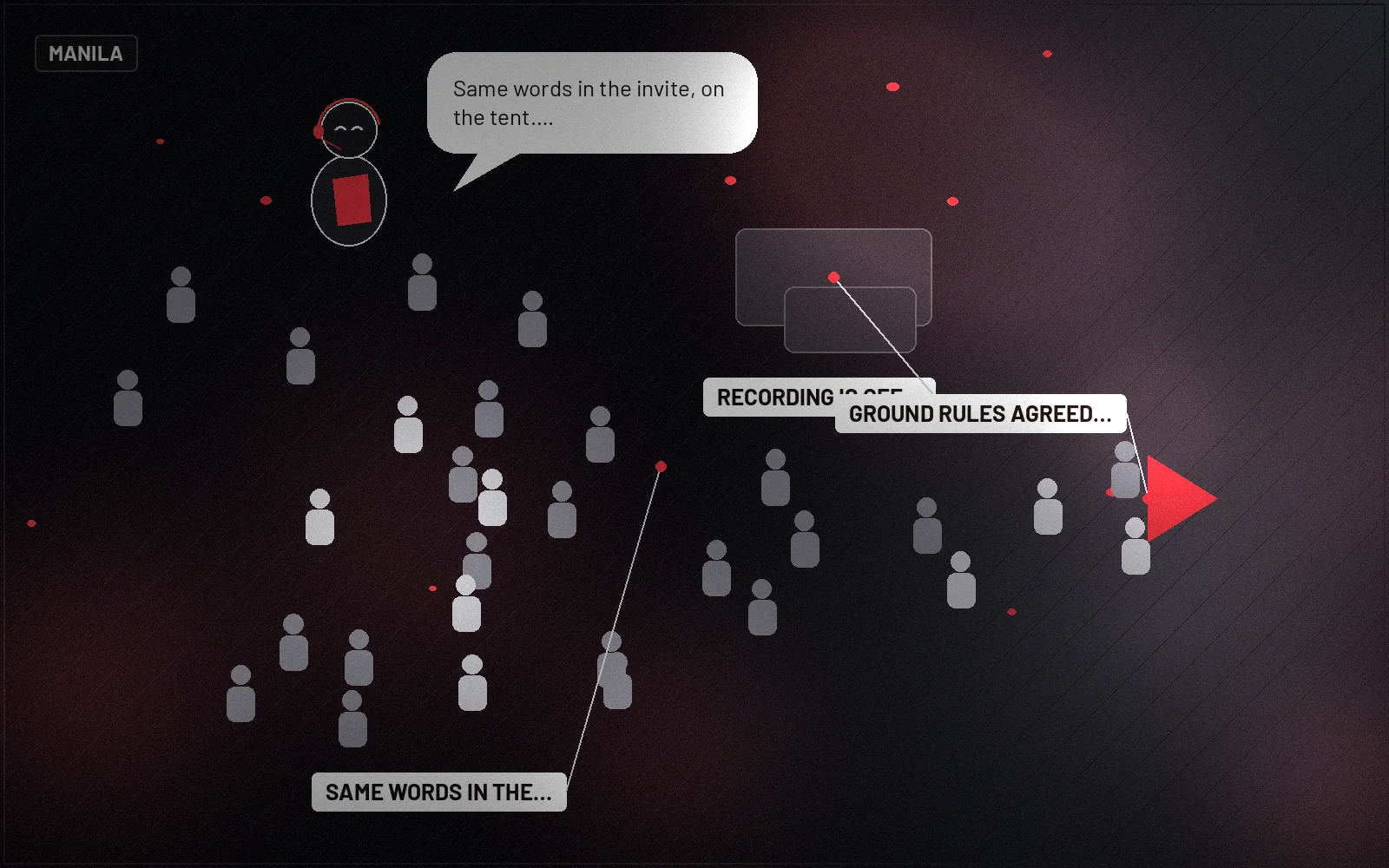
- Same words in the invite, on the tent card and at the start.
- Ask the room for a clear yes before anyone speaks.
- Kill rule: if the ground rules come after the first answer, the line came too late; fix the run of show.
What to do this week
- Agree the ground rules with the organiser and spokesperson.
- Put them in the invite in one or two lines.
- Print the tent card.
- Brief the host to say the line before anyone speaks.
FAQs
What is a no-recording line English APAC?
It is the short opening line for a closed session: recording is off, what that covers, what people can still use. The organiser agrees the terms and the host says them first.
What should you say at the start of an off-the-record briefing?
Say that the session is not recorded, what can and cannot be quoted, and ask the room to agree. Use plain words instead of relying on the label alone.
What if a reporter does not agree to the ground rules?
Note it calmly and let the organiser decide whether the closed session goes ahead on those terms. Do not start until everyone knows what the rules are.
Neuwark Communications plans press and briefing work as part of our services, including Digital and Social for briefing invites and follow-up notes. Briefings where nobody is sure what is on the record? Talk to us at Contact. More language companions live in Insights.
Illustrative lines only. Not legal advice; counsel checks election-period and platform rules.
Related: Press Wi-Fi line English APAC · Photo consent line English APAC