
The post was careful.
The share card lied.
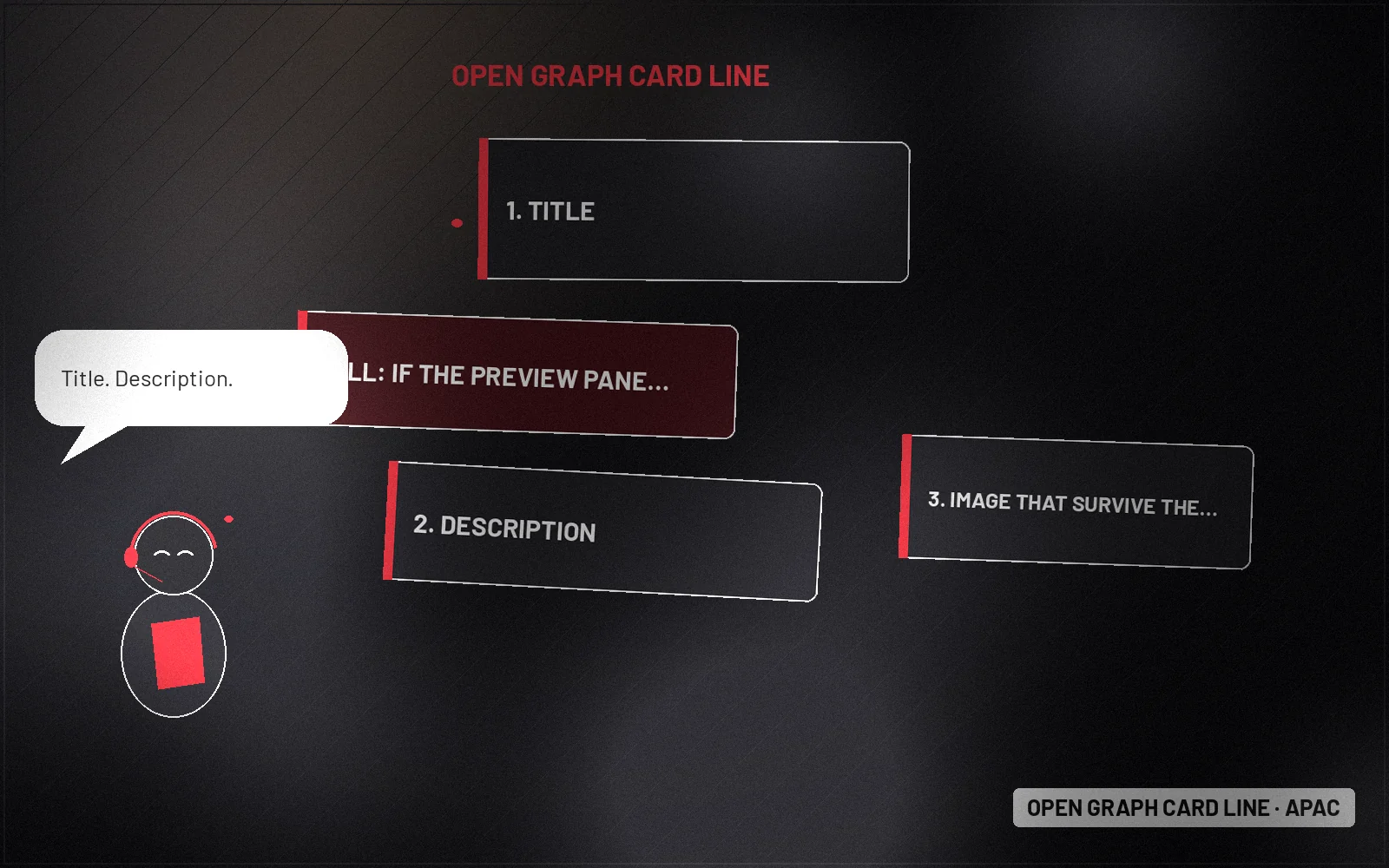
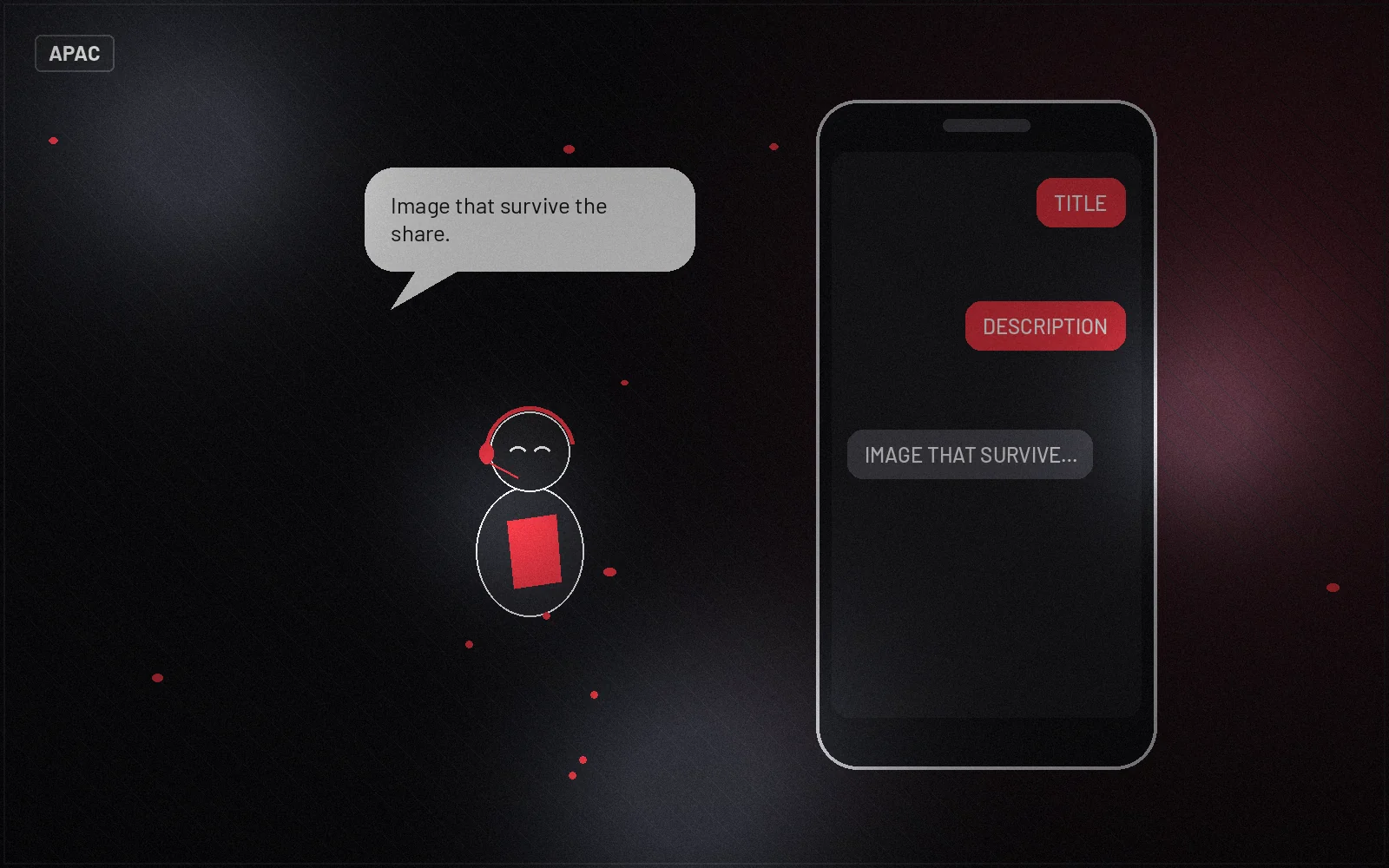
Open Graph card English APAC is the three fields a preview pane will steal: og:title, og:description, and the one line that still names the object if the image is cropped. Not the slogan. Not the first paragraph of the manifesto.
Most advocacy pages leave Open Graph to the CMS default.
The title becomes the H1 plus the brand.
The description becomes the meta, which was already mush.
The image is a logo on a navy square.
The group chat sees a brochure.
Nobody opens a brochure at 9pm.
Street-smart APAC English: short sentences a tired operator can say out loud.
This is a companion to our OG card English APAC piece, which locks the title and description lines. This one adds the field people forget: the image job. It also leans on our meta description English APAC and image filename English APAC companions.
What should the three fields say?
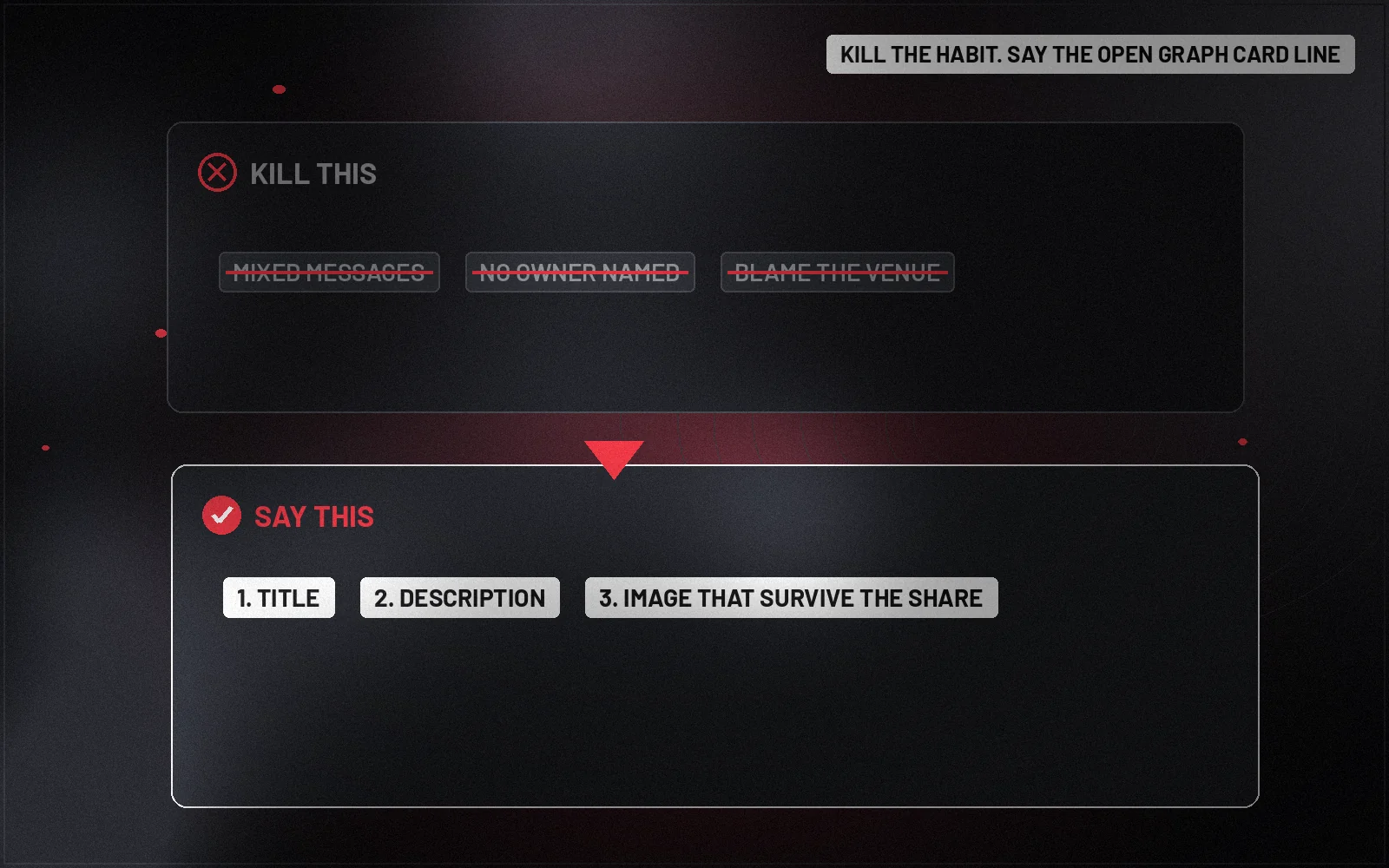
| Field | Kill this | Say this (illustrative) |
|---|---|---|
| og:title | Neuwark Insights: Our Latest Thinking | Flood-control contracts posted. What is public |
| og:description | We are a movement for a better tomorrow for every family | The tracker lists owner, amount, and date. Open the page |
| Image job | Logo on navy | One object in frame: the document, the street, the desk |
og:title can be shorter than the H1.
It cannot invent a second fight.
If the H1 says “contracts posted” and the card says “Join the Movement,” you shipped two pages on one URL.
Why share cards fail in PH and APAC feeds
Brand first. The org name eats the title space. The object never arrives.
Mission paragraph. Messenger and Viber crop at one breath. The proof dies in the crop.
Logo as image. A mark is not an object. The thumb needs something to recognise before the tap.
Empty OG. Facebook and LinkedIn guess a title from whatever the page offers. You do not get a second chance to un-invent it.
Paste-ready lock (illustrative)
og:title: Open Graph card English APAC desks can paste
og:description: Three share-card fields: title, description, image job. Name the object before the pane crops you.
articleSection: Insights
Image filename: og-flood-tracker-2026-09.jpg
Image alt: Printed contract list on a night desk, no faces.
What is the image job on an Open Graph card English APAC desk?
The image has one job. Show the object before the words load.
A contract list on a desk. A flooded street. The venue door for a briefing.
Not a logo. Not a crowd shot with faces you have no release for. Not a poster with ten lines of type that turns to grey noise at thumbnail size.
Check the crop. Chat apps and feeds cut the same image into different shapes. Keep the object near the middle so a square crop and a wide crop both keep it.
Write the alt text while you pick the image. Same object, plain words, no second fight.
How do you test the card before it ships?
Paste the URL into the chat app your audience actually uses. Send it to yourself. Look at it on a cheap phone, not the office monitor.
Platforms can cache the first card they see. Fix the tags before the first share, not after.
Read only what the pane shows. Does it name the object? Does it match the H1? Would a stranger in the group chat know what they are opening?
If any answer is no, fix the field, not the post.
Who owns the card?
The writer who owns the H1 owns og:title and og:description. Not the developer. Not the plugin default.
The designer owns the image job, with one rule from the writer: the object in frame.
The editor signs off on all three before publish. One person. One check. It takes two minutes and saves the share.
What about bilingual pages?
Some APAC pages run English and a local language on one URL. The card still gets one language.
Pick the language the share is aimed at. If the link is going to a Tagalog group chat and the page has a Tagalog version, point the card at that version. If the page is English, keep the card English.
A card that switches language mid-line reads like two pages fighting for one pane.
Same object. One language. One card.
Monday field kit
- Write og:title after the H1. Cousin, not clone, not contradiction.
- Cap og:description at 110–160 characters. One object. One proof word.
- Pick an image that still reads at 200 pixels wide.
- Kill rule: if the preview pane does not name the object, the post does not ship.
FAQs
What is Open Graph card English APAC?
It is the title, description, and image line a share pane will steal. Written so a stranger in a group chat still knows the object.
Is the meta description enough?
No. Meta description is for the search snippet. Open Graph is for the share card. Fill both. Let them cousin each other.
Can og:title differ from the H1?
Yes. It can be shorter and plainer. It cannot promise a different story from the page.
What if we have no good photo?
Use a clean object shot: the document, the venue, the desk. A logo on a flat colour tells the thumb nothing, so it is the last resort, not the default.
What to do this week
Pull your last ten shared URLs. Paste each into a chat to yourself. Count how many cards name the object. Fix the rest before the next share.
Neuwark Communications writes share-ready page language under Digital & Social and Strategy & Messaging. If your cards still show a logo on navy, talk to us at Contact. More language companions live in Insights.
Communications craft, not legal advice. Check image rights, privacy and platform rules with counsel before you publish.
Related: OG card English APAC · Meta description English APAC · Image filename English APAC · Title tag English APAC