
The board had a paragraph. The light changed.
OOH headline English APAC is the short line, about eight words, on a jeepney back, a transit card or a bus shelter that still names the object when the commuter has a few seconds and no sound.
Street-smart APAC English: short sentences a tired operator can say out loud.
Most advocacy out-of-home ships a slogan plus a QR code plus a logo stack. “Together for a just and sustainable future. Scan to join.” Nobody joins. The photo of the board becomes the campaign’s proof of work. The street never got a sentence.
This is the language companion to our OOH creative for monsoon Asia cities, which covers legibility, placement and production in rain and traffic. That piece designs the board. This one writes the words on it.
What should the OOH headline English APAC line do?
Name the object. Or name the ask. Not both, if both need a clause.
Eight words is our desk target, not an industry rule. Some surfaces carry more, some carry less. The test is whether a person in motion can finish the line, not whether it hits a count.
| Surface | Kill this | Say this (illustrative) |
|---|---|---|
| Jeepney back | “A brighter tomorrow starts with you” | “Where the classroom money goes” |
| Transit card | “Be the change. Scan now” | “Thursday 7pm briefing. Free seat” |
| Bus shelter | “Accountability is not optional” | “Follow the flood-control money” |
| Roadside LED | “Together we rise” | “Unprogrammed appropriations, explained” |
Every line here is illustrative. Use your own object, cleared for print.
If the QR code is the strategy, the headline still has to work when the QR fails in the rain.
Why does the headline have to match the landing page?
Because the people who do scan or type the URL arrive expecting the thing the board promised. If the board says “Follow the flood-control money” and the landing page opens with a mission statement, you lose them on the first screen.
Write the board line and the landing H1 as cousins. Same object, same words where possible. Our paid search landing English covers the page side of that promise.
What does the board not carry?
| Kill this | Why it fails | Say this instead |
|---|---|---|
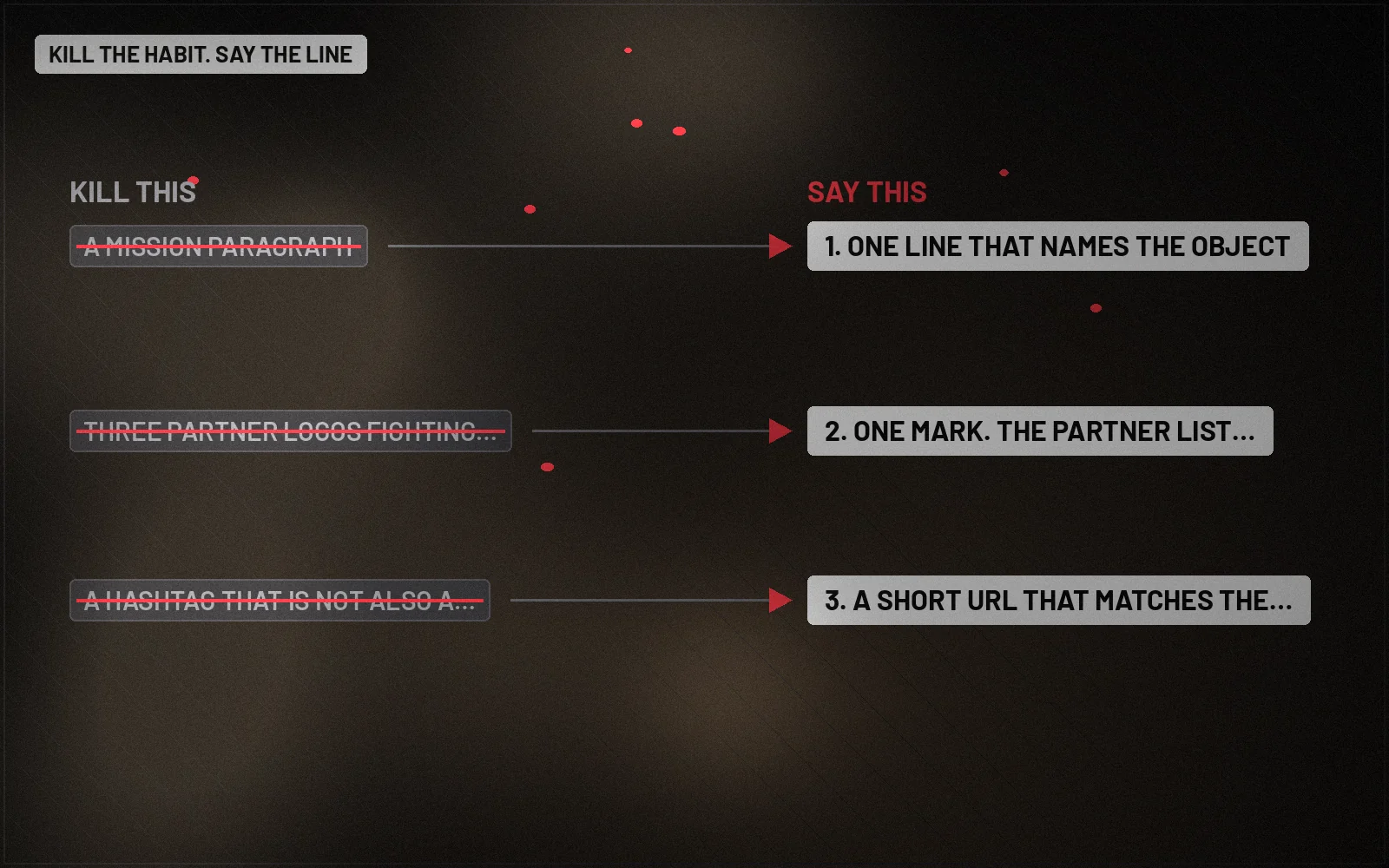
| A mission paragraph | Nobody reads a paragraph at a crossing | One line that names the object |
| Three partner logos fighting the type | The headline shrinks to fit the logos | One mark. The partner list lives on the page. |
| A hashtag that is not also a URL | Nobody types a hashtag into a browser | A short URL that matches the object |
| A claim counsel has not cleared for print | A printed board cannot be edited tonight | Only lines that are already cleared |
| “Learn more” as the only verb | Tells the reader nothing | A verb tied to the object: follow, read, join Thursday |
Sign, advertising and election-material rules differ by city and market. Check what applies to your buy with counsel and your media owner before artwork goes to print.
What goes in the proof line?
One line under the headline. Not a footnote essay.
Say: “Contracts posted. Link on the board.” Do not say: “Visit our multi-platform transparency hub to explore the full dataset.”
Keep the proof line short enough to read in the same glance as the headline. If it needs a second glance, it is not a proof line. It is copy.
How do you test the line before you buy?
Take it outside. A board that reads well on a laptop can die on a wet street at dusk.
Print the mock at a size that matches the real viewing distance, or at the size of a phone screen held at arm’s length. Shoot it from a moving car, in low light. Show the photo to someone who has not seen the brief and ask what the board is about. If they cannot say it back, rewrite.
Test in the language of the street. If the crossing speaks Filipino, Bahasa or Malay, write the line in that language first and test it with people who live there.
Monday field kit
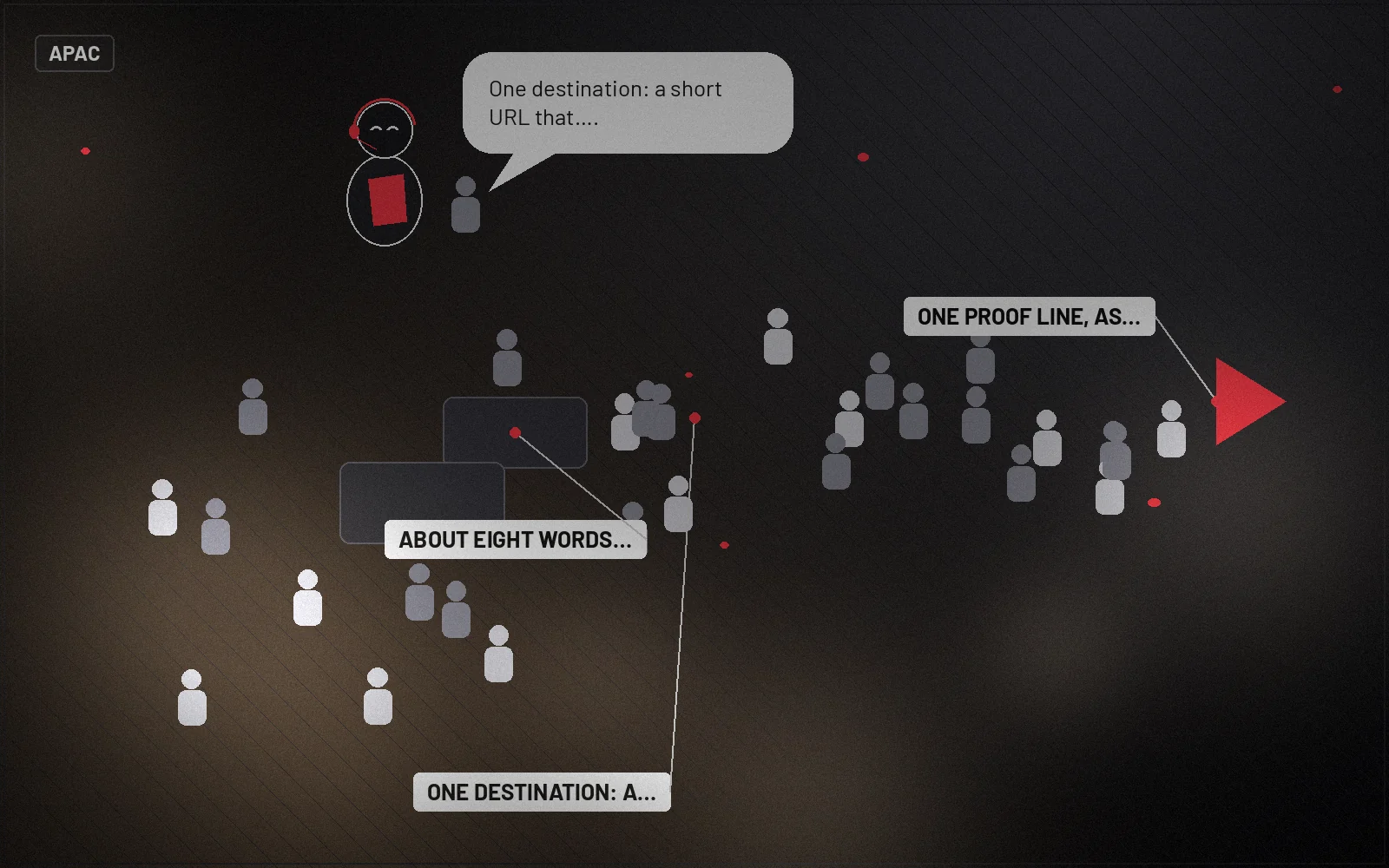
- About eight words, object first.
- One proof line, as short as you can make it.
- One destination: a short URL that matches the object.
- End card or logo: one mark, not the coalition roll call.
- Photo test: shoot the mock at dusk from a moving car. If you cannot read it, the street cannot.
FAQs
What is OOH headline English APAC?
OOH headline English APAC is the short line on street media that names one object a commuter can finish before the light changes. Our desk aims for about eight words.
Can the headline be in Filipino or Malay?
Yes, write the headline in the language of the street you bought. Do not stack English and a second language as two paragraphs on one board.
Does a clever line outperform a plain object?
A clever line loses when it needs a decoder. Put the object first and add wit only if the line still names the object.
Should the board carry a QR code?
A QR code can help, but the headline must work without it. Rain, glare and distance all break scans, so the words carry the board.
What to do this week
Print the headline at the size of a phone screen. Hold it at arm’s length. If you squint, rewrite.
Neuwark Communications writes street lines under Media & Paid and Creative & Brand. If your boards still read like brochures, talk to us at Contact. More language companions live in Insights.
Communications craft, not legal advice. Check sign, advertising and election-material rules with counsel and your media owner in each market before artwork goes to print.
Related: OOH creative for monsoon Asia cities · Paid search landing English · Reel caption English · Provincial radio host-read English