
MV June Aster caught fire off Coron, Palawan on 9 September 2026. By 16 September the death toll had climbed to 77 after a surviving crew member died, with missing counts still revising through 17–18 September and MARINA detailing operator assistance rules in public. That is not a press-release story. That is a live textbook of first 72 hours crisis communications for transport, tourism, and employer brands that still invent war-room steps after midnight.
The first 72 hours are not a single statement. They are a sequenced ops system for families, regulators, and markets—in that order. Soft path: Services · Contact.
Why a moving death toll turns the first 72 hours into the whole story
When casualty numbers move, every earlier claim becomes a screenshot. Media, group chats, and next-of-kin networks treat yesterday’s figure as today’s broken promise unless you have already published how updates will work.
Moving tolls create three traps:
- 1. Holding-statement lock-in — language that sounded careful at hour one looks cold when the number rises
- 2. Rumor vacuum — if you go quiet between updates, unofficial channels write the interim draft
- 3. Aid-rule confusion — families hear different versions of operator assistance, MARINA guidance, and employer support
Transport and tourism brands adjacent to Coron routes felt spillover questions even when they were not the operator. Employer brands with crew or contractors on board faced next-of-kin sequencing before any polished Q&A existed. This is why first 72 hours crisis communications belongs in a retainer, not a scramble. For holding-line craft without inventing facts, keep crisis holding-statement templates on the shelf. For regional scoping language, pair with APAC crisis retainer scoping before midnight.
Philippine audiences are fluent in disaster weeks. They notice when a brand updates only when the number gets worse, and they notice when a brand refuses to explain how verification works. Process transparency is not softness. It is how you keep the holding statement from becoming the story.
Hour 0–1: holding statement, next-of-kin sequencing, who speaks
Hour zero is triage, not poetry. Name three owners before anyone opens a laptop:
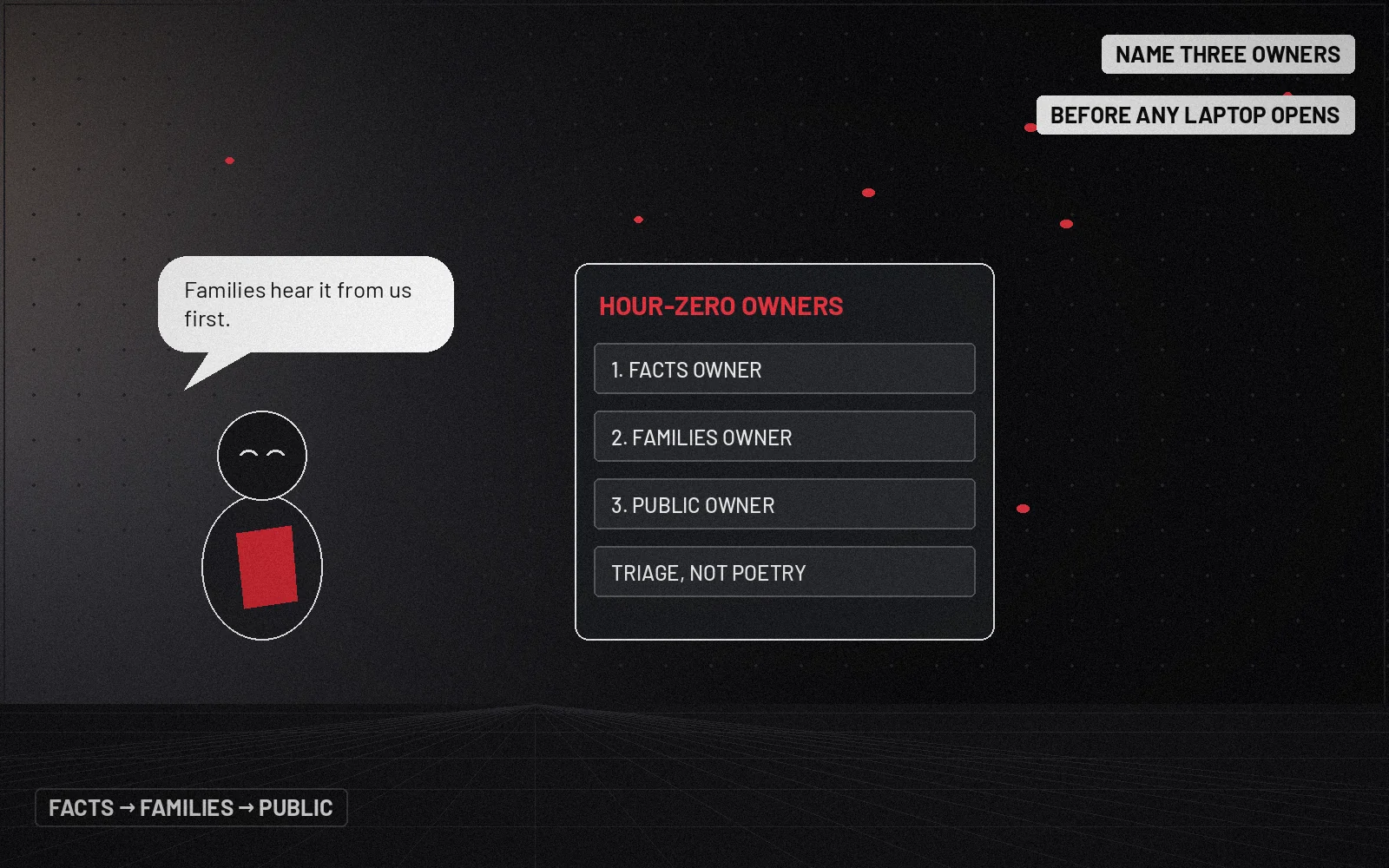
- Facts owner — what is confirmed, what is still unknown, what must not be guessed
- Families owner — next-of-kin sequence, who calls, what language is allowed
- Public owner — who speaks on record, who stays silent, which channel goes first
The holding statement should do four jobs only: acknowledge the incident, state what is confirmed, refuse speculation, and point to the next update window. It should not apologize for unverified causes. It should not invent passenger counts. It should not promise aid formulas that counsel has not cleared.
Next-of-kin sequencing beats media sequencing. Families who learn a loved one’s status from a feed will never forgive your brand for a clever quote. If your SOW still says “media first,” rewrite it after MV June Aster week. Street-smart boards ask one question at hour zero: who is calling families, and what script are they using?
Hours 1–24: war-room roles, regulator ladder, rumor triage
By hour one the war room should look boring: named roles, a decision log, and a rumor triage board that separates “needs answer now” from “monitor only.”
War-room roles that actually move:
- Incident lead (ops)
- Communications lead (external + internal)
- Legal / compliance seat
- Customer / passenger care lead
- Employee / crew care lead
- Digital / rumor desk (not a junior social intern alone)
Regulator ladder for maritime incidents typically includes MARINA-adjacent reporting, local government units, and any tourism or labor bodies that will ask public questions. Do not invent jurisdiction. Do invent a call order and a “who confirms what” matrix so two offices do not contradict each other on air.
Rumor triage rules:
- Screenshot and timestamp every high-reach claim
- Tag as confirmed / disputed / unknown
- Answer only what your facts owner clears
- Kill zombie claims with a short correction, not a thread war
This is distinct from flood-control 72-hour playbooks. Sea incidents have different family logistics, different regulator language, and different tourism spillover. Use crisis flood-control communications playbooks as adjacent ops muscle—not a copy-paste template.
Hours 24–72: aid-rule updates, employee/customer lines, media cadence
Days two and three are where brands lose trust without noticing. Aid rules enter the public story. Survivors and missing counts still move. Employees ask what they can say to friends. Customers on adjacent routes ask if travel is safe.
Cadence that survives a moving toll:
- 1. Scheduled updates even when the update is “no material change”
- 2. Aid-rule language cleared once, then versioned when rules change
- 3. Employee lines short enough for a supervisor to read aloud
- 4. Customer lines that separate your brand’s exposure from the operator’s facts
- 5. Media windows that refuse gotcha speculation about cause
If you only publish when the number changes, you train the market to equate silence with cover-up. Publish the process: when you update, who verifies, where families go for help. Markets price calm process. A burst of conflicting quotes with letterhead still reads like panic.
Transport / tourism / employer brand spillover without copying the flood playbook
Not every brand in Coron week was the ferry operator. Hotels, tour desks, airlines with connecting passengers, and employers with staff on leave still faced questions. Spillover communications need a lighter kit:
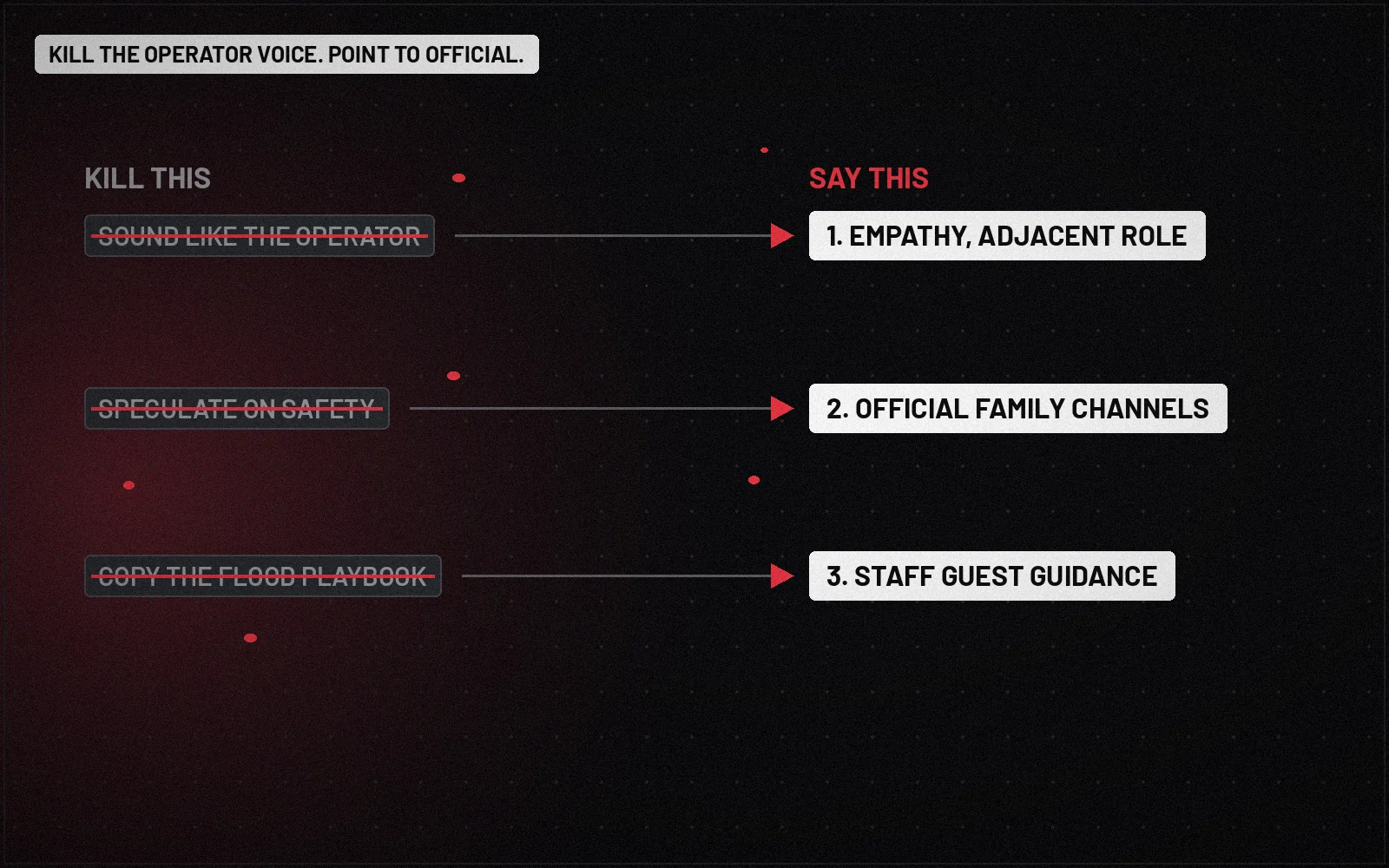
- Empathy without claiming operator status
- Clear redirect to official passenger/family channels
- Staff guidance for guest questions
- No speculative safety commentary that becomes tomorrow’s evidence
Employer brands should treat crew and contractor families as stakeholders, not afterthoughts. Tourism brands should resist “business as usual” cheerleading while recovery is live. Transport brands adjacent to the route should coordinate facts with counsel before inventing route-status theater.
Street-smart rule: if you are not the operator, do not try to sound like the operator. Sound like a responsible adjacent actor with a clean redirect. That discipline protects you when a guest films a confused front-desk answer and posts it as “the company’s position.”
What a 72-hour retainer clause should include in the SOW
Boards still buy “crisis PR” that means a midnight brainstorm. A first-72-hours crisis communications retainer should name:
- On-call windows and surge triggers
- Holding-statement skeleton already in the shared drive
- Next-of-kin sequencing support (process, not impersonation of authorities)
- Regulator / media ladder with named seats
- Rumor triage desk and decision log
- Dark-site adjacency if you need a holding URL fast—see crisis dark-site readiness
- What is out of scope (litigation strategy, paid media, fabricating certainty)
Finance-friendly language beats vibe decks. If the clause cannot be read aloud in a board packet, it will not survive the first real night. Pair SOW language with the regional framing in crisis retainer scoping so APAC groups do not invent a second playbook for every market.
Soft CTA: scope a first-72-hours crisis retainer
MV June Aster made the cost of improvisation visible in Philippine headlines. Neuwark Communications scopes first-72-hours crisis retainers for transport, tourism, and employer brands that refuse to invent war-room steps after midnight.
See Services for Crisis & Rapid Response, read more on Insights, or reach Contact. About for who we are. Home is [neuwarkcommunications.com](/). The first 72 hours are an ops system—build it before the next toll starts moving.
Extra operating notes boards forget until hour 18
Document the update rhythm in the first internal brief, not the fifth. Assign one person to watch MARINA and local authority channels so the war room is not refreshing five group chats. Keep a redacted family-care FAQ that legal can clear once and ops can reuse when aid rules shift. If tourism partners ask for co-branded statements, require a facts-owner sign-off before any logo appears next to a casualty number. When employee WhatsApp becomes the unofficial newsroom, push a single approved paragraph and a “do not speculate” line—then stop flooding the channel.
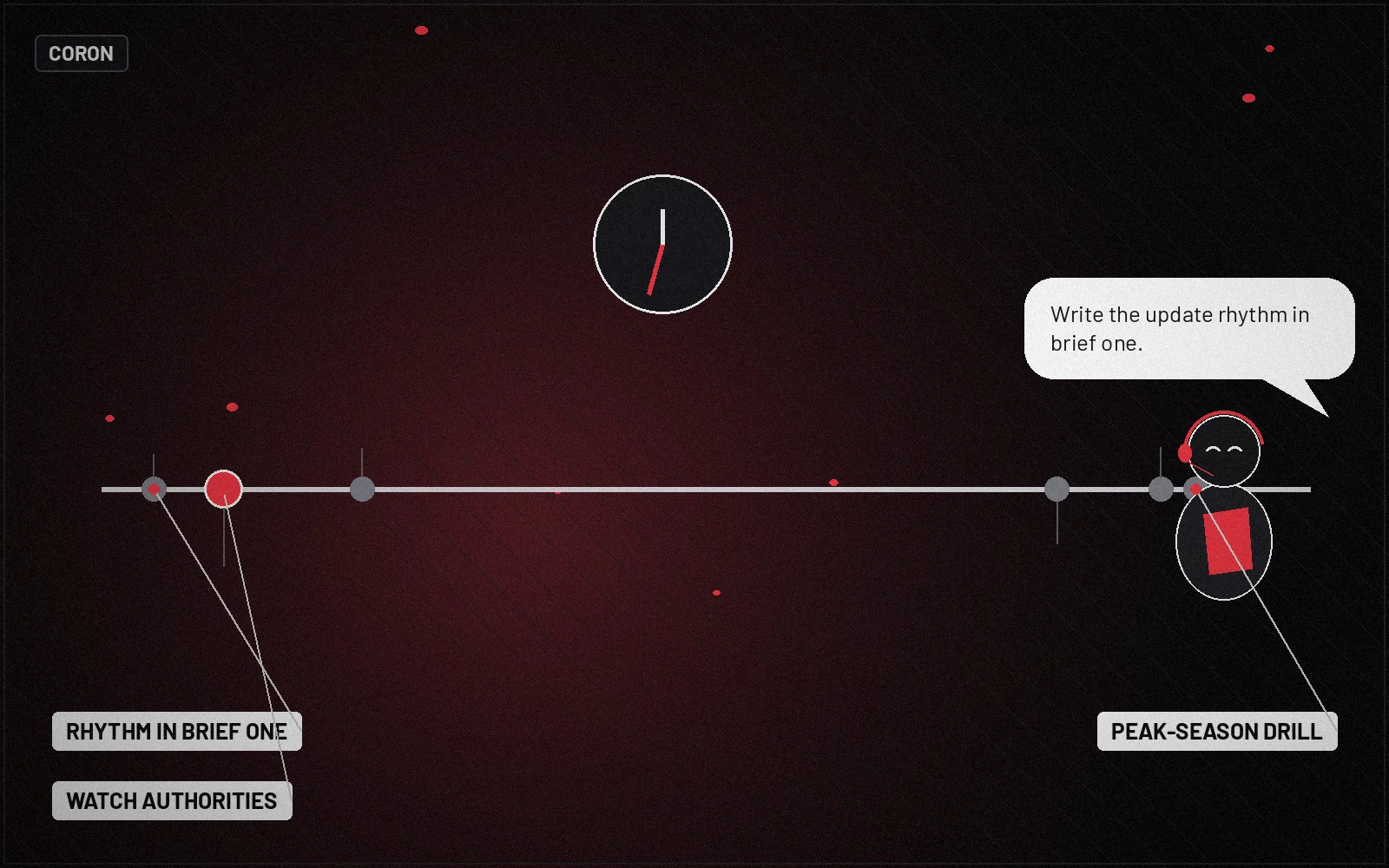
Practice one tabletop before peak travel seasons: hour-zero owners, a fake moving toll, and a rumor that names your brand. Time how long it takes to produce a cleared holding line and a family-care redirect. If that drill takes three hours, your live first 72 hours crisis communications will take longer under stress. Coron week was public. The next maritime or transport incident will not wait for your slide deck to finish loading.
Checklist for the night the number moves again
Print this. Tape it near the war-room screen.
- [ ] Facts owner confirms the new figure and source before any public line changes
- [ ] Families owner gets the update before media
- [ ] Public owner revises the holding statement with the version date visible
- [ ] Employee line updated in one paragraph, not a thread
- [ ] Rumor desk watches for recycled old numbers presented as new
- [ ] Decision log captures who approved the change and when
- [ ] Next update window restated even if the next change is “no material update”
That checklist is the difference between first 72 hours crisis communications and improvisational PR. MV June Aster’s mid-September arc showed how often the public story is really a verification story. Brands that treat verification as ops—not as a speech—survive the week. Brands that treat it as messaging theater learn why families and markets stop listening.