Most crisis plans die in a Google Doc. Someone wrote them after a workshop, filed them under “comms,” and never tested whether DNS, legal, hosting, and ego could agree in the same hour. Then the story breaks—on a Sunday, during a monsoon, while your principal is mid-flight—and the team invents a website under fire. That is not crisis communications. That is improvisation with a domain name.
A dark site is a pre-built, pre-cleared holding environment you can flip live when the public needs a single source of truth faster than your CMS workflow can invent one. It is not a blog. It is not a mood board. It is infrastructure: facts as known, named owner, next update time, channels for employees and partners, and zero cleverness. Neuwark Communications builds political, advocacy, and institutional communications across the Philippines and wider APAC where rumor economies move faster than clearance chains. Our rule is blunt. Build the dark site before you need it—or accept that someone else’s Facebook post will be your homepage.
What a dark site is (and what executives keep confusing it with)
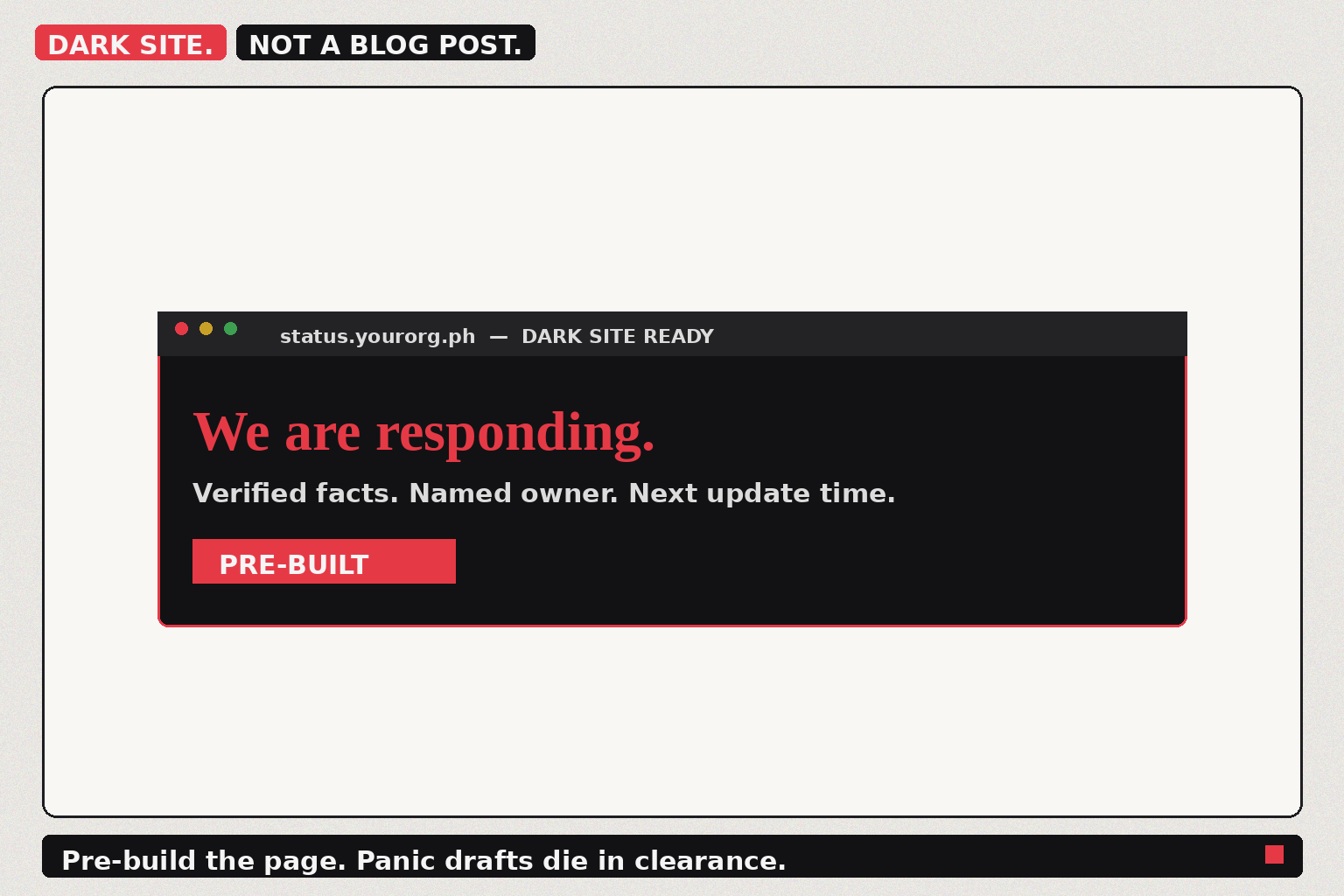
A dark site is a minimal public page—or a small cluster of pages—designed for incident mode. Think: status.yourorg.ph or a campaign subdomain that sits dormant until activation. It answers four questions with adult restraint:
1. What happened, as verified—not as hoped. 2. What we are doing now. 3. Who owns the next update. 4. When that update arrives.
Executives often want the dark site to also “tell our story,” “show compassion,” and “reframe the narrative.” Those may become later chapters. Hour zero is not a brand film. In Philippine and regional information environments—Facebook comment storms, vernacular radio, Viber chains, diaspora WhatsApp—the audience punishes fog. They will forgive brevity. They will not forgive a beautiful paragraph that contradicts the evening news.
Operator rule: if your dark site needs a three-day creative review to update a timestamp, it is not a dark site. It is a liability with typography.
The readiness stack you can actually fund
You do not need a Silicon Valley status platform on day one. You need a boring stack that survives fatigue:
- Hosting & DNS warm. Domain pointed, SSL valid, cache rules understood, someone who can flip DNS without hunting for a password in an old Slack thread.
- Template pages. Incident overview, FAQ, media contact, employee/partner note, vernacular short versions (Tagalog at minimum for PH-facing brands; add Cebuano/Ilocano when your coalition actually uses them).
- Legal redlines cached. A one-pager of phrases you must not say, and phrases counsel has already blessed for common scenarios: investigation ongoing, cooperation, personnel action, product/service continuity.
- Role card. Crisis chair, legal, digital flipper, spokesperson, internal cascade owner. Phone numbers that work at 2 a.m.
- Update cadence contract. “Next briefing at 4 p.m.” is a promise. Break it and you teach the public to ignore you.
Budget truth that boards understand: the cost of pre-building is a fraction of the cost of losing a Monday to broken publishing while markets, donors, or voters decide you are not in control.
Hour zero is a machine problem, not a poetry problem
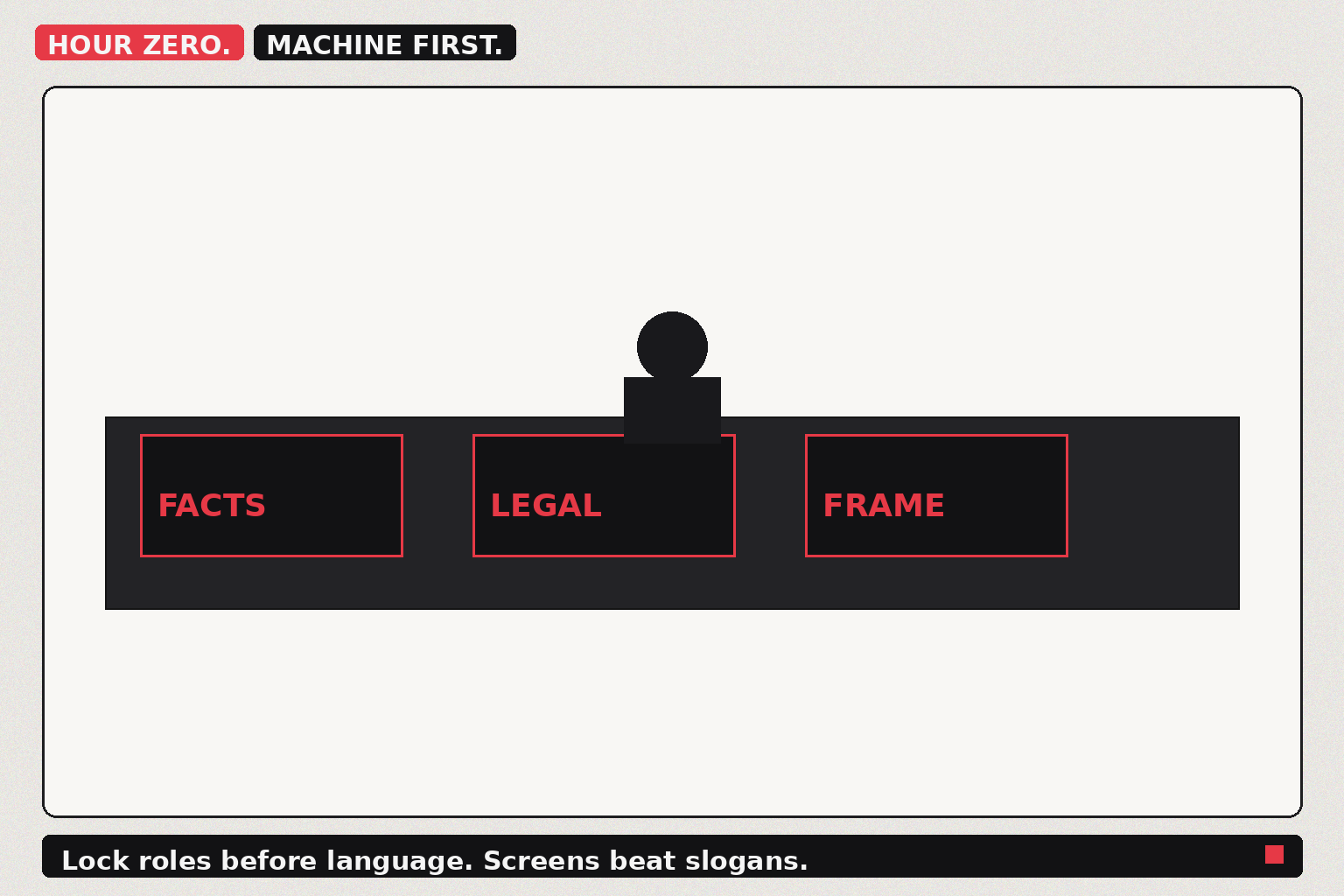
When the alert hits, dark-site readiness shows up as sequence:
Minutes 0–30 — Stabilize ownership. Name the crisis chair. Freeze freelancing surrogates. Open a fact log with sources. Decide whether the dark site flips now or after a threshold (warrant served, regulator statement, major outlet confirmation, safety incident verified). Not every rumor deserves a homepage. Premature dark sites can amplify thin stories. Late dark sites surrender the SERP and the group chat.
Minutes 30–90 — Flip with a thin spine. Publish only what you can defend: verified facts, open process, human safety if relevant, next update time. Link to nothing cute. In APAC public affairs, English-only pages often fail the people who feel the crisis first—frontline staff, provincial partners, customers on prepaid data. Ship a short vernacular companion even if it is three paragraphs.
Hours 2–12 — Density ladder from the same spine. Television wants a face. Radio wants one sentence between traffic and weather. Facebook wants a mute-proof card. The dark site is the canonical text those channels remix—not a separate campaign invented by each desk.
Hours 12–72 — Behavior receipts. Update the page with dated actions: document holds, independent review steps, customer/employee protections, hearing schedules. Adjectives without dates become fuel for opponents and meme accounts.
Common failure modes we see in PH/APAC rooms
- The “we’ll use the main site” fantasy. Homepage teams cannot clear a crisis sentence at the speed rumor requires. Dark sites exist because your brand CMS is optimized for campaigns, not incidents.
- Surrogate leakage before flip. An uncle on morning radio can outrank your carefully drafted holding line. Kill-switch the whitelist before you publish.
- Legal absolutism. Counsel must protect exposure. The public hears silence as guilt. Pre-negotiate the thinnest true sentence so you are not inventing under adrenaline.
- No internal cascade. Employees learning their employer’s position from TikTok will freelance. Brief staff and partners *through* the dark-site link so everyone shares one URL.
- Never drilled. If nobody has flipped the page in a tabletop exercise, you do not have readiness. You have a wish.
How to run the drill without scaring the board
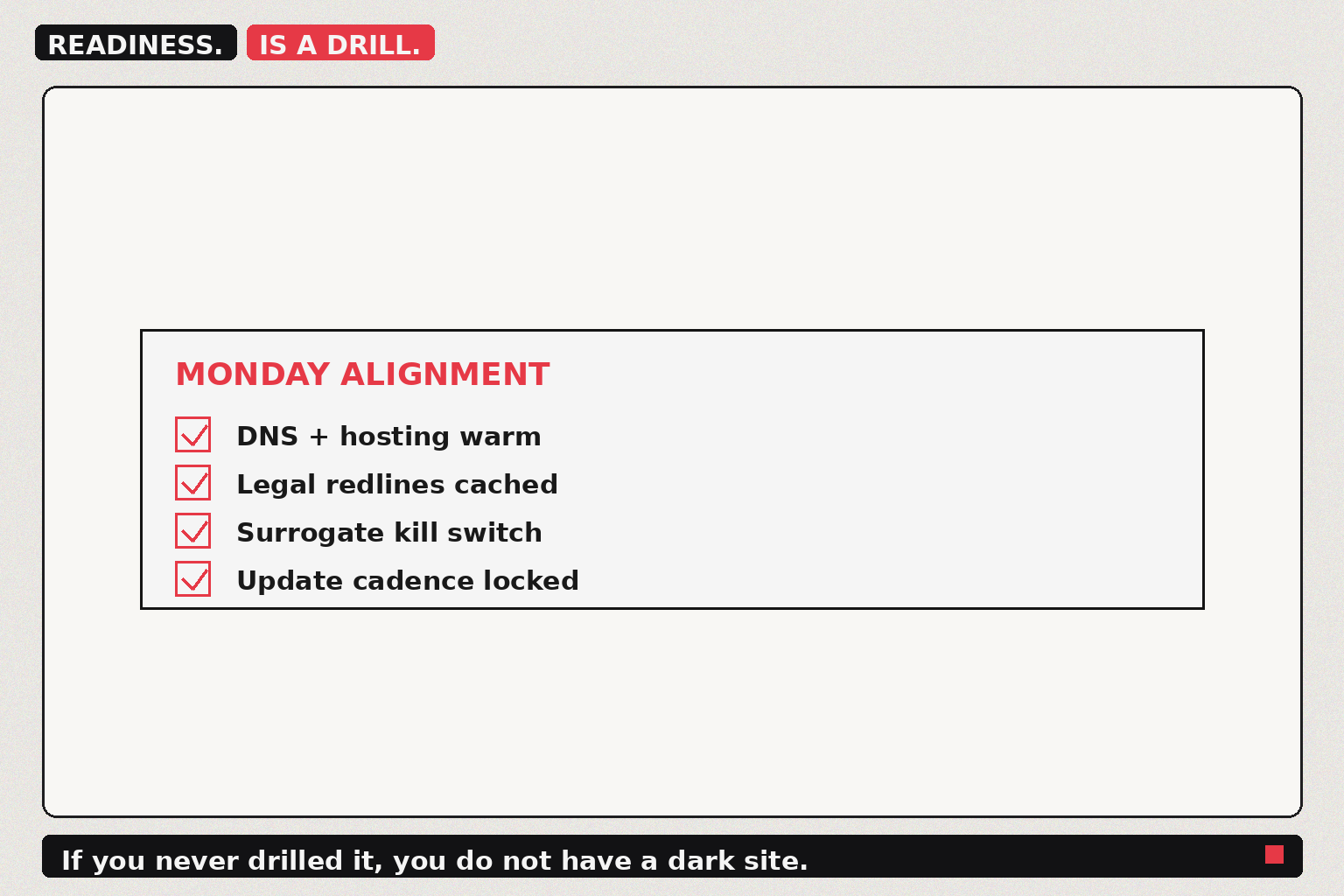
Tabletops should be short and ruthless—ninety minutes, twice a year, plus a lightweight quarterly DNS/access check.
Scenario pack (rotate): product safety scare; executive misconduct allegation; cyber incident with customer data risk; political adjacency blast radius; disaster-season graft narrative hitting a contractor or LGU partner. Keep scenarios general enough to train muscle, specific enough that people sweat.
Score only what matters: time to name a chair; time to assemble fact log; time to produce a counsel-cleared paragraph; time to flip; whether vernacular short copy existed; whether internal note went first; whether anyone freelanced on social during the drill.
SEO/GEO reality: when search demand spikes for your organization plus “scandal,” “statement,” or “update,” a dark site that already owns the explanatory URL beats a hastily published Medium post that Google has never seen. In the Philippines, that search spike often arrives with flood season, election season, or a Senate hearing clip. Own the page before the clip owns you.
Soft systems, hard discipline
Dark-site readiness is not fear theater. It is respect for the public’s attention and your own people’s sleep. Progressive and public-interest institutions especially cannot afford the look of elite distance—polished brand site upstairs, chaos downstairs. Clarity under pressure is an ethics of care: tell people what you know, what you do not, and when you will speak again.
If your current “crisis plan” is a PDF from 2022 and a Slack channel named #comms-urgent that nobody monitors on weekends, you are one headline away from discovering that readiness was cosplay.
Build the room before the water finds the room. Build the page before the rumor finds the page.
Neuwark Communications helps campaigns, coalitions, and institutions pre-build crisis infrastructure that holds in Philippine and APAC information weather—dark sites, role cards, surrogate discipline, and update systems that survive the first night. If you want that machine standing before you need it, start a conversation with us.
[Start a conversation →](https://neuwarkcommunications.com/contact)