
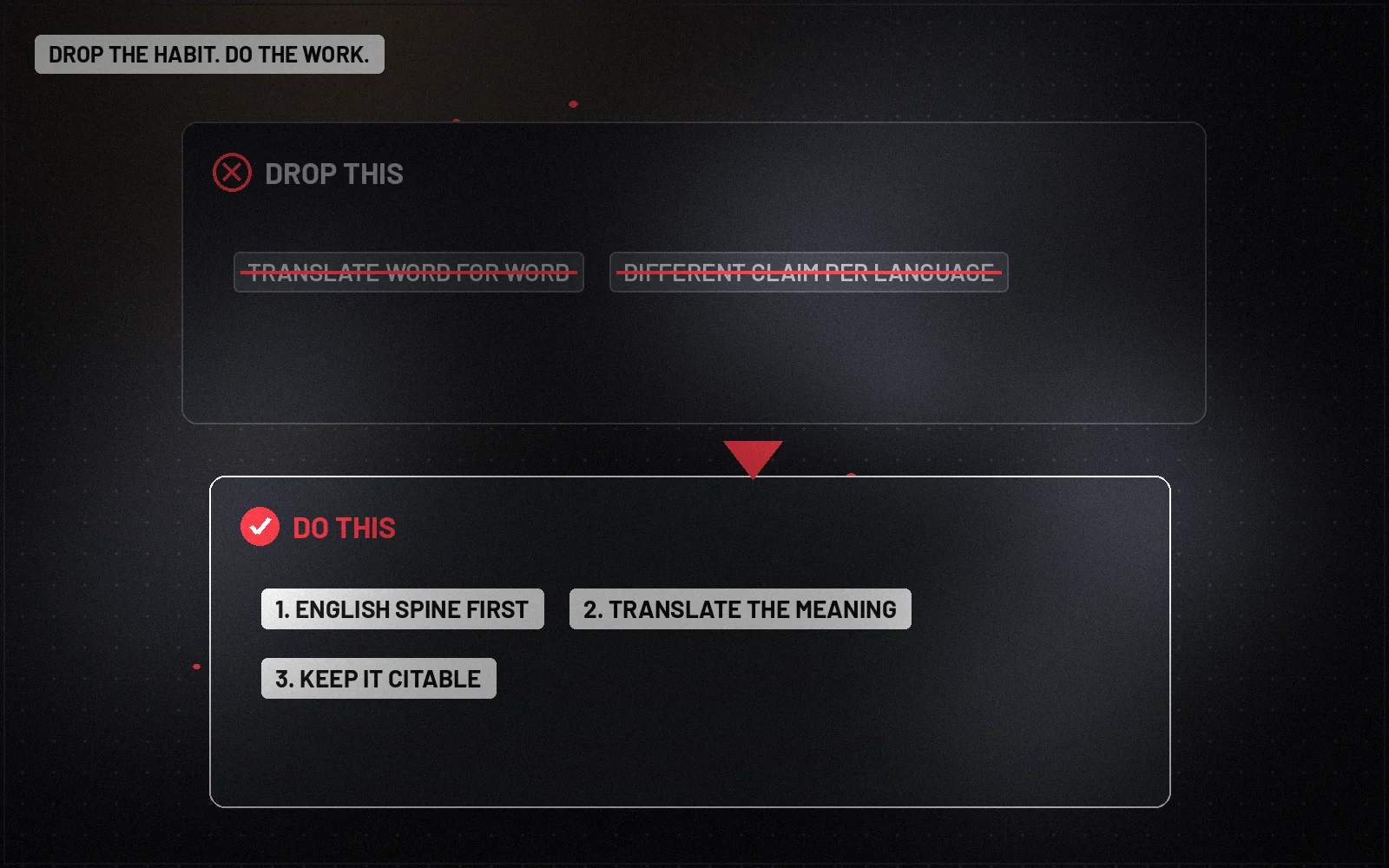
Multilingual GEO for advocacy in APAC still dies when the English master is mush. Translators and answer engines can only carry a claim you actually made. Fix the multilingual GEO English master copy first: write a four-sentence block a machine can quote, lock it, then translate in a set order.
This is the language companion to our multilingual GEO after PR Congress piece. That one argued fragmentation is a language problem too and laid out cite-ready EN–FIL–ID pages. This one is about the English sentence underneath all of them.
Neuwark Communications builds GEO and message systems for advocacy and brand teams across APAC from Manila, with a Singapore account office at Marina Bay Financial Centre Tower 2. Soft path: Services · Contact · Insights.
Why does a mushy English master kill multilingual GEO?
Because translation copies mush faithfully. If your English says “we champion inclusive, people-centred reform across the region”, the Filipino version says the same nothing in Filipino. Now you have seven languages of nothing.
Answer engines have the same problem. They look for a sentence that directly answers the question. If your page never states the answer plainly, they quote someone who did.
The fix is not more languages. It is one clean English spine that every language inherits.
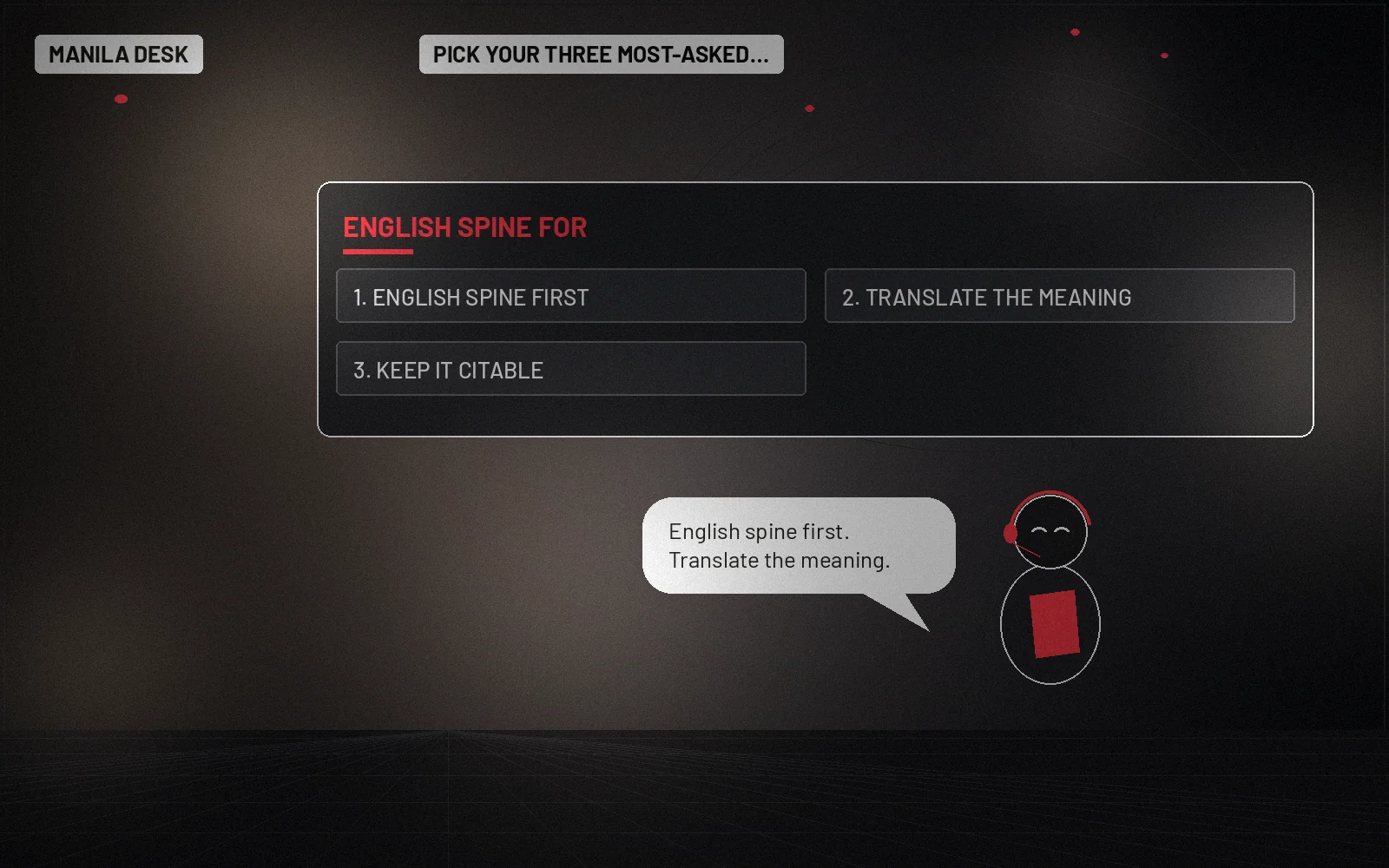
Why do AI Overviews cite someone else?
Usually because the other page answered the question in plain text, near the top, and yours did not.
Google says there are no extra requirements or special optimisations to appear in AI Overviews or AI Mode. The usual SEO basics still apply: the page must be indexed and eligible for a snippet, important content should be in text form, and structured data should match the visible text. Google also says you do not need new machine-readable files or special schema. Source: Google Search Central — AI features and your website.
So the “trick” is boring. Say the answer in words, on the page, where a reader and a crawler can both find it. Common reasons you lose the citation:
- Your answer is inside a PDF, an image, or a video with no transcript.
- Your first paragraph is a mission statement, not an answer.
- Your numbers differ between the English and the translated page.
- The translated page is a machine dump that no native speaker would trust.
What is a cite-ready four-sentence block?
Four sentences, in this order, at the top of any page that answers a real question.
| Sentence | Job | Pattern |
|---|---|---|
| 1. Answer | Answers the question in one line | “[Who] wants [what specific change] because [one reason].” |
| 2. Proof | One checkable fact with its source | “According to [named public source], [one number or fact].” |
| 3. Boundary | Says what you are not claiming | “This does not mean [the thing critics will assume].” |
| 4. Action | Tells the reader what to do | “To support or learn more, [one action].” |
A worked example, for an illustrative coalition position on a transport consultation:
Our coalition wants the city’s bus-fare proposal to keep a concession for students and seniors, because they ride most at off-peak hours. The figures come from the operator’s own published consultation paper, which we link on this page. We are not opposing the fare review as a whole. To add your view, submit through the official consultation form before it closes.
Every sentence survives translation because every sentence has one job. There is nothing to “interpret”.
What are the spine rules?
Lock these before the file goes to any translator or editor.
| Rule | What it means | What it prevents |
|---|---|---|
| One claim set | Every language makes the same claims, no more, no fewer | Local teams “adding colour” that becomes a new promise |
| Numbers lock | Figures, dates, and units are copied exactly, with the same source | A peso figure in English and a rounded one in Filipino |
| Name lock | Laws, agencies, and programmes use their official name in each language | Three names for one bill across three pages |
| Length lock | Translations stay close to the English length. If one grows a lot, check what was added | Padding that buries the answer sentence |
| Back-translate | A second person translates the final version back to English and compares | Meaning drift nobody on the English team can read |
What order should the languages go in?
Not all at once. Go in the order where you have real audiences and real editors.
| Language | When to add it | Why |
|---|---|---|
| English + Filipino | First, together | Your core Philippine audiences search in both. Publish them as a pair |
| Bahasa Indonesia | When the ASEAN theme is real, not decorative | Worth it when Indonesian partners, media, or policy actually care |
| Thai, Vietnamese | On partner routes | Only where a partner organisation will use, share, and correct it |
| Japanese, Korean | Only with a native editor | Machine output in these languages loses trust fast. No editor, no page |
Link each language version to its siblings with hreflang, as Google describes in its guide to localized versions of your pages.
How does this fit your existing systems?
The spine is the top of a stack you may already have.
- Message rules across languages live in multilingual message discipline for APAC. The spine gives that discipline a single source text.
- Question-shaped pages live in GEO FAQ pages for campaign SEO. Each FAQ answer should open with a sentence 1 from your block.
- Shared assets across partners live in a coalition shared creative library. Store the locked spine there, with every approved translation beside it.
Monday field kit
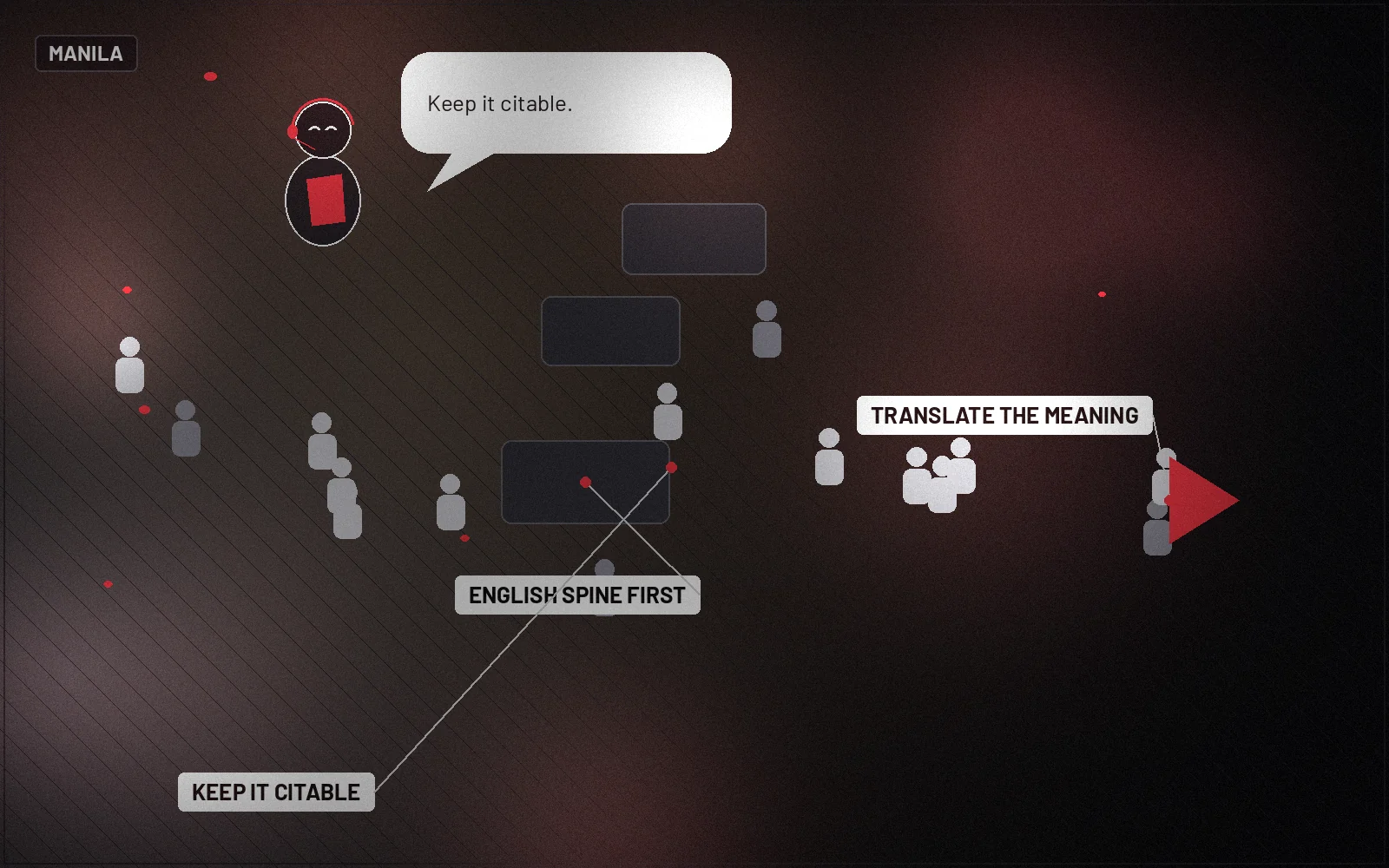
- Pick your three most-asked questions. Write a four-sentence block for each in English.
- Read each block aloud. Cut any sentence that needs a breath in the middle.
- Lock numbers and names in a one-page sheet with sources.
- Send English + Filipino together to a native editor, not a free translator.
- Back-translate the Filipino. Fix any drift before you publish.
- Search your top question a week later. Note who gets cited, and why.
FAQs
What is an English master copy in multilingual GEO?
It is the single approved English text that every translated page inherits. It holds the claims, numbers, and names that must stay identical across languages.
Do we need special schema or AI files to appear in AI Overviews?
Google says no. There are no additional technical requirements beyond normal Search eligibility, and no special schema is needed. Clear text answers and matching structured data still help.
Can we machine-translate the English master?
You can use it as a first draft. Publish only after a native editor has fixed it and a back-translation shows the meaning held.
Which language should come after English?
For Philippine advocacy, Filipino, published alongside English. Add Bahasa Indonesia, Thai, or Vietnamese when there is a real partner or audience, and Japanese or Korean only with a native editor.
What to do next
Write three cite-ready blocks this week and lock the spine before any translation. Then go back to the multilingual GEO after PR Congress playbook for page structure and hreflang. For inbound strategy, see answer-engine GEO for inbound.
If you want a partner to build the spine and the language system, see our Services or talk to us. More field notes in Insights.