
If your Malaysia creator contract only binds the influencer, you didn’t buy compliance—you bought a scapegoat. Malaysia’s Communications and Multimedia Content Forum (CMCF) opened a public consultation on draft influencer and brand-collaboration guidelines covering paid disclosure, unsubstantiated claims, health promotions, AI-generated content, fake engagement, and cultural or religious sensitivity. Consultation closes 30 September 2026—about six days from this 24 September publish. CMCF’s draft framing is explicit: brands and agencies share briefing, approval, and monitoring duty with creators.
This is the proactive influencer advertising compliance Malaysia playbook—systems you install before a complaint, not a holding statement after MCMC is already in the path.
Educational note (YMYL-lite): This article is operator guidance, not legal advice. Draft consultation themes are not final rules. The themes summarised here come from CMCF’s Public Consultation Paper No. 1/2026 (consultation period 17 August–30 September 2026, per the Content Forum’s consultation page) and The Star’s report on the draft. Confirm current CMCF text, the Content Code 2022, and any MCMC or ministry guidance with counsel before you change live campaigns.
Neuwark Communications builds creator-brief and brand-safety systems for Malaysia and SEA advertisers. Soft path: Services · Contact. Related reading: Thailand influencer disclosure compliance OCPB, influencer brief templates progressive PH, brand safety agency Singapore AI likeness ads, and public affairs agency Malaysia AI election ops.
Why “the talent posted it” is a dying defense
For years, brands treated influencers like weather: useful, unpredictable, someone else’s liability. Draft CMCF framing and the wider SEA enforcement mood say otherwise. If you paid, briefed, seeded, or benefited, you own a duty to clear claims, force disclosure, and monitor what went live.
Waiting for “final guideline PDF” to professionalize is how you enter enforcement season with soft process. Use consultation themes as a pre-flight standard now—then tighten when final text lands.
Brand–agency–creator duty split (original ops system)
| Owner | Owns | Must not dump onto others |
|---|---|---|
| Brand | Claims truth, product substantiation, final ban list, kill authority, budget for compliance labor | “Agency should have caught it” when ban list was empty |
| Agency | Brief quality, approval ticket, as-run capture, monitoring shifts, creator coaching | “Talent freestyled” when brief had no banned-claims annex |
| Creator | Honest disclosure, no freestyle banned claims, timely edits on kill notice, keep drafts | Unilateral legal risk for claims the brand wrote |
If any leg is missing, the stool falls on the logo with the deepest pockets—usually yours.
Pre-30 September sprint (six days from 24 Sept)
You do not need the final guideline text to act this week. Run this sprint before the consultation window shuts.
- 1. Inventory all live Malaysia creator campaigns (paid, gifted, affiliate, seeding).
- 2. Score each for disclosure visibility, health/wellness claims, AI content, engagement authenticity, cultural/religious risk.
- 3. Rewrite briefs with mandatory disclosure placement examples and a banned-claim list per SKU category.
- 4. Add monitoring SLAs — first 2 hours after post; 24-hour sweeps for stitches/duets/comment pins.
- 5. Insert kill/edit obligations and fake-engagement warranties into contracts (or side letters for flights already live).
- 6. Submit consultation feedback if you have operational evidence—silence is also a choice. CMCF takes responses through its online feedback form, linked from the consultation page.
Same-week triage board
| Risk score | Action before 30 Sept | Who signs |
|---|---|---|
| Red (health claim or missing disclosure on boosted post) | Pause boost → edit/kill → re-brief | Brand legal + agency lead |
| Amber (gifted/affiliate gray zone) | Written disclosure letter + caption template | Agency + creator |
| Green (clean disclosure, no banned claims) | Keep; archive as-run | Agency monitor |
Disclosure that humans can see
Disclosure is not a last hashtag in a sea of emojis. It is a clear paid-partnership signal in the language your audience actually reads, placed where thumbs do not need to open “more.”
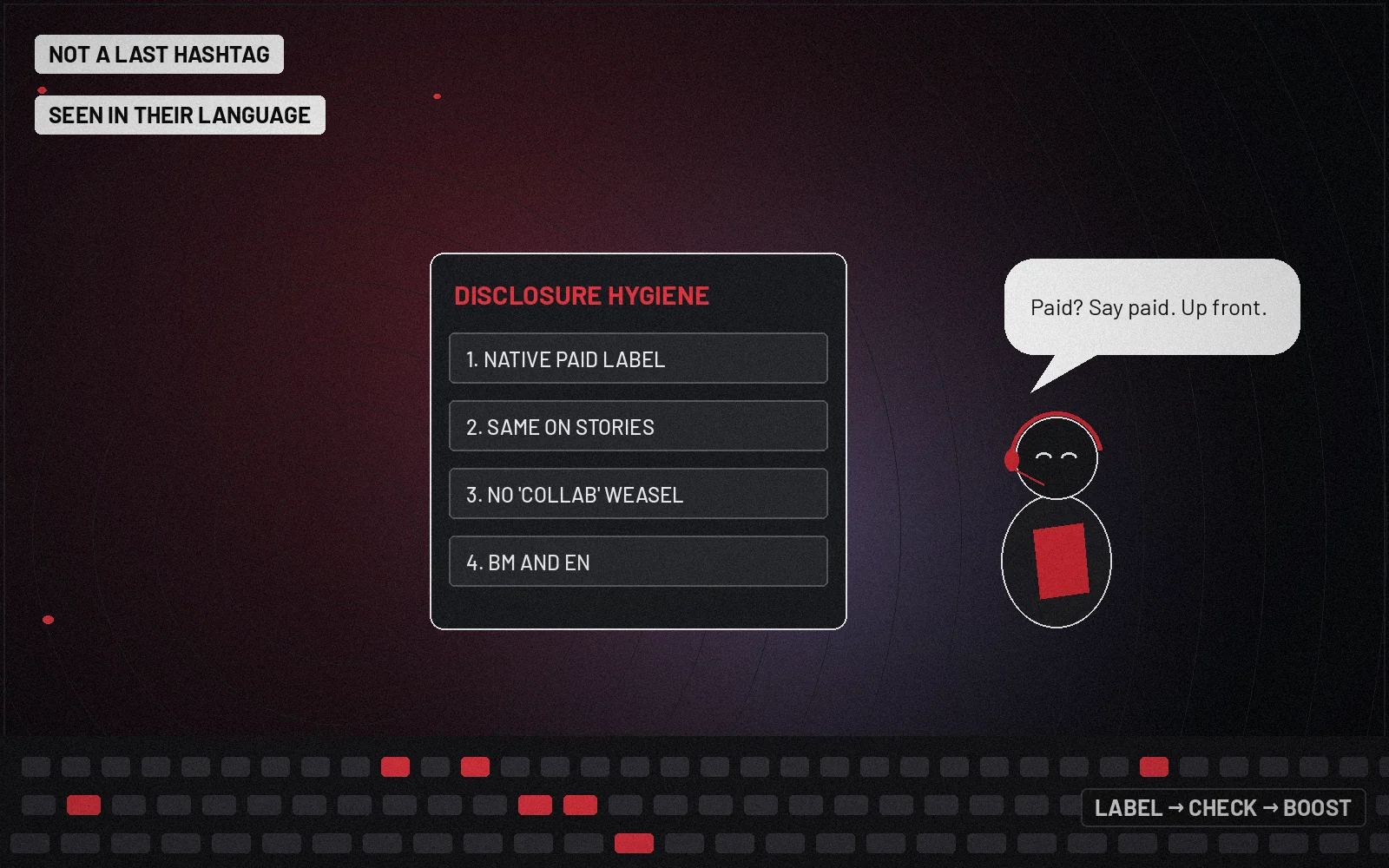
Disclosure hygiene checklist
- Platform-native paid labels where available—plus plain language in the caption
- Same standard on Stories/Reels/TikTok as on feed
- No “collab” weasel words that hide commercial intent
- Agency QA screenshot before boosting organic creator posts into ads
- BM/EN (and other languages you actually run) — not English-only when the audience is not
If your legal team cannot find the disclosure in three seconds, neither can a CMCF-minded reviewer.
Health promotions and unsubstantiated claims
Malaysia’s parallel conversation about misleading online health ads (including MCMC referral pathways) makes health-adjacent creator content double-sensitive. Influencer advertising compliance Malaysia for wellness, supplement, device, and beauty-with-medical-overtone categories needs medical/regulatory affairs in the approval loop—not only lifestyle community managers.
Hard rules for health-adjacent creators
- No disease-cure claims without lawful basis
- No before/after medical theater without clearance
- No “doctors hate this” clickbait
- Substantiation on file before the brief goes to talent
- Separate crisis path if a health claim draws association or regulator heat
Proactive compliance here reduces the odds you need the MCMC crisis brief later. That crisis path is a different intent and a different desk—see our Insights category for regulator-response work; do not pretend one memo covers both clocks.
AI-generated content and fake engagement
Draft themes flag AI-generated content and fake engagement. Treat both as brand-safety issues, not “creative flavor.”
AI
- Disclose when a creator’s face, voice, or demo is synthetic if a reasonable viewer would assume it is real
- Ban AI medical “patients” and fabricated lab scenes
- Keep human approval on the final cut even if AI drafted the caption
Engagement
- Contractually ban bought comments, fake giveaway loops, and pod inflation for campaigns you fund
- Audit suspiciously flat comment quality before you amplify a post into paid
- Agencies that sell “guaranteed engagement packages” without provenance are selling you tomorrow’s scandal
Singapore’s AI-likeness brand-safety work is a useful regional parallel—see Singapore AI likeness ads.
Cultural and religious sensitivity in creator casting
Malaysia’s diversity is not a mood board. Creator jokes, wardrobe, food play, and festival riffs can cross lines fast. Briefs need sensitivity checks for religion, race, and local politics—especially when brands import regional creative from other SEA markets without localization.
Practical checks
- Local reviewer signs sensitivity pass before go-live
- Festival calendars (not only commercial calendars) in the content planner
- No “edgy” religion jokes in branded content—ever
- Recast rather than “fix in post” when a take is wrong
Agency workflow: approval is a timestamp, not a vibe
Build a ticket per deliverable: brief → draft → legal/claims → brand → as-run archive. No WhatsApp-only approvals for health or high-spend flights. Thailand’s OCPB-oriented disclosure discipline is a useful cousin process—see Thailand influencer disclosure. PH progressive brief templates also translate organizationally even when the politics differ—see influencer brief templates.
Monitoring shifts
- T+0 to T+2 hours: catch freestyle claims while edit windows are live
- T+24: sweep duets, stitches, and comment pin changes
- Weekly: portfolio risk score for the brand’s creator roster
Contract clause annex (fight for these)
Paste-ready themes for counsel to localize (not substitute for Malaysian counsel review):
- 1. Disclosure obligations with examples — screenshot of acceptable placements attached as Schedule A.
- 2. Banned claims annex — SKU-specific; updated when claims change; creator acknowledges receipt.
- 3. Kill/edit within agreed hours — a fixed number of hours to edit after written notice, and a shorter window to take down on platform tools the creator controls; set both with counsel.
- 4. Fake engagement warranty — no bought comments/followers/pods for campaign deliverables; audit right.
- 5. AI disclosure rules — synthetic face/voice/demo must be flagged per brief.
- 6. Evidence preservation — keep drafts, approval timestamps, and as-run files for a retention period your counsel sets.
- 7. Joint duty acknowledgment — briefed claims are shared responsibility; not a unilateral dump onto talent.
- 8. Fair pay for compliance labor — revisions for ban-list and disclosure fixes are in-scope, not “friendly favors.”
Creators deserve fair pay for compliance work. Paying for a caption and expecting free legal risk absorption is how relationships and compliance both fail.
ROI / risk table (original element)
A frame for your own operator math—we do not publish market rates here. Fill each line with your finance and counsel numbers.
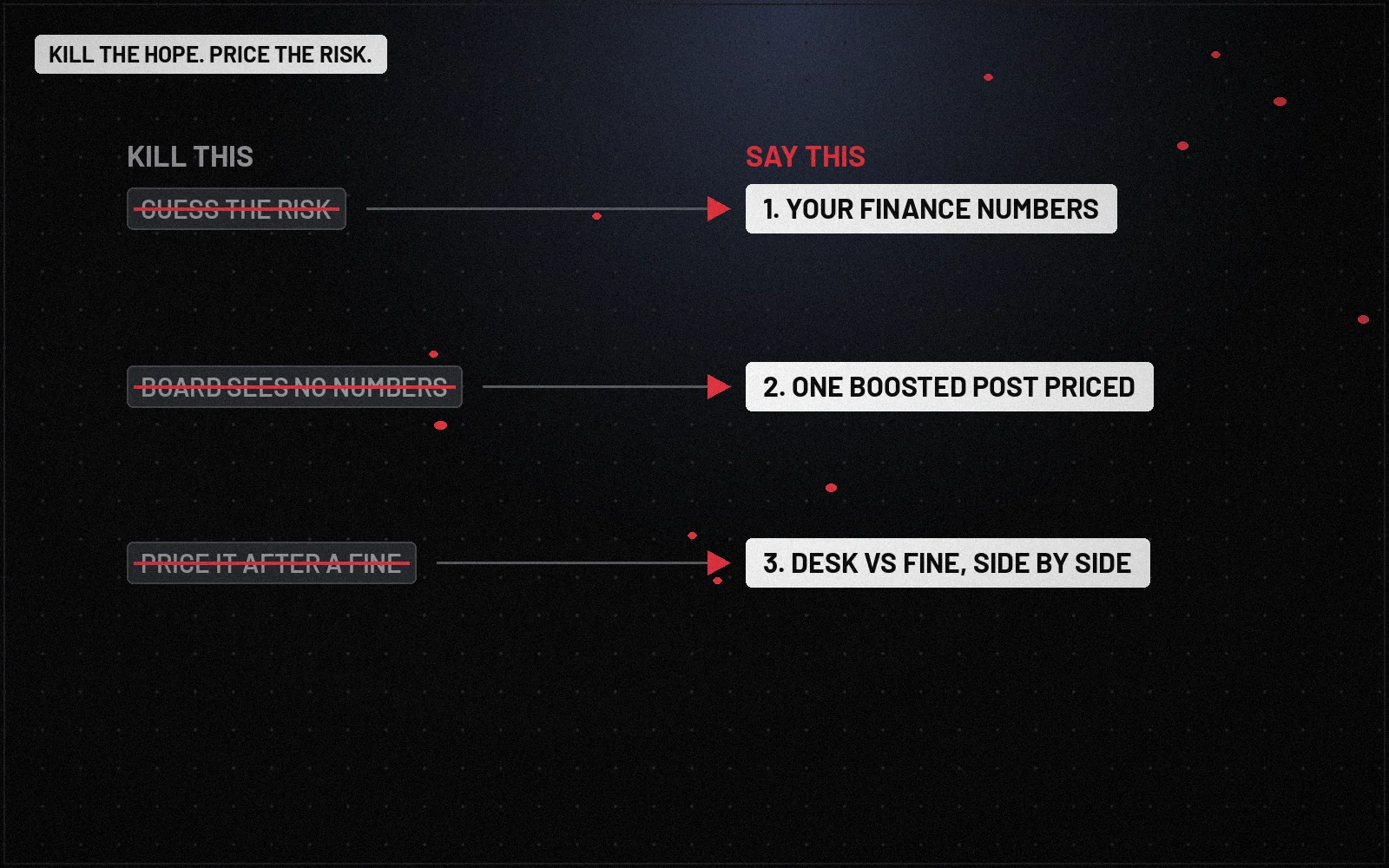
| Cost / risk item | What to price | Tag |
|---|---|---|
| Pause + reshoot one non-compliant boosted creator post | Creative + media waste | Internal finance |
| Legal / regulatory affairs hours for one complaint | External counsel + internal time | Counsel rate card |
| Trust / partnership hit (retailer or platform) | Hard to price; often > media line | Brand risk |
| Same-week brief + monitoring upgrade (templates, 2-hour SLA, as-run archive) | Agency labor for one brand roster | Agency estimate |
| Quarterly creator compliance audit | Audit labor per quarter | Retainer menu |
Read: price one non-compliant boosted post against a quarter of running the duty-split desk, using your own numbers, before you put either in a board deck.
Gifted product and affiliate gray zones
Not every post has an invoice. Gifted SKUs and affiliate links still create commercial intent. Treat gifted seeding as paid collaboration for disclosure purposes when the creator was selected and briefed by the brand. Affiliate programs need the same banned-claim annex; “the network wrote the caption” is not a defense if your landing page repeats the overclaim.
Seeding SOP
- Gift letters state disclosure expectation in writing
- Track SKU serials to creators for recall of bad briefs
- Affiliate caption templates pre-cleared
- Kill path for affiliate creatives that drift
Micro-creators need simpler tools, not lower standards
Micros move culture in Malaysia. They also get the weakest briefs. Give them short checklists, example screenshots of good disclosure, and a WhatsApp approval bot if that is how they work—but do not skip approval. Volume is not an excuse for unsubstantiated health talk.
Training calendar for brand and agency teams
- Monthly 45-minute review of one failed and one clean campaign
- Quarterly contract refresh
- Onboarding module for every new community manager before they touch MY creators
- Shared glossary: disclosure, substantiation, kill, as-run, synthetic media
Influencer advertising compliance Malaysia fails when only legal knows the rules. Install the rules in the people who brief talent at 11 p.m.
How this differs from the MCMC crisis page
| Topic | This CMCF compliance page | MCMC referral crisis page |
|---|---|---|
| Timing | Before / during consultation | When referral or complaint is live |
| Goal | Systems, briefs, contracts | Holding lines, ledgers, regulator cell |
| Tone | Build the desk | Run the hour |
| Offer | Influencer compliance / brand-safety retainer | Crisis + regulator-response retainer |
Run both. Do not pretend one memo covers both clocks. More Malaysia context: Insights and Malaysia AI election PA.
Who this is for / who should skip
For: Brand marketers, in-house legal/comms, and media/influencer agencies running paid creator campaigns in Malaysia (and SEA hubs briefing MY talent) who own briefs, approvals, and kill authority.
Skip / hand to counsel first: Anyone seeking a guarantee that CMCF’s final text will match today’s draft; anyone asking for litigation strategy on an open complaint; medical claims that need regulatory affairs, not a marketing checklist alone.
FAQs
Does consultation closing on 30 September mean the guidelines are law that day?
No. Closing ends the public comment window. Final text, effective dates, and enforcement posture still need official confirmation. CMCF’s consultation paper says the proposals may be revised after public feedback and that responses will help refine the Guidelines before they are finalised. Act on draft themes as pre-flight standards; update when final guidance publishes.
Can we keep “influencer is solely responsible” in the contract?
You can write it. It is a weak defense if you briefed, paid, or boosted the claim. Prefer joint duty language plus a real approval ticket.
We only gift product—do we still need disclosure?
If you selected and briefed the creator for commercial benefit, treat it as paid collaboration for disclosure purposes unless counsel says otherwise for your facts.
Is this the same as Thailand OCPB influencer disclosure?
Related discipline, different regime. Link the Thailand piece for workflow cousins; do not copy-paste Thai labels into Malaysian captions.
Operator checklist before 30 September
- Finish the live-campaign inventory and risk score
- Ship new brief + contract templates with duty split
- Train brand and agency approvers on disclosure and health bans
- Stand up monitoring shifts for top creators
- Submit consultation input if you have field evidence
- Schedule a quarterly compliance audit on creator spend
- Soft-path a creator-brief / brand-safety retainer if your MY creator engine still runs on screenshots and hope: Contact
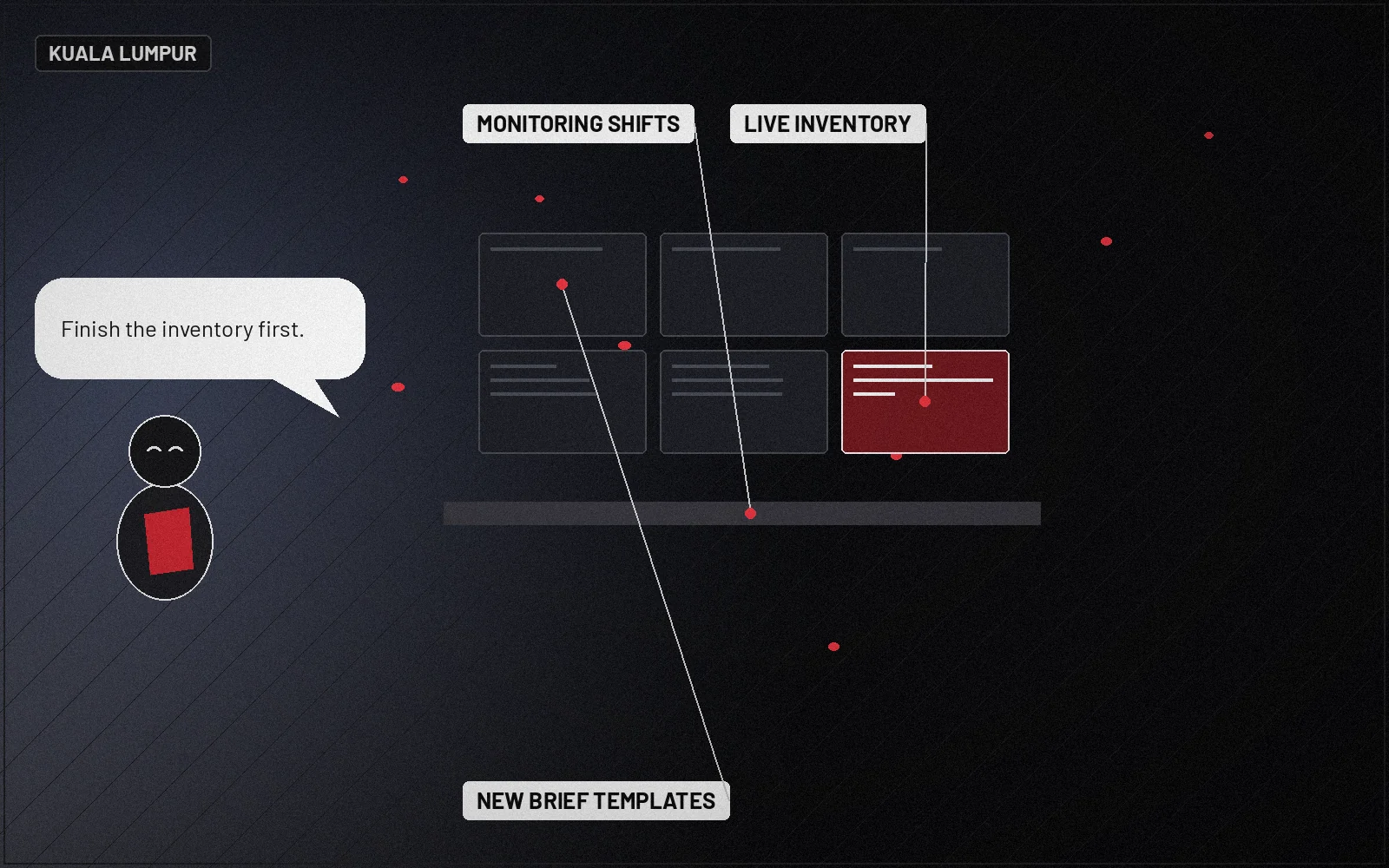
After consultation closes: assume directionally tighter norms
Even if final text shifts, the direction of travel is clearer duties for brands and agencies. Budget for compliance labor in 2026 Q4 creator plans. Cut vanity creator count if you cannot monitor them. Fewer, cleaner partnerships beat a roster you cannot see.
Closing: buy duty, not a scapegoat
CMCF’s consultation end date is a calendar reminder, not the start of ethics. Brands that share duty with agencies and creators will adapt cleanly. Brands that kept “influencer problems” off their own risk register will learn in public. Influencer advertising compliance Malaysia is a product you can install—briefs, approvals, monitoring, kill rights—before someone else installs consequences. Soft path: Services · Contact.