
If your media plan still treats provincial AM/FM like a leftover after Metro Manila digital, you are buying reach the wrong way. Progressive campaigns that win mid-tier races in the Philippines often live or die on whether radio and podcast sponsorships buy persuasion—or just burn airtime. This playbook is for operators who need provincial radio podcast sponsorship ROI without pretending every peso equals a national brand buy.
Neuwark Communications builds media systems for political and advocacy work across the Philippines and APAC. Soft path: Services · Contact. Related reading: paid media portfolio mid-cycle algorithm shocks, brand safety progressive paid media PH APAC, and media mix modeling lite.
Why provincial radio still moves votes when feeds get noisy
Provincial audiences still wake up to radio. Jeepney drivers, market vendors, fisherfolk, and OFW families on morning calls hear AM/FM before they open TikTok. That habit matters when your race is decided in Cebu, Iloilo, Davao, Bicol, or Northern Luzon—not only in Makati boardrooms.
Digital reach is real. It is also fragmented, auction-priced, and easy to fake with vanity metrics. Radio sponsorship, done right, buys habit plus trust. Hosts who have talked to the same province for a decade carry transfer of trust your brand-new page cannot buy overnight.
Podcast host-reads sit between those worlds. A local news or public-affairs podcast may have smaller absolute reach than a primetime FM strip—and denser attention among organizers, teachers, nurses, and young professionals who influence household conversation. Treat podcasts as precision tools, not cheap radio clones.
Do not romanticize either channel. Bad creative on a good station still wastes money. Good creative on a hostile host still fails. ROI starts with fit: geography, daypart, host credibility, and a message your field team can defend in a barangay meeting the next morning.
Define ROI before you ask for a rate card
Most mid-tier campaigns lose money before the buy because nobody defined what “good” means. Write the success metric in one sentence. Examples that work in PH progressive work:
- Increase aided message recall in target provinces by a pre-agreed percentage after two flight weeks
- Drive unique visits to a local landing page or SMS keyword from geo-tagged spots
- Lift volunteer signup rate in the same congressional district as the station footprint
- Move undecided soft supporters one step on a simple tracker after exposure
Vanity listens and “estimated impressions” are not ROI. If your consultant cannot connect the buy to a field or fundraising outcome, renegotiate the brief before you renegotiate the rate.
Roles that must own the buy
- Media buyer / planner: rate negotiation, make-goods, affidavit of performance
- Message lead: script, host-read guardrails, ban list
- Field / organizing lead: which municipalities must hear what, and when
- Finance: payment schedule tied to affidavits, not vibes
- Compliance / legal: election advertising rules, disclosure, and archive of audio
If one person wears all five hats, you will miss a make-good. Mid-tier does not mean understaffed to the point of negligence.
How to read a provincial rate card without getting played
Ask for the full card, not a “special package” slide. You want published rates for spots, sponsorship billboards, live reads, and remotes. Then ask what the real street rate is for political and advocacy clients this quarter. The gap between card and street is where amateurs overpay.
Checklist for rate cards and packages
- Confirm whether quoted rates are net or gross of agency commission
- Separate cost of airtime from cost of production and talent
- Demand daypart detail: morning drive, midday, afternoon, evening, overnight
- Ask for average quarter-hour estimates by daypart if the station tracks them—and treat them as directional, not gospel
- Require a written list of preemptions, religious blocks, and news windows you cannot buy
- Get make-good language in the insertion order before money moves
- Archive the signed IO, scripts, and audio masters with date stamps
Political seasons inflate prices. That is normal. What is not normal is paying primetime rates for overnight ghosts because someone “forgot” to check the log.
Podcast rate cards look different. You may buy CPM, flat episode fees, or host-read packages across a mini-series. Insist on download or unique listener definitions that match the host’s analytics export—not a screenshot of a vanity dashboard. Prefer host-reads over mid-roll banners when persuasion is the job.
Host-reads that persuade versus ads that interrupt
A host-read is not a 30-second spot with a friendly voice. It is the host staking credibility. That means your script must sound like them—or they will either refuse it or deliver it like a hostage reading a ransom note.
Brief the host with three things only: the problem in local language, the proof, and the ask. Cut the slogans that sound like Metro creative agencies. If the host cannot explain your line to their cousin in Capiz, rewrite.
Message testing before you scale the buy
- Run two script variants in a small sample of organizers and soft supporters
- Test for comprehension: can they repeat the claim in their own words?
- Test for backlash: does any phrase sound like an attack on local values or faith communities?
- Record a dry run with the host; listen for hesitation and rewrite
- Keep a kill list of words banned for this market (corruption shorthand that backfires, trauma porn, empty “change” clichés)
Only after a clean dry run should you expand from one station or one podcast to a provincial cluster. Scaling a weak script is how you buy expensive embarrassment.
Build a provincial-first media mix, not a Metro leftover plan
Start with the map of votes and volunteers, not the map of agency convenience. List municipalities by priority. Match stations whose coverage contours actually touch those places. Then add podcasts that those communities already share in group chats.
Metro Manila inventory can wait until provincial spine buys are locked. National vanity buys that never touch your district are ego, not strategy.
A practical weekly operating rhythm
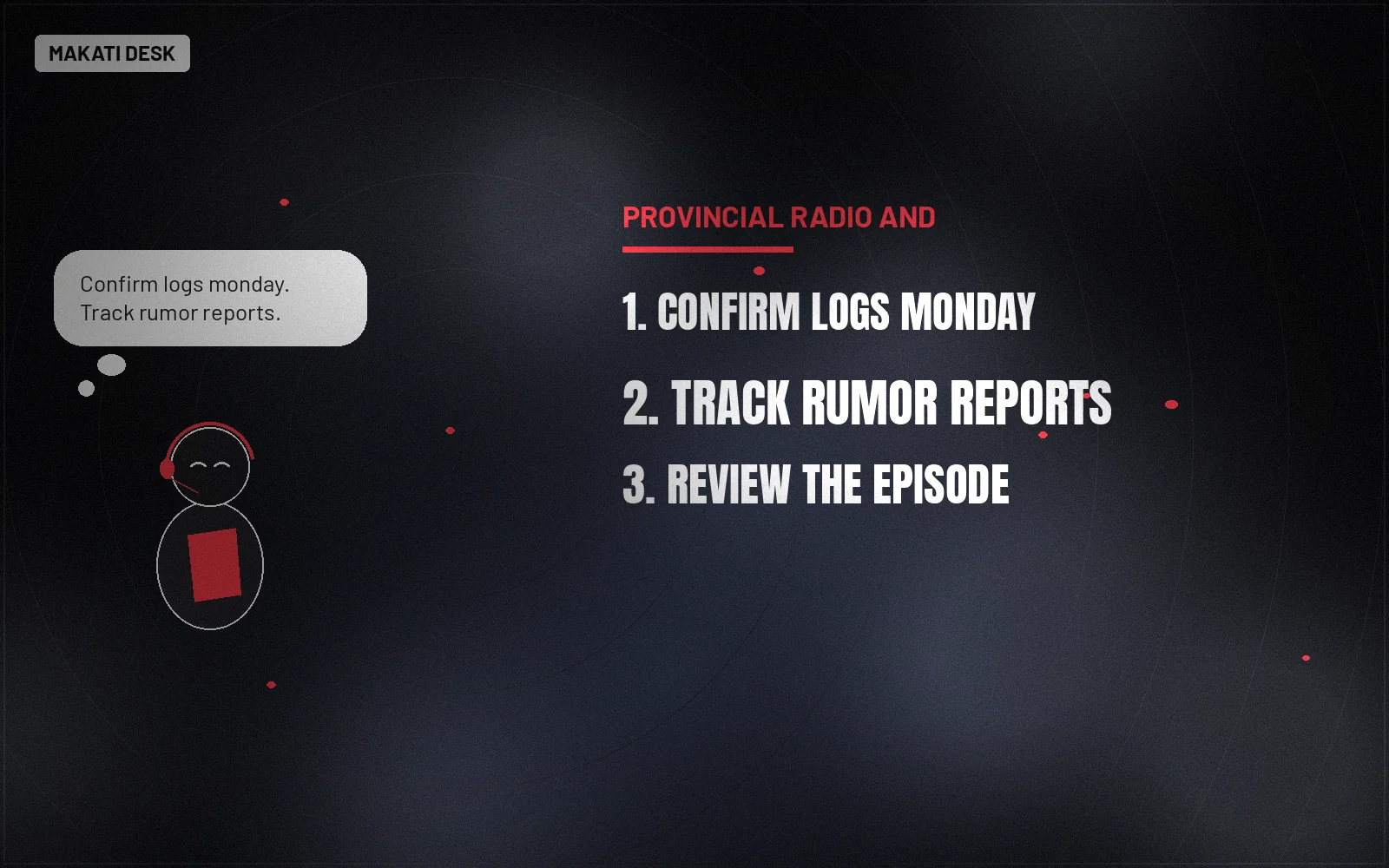
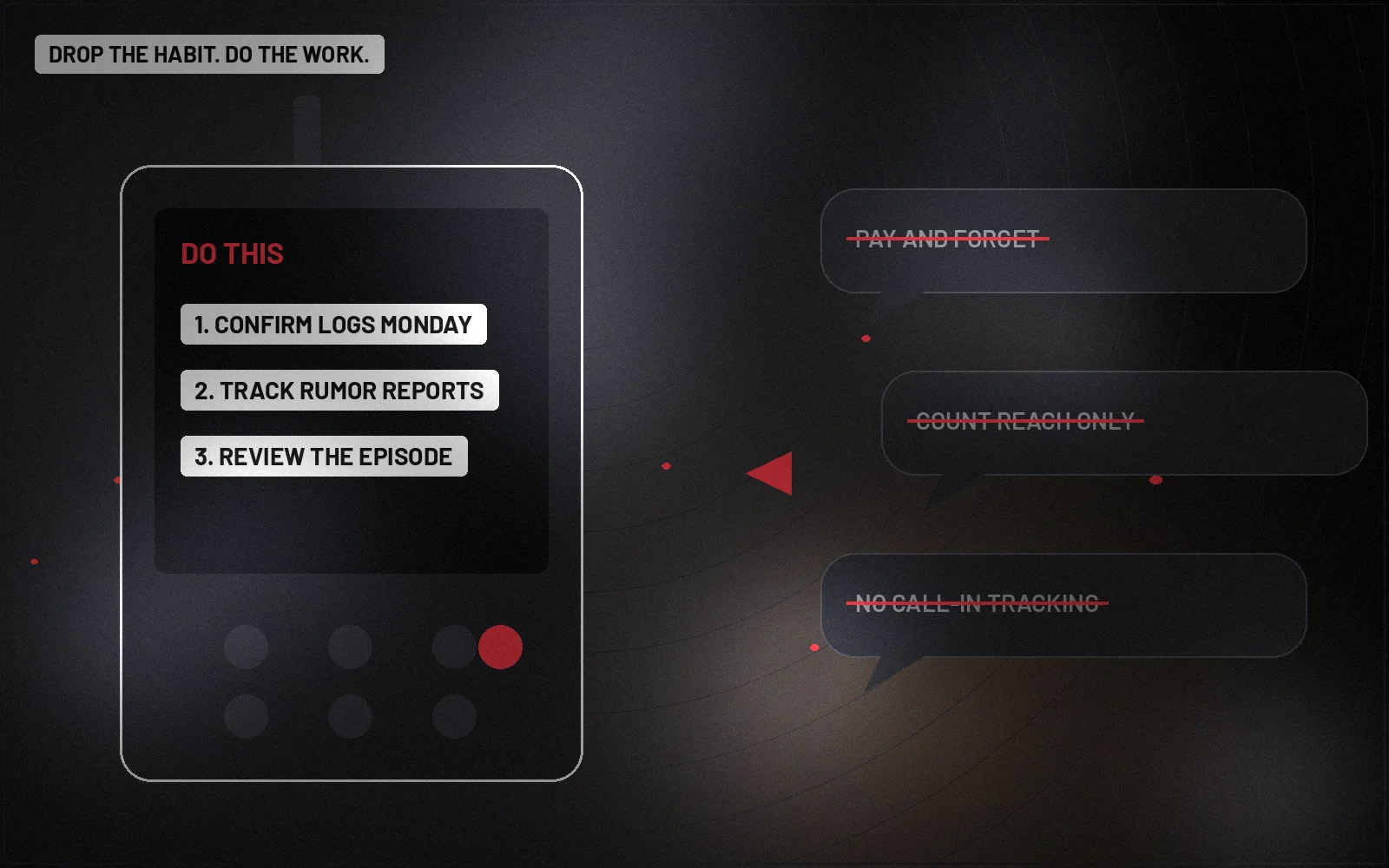
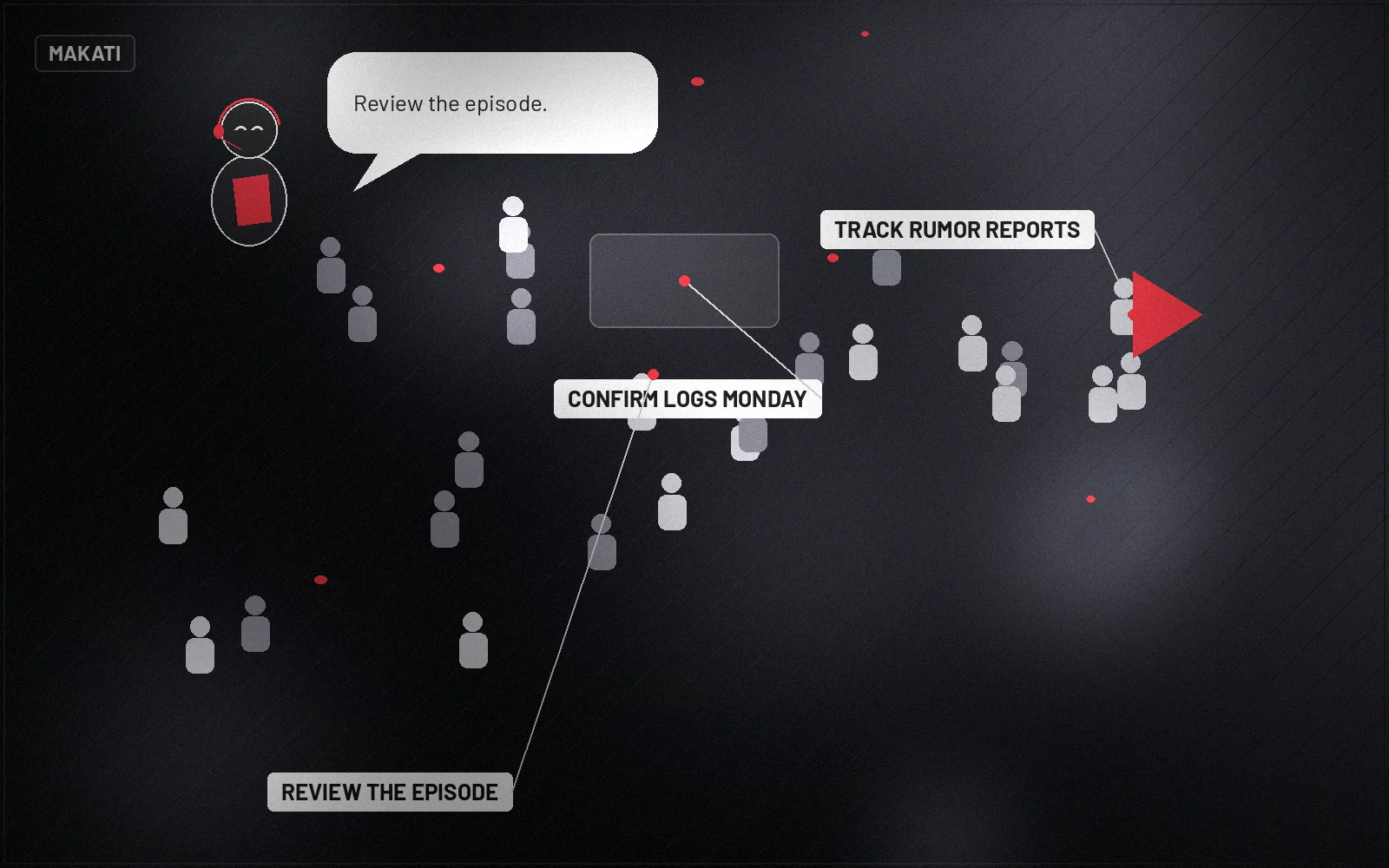
- 1. Monday: confirm logs and upcoming make-goods with station traffic
- 2. Tuesday: field team reports rumor themes from barangays; message lead adjusts next week’s scripts
- 3. Wednesday: review podcast episode analytics and comment sentiment
- 4. Thursday: cut or reallocate underperforming dayparts
- 5. Friday: finance matches invoices to affidavits; flag disputes early
- 6. Weekend: capture listener anecdotes from canvassers—qualitative ROI that numbers miss
This rhythm is boring. Boring wins races. Flashy buys without ops lose them.
Make-goods, affidavits, and the money trail
When a spot does not air as ordered, you do not shrug. You claim the make-good in writing within the window in your IO. Stations that respect professional buyers will fix it. Stations that stall should lose the renewal and the referral.
Keep an audio archive of what aired. If a dispute goes legal or political, “I think it ran” is not evidence. Progressive campaigns that treat media ops like serious finance protect both budget and reputation.
Kill criteria for underperforming sponsorships
- Host openly contradicts your frame on the same show
- Coverage contour does not reach priority municipalities after verification
- Podcast audience skews far outside your persuasion universe with no secondary value
- Make-goods chronically delayed or denied
- Creative fatigue: same read for four weeks with flat field feedback
Killing a buy is not failure. Keeping a bad buy to avoid awkward phone calls is failure.
Podcast sponsorship specifics for PH progressive campaigns
Choose podcasts with clear topical fit: local governance, labor, education, health, climate, or community news. Celebrity gossip pods can deliver reach and still miss your voters. Prefer hosts who already interview organizers or LGU officials without turning every episode into spectacle.
Negotiate for:
- Mid-roll or host-integrated reads, not only pre-roll
- One organic mention in show notes with your tracked link
- Right to approve the final audio before publish
- Clear disclosure language that matches platform and election rules
- A short exclusivity window against direct opponent categories if budget allows
Do not buy “ forever” exclusivity you cannot afford. Buy clarity.
Budget architecture for mid-tier campaigns
A workable mid-tier split often looks like: heavy provincial radio in priority districts, selective podcast host-reads for opinion leaders, and digital retargeting that catches people who already heard the radio frame. Exact percentages depend on your race. The principle does not: spine first, amplifiers second.
Protect a testing slice—often 10–15% of the radio/podcast line—for experiments that can fail without collapsing the plan. Protect a contingency slice for make-goods disputes and emergency message shifts after a local crisis.
If you need help building that architecture without agency theater, start a conversation via Contact. Explore Services for how Neuwark scopes paid media and message systems for progressive and public-interest clients.
Soft CTA and next step
Provincial radio and podcast sponsorship ROI is not a mystery metric. It is fit, message discipline, written make-goods, and weekly ops. Buy the signal people already trust. Test before you scale. Kill what does not work. That is how mid-tier progressive campaigns in the Philippines stretch media budgets without surrendering the airwaves to whoever shouts loudest in Metro feeds.