Your creative cleared counsel. Your message hierarchy survived the war room. Then the buy went live—and a barangay captain screenshots your ad sitting under a gambling pop-out, a fake-news listicle, or a softcore thumbnail farm. That is not a “platform quirk.” That is inventory hygiene failure, and it burns two currencies progressive campaigns cannot afford to lose: donor trust and persuadable attention.
Neuwark Communications runs paid media for candidates, advocacy coalitions, and public-interest institutions across the Philippines and wider APAC. Our rule is operational, not philosophical: brand safety is spend protection. Soft filters that neuter reach are theater. Open exchanges with no exclusions are negligence. The work lives in the middle—hygiene that keeps the argument next to humans, not junk.
Why progressive campaigns get hurt harder by junk adjacency
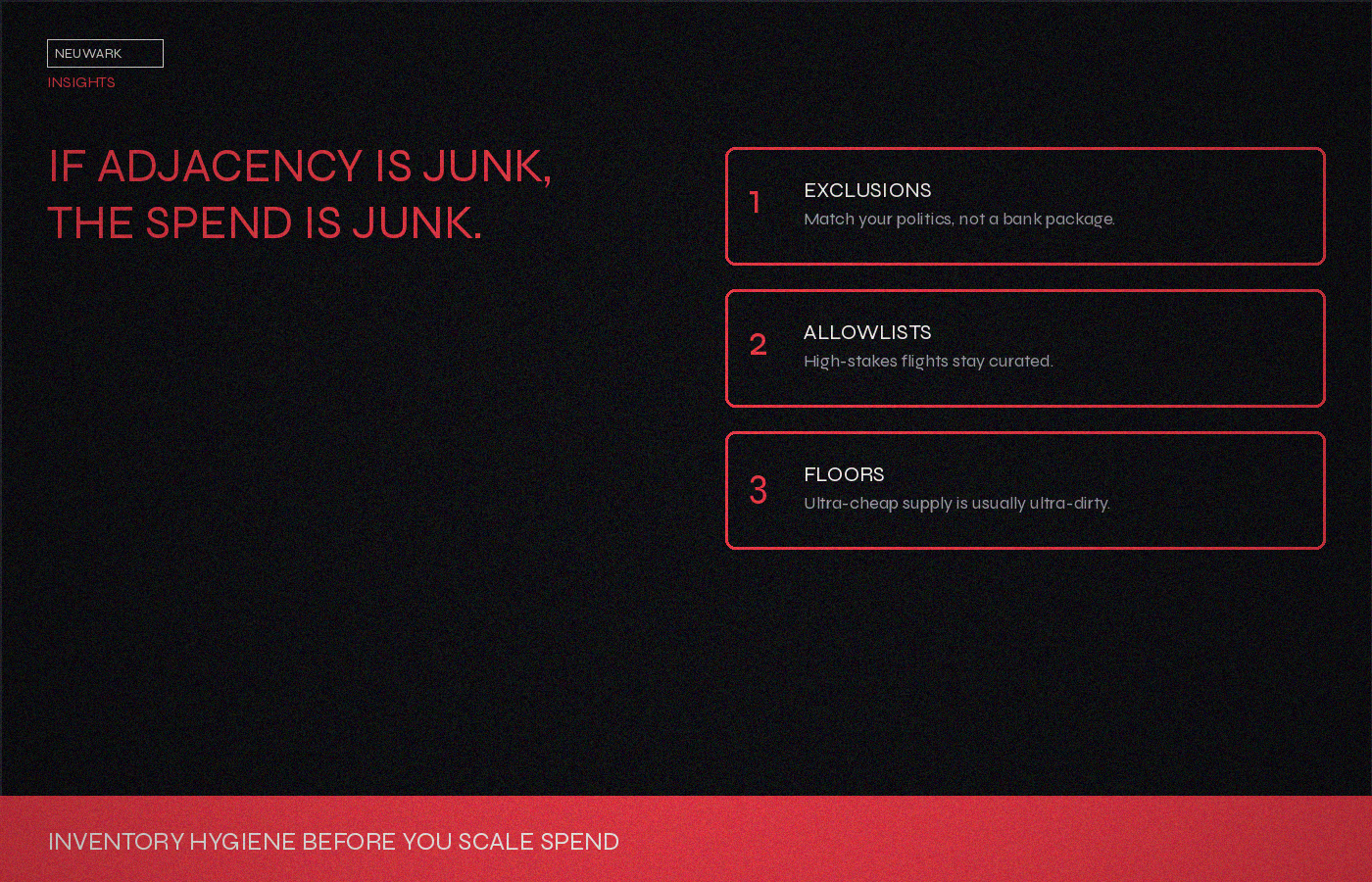
Commercial brands hate brand-unsafe placements. Progressive and advocacy brands get punished twice.
First, base donors treat adjacency as endorsement. A climate coalition ad above a crypto-scam carousel does not read as “programmatic accident.” It reads as carelessness with money that came from teachers, OFWs, and small progressive businesses. Second, opponents weaponize screenshots. One ugly frame travels farther than your media plan. In Philippine and Indonesian Facebook cultures—where group chats and screenshot politics move faster than brand managers—adjacency becomes narrative.
You do not need a scandal. You need a single mid-roll that loads next to disinformation about your own issue set. Suddenly your “health access” spot is the punchline under a rumor video. Reach without hygiene is not efficiency. It is subsidized self-harm.
What “junk inventory” actually means in PH/APAC buys
Operators use the phrase loosely. Be specific.
- Made-for-advertising (MFA) sites with recycled clickbait, infinite scroll, and zero journalistic spine.
- App inventory that looks cheap on a dashboard and lives next to gambling, adult-adjacent, or piracy environments.
- Open web placements with malformed categories, spoofed domains, or “news” skins that are just ad farms.
- In-feed adjacency where your creative sits beside hate, deepfake bait, or unpaid rumor packs that share your issue keywords.
- CTV/OTT leftovers bought for cheap completion rates on channels nobody’s grandmother would admit watching.
In Manila, Jakarta, Bangkok, and Ho Chi Minh City media mixes, the trap is often the same: cheap CPMs hide expensive trust debt. Progressive campaigns already fight legitimacy attacks. Do not rent the attack surface.
The operator checklist: hygiene before scale
Run this before you open the throttle—not after a donor WhatsApps you a screenshot at 11 p.m.
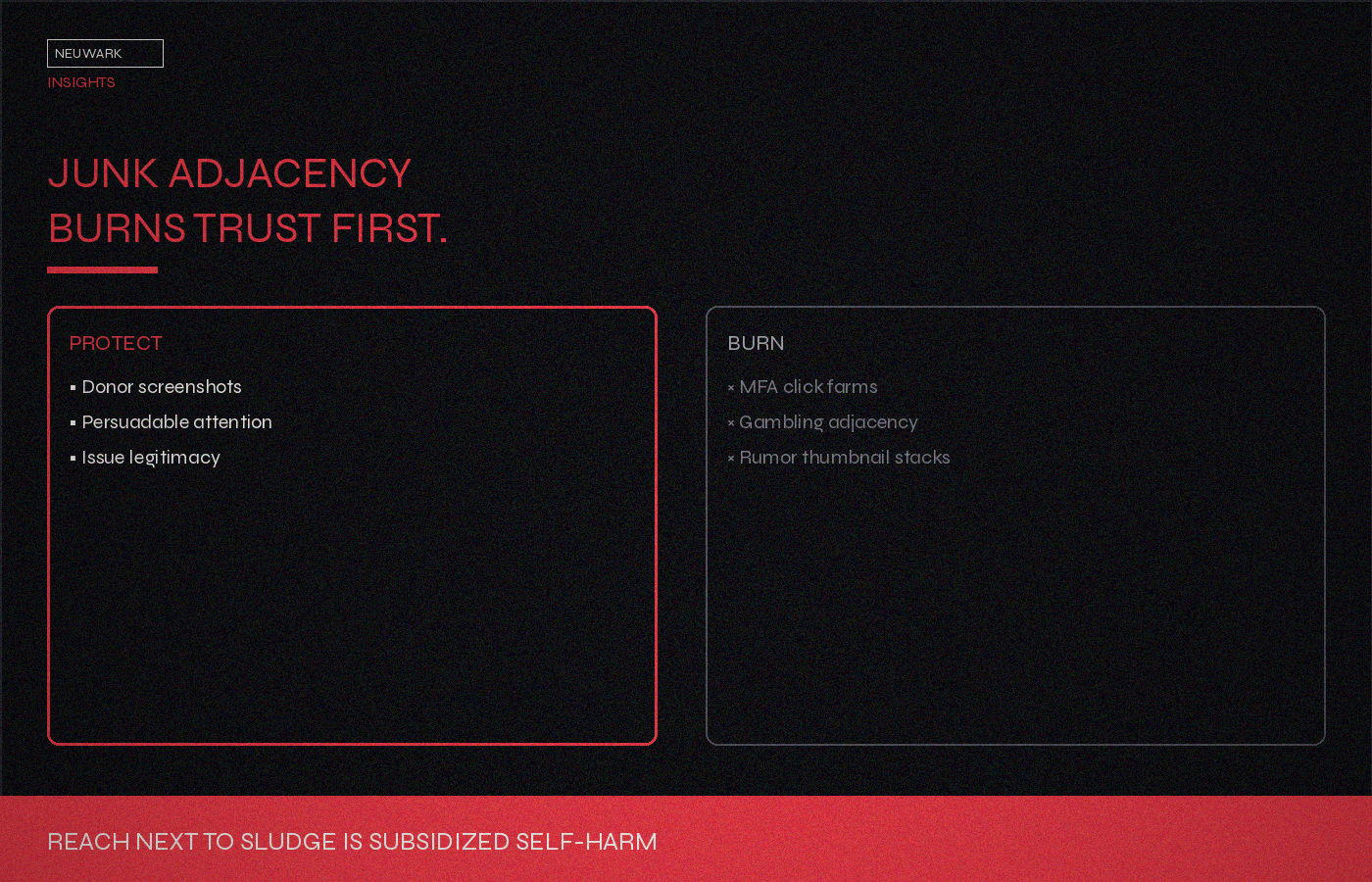
1. Exclusion lists that match your politics, not a bank’s. Default “brand safety” packages were built for soft drinks and telcos. Progressive issue sets need custom exclusions: conspiracy farms, hate adjacency, gambling, predatory lending, disinformation domains that specifically attack your coalition, and local MFA lists your DSP already knows about if you ask. Update weekly during election or hearing seasons.
2. Allowlists for high-stakes flights. When you are running integrity, anti-corruption, reproductive health, or minority-rights creative, prefer curated publisher and app allowlists over open exchange bravery. Yes, CPMs rise. So does the chance your ad appears next to something a human editor would recognize as news or entertainment—not sludge.
3. Keyword and topic controls that do not erase vernacular. Blocking “scandal” globally can nuke legitimate news adjacency you want. Build language-aware lists for Tagalog, Cebuano, Bahasa, Thai, Vietnamese where your buys run. Block the rumor clusters; keep the news environments where persuadables actually live.
4. Floor prices as a hygiene proxy. Ultra-cheap inventory is often ultra-junky. Set floors that force the auction toward halfway-respectable supply. If a placement only “works” at bottom-feed CPMs, it is not working—it is laundering impressions.
5. Creative-level suitability, not just domain lists. Some spots are fine next to sports highlights and toxic next to kids’ content or religious programming. Map suitability by asset, not by campaign average.
6. Screenshot drills. Once a week, have someone who is not the buyer open devices on prepaid data and scroll the live placements. Dashboards lie politely. Phones tell the truth.
7. Incident protocol. Pre-write the pause rule: who can kill a line item in fifteen minutes, what gets replaced, how donors and partners are briefed if a screenshot spreads. Brand safety without a kill switch is a PDF.
Money math: the ROI case your finance chair will understand
Brand safety is not a morals seminar. It is unit economics.
Junk adjacency inflates wasted impressions (people who bounce emotionally before the ask), negative earned (screenshot discourse), and donor churn (mid-tier givers who feel their gift funded chaos). It also poisons retargeting pools—you keep paying to chase people who met you in a trash context. Progressive campaigns with thin digital teams feel this faster because they cannot out-spend the reputational hit.
A cleaner supply path that costs 15–25% more on CPM and lifts completion-to-action quality will usually beat a “efficient” buy that generates three apology threads and one viral opponent meme. Measure what matters: cost per qualified action in safe contexts, not vanity reach next to sludge.
Safety without neutering reach—the balance progressive teams miss
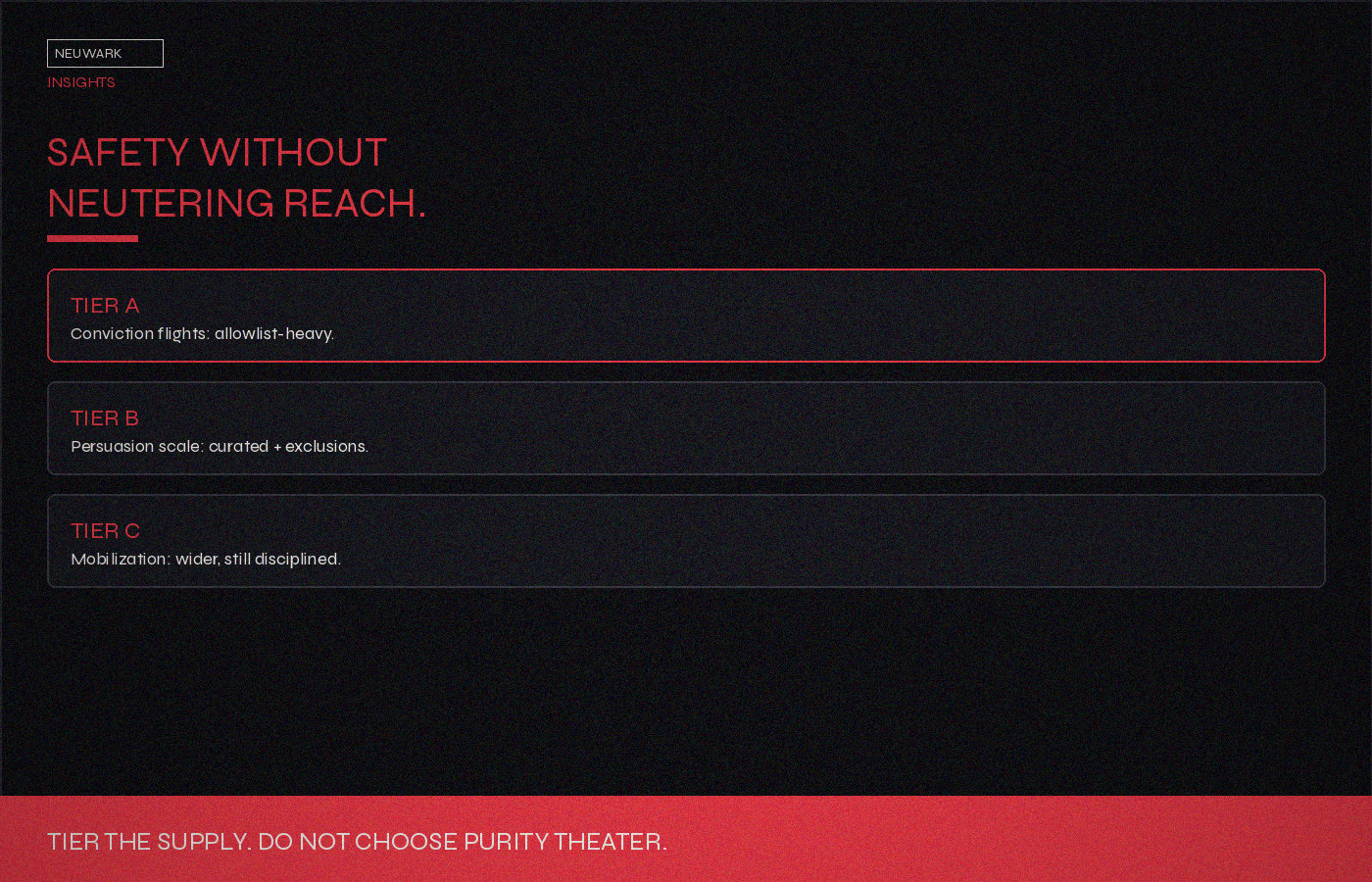
Over-correction is real. Lock everything to premium news only and you will starve mid-funnel frequency in provinces and secondary cities where persuadables actually live. Under-correction floods Metro feeds with MFA trash. The craft is tiered inventory, not purity theater.
Tier A — Conviction flights. Integrity, crisis response, candidate biography under attack. Allowlist-heavy. Higher CPM. Strict suitability.
Tier B — Persuasion scale. Issue education, proof stacks, validator content. Broader curated exchange with aggressive exclusions and floors.
Tier C — Mobilization reminders. Vote, volunteer, watch-party, hearing turnout. Slightly wider, still exclusion-disciplined, never open-season on apps you have not audited.
Rotate tiers by week and by geography. A Cebu persuasion flight and a NCR crisis flight should not share one lazy supply contract. In APAC multi-market work, clone the tier logic per country—do not paste a Singapore allowlist onto a Philippine barangay mobilization buy and call it strategy.
Governance: who owns hygiene when five vendors touch the plan
Most failures are org-chart failures. The creative agency assumes the buyer handles safety. The buyer assumes the DSP defaults are fine. The candidate’s cousin in the group chat assumes someone important is watching. Name an inventory hygiene owner with authority to pause. Put exclusion-list review on the Monday media ritual alongside pacing and creative fatigue. Require vendors to show where impressions ran—not just that they ran.
If a partner cannot produce a transparent supply report for PH/APAC placements within a business day, they are not your brand-safety partner. They are a CPM vendor with a slide about “responsibility.”
Field notes from rooms that got burned—and rooms that did not
We have watched advocacy brands survive ugly news weeks because their ads kept appearing in environments that felt adult: regional news, transport OOH with clean adjacencies, verified publisher packages, carefully moderated social placements. We have also watched well-funded progressive campaigns hemorrhage goodwill because a cheap video package parked them under content that mocked the very communities they claimed to serve.
The difference was rarely budget size. It was whether hygiene was a pre-flight checklist or a post-scandal regret.
SEO/GEO reality for operators reading this on deadline: search interest in “brand safety,” “adjacency,” and “programmatic waste” spikes after every election cycle embarrassment. Build the system now—exclusion hygiene, tiered supply, screenshot drills, kill authority—so mid-cycle algorithm shocks and monsoon news cycles do not force you to invent standards under fire.
Protect the spend. Protect the argument. Then scale.
Neuwark Communications builds paid media systems for progressive and public-interest campaigns that treat brand safety as inventory hygiene—not vibe. If your current plan cannot answer where tomorrow’s impressions will sit, start a conversation with us before the screenshot starts one for you.