

Thailand’s competition regulator has handed Shopee’s local unit the country’s first e-marketplace unfair-trade fine—centered on automatically enrolling sellers into paid promotions without prior consent. That is not only a platform story. It is an e-marketplace reputation risk Thailand story for every brand and seller whose trust rides on the same checkout cart.
When the marketplace becomes the headline, your brand still needs a voice that does not sound like the platform’s lawyer. Neuwark Communications builds marketplace reputation monitoring and seller-comms retainers for TH and SEA ecommerce brands that cannot afford to ghost their own partners mid-scandal.
Why Thailand’s first e-marketplace fine is a brand story
Shoppers do not always separate “platform behavior” from “brand on that platform.” Sellers do not either. When automatic paid-promo enrollment becomes a regulator finding, three trust paths light up at once: sellers feel coerced, shoppers wonder who else is gaming the feed, and brand teams get pulled into comment threads they did not create.
Commercial spillover is real:
- Seller trust — Partners ask whether your brand knew, benefited, or will keep pouring budget into a contested mechanic.
- Shopper trust — “Was that ranking bought?” becomes a reputation question, not only a media question.
- Partner and investor questions — SEA ecommerce exposure is now a governance story, not only a GMV story.
This is cousin work to paid-media brand safety and to mid-cycle platform shocks covered in algorithm-shock portfolio discipline. The difference: here the platform itself is the protagonist of the risk narrative.
Treat the fine as a scenario template, not a one-brand scandal. The next finding could land on a different marketplace, a different mechanic, or a different market. Brands that wait for “our platform” to be named are practicing optimism, not risk management.
Seller trust collapse paths: silent enrollment, promo coercion, review pile-ons
Silent enrollment into paid promos is the spark. Coercion narratives are the fire. Review pile-ons and seller group chats are the accelerant. Once sellers decide the marketplace “taxes” them without consent, they will also scrutinize brand-led campaigns that look like the same pattern—mandatory co-funding, opaque boost fees, ranking that feels purchased.
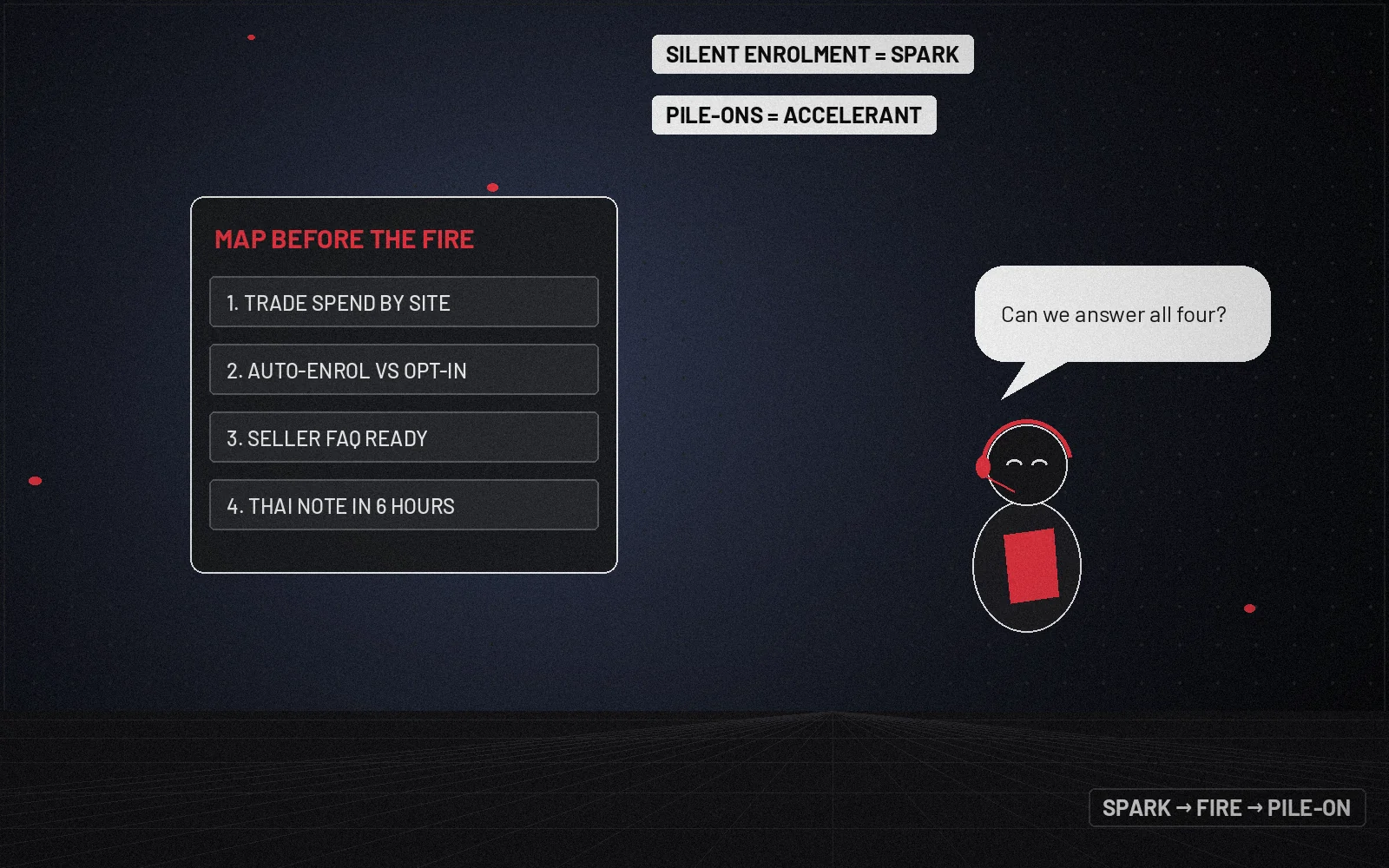
Brand teams should map:
- Where your trade spend sits on each marketplace.
- Which promos auto-enroll partners vs opt-in.
- What your seller FAQ says when the platform is the villain of the week.
- Who owns the Thai-language note to key sellers within six hours.
If you cannot answer those four, you are improvising under a regulator spotlight. Improvisation is how brands accidentally defend the platform they meant to distance from—or trash a commercial partner they still need next quarter.
Reputation monitor: what to watch across TH/SEA marketplaces
Build a lightweight monitor that is not vanity listening:
- Regulator and competition-authority alerts in TH, ID, MY, VN, SG.
- Seller-community sentiment (forums, Line/WhatsApp chatter you can ethically observe, trade association notes).
- Ranking and promo mechanic changes that smell like forced monetization.
- Brand-name co-occurrence with “fine,” “forced,” “auto enroll,” “unfair.”
Assign an owner. Weekly is enough in calm periods; daily when a marketplace is on the front page. Pair monitoring with a decision tree: watch, brief sellers, pause paid placement, or issue a brand statement. Monitoring without decisions is a dashboard hobby.
Keep the monitor next to your broader Insights crisis and brand-safety playbooks so marketplace drama does not get siloed inside performance marketing.
Also watch creative and landing pages that imply platform endorsement your brand cannot defend. When the marketplace is the story, every “official partner” badge becomes a question.
Comms that separate your brand from the platform’s defense
Your job is not to litigate the fine. Your job is to protect brand trust with sellers and shoppers.
Pre-write:
- Seller note — Empathy for consent concerns; clarity on what your brand controls; path to ask questions.
- Shopper FAQ — What the news means (and does not mean) for product quality and fulfillment you own.
- Internal brief — Sales and community teams get one spine, not freestyle takes.
- Escalation rule — When to pause boost spend on that marketplace without sounding like a breakup letter.
Use the same holding discipline you would for any reputation event—see crisis holding-statement templates. Short, factual, human. No cosplay as the platform’s defense counsel. No pile-on that burns a channel you still need.
Language tests: if a seller screenshot of your note would look fair in a trade group chat, ship it. If it would look like HQ protecting HQ, rewrite. SEA seller networks forward faster than your legal review cycle.
Paid media + PDP hygiene when the marketplace is the headline
When the platform is radioactive for a news cycle, review:
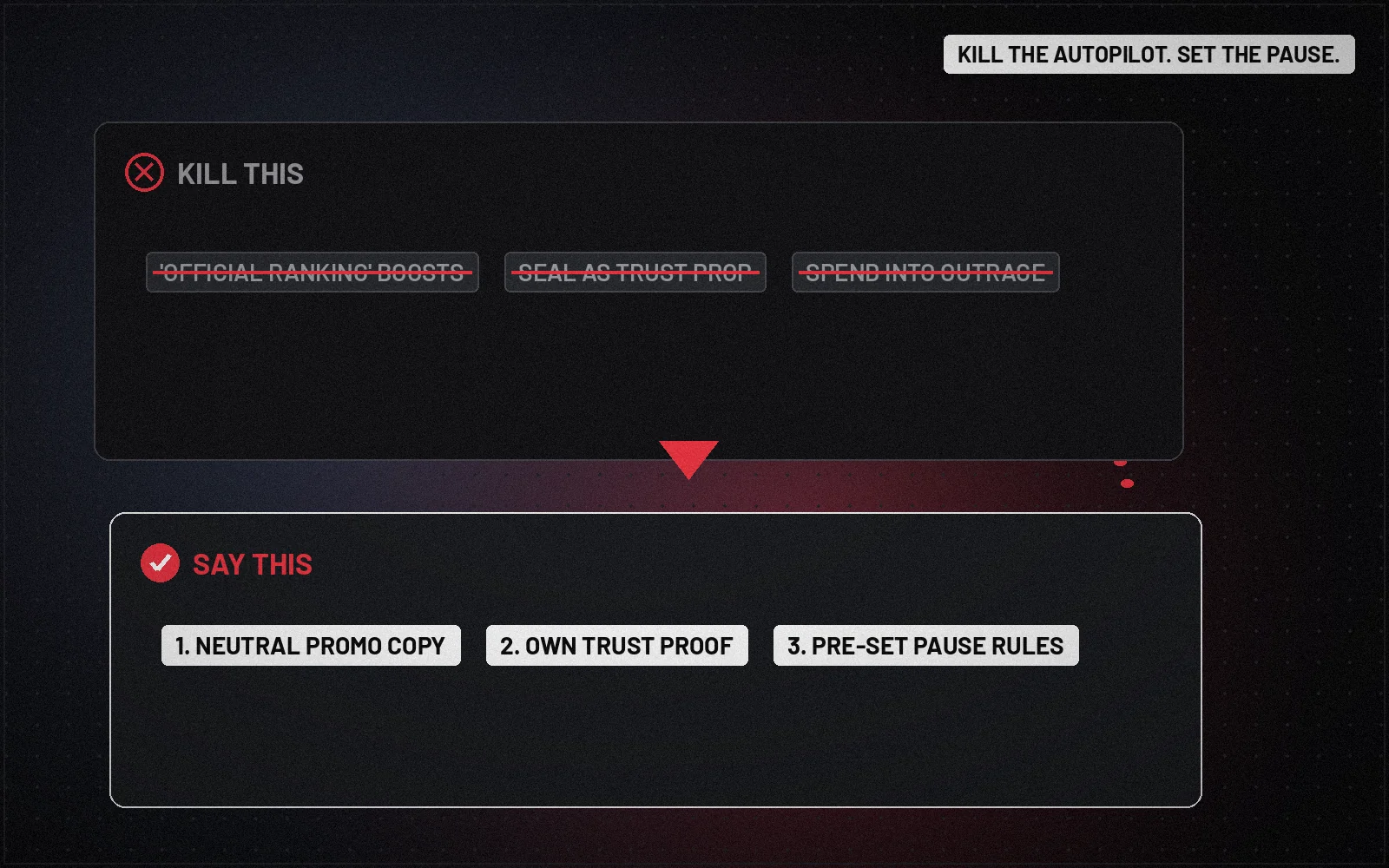
- Boost and co-funded promo copy that implies “official ranking.”
- PDPs that lean on marketplace seals as trust props.
- Influencer scripts that treat the platform as the hero of your brand story.
- Retargeting that keeps spending into outrage adjacent queries.
This is where brand-safety for progressive paid media and marketplace reputation meet. You may not leave the platform. You should not sleepwalk through the week as if nothing changed. Hygiene is not a boycott. Hygiene is adult spend control.
Document the pause criteria in advance: regulator finding + seller revolt threshold + brand-name sentiment spike. Arguments at 11 p.m. invent softer criteria. Written criteria keep finance and brand on the same clock.
Retainer scope: monitoring + seller scripts + escalation
A marketplace reputation retainer should include: monitoring across priority SEA platforms, Thai (and other local-language) seller script packs, escalation trees for pause/brief/statement, quarterly tabletop on “platform is the story,” and on-call hours when a fine or raid hits the feed.
Ignoring it means you will borrow the platform’s PR by accident—or vanish while sellers invent your position for you. Either failure costs more than a retainer.
Operator checklist: 10 working days
Days 1–2 — Map trade spend, auto-enroll promos, and top seller cohorts on each priority marketplace.
Days 3–5 — Draft seller note, shopper FAQ, and internal brief; translate with [message discipline]({MULTI}), not freestyle.
Days 6–7 — Wire monitoring alerts and escalation owners; define pause criteria for boost spend.
Days 8–10 — Tabletop “marketplace fined”; time seller outreach; fix gaps in writing.
Soft CTA
If your only plan for marketplace drama is “wait for platform PR,” you are outsourcing your brand voice. Neuwark builds marketplace reputation monitoring and seller-comms retainers for TH/SEA ecommerce brands. See services or contact us.
When the platform gets fined, your brand still needs a voice that doesn’t sound like the platform’s lawyer.
Field notes from SEA marketplace wars rooms
Brand teams that weather marketplace scandals well share habits. They keep a living map of which sellers drive revenue on each platform. They know which promotions are opt-in versus auto-enroll. They have a Thai-language seller note that can ship the same day without sounding like a translation of a New York apology. They separate “we are reviewing our media plan” from “we are condemning our channel partner” unless facts force the latter.
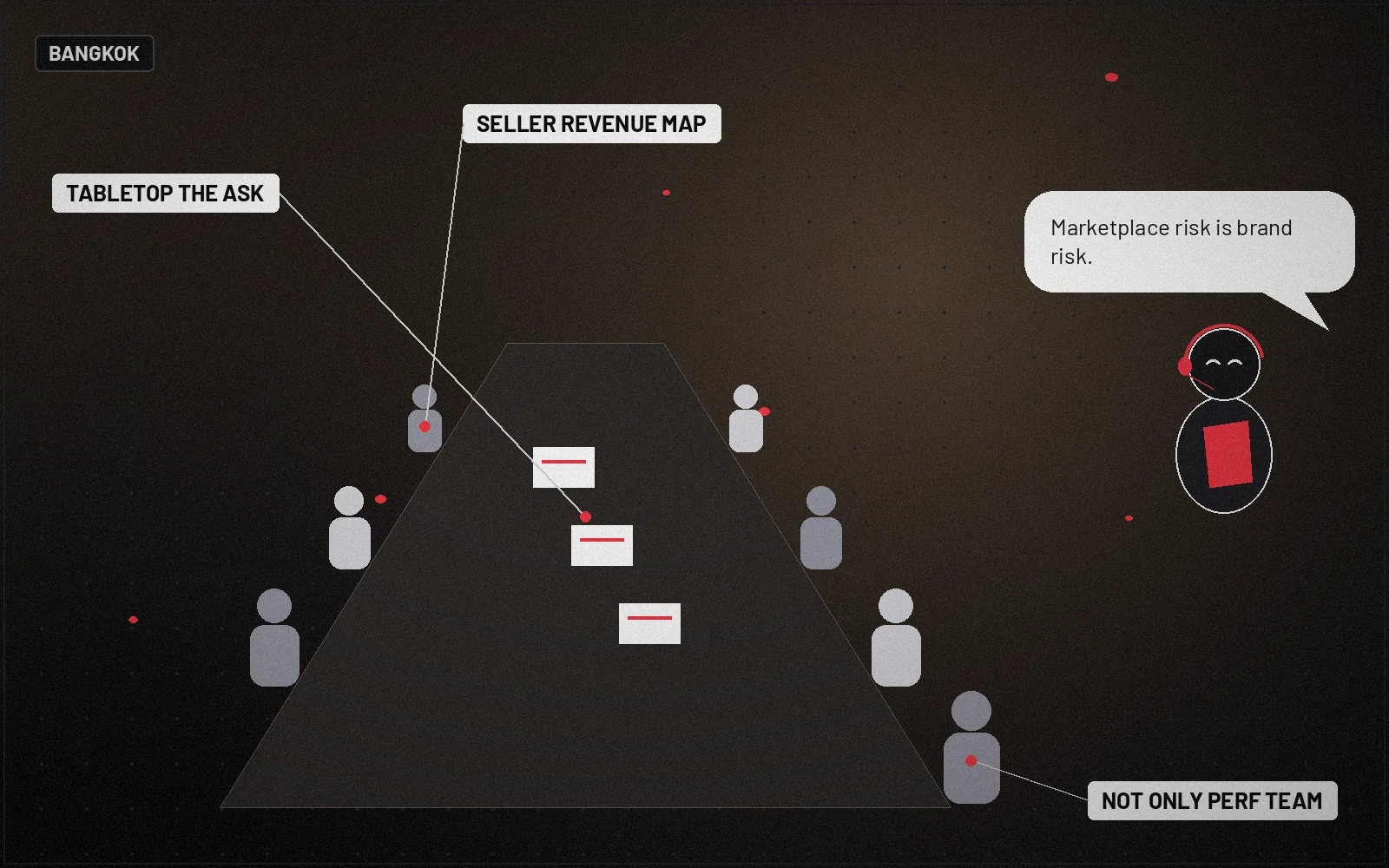
They also refuse to let performance marketers alone own the narrative. Marketplace risk is brand risk. If the only person watching seller forums is a junior buyer chasing ROAS, you will learn about a revolt from a screenshot in a group chat—not from your own monitor.
Finally, they tabletop the awkward questions: Do we pause boosts? Do we issue a statement? Do we brief retail partners who also sell on that marketplace? Written answers beat midnight improvisation. For rapid language under pressure, keep holding-statement templates open. For spend hygiene when platforms shake, keep mid-cycle algorithm shock discipline next to your marketplace SOP.
What “good” looks like 90 days later
Ninety days after a marketplace fine, good looks boring: seller NPS that did not crater, boost spend that was paused with criteria and restarted with criteria, no freestyle brand statements floating in trade chats, and a monitor that still runs when the news cycle moves on. Bad looks like a single reactive LinkedIn post, a quiet week of seller anger, and a return to autopilot until the next regulator headline.
Operator FAQ
Should we leave the marketplace? Usually no. Should you sleepwalk? Also no. Pause criteria and seller clarity beat theatrical exits.
Who speaks first—brand or platform? Platform speaks for platform. Brand speaks for brand-seller and brand-shopper trust. Do not merge the scripts.
What language? Local language for sellers first. English for regional leadership second. Keep meanings aligned via multilingual discipline.
Commercial next step — Marketplace reputation monitoring plus seller-comms retainer. Start at services or contact.
Marketplace reputation is now a board-level risk for SEA ecommerce brands, not a community-manager side quest. The brands that win treat seller trust as inventory: measured, reserved, and defended when the platform becomes the story. If you need a monitor and a seller script pack before the next fine hits the feed, start here.