
On or around 18 September 2026, India’s food regulator FSSAI initiated legal action against Nestlé India over infant-nutrition claims and a substandard biotin sample. That is not a faraway “India-only” headline for marketers across Southeast Asia. It is a live brand claims compliance crisis Asia case study: product language, e-commerce screenshots, and lab findings can become exhibits overnight—and shelf trust is revenue.
If your brand sells into India, ASEAN, or any market where parents and regulators screenshot PDPs the same way, treat this week as a drill. Neuwark Communications builds crisis retainers and claims-review systems for brands that would rather rehearse the holding statement while the sky is still clear.
What FSSAI’s Nestlé action changes for every APAC claims team
Regulators do not only read your press kit. They read what shoppers see: marketplace cards, Instagram carousels, TikTok scripts, pharmacy leaflets, influencer captions, and the tiny bold claims on pack. When a claim is challenged, the public story does not wait for your Q4 legal memo.
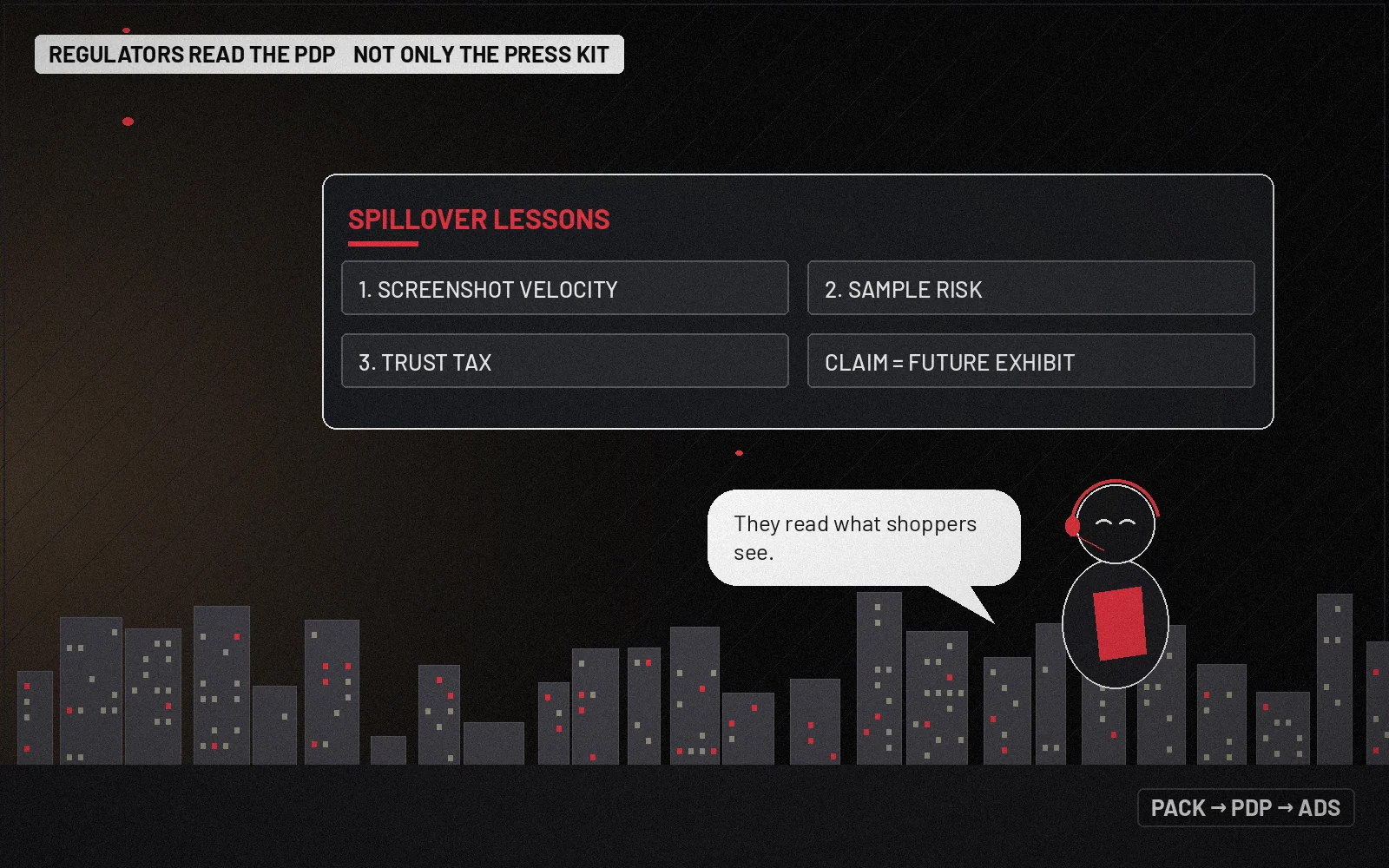
Three spillover lessons for SEA and broader APAC:
- Screenshot velocity — A competitor, activist, parent group, or journalist can archive your PDP faster than you can revise it.
- Sample risk — Quality findings and claims language travel in the same headline. “Substandard sample” plus “overclaim” is a double hit on trust.
- Trust tax — Even if counsel later wins a technical point, the interim story can move share of shelf, retailer confidence, and paid efficiency.
This is why brand claims compliance crisis Asia work is commercial, not cosmetic. You are protecting revenue, listing relationships, and the right to keep advertising without sounding evasive. Pair this with the inventory discipline in brand safety for progressive paid media in PH and APAC and the rehearsal habits in crisis holding-statement templates.
Treat every claim as a future exhibit
Brand and legal need one living inventory: claim text, channel, date live, supporting evidence, owner, and kill path. E-comm teams cannot freestyle “clinically proven” because a category manager liked the cadence. Crisis comms already knows which lines are cleared for hour-one holding—and which phrases are radioactive.
Claims are brand safety for the product story itself. Improvisation feels brave on a war-room Zoom. Systems keep the brand on the shelf. If your current process is “legal reviews the big campaigns,” you are already behind—because the risky claim is often the quiet marketplace bullet someone added on a Tuesday night.
Map your claim surface: pack, PDP, ads, influencer scripts
Export PDP titles, bullets, A+ modules, packs, leaflets, creator briefs, search ads, and marketplace “promotion” blurbs sellers add without asking. Tag each claim: nutrition, efficacy, “natural,” comparative, infant/child, medical-adjacent. Infant and child claims deserve a red tier everywhere—not only in India.
Walk the full surface:
- On-pack and inserts — What a parent can photograph in a store aisle.
- Owned digital — Brand.com, apps, email, WhatsApp catalogs.
- Marketplaces — Shopee, Lazada, Tokopedia, TikTok Shop, Flipkart, Amazon; plus seller-edited fields.
- Paid — Search headlines, social primary text, CTV supers.
- Creators — Scripts, pinned comments, “link in bio” landing pages.
If any of those five still live in separate Slack threads, you do not have a claims system. You have hope. Hope does not survive a regulator filing. Make the inventory boring, shared, and dated—then assign owners who can pull a line without a three-day email chain.
Pre-crisis stack: claims matrix, holding lines, dark-site FAQ
Claims matrix
Every high-risk claim needs a human triad: brand owner, legal/regulatory owner, e-comm or media owner. Committees delay. Named owners pull copy in under an hour. Put their names on one page that sales and agencies can open without a scavenger hunt.
Evidence folders must match the words on screen. If the PDP says “supports immunity,” the file must match that exact meaning—not a nearby study your agency liked. Date the evidence. Note geographic applicability. A EU dossier does not automatically bless a SEA claim.
Holding lines and dark-site FAQ
Pre-write an internal note for sales and retailers; a customer-facing holding that stays human without over-claiming innocence before facts; a media Q&A that separates what you know, what you are checking, and what you will update; creator pause instructions if influencers are amplifying the old line; and a board or investor line if the brand is listed or heavily covered.
Stage a dark-site FAQ stub offline so you are not designing under fire. Rehearse once. Midnight is a terrible first draft environment. See also crisis dark-site readiness.
Kill switch with a clock
Document who can unpublish or overwrite a claim across platforms in 60 minutes. Test it once a quarter with a harmless dummy claim. Untested kill switches are theater. Include marketplaces where you rely on sellers or distributors—those are often the slowest surfaces. Write the SLA into agency contracts so “we’ll try” is not the operating system.
First 48 hours when a regulator files
Hour 0–3 — Freeze new creative that repeats the contested claim. Name the incident lead (comms + legal + brand). Pull top revenue PDPs into a war-room list.
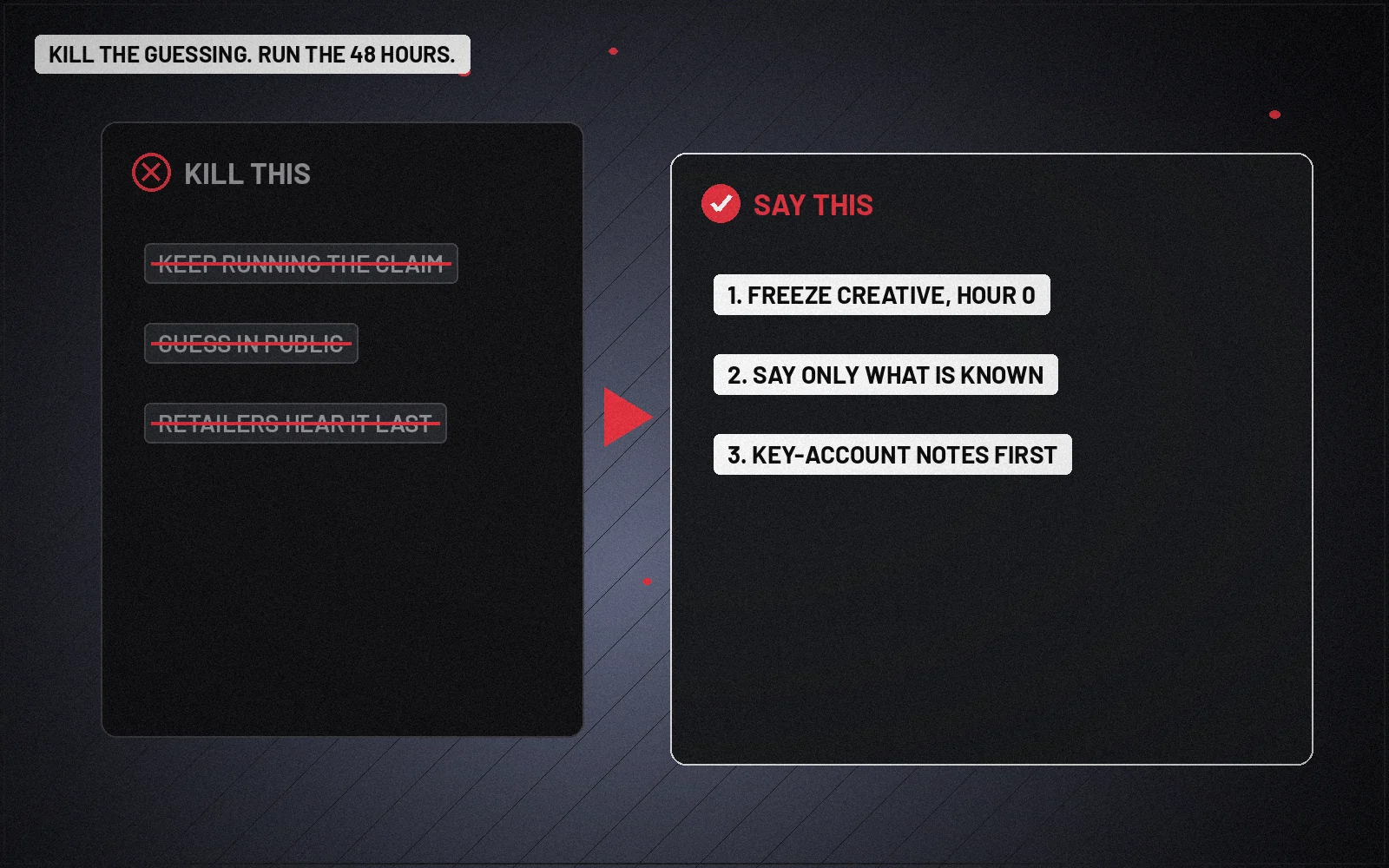
Hour 3–12 — Decide what can be said externally without guessing. Push retailer and key-account notes before rumor fills the gap. Brief customer care with three approved lines—no freestyle empathy that invents facts.
Hour 12–48 — Clean live claim surfaces in priority order (highest revenue and infant/child first). Publish a dated update calendar so silence does not look like indifference. Log every change: who, when, which URL. Regulators and journalists will ask. Browse more operator playbooks in the Insights hub. Claims crises reward the same muscle as other rapid-response work: speed with discipline, not speed with panic.
SEA e-commerce spillover: screenshots become exhibits
Marketplace multiplicity is the regional trap. Shopee, Lazada, Tokopedia, TikTok Shop, and brand.com will not update themselves in sync. A cleared English claim can become an uncleared vernacular boast in translation—keep multilingual message discipline on the same spine. Creators will keep saying last month’s line unless you send a pull note with a deadline and proof requirement.
India headlines land in Singapore investor chats and Manila category WhatsApp groups the same afternoon. Parallel distributor listings may still carry the old boast while HQ thinks the world is clean. Design the kill switch for that reality—or accept that “we fixed brand.com” is not a defense.
Operator checklist: 10 working days to leave freestyle mode
Days 1–2 — Map top 50 revenue SKUs, all infant/sensitive claims, every marketplace and language variant.
Days 3–5 — Clean the worst ten claims; align pack vs PDP vs ads; brief creators and key sellers in writing.
Days 6–7 — Wire platform admin access, agency SLAs, retailer notification templates, and the first-six-hours spokesperson.
Days 8–10 — Drill a “regulator files + lab headline” tabletop; time PDP clean-up and holding approval; fix owners, not slogans. File the drill notes where the next person can find them after a resignation.
What a claims + crisis retainer should include (and the cost of ignoring it)
Revenue leaks three ways when claims go sideways: immediate sell-through hits, paid media waste into an indefensible story, and emergency counsel hours that cost more than a quarterly audit. The sellable fix is a claims-review / brand-safety audit plus a crisis retainer that covers holding statements, dark-site FAQ stubs, retailer letters, and a named kill switch.
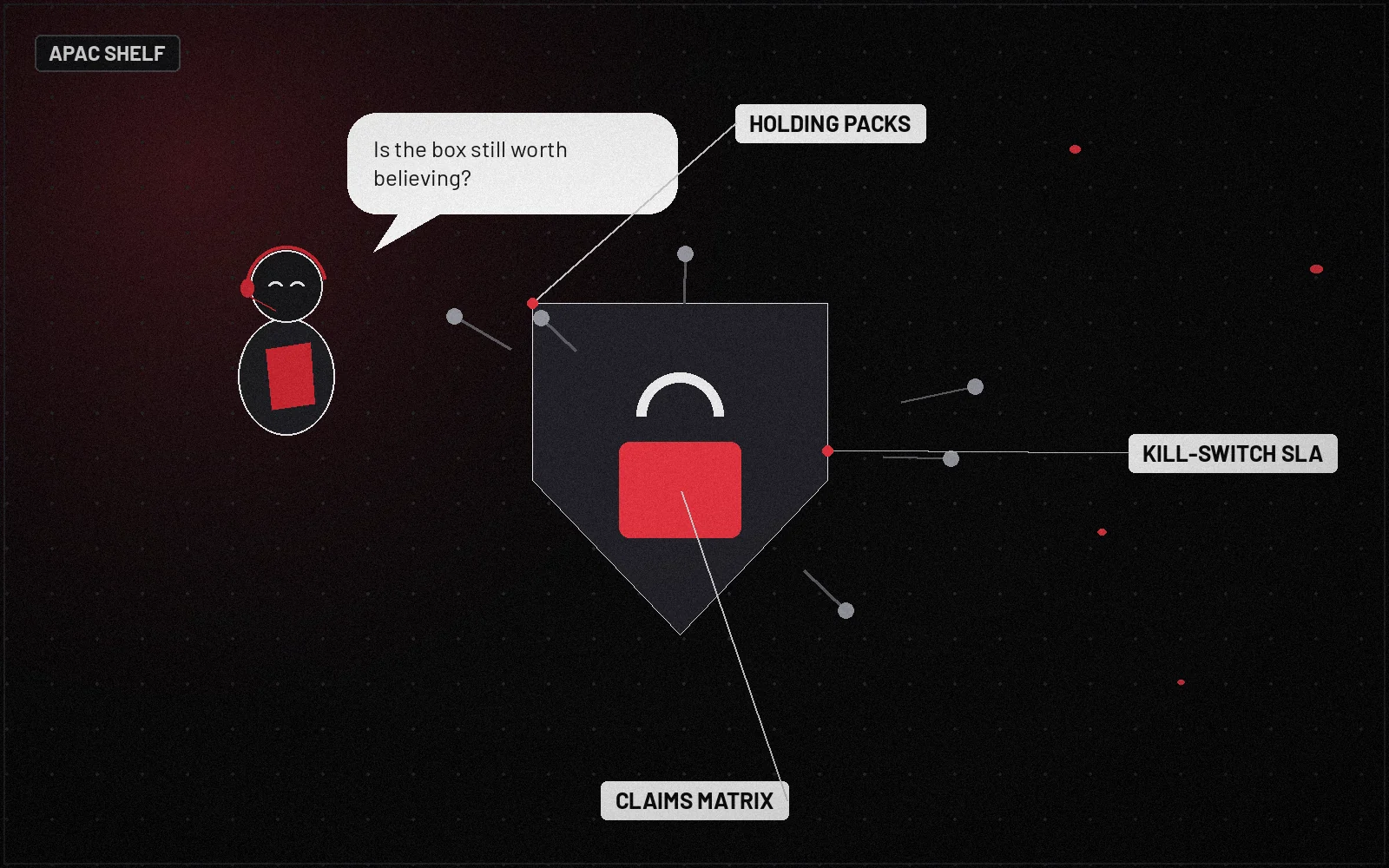
A serious retainer includes quarterly claims matrix refresh, pre-cleared holding packs by scenario, kill-switch drills with written SLAs, creator and seller notification templates, and on-call hours for the first 48 hours of a filing. Ignoring it is not “saving budget.” It is buying a future scramble at peak rates while screenshots already travel.
Spin optimizes for the first hour of social. Shelf trust optimizes for the next two quarters of listings, parents’ willingness to repurchase, and retailers’ willingness to keep facings. In a brand claims compliance crisis, adult brands correct the live claim surface, speak in cleared language, and show a dated verification plan—not a vibe of outrage or denial.
Parents, pharmacists, and category managers are not impressed by clever pivots. They are impressed by whether the words on the box still deserve belief. That is the commercial core of claims work: belief keeps the SKU moving when the news cycle is ugly.
Soft CTA
If your claims inventory still lives in Slack threads and `final_final_v7` decks, you are one screenshot away from learning the hard way. Neuwark runs claims-review audits and crisis retainers for APAC brands that want the stack built before the regulator files. Explore services—especially Crisis & Rapid Response and Brand Safety—or start a conversation.
Treat every product claim as a future exhibit. Build the compliance and holding-statement stack while the sky is still clear—because FSSAI just reminded the region that clear skies do not last.