
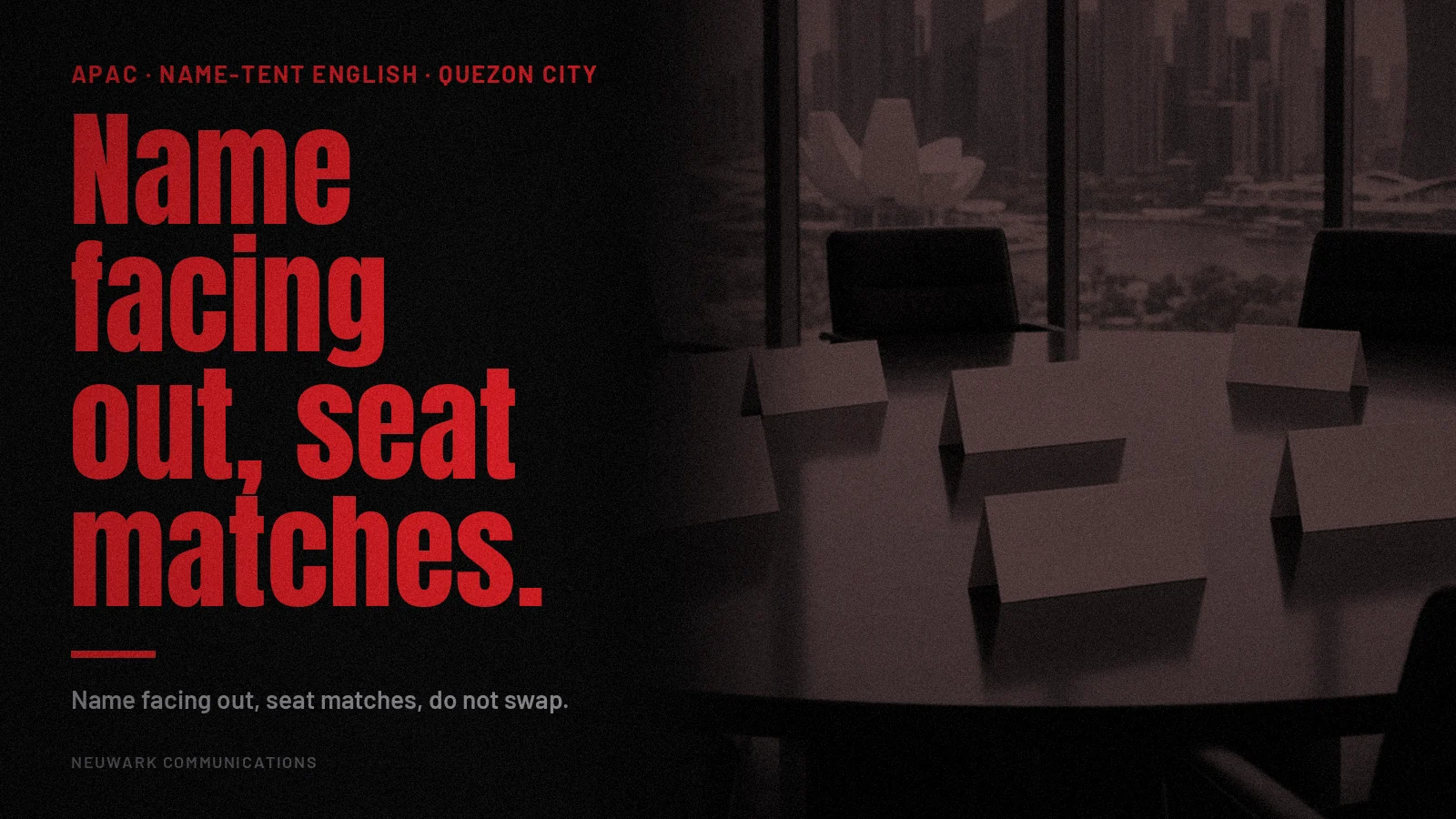
Name-tent line English APAC is the protocol desk’s short place-card rule: name facing out, seat matches, do not swap.
Street-smart APAC English: short sentences a tired operator can say out loud.
A Singapore roundtable ten minutes before seats.
Name tents sit flipped or moved two seats left.
One protocol runner resets each card facing out to the matched seat.
Quick answer: A name-tent line English APAC is the place-card rule: name facing out, seat matches, do not swap. Say it before seats so every card faces the room and every guest sits where the list says.
Pair it with the seat-drop line English APAC for packs and the precedence line English APAC for order. Good event language on the table keeps every name readable without a quiet reshuffle.
What goes in a name-tent line English APAC?
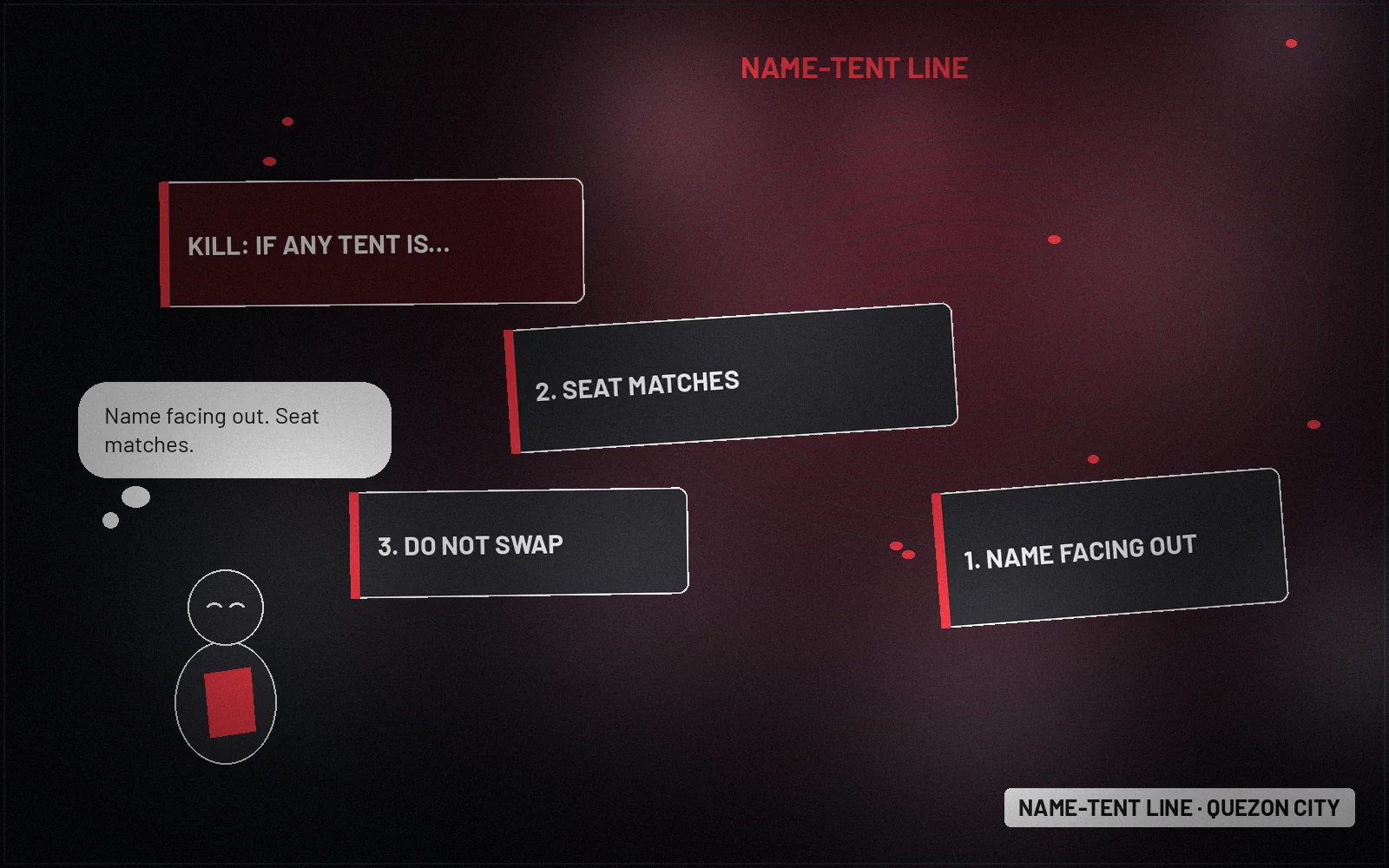
Three parts. Name facing out, seat matches, do not swap.
Name-tent line (illustrative):
“Set each tent with the name facing out to the room.”
“Match the printed seat to the seating list before doors.”
“Do not swap tents; call protocol if a guest moves.”
Speakable lock (illustrative): “Name facing out, seat matches, do not swap.”
Facing out matters most. A tent facing the guest hides the name from the chair and the room, and a swap breaks the precedence list. Walk the full table once with the list in hand before any guest sits.
What should protocol stop saying about name tents?
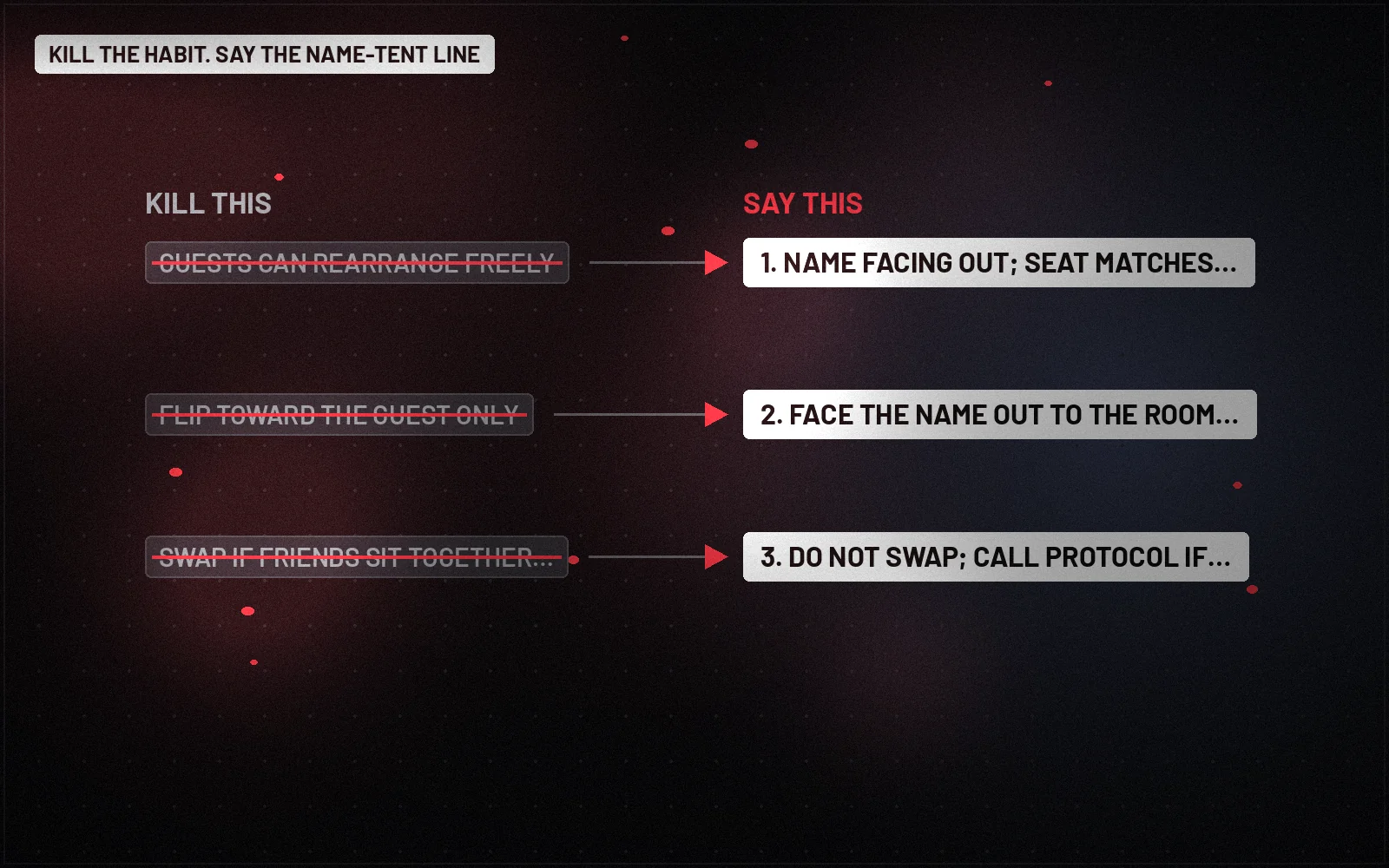
Stop saying guests can rearrange and start naming the facing-out rule. Rearrange breaks the list. Face every name out, match the seat, and call protocol before any swap. Say the three beats at the protocol brief, then check every tent from the chair’s view.
| Kill this | Say this (illustrative) | Why |
|---|---|---|
| Guests can rearrange freely. | Name facing out; seat matches the list; do not swap. | Fixed seats |
| Flip toward the guest only. | Face the name out to the room and chair. | Facing out |
| Swap if friends sit together lah. | Do not swap; call protocol if a guest moves. | No swap |
| Sige po, bahala na sa cards. | Match each tent to the seating list before doors. | List match |
| Close enough is fine. | Seat matches the printed name exactly. | Exact match |
Lines in this table are illustrative, not quotes from real people.
Who owns the name-tent line at a roundtable?
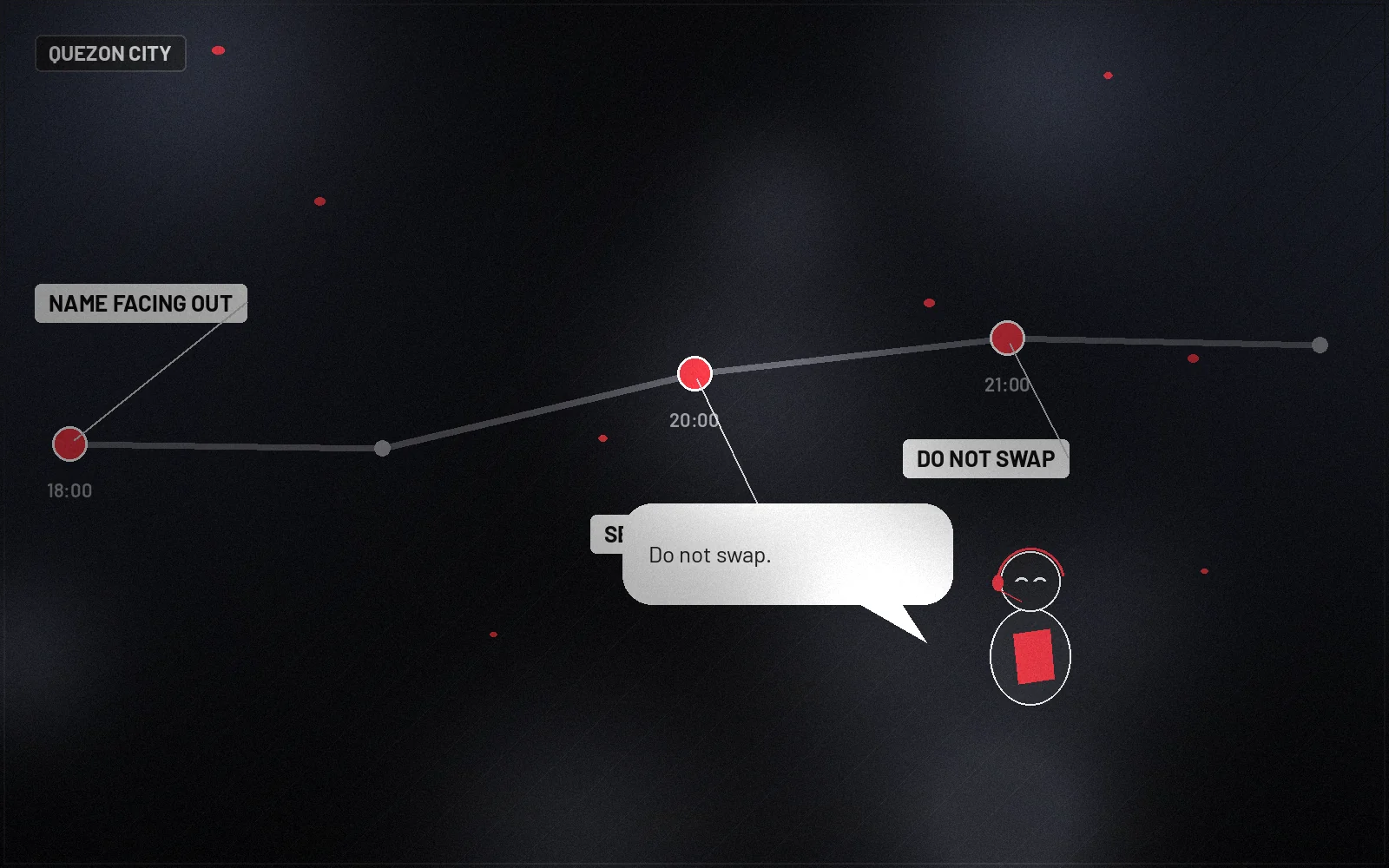
One protocol runner owns the tents, with the chair confirming the list. Guests do not rewrite seats. The runner sets facing out, matches the list, and holds swaps until protocol clears them. If a guest asks to move, hold the tent and radio protocol before any swap.
What if a guest moves a tent before the session?
Reset the tent to the listed seat and explain once. Do not argue across the table. Point to the list, restore facing out, and call protocol if the guest insists. Restore facing out first, then confirm the seat against the printed list.
How does this play out on PH, SG and Bangkok desks?
Same three parts. Different desks.
Philippines desk. In Manila and Quezon City roundtables, tents often get flipped during photo tests. Say it with po: name facing out po, seat matches po, do not swap po. Walk the table once before doors. Keep spare blank tents and a marker at one protocol point for last-minute name fixes.
Singapore desk. In Singapore, seating lists are strict and chairs expect names readable from across the table. Keep the line in plain English, face every tent out, and block swaps before doors. Photograph the set table once for the chair so any mid-session drift is obvious.
Bangkok desk. In Bangkok, keep the same three beats in plain English at the table walk. Facing out and no-swap keep visiting chairs from guessing who sits where.
Monday field kit
- Print the seating list and walk every tent with protocol before doors.
- Stage spare tents and a marker at one protocol point.
- Assign one runner to face-out checks and one to list matches.
- Rehearse once: name facing out, seat matches, do not swap.
- Kill rule: if any tent is flipped or swapped, reset it before guests sit.
FAQs
What is a name-tent line English APAC?
A name-tent line English APAC is the short place-card rule: Name facing out, seat matches, do not swap. It keeps the table aligned before seats.
When do you say the name-tent line?
Say it in the protocol brief before doors, then once if cards drift. Repeat only when the team needs the reset.
Who owns the name-tent line?
One protocol runner owns the line, with the chair confirming the list. Guests do not rewrite the rule.
Neuwark Communications builds event and campaign communications as part of our strategy and messaging work. More street-smart lines live in Insights.
Related: seat-drop line English APAC · precedence line English APAC
Talk to us about your next event script.
Illustrative lines only. Communications craft, not legal advice.