
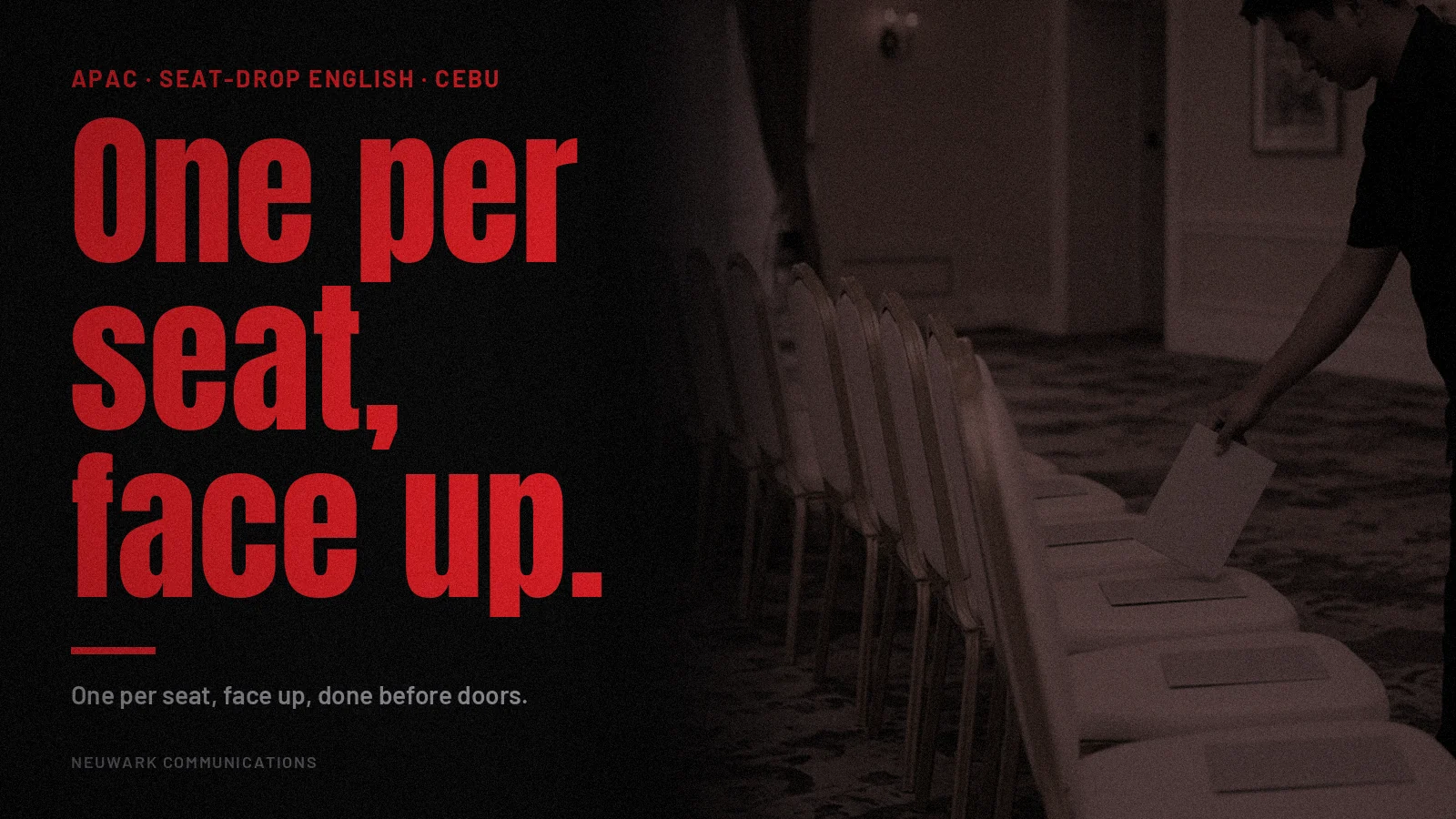
Quick answer: A seat-drop line English APAC is the floor lead’s short brief for crew placing items on chairs: one per seat, face up, done before doors. Say it the same way to every runner, so guests find the same thing on every chair and nobody is still dropping when doors open.
A Cebu hotel function room, forty minutes to doors.
Three runners drop programmes, one from the front, two from the back, and nobody counts.
Row six gets two each, row twelve gets none, and the doors open early.
Seat-drop line English APAC is the short brief for crew who place programmes or gifts on chairs: one per seat, face up, finished before doors.
Street-smart APAC English: short sentences a tired operator can say out loud.
It sits after our reserved-seat line English APAC on the held rows and before the leaflet-handout line English APAC at the door. Good event language for crew means guests never notice the drop at all.
What goes in a seat-drop line English APAC?
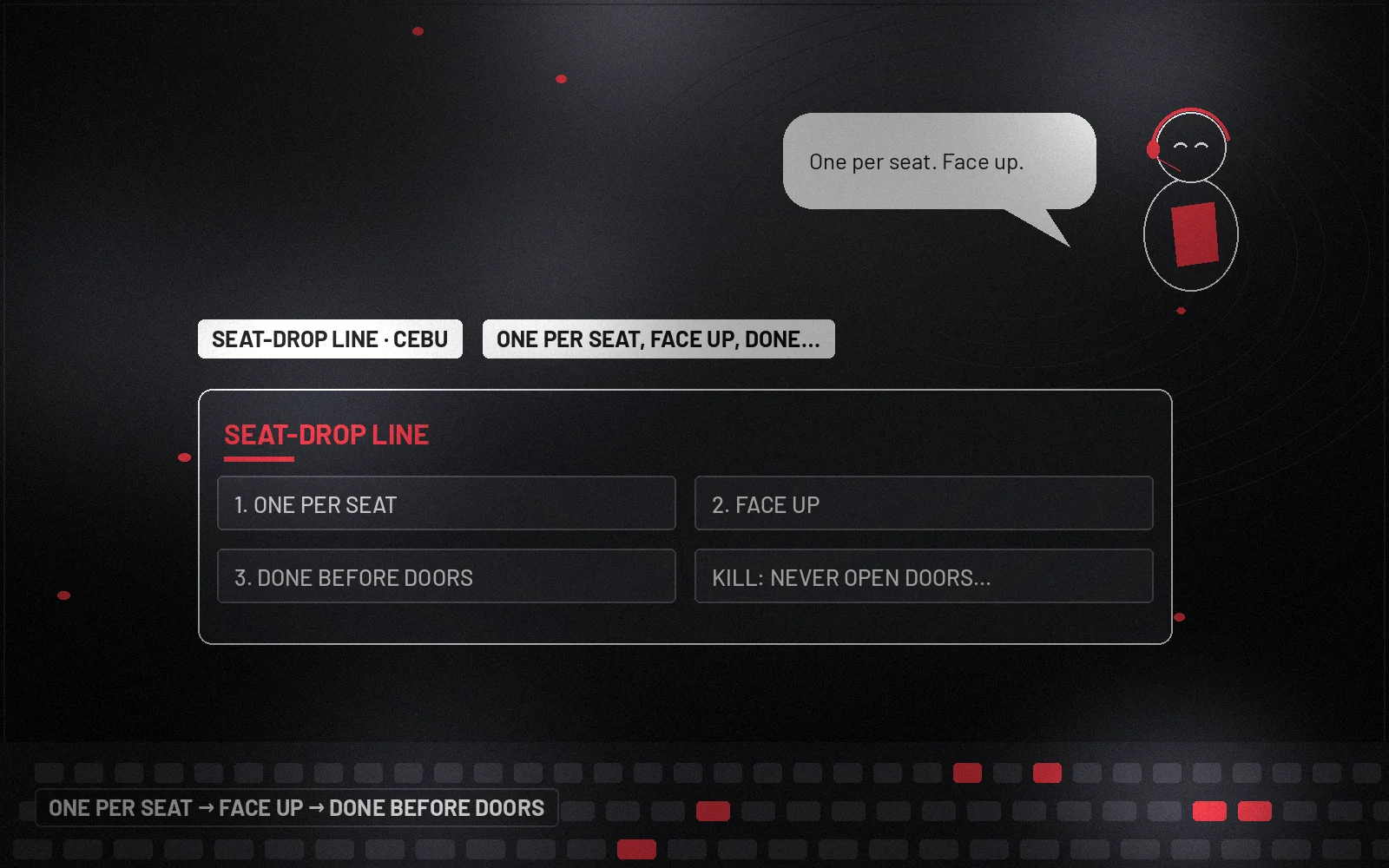
Three parts. One per seat, face up, done before doors.
Seat-drop line (illustrative):
“One per seat, face up, centre of the chair.”
“Start at the stage end, one runner per block.”
“Done by doors minus ten. Call it in when your block is clear.”
The deadline matters most. A crew still dropping when guests walk in blocks rows and looks unready.
What does the floor lead say to the seat-drop crew?
Give each runner one block of rows, the item and the deadline in the same breath. Show one chair done right so everyone copies it. Ask each runner to call in when their block is clear, then walk the room once yourself.
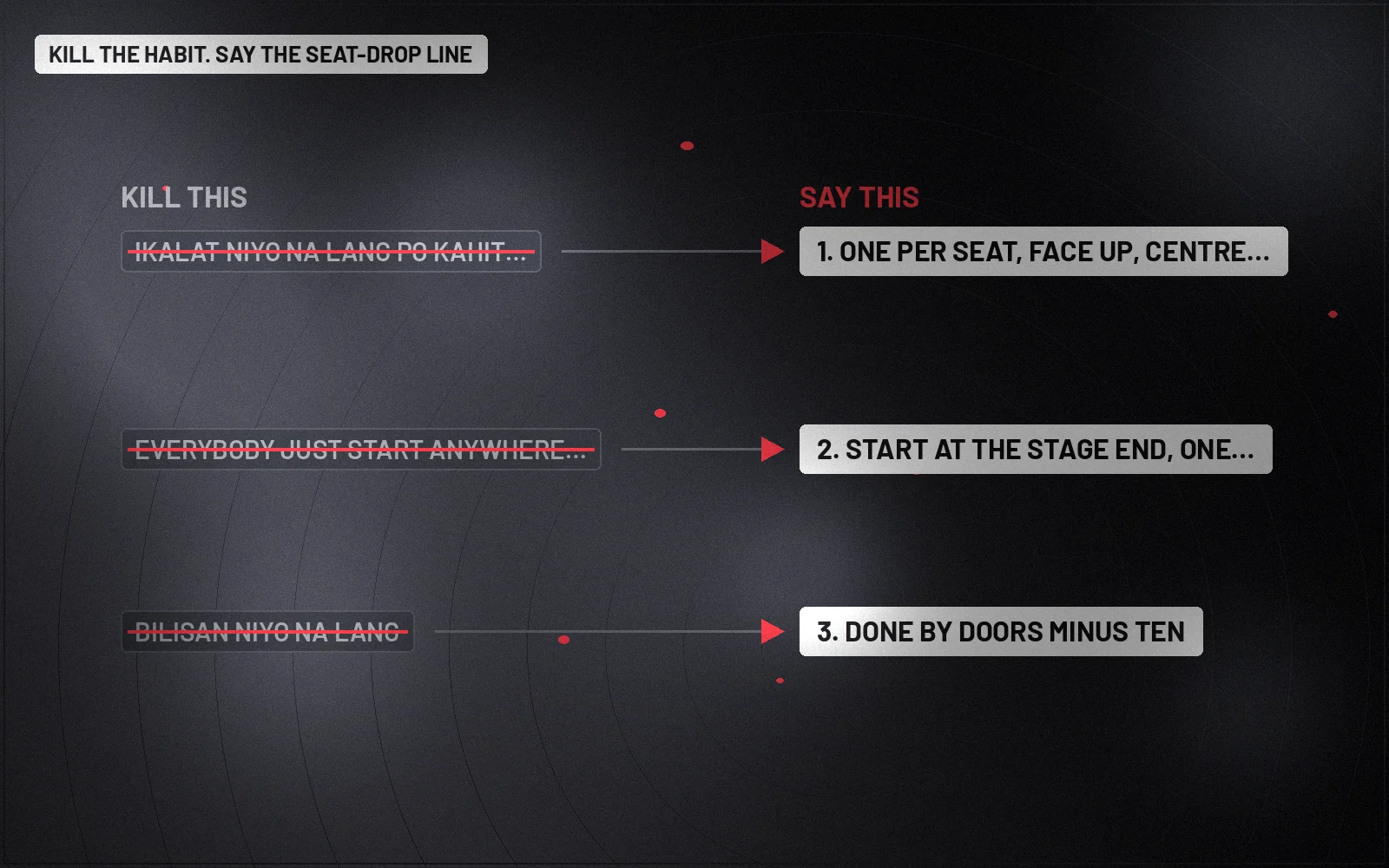
| Kill this | Say this (illustrative) | Why |
|---|---|---|
| Ikalat niyo na lang po kahit saan. | One per seat, face up, centre of the chair. | Same on every chair |
| Everybody just start anywhere lah. | Start at the stage end, one runner per block. | No overlaps, no gaps |
| Bilisan niyo na lang. | Done by doors minus ten. | A clear deadline |
| Okay na siguro yan. | Call it in when your block is clear. | Someone checks |
| Reserved rows also, just drop. | Skip the held rows. The usher handles those. | Held rows stay held |
Lines in this table are illustrative, not quotes from real people.
What if there are not enough items for every seat?
Count before you drop, not after. If the count is short, tell the floor lead straight away and drop the front rows first, or hold the item for the exit instead. Never leave some rows with items and others without.
What about gifts or items meant for named guests?
Named items go on named seats only, checked against the seating plan by one person. Everything else is identical and unnamed. If a named item is missing, leave the seat clear and tell the usher, so the guest hears it from a person, not from an empty chair.
How does this play out in PH and SG?
Same three parts. Different desks.
Philippines desk. In Cebu and across the Philippines, crews are often a mix of venue staff and volunteers who meet on the day. Brief everyone together, show one chair done right, and say the deadline in English or Bisaya. Add po when you brief older volunteers, and post the block map in the crew Viber group.
Singapore and wider APAC desk. In Singapore and the wider region, crews often work from a printed floor plan with blocks marked. Keep the line in plain English, give the deadline as a clock time, and have runners call in on the radio when their block is clear.
Paste-ready lock
Speakable lock (illustrative): “One per seat, face up, start at the stage end, and call it in by doors minus ten.”
Monday field kit
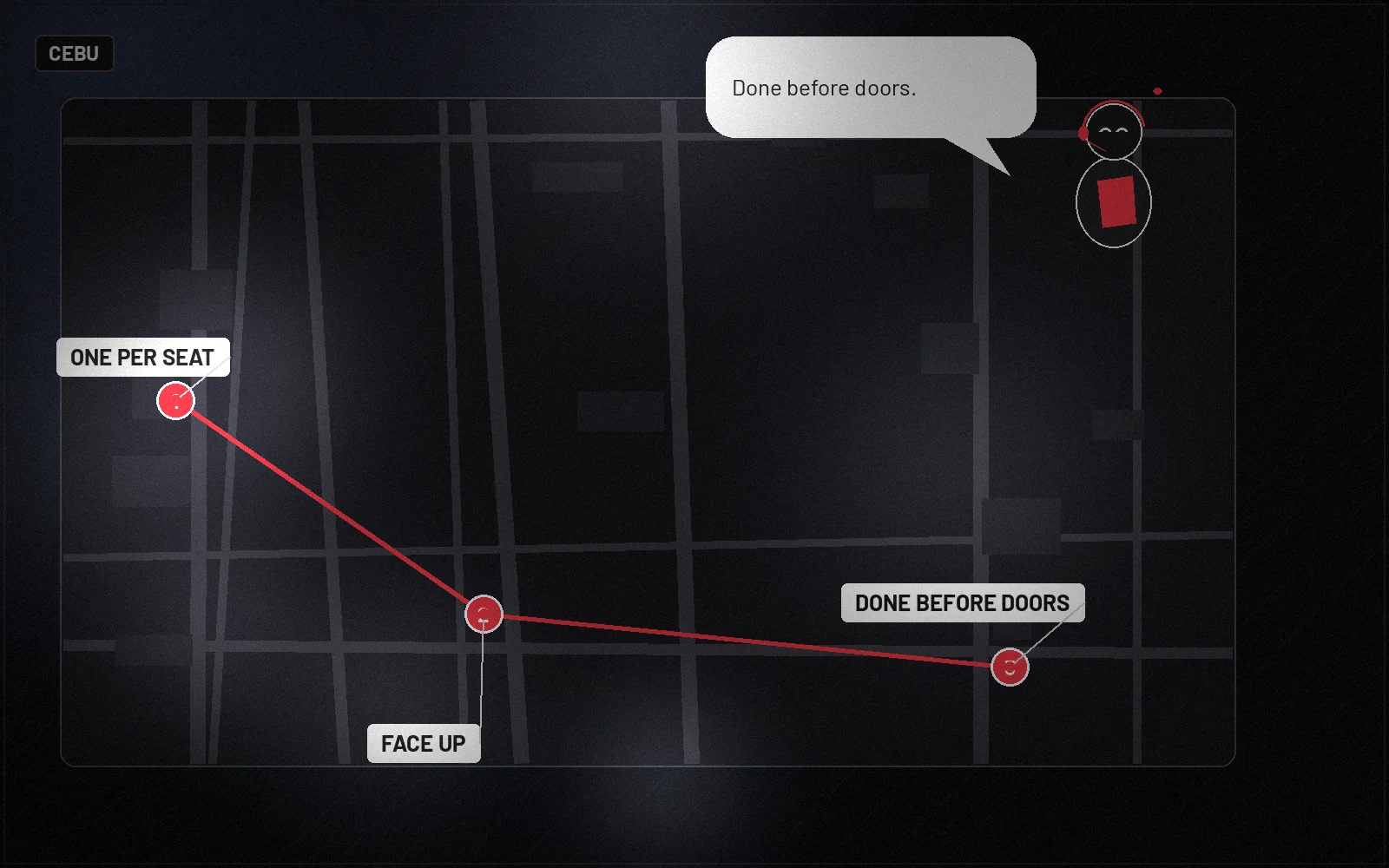
- One per seat, face up, done before doors.
- Items counted against the chair count.
- One runner per block, starting at the stage end.
- Held rows and named seats marked on the plan.
- Kill rule: never open doors while a runner is still dropping.
What to do this week
- Write the three lines on the crew brief card.
- Get the final chair count from the venue.
- Mark blocks, held rows and named seats on the floor plan.
- Agree the drop deadline as a clock time.
- Name one person to walk the room before doors.
FAQs
What is a seat-drop line English APAC?
A seat-drop line English APAC is the floor lead’s brief for crew placing items on chairs: one per seat, face up, done before doors. Every runner hears the same words.
How early should you finish a seat drop before an event?
Finish the seat drop at least ten minutes before doors, with time to walk the room once. Start as soon as the chairs are set and counted.
Where do you place a programme on a chair?
Place one programme per seat, face up, in the same spot on every chair. Guests see it as they sit, and the room looks set.
What if you run out of programmes for every seat?
Tell the floor lead straight away and drop the front rows first, or hold the programmes for the exit. Never leave a random mix of full and empty rows.
Neuwark Communications writes event scripts like this through strategy and messaging. More street-smart lines live in Insights.
Related: reserved-seat line English APAC · leaflet-handout line English APAC
Talk to us about your next event script.
Illustrative lines only. Communications craft, not legal advice.