
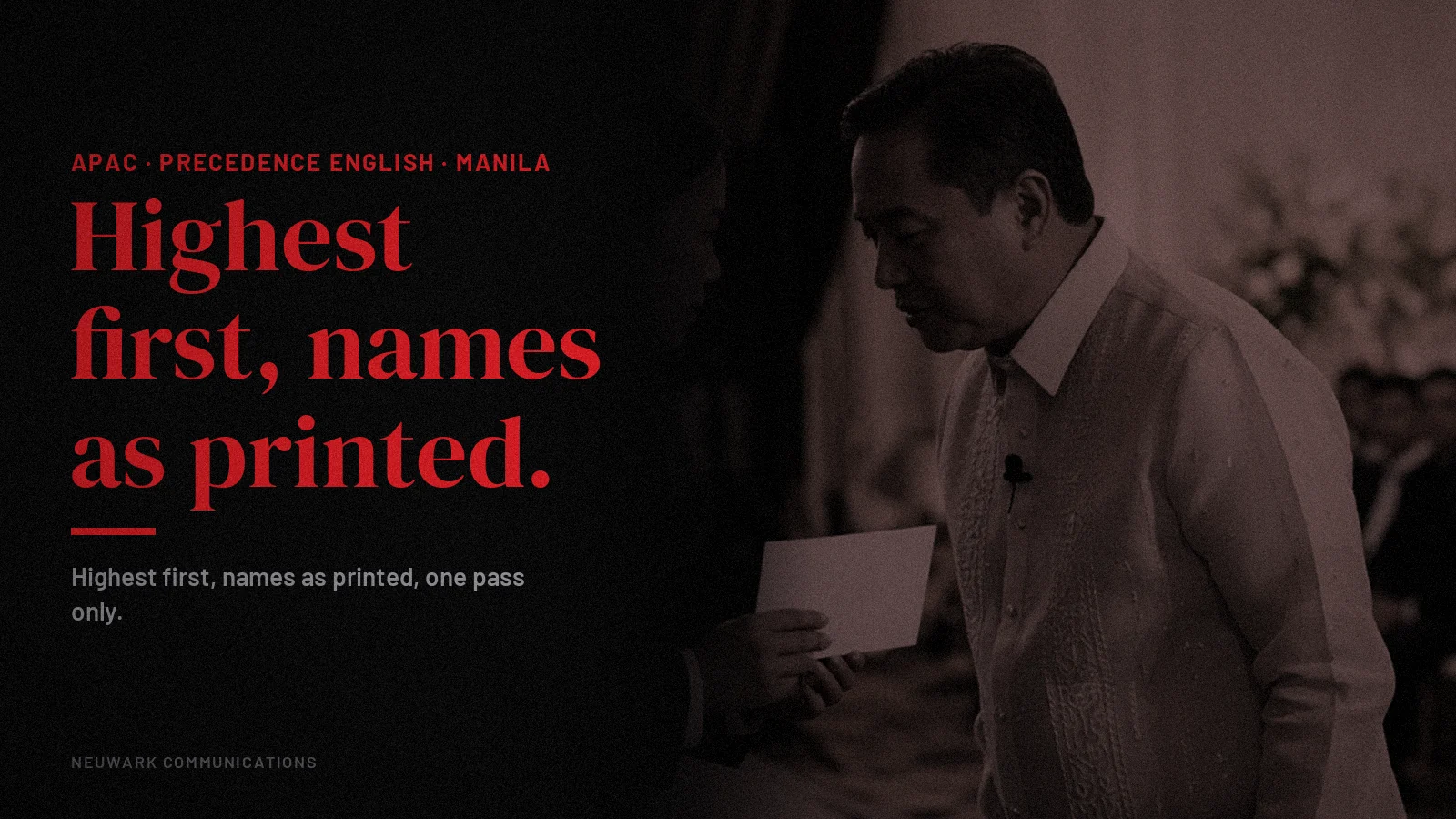
Precedence line English APAC is the protocol aide’s short rule for the emcee’s acknowledgements: highest first, names as printed, one pass only.
Street-smart APAC English: short sentences a tired operator can say out loud.
A Manila hotel ballroom, a forum opening, a full front row of guests of honour.
The emcee reads the list from memory, skips a title, then goes back to add two late arrivals.
The acknowledgements take longer than the keynote.
Quick answer: A precedence line English APAC is what the protocol aide hands the emcee before the programme: highest first, names as printed, one pass only. The emcee reads the list once, in order, and moves on.
Pair it with the name-pronunciation line English APAC before anyone takes the mic and the thank-the-host line English APAC at the close. Good event language from the protocol desk keeps an opening respectful and short.
What goes in a precedence line English APAC?
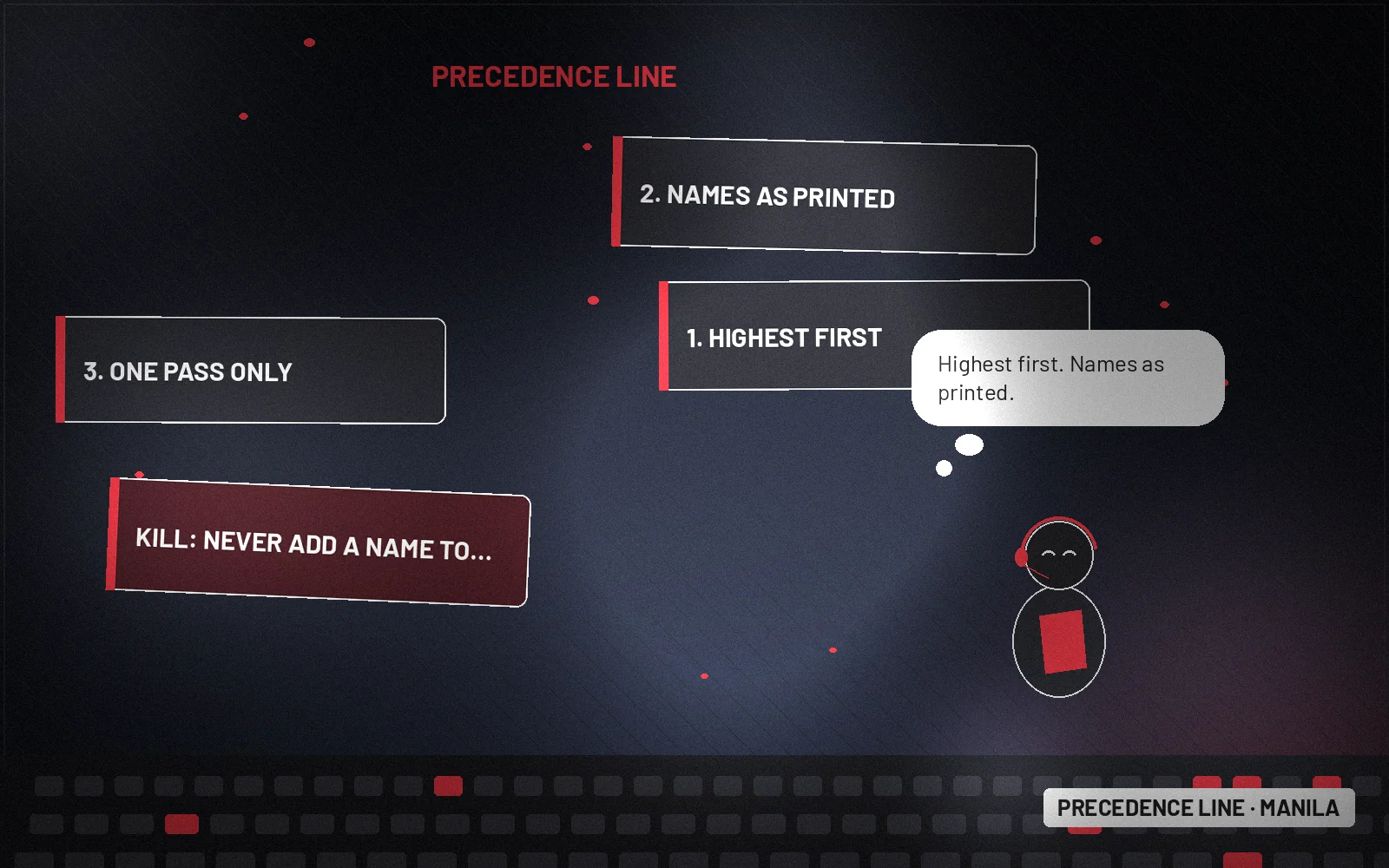
Three parts. Highest first, names as printed, one pass only.
Precedence line (illustrative):
“Here is the list: highest first, top to bottom.”
“Read every name exactly as printed, titles included.”
“One pass only. Late arrivals go on the closing card.”
Speakable lock (illustrative): “Highest first, names exactly as printed, and one pass through the list only.”
Names as printed matters most. A wrong title or a skipped name is the one thing a guest of honour remembers from the opening.
What should the emcee stop doing during acknowledgements?
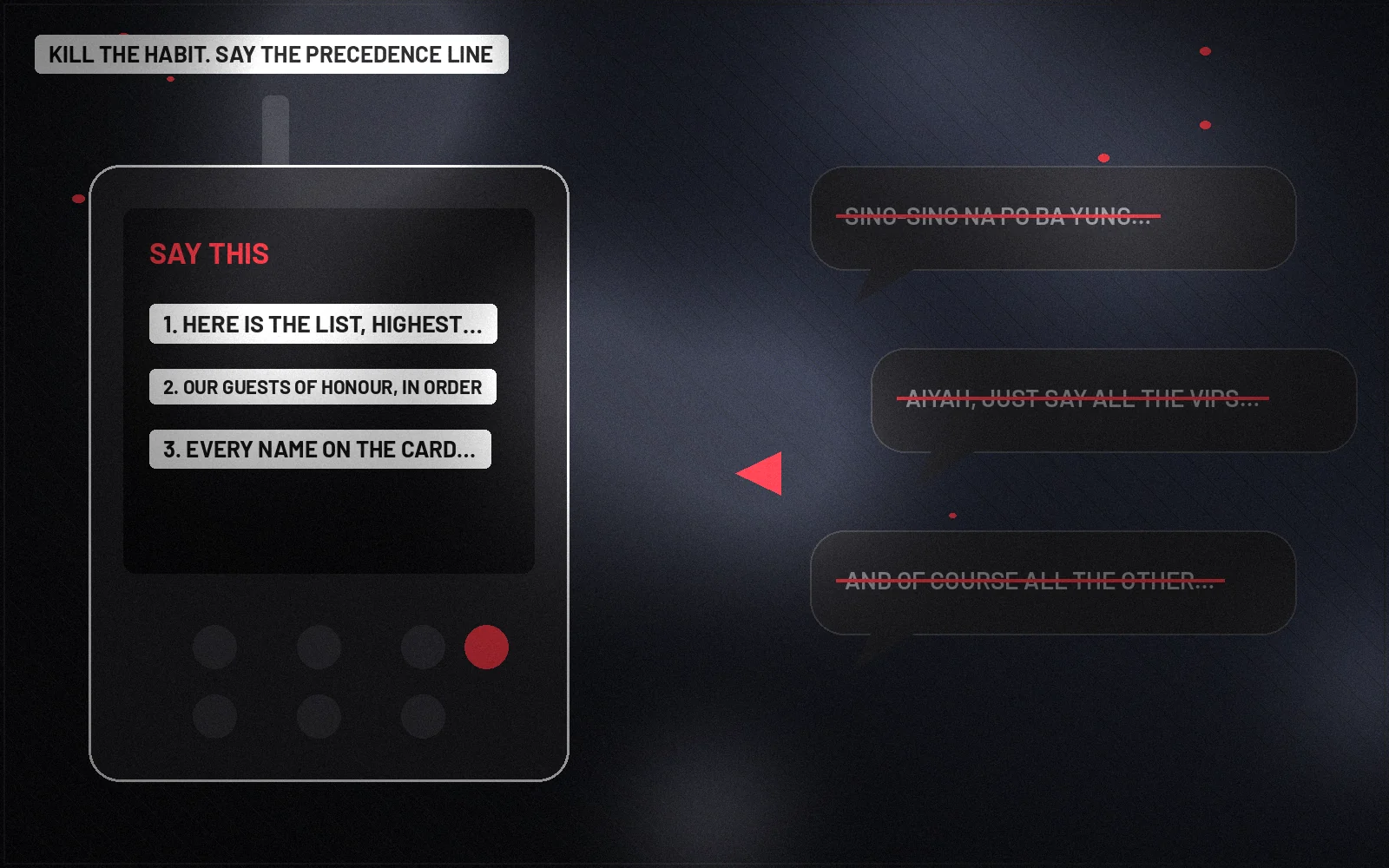
Stop improvising the list and start reading the card. An emcee who adds names from memory or from the floor will miss someone and get the order wrong. The protocol aide owns the card; the emcee reads it, slowly, once.
| Kill this | Say this (illustrative) | Why |
|---|---|---|
| Sino-sino na po ba yung nandito? Basahin ko na lang lahat. | Here is the list, highest first. | One agreed order |
| Aiyah, just say all the VIPs lah, faster. | Our guests of honour, in order. | No group shortcut |
| And of course all the other distinguished guests here today. | Every name on the card, exactly as printed. | Nobody lumped in |
| Ay, sorry po, nandito na pala si sir, balikan ko. | Late arrivals are acknowledged at the closing. | One pass only |
| Can or not just skip the titles? | Titles stay, exactly as printed. | Respect is in the title |
Lines in this table are illustrative, not quotes from real people.
Who decides the order of precedence?
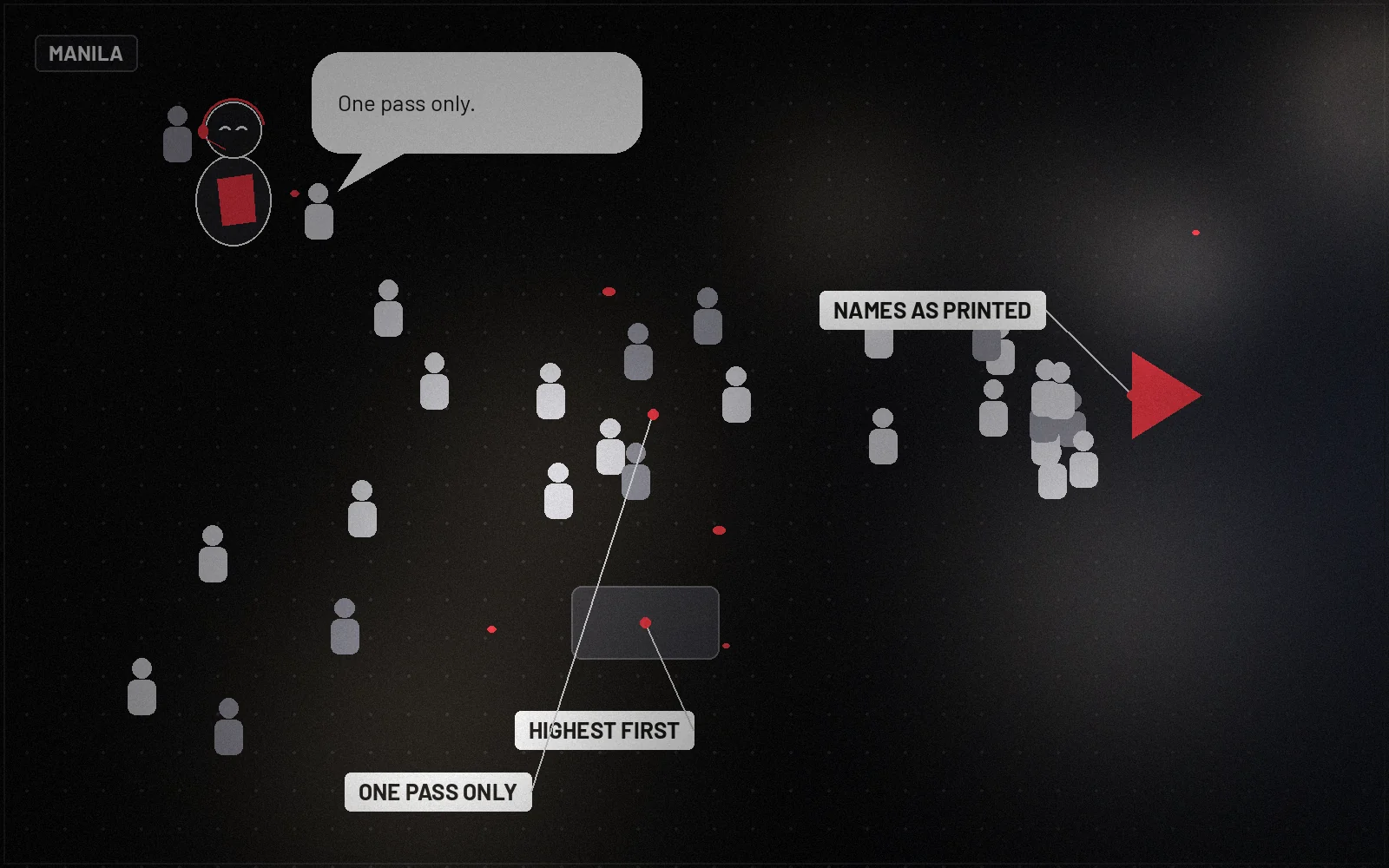
The host organisation decides, and the protocol aide writes it down. Agree the order the day before, check every title and spelling with each guest’s office, and print one card for the emcee. If two guests are of equal rank, the host decides who goes first, and the card shows it.
What about guests who arrive after the acknowledgements?
They go on a closing card, not back into the opening. The aide slips the emcee a note with the name as printed. At the close, the emcee thanks them once, in the same calm voice. Going back mid-programme breaks both the order and the flow.
How does this play out on PH, SG and Jakarta desks?
Same three parts. Different desks.
Philippines desk. In Manila, programmes often acknowledge many guests, and titles such as Secretary, Mayor or Councilor matter to everyone in the room. Check each title with the guest’s office, add po when you confirm by phone, and send the final card to the emcee on Viber the night before.
Singapore desk. In Singapore, openings are usually brief, with only the guest of honour and a few named guests acknowledged. Keep the line in plain English, read the card once, and follow the host’s order without adding names.
Jakarta desk. In Jakarta, acknowledgements often open with Bapak dan Ibu and full titles. Write the card the way the emcee will say it, with Bapak or Ibu before each name, and keep the same one-pass rule.
Monday field kit
- Highest first, names as printed, one pass only.
- Order agreed with the host organisation the day before.
- Every title and spelling checked with each guest’s office.
- One printed card for the emcee, one copy for the aide.
- Kill rule: never add a name to the opening from memory or from the floor.
FAQs
What is a precedence line English APAC?
A precedence line English APAC is the protocol aide’s rule for acknowledgements: highest first, names as printed, one pass only. The emcee reads the card once and moves on.
How do you acknowledge guests in order of precedence?
Start with the most senior guest and go down the list the host agreed, reading each name and title exactly as printed. Do it once, without adding names from the floor.
What do you do when a VIP arrives late to an event?
Add the name to a closing card and acknowledge them once at the end. Do not go back into the opening list.
Neuwark Communications builds event and campaign communications as part of our public affairs work. More street-smart lines live in Insights.
Related: name-pronunciation line English APAC · thank-the-host line English APAC
Talk to us about your next event script.
Illustrative lines only. Communications craft, not legal advice.