
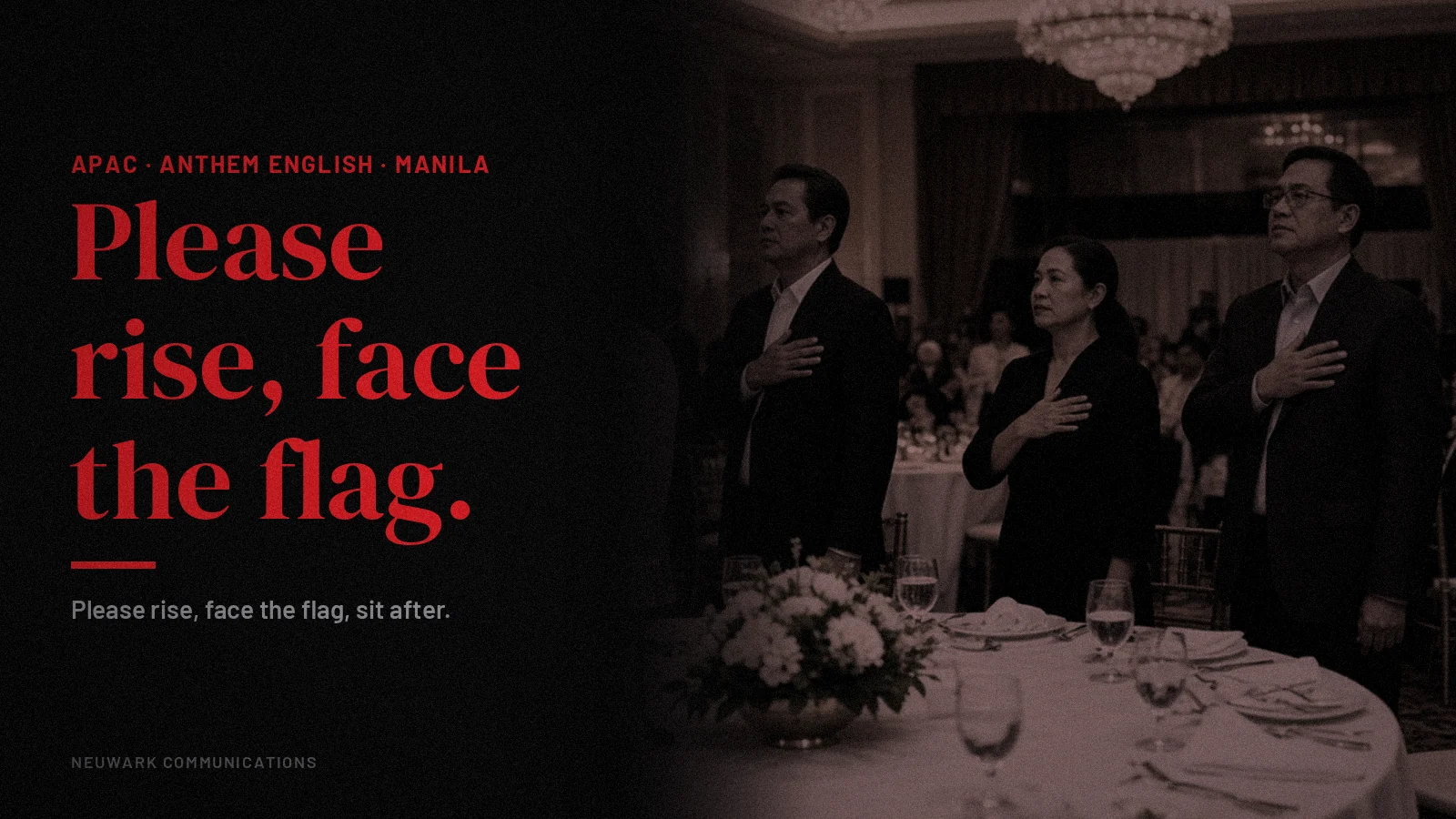
“Please rise, face the flag, sit after.”
Street-smart APAC English: short sentences a tired operator can say out loud.
A Manila hotel ballroom, the opening programme about to start.
The emcee says the anthem is next, and half the room keeps eating.
Some guests face the stage, others face the screen, and a few stay seated.
Quick answer: An anthem line English APAC is the emcee’s short call before the national anthem: please rise, face the flag, sit after, so the whole room stands together and sits together. The emcee says it once, slowly, before the anthem cue.
Pair it with the phone-silence line English APAC and the applause-cue line English APAC for more event language on the floor. It is a respectful cue, not a lecture: one sentence, then the anthem.
What goes in the anthem line English APAC?
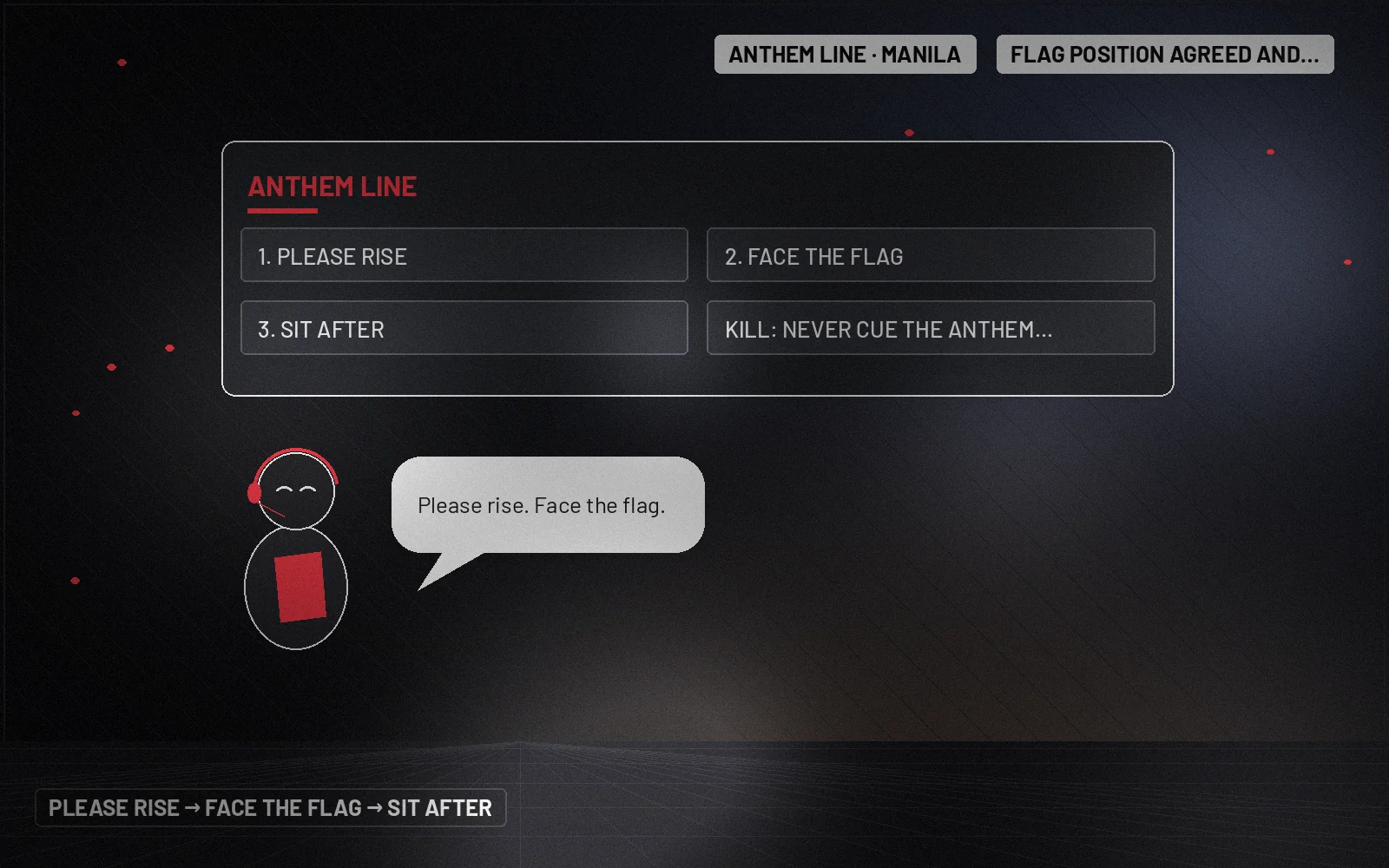
The anthem line English APAC has three parts: the rise, the direction and the sit. Please rise invites the room to stand, with a pause long enough for chairs to move. Face the flag gives one direction, so guests are not split between the stage and the screen. Sit after tells everyone when to sit, so nobody sits during the last bar.
Anthem line (illustrative):
“Ladies and gentlemen, please rise for the national anthem.”
“Please face the flag.”
“Thank you. Please be seated.”
Speakable lock (illustrative): “Please rise, face the flag, sit after.”
Print it on the emcee card and say it the same way at every event. Rise, face, sit: three cues, one calm voice.
When should the emcee give the anthem line?
Right before the anthem cue, once the room has settled and servers have stepped back. Say the first sentence, wait for chairs to stop moving, then nod to the booth. Do not say it over walk-in music or while plates are landing. After the last note, give the sit cue in the same calm voice.
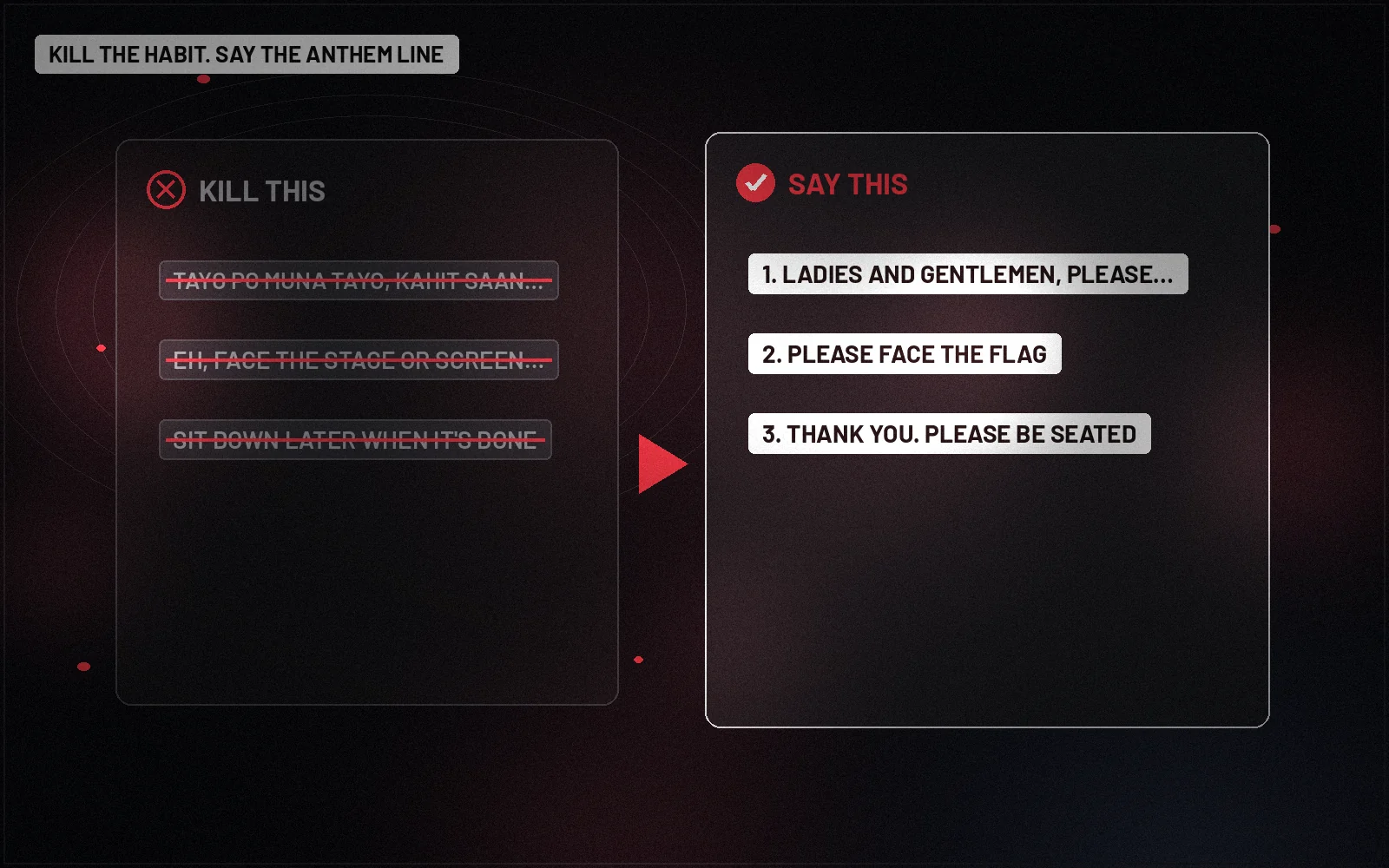
| Kill this | Say this (illustrative) | Why |
|---|---|---|
| Tayo po muna tayo, kahit saan na lang humarap. | Ladies and gentlemen, please rise for the national anthem. | A clear invitation |
| Eh, face the stage or screen also can lah. | Please face the flag. | One direction |
| Sit down later when it’s done. | Thank you. Please be seated. | A clear sit cue |
Lines in this table are illustrative, not quotes from real people.
What if guests do not rise right away?
Give them a moment and keep your own posture still; the room follows the stage. Do not repeat the line louder or single anyone out. If some guests cannot stand, that is fine, and the line never asks why. The booth waits for the emcee’s nod, not a fixed count.
How do you brief the team on the anthem line?
Brief the emcee, the booth and the floor captain together at the run-through. Agree where the flag sits, which file plays and the nod that starts it. Tell servers to pause service and step back during the anthem. Anyone who joins late gets the same short brief before doors.
Why does the line work?
The anthem is the one moment the whole room does something together. A vague cue splits the room: some stand, some face the wrong way, some sit too early. The line removes the guessing, so the moment looks and feels respectful, and the programme starts on a calm note.
How does the line play out on PH and SG/MY desks?
Philippines desk. In Manila and other PH events, many guests place a hand on the chest during the anthem, and the room expects service to stop. Add po and sir or ma’am in the briefing: please rise po, face the flag. Post the anthem time in the crew Viber group so servers pause on cue.
Singapore and Malaysia desk. In Singapore and Malaysia, keep it brisk and plain: please rise for the national anthem, please face the flag, thank you, please be seated. Agree where the flag stands at the run-through so the emcee never has to improvise.
Monday field kit
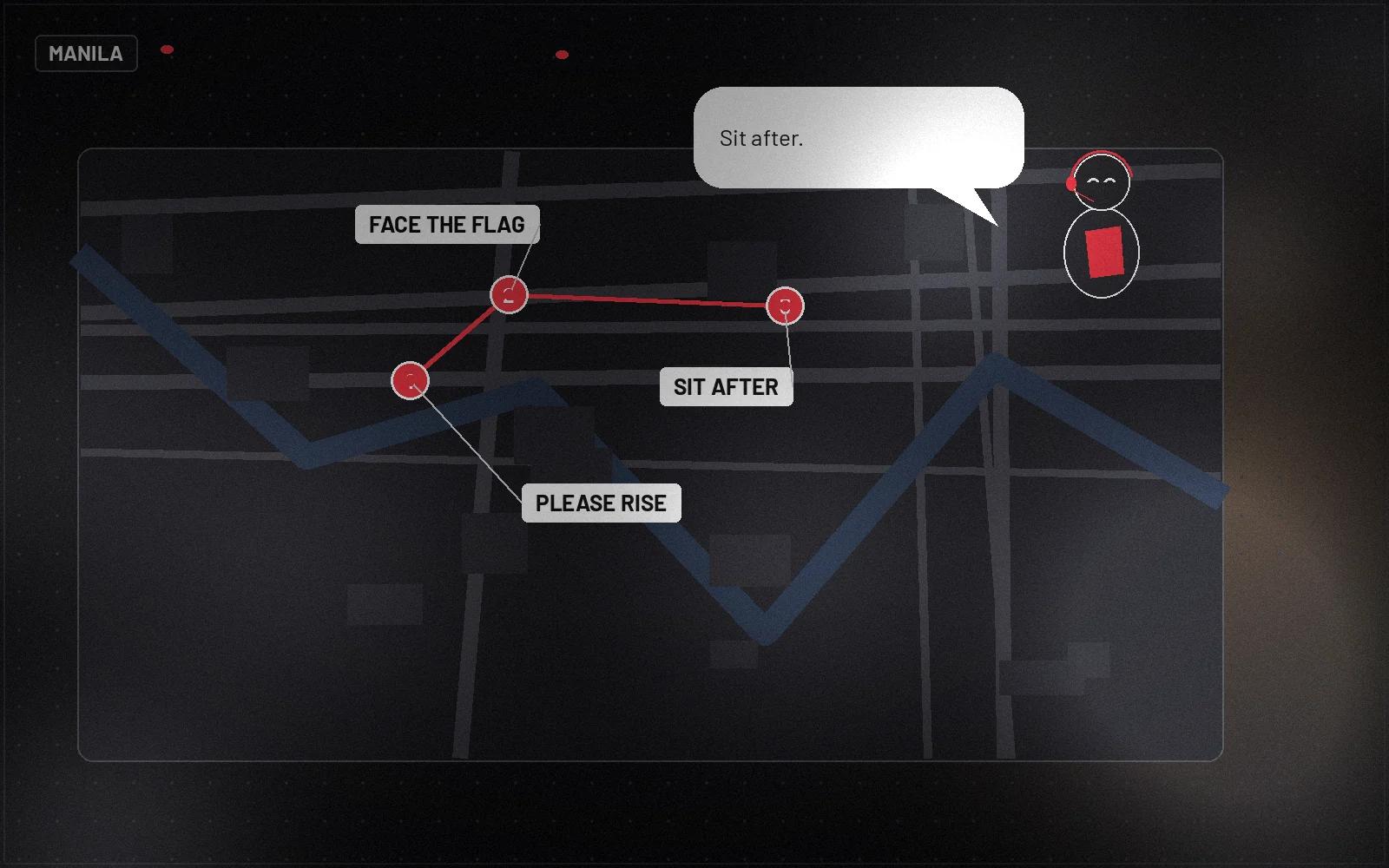
- Flag position agreed and visible from every table.
- Anthem file tested at the booth.
- Emcee card with the rise and sit cues.
- Servers briefed to pause and step back.
- Kill rule: never cue the anthem while service or walk-in music is still running.
FAQs
What is an anthem line English APAC?
An anthem line English APAC is the emcee’s short call before the national anthem: please rise, face the flag, sit after. The whole room stands together and sits together.
When do you say the anthem line English APAC?
Say it once, slowly, before the anthem cue. Give the sit cue after the last note.
Who owns the anthem line English APAC?
The emcee owns the anthem line English APAC. The emcee says it and nods to the booth.
Neuwark Communications writes event scripts like this through strategy and messaging.
Talk to us about your next event script.
Illustrative lines only. Communications craft, not legal advice.