
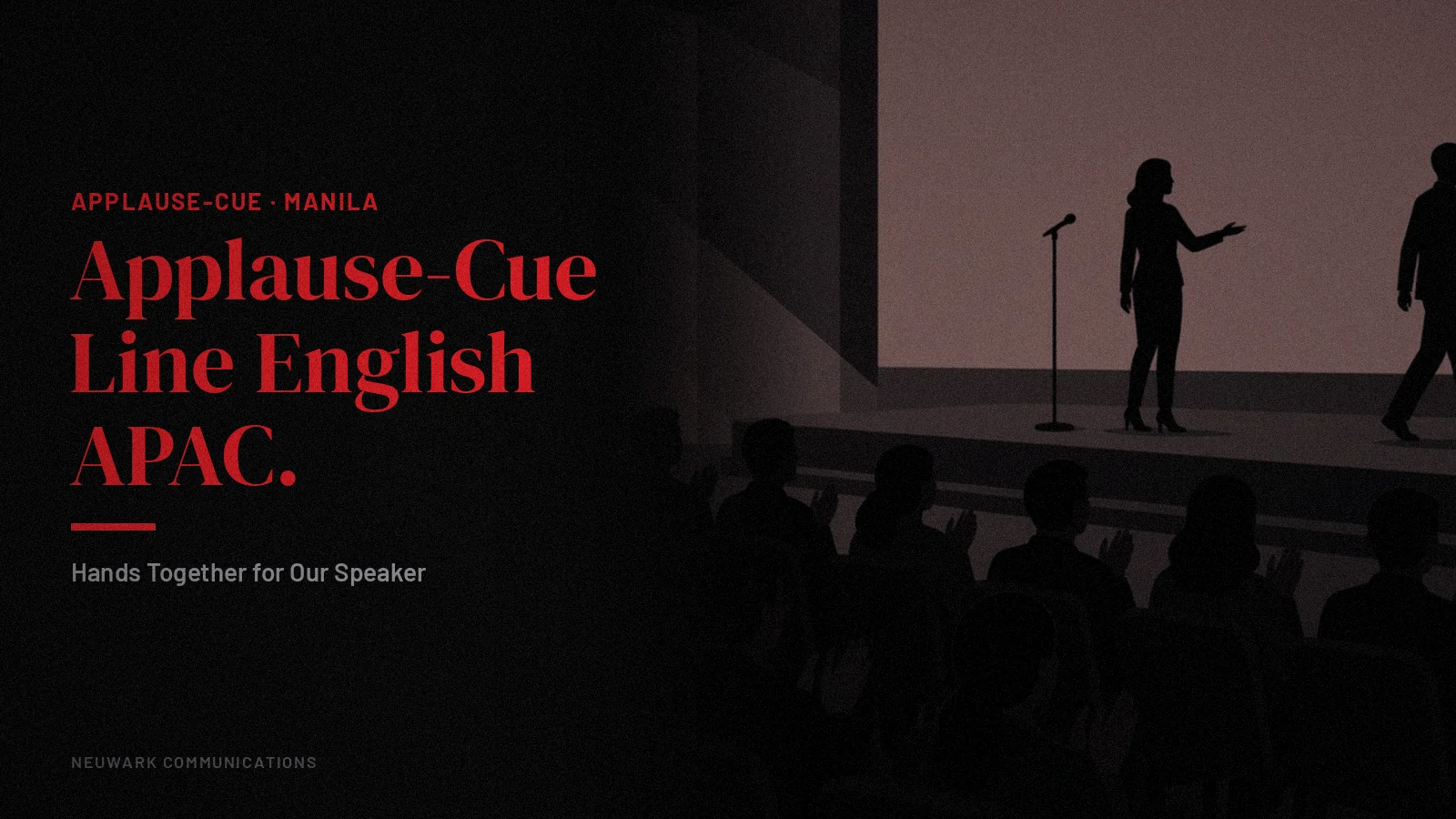
A forum hall in Manila, the keynote is next.
The speaker stands in the wings.
The room is still chatting, and nobody knows when to clap.
Applause-cue line English APAC is the short emcee line that tells the room when to clap: hands together, here is our next speaker, thank you.
Street-smart APAC English: short sentences a tired operator can say out loud.
Quick answer: An applause-cue line English APAC is what the emcee says to bring a speaker on to a warm room: please put your hands together, here is our next speaker. Give the cue before the name, keep it short, and start clapping yourself.
The run-of-show cue English APAC moves the crew; this line moves the audience. The award call-up line English APAC adds the walk and photo.
What goes in an applause-cue line English APAC?
An applause-cue line English APAC has three parts: the cue to clap, the speaker line, and a thank-you as the speaker reaches the lectern. It does not read a full biography. Clear event language gives the room one signal, so the applause starts together instead of in scattered pockets.
Applause-cue line (illustrative):
“Ladies and gentlemen, please put your hands together.”
“Here is our next speaker.”
“Thank you, the floor is yours.”
How do I get the audience to clap for a speaker?
Give the cue before the name, so hands are ready when the speaker appears. Say it a little louder than your normal voice. Start clapping yourself, away from the mic, and nod to the front rows. The tech desk can raise walk-in music on the same cue.
Question ladder (illustrative):
- Typed question: “What do emcees say to introduce a speaker?” Opener: “Please put your hands together.”
- Follow-up: “Should I read the whole bio?” Opener: “One line is enough.”
- Practical rung: “What if nobody claps?” Opener: “A warm welcome, please.”
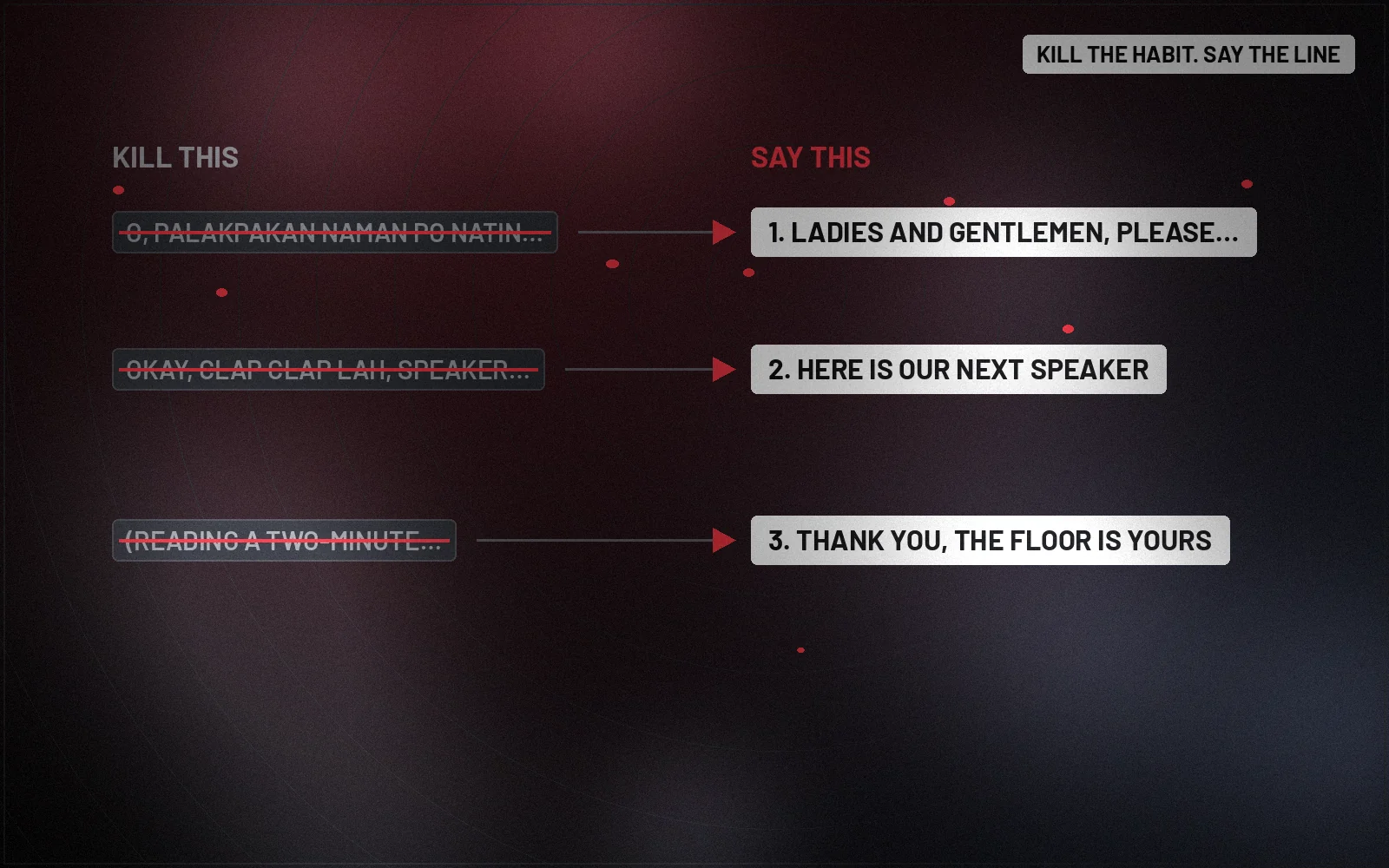
| Kill this | Say this (illustrative) | Why |
|---|---|---|
| O, palakpakan naman po natin, dali! | Ladies and gentlemen, please put your hands together. | One clear cue |
| Okay, clap clap lah, speaker coming! | Here is our next speaker. | Calm and direct |
| (reading a two-minute biography first) | Thank you, the floor is yours. | Hands over cleanly |
What if the speaker is slow to walk on?
Keep the applause alive with one more line: a warm welcome, please, as the speaker walks up. Watch the wings for the stage manager’s nod before you start the cue. If the speaker is not there, stop, smile and say we’ll be with you in a moment.
Why does this line work?
Audiences want to clap but wait for permission. The cue gives it, the speaker line tells them who is coming, and the thank-you hands the stage over without dead air. The speaker walks into warmth instead of silence, and starts the talk on a better footing.
The line shifts in word choice only: in the Philippines, add po or a warm palakpakan cue; in Singapore and Malaysia, keep it crisp and formal; in Indonesia, open with Bapak dan Ibu.
PH and SG desk notes
Philippines desk. In a Manila forum hall, audiences clap warmly once cued, and some emcees add a light joke. Keep it short and never at the speaker’s expense.
Singapore and wider APAC desk. In Singapore, audiences may wait politely in silence. Give a clear cue and keep campaign communications staff in the wings.
Paste-ready lock
Speakable lock (illustrative): “Ladies and gentlemen, please put your hands together, here is our next speaker, thank you.”
Monday field kit
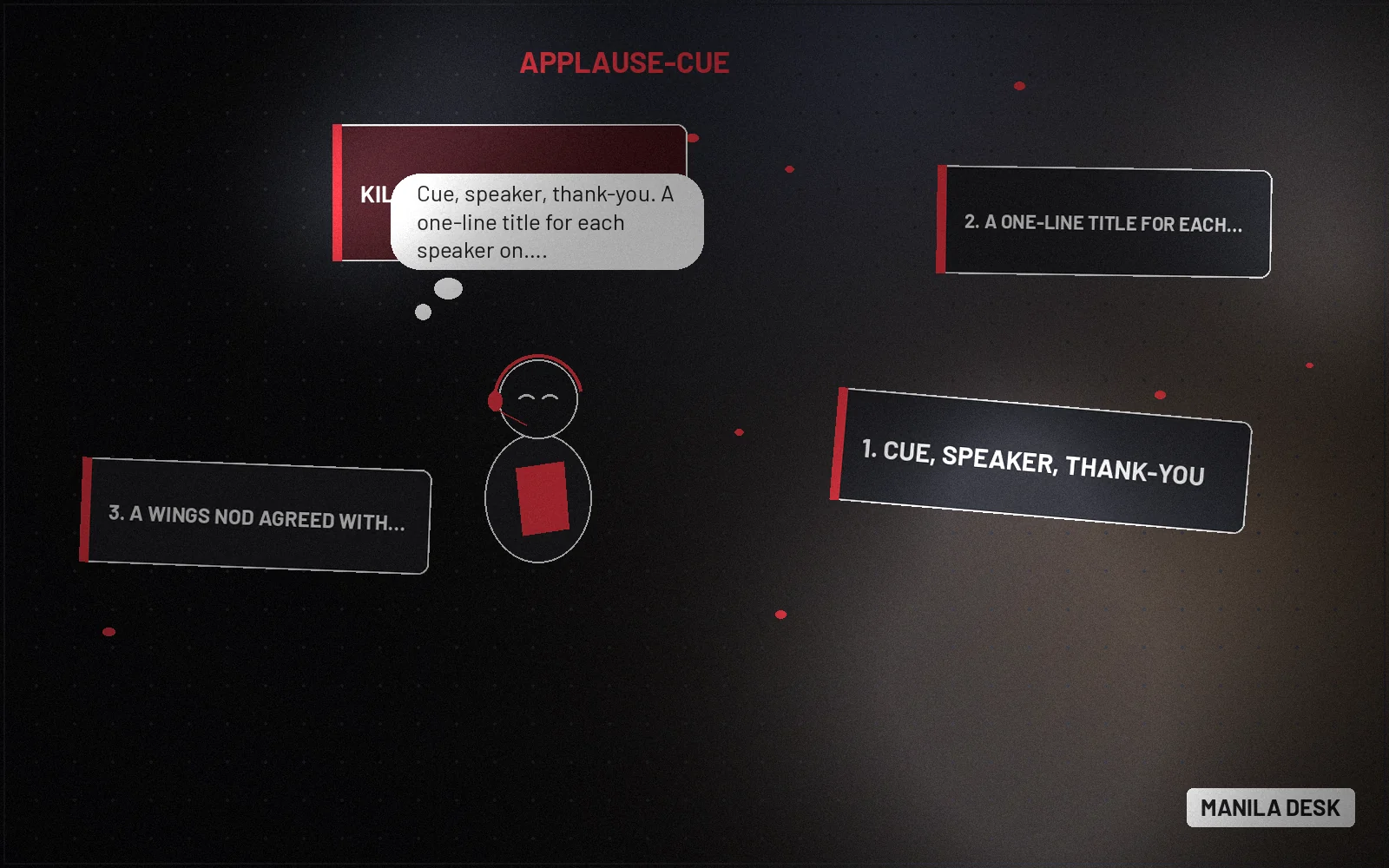
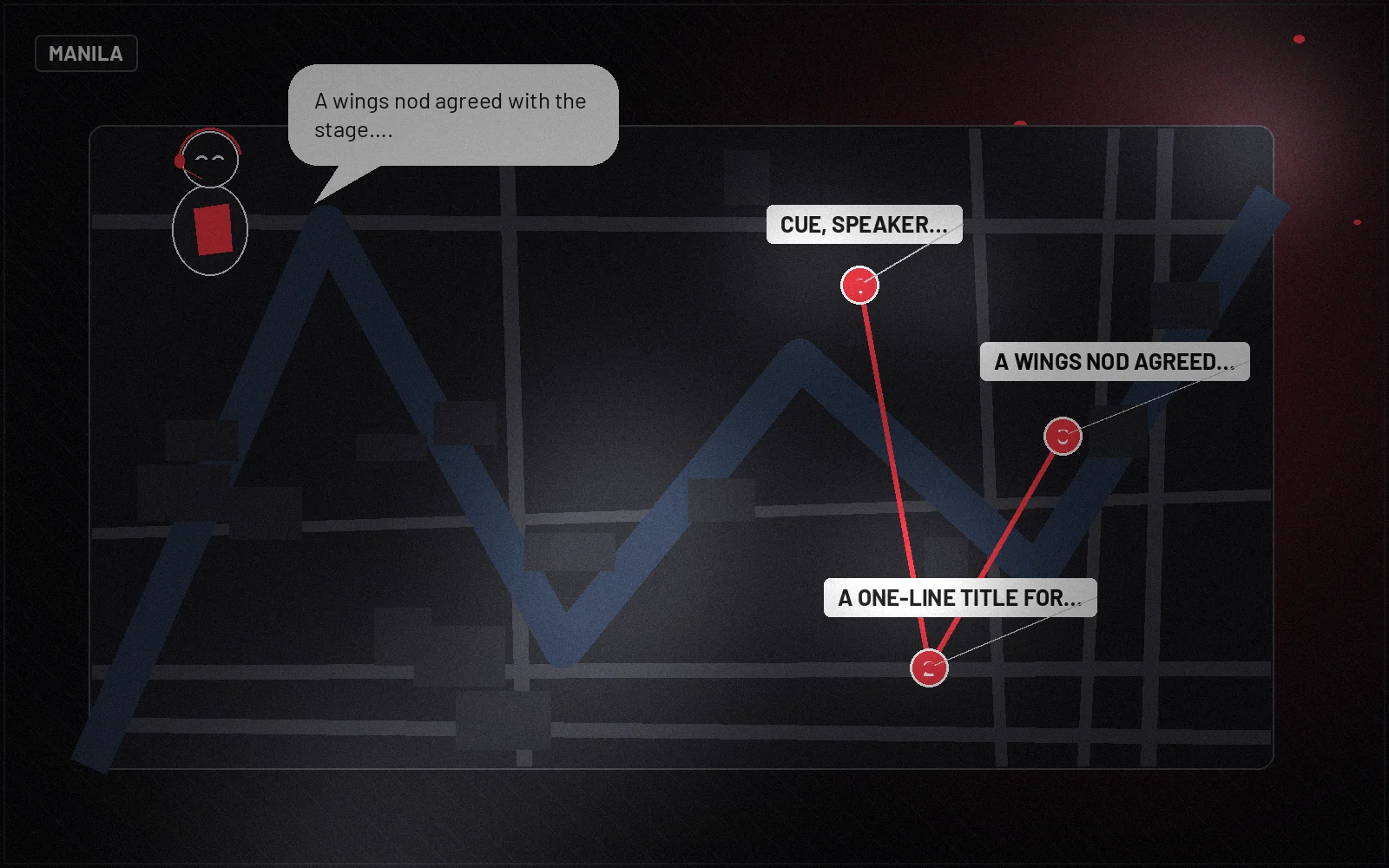
- Cue, speaker, thank-you.
- A one-line title for each speaker on the emcee card.
- A wings nod agreed with the stage manager.
- Walk-in music cued at the tech desk.
- Kill rule: never read a full biography before the applause.
FAQs
What is an applause-cue line English APAC?
An applause-cue line English APAC is the short emcee line that tells the audience when to clap for a speaker. It gives the cue, introduces the speaker and hands over the floor.
What should an emcee say to introduce a speaker?
To introduce a speaker, an emcee should ask the room to put their hands together and hand over the floor, using an applause-cue line English APAC. The full biography belongs in the programme.
How do you get an audience to clap on cue?
Get an audience to clap on cue by giving the cue before the speaker appears and clapping yourself, as the applause-cue line English APAC suggests. Walk-in music on the same cue helps.
What to do this week
- Write the line on the emcee card.
- Cut each speaker intro to one line.
- Agree the wings nod with the stage manager.
- Cue walk-in music with the tech desk.
Neuwark Communications writes event scripts through strategy and messaging and digital and social within our services. More lines live in Insights.
Related: Run-of-show cue English APAC · Award call-up line English APAC
Talk to us about your next event script.
Illustrative lines only. Communications craft, not legal advice.