
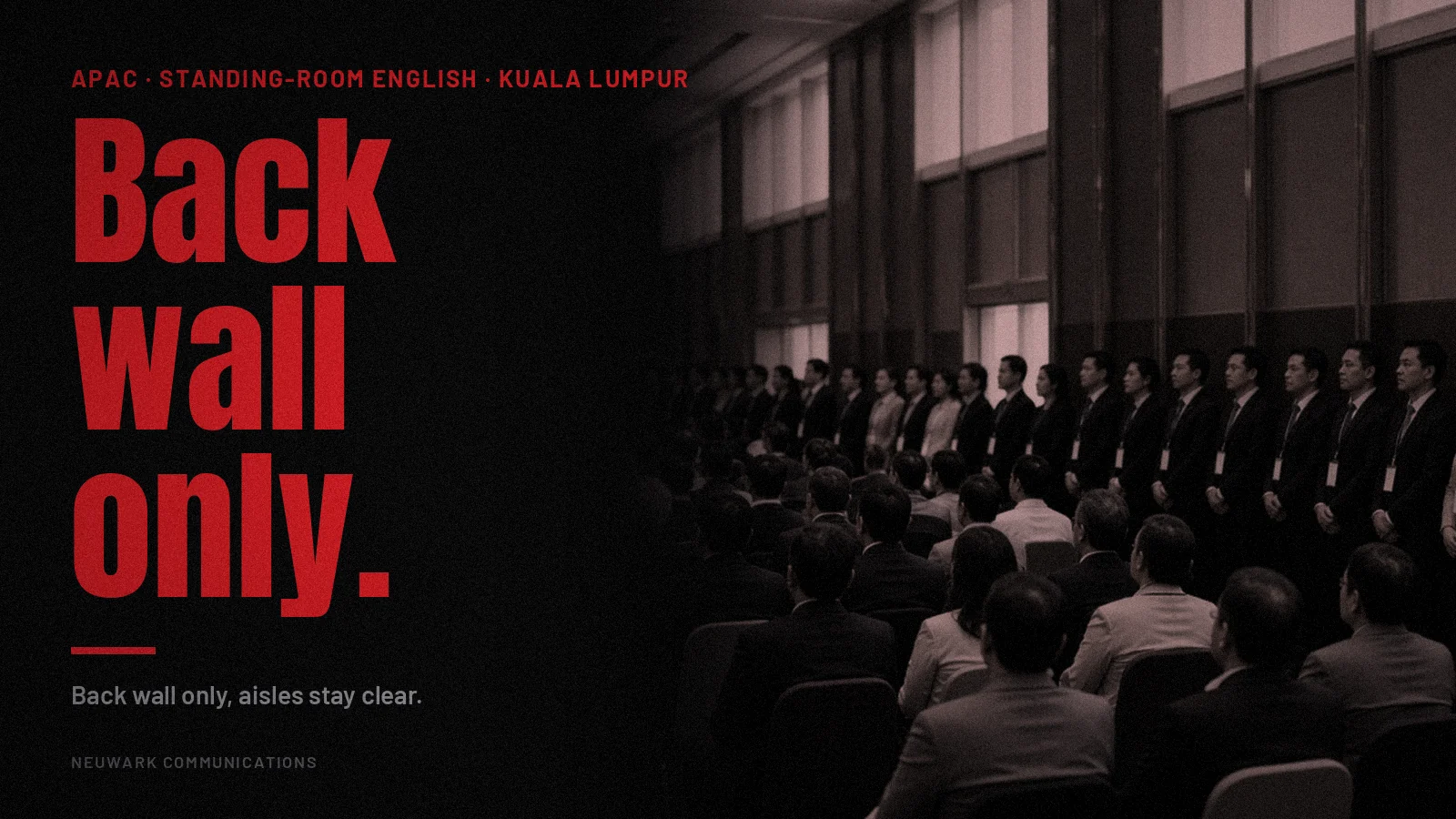
“Back wall only, aisles stay clear.”
Quick answer: A standing-room line English APAC is what the usher says once every seat is taken: back wall only, aisles stay clear, and a seat goes to you as soon as one frees up. Point to the wall before guests choose their own spot.
A Bangkok hotel ballroom, keynote just started.
Every seat is taken and more guests keep arriving.
Three of them stop in the side aisle to watch.
Standing-room line English APAC is the short usher line for a full hall: back wall only, aisles stay clear, so latecomers can watch without blocking the way.
Street-smart APAC English: short sentences a tired operator can say out loud.
Pair it with the seat-filler line English APAC and the at-capacity line English APAC for more event language on the floor.
What goes in a standing-room line English APAC?
A standing-room line English APAC has three parts: the place, the rule and the promise. Back wall only gives one place to stand, behind the last row. Aisles stay clear is the rule that keeps the way open for ushers, mics and anyone leaving. The promise, a seat as soon as one frees up, keeps standing guests patient.
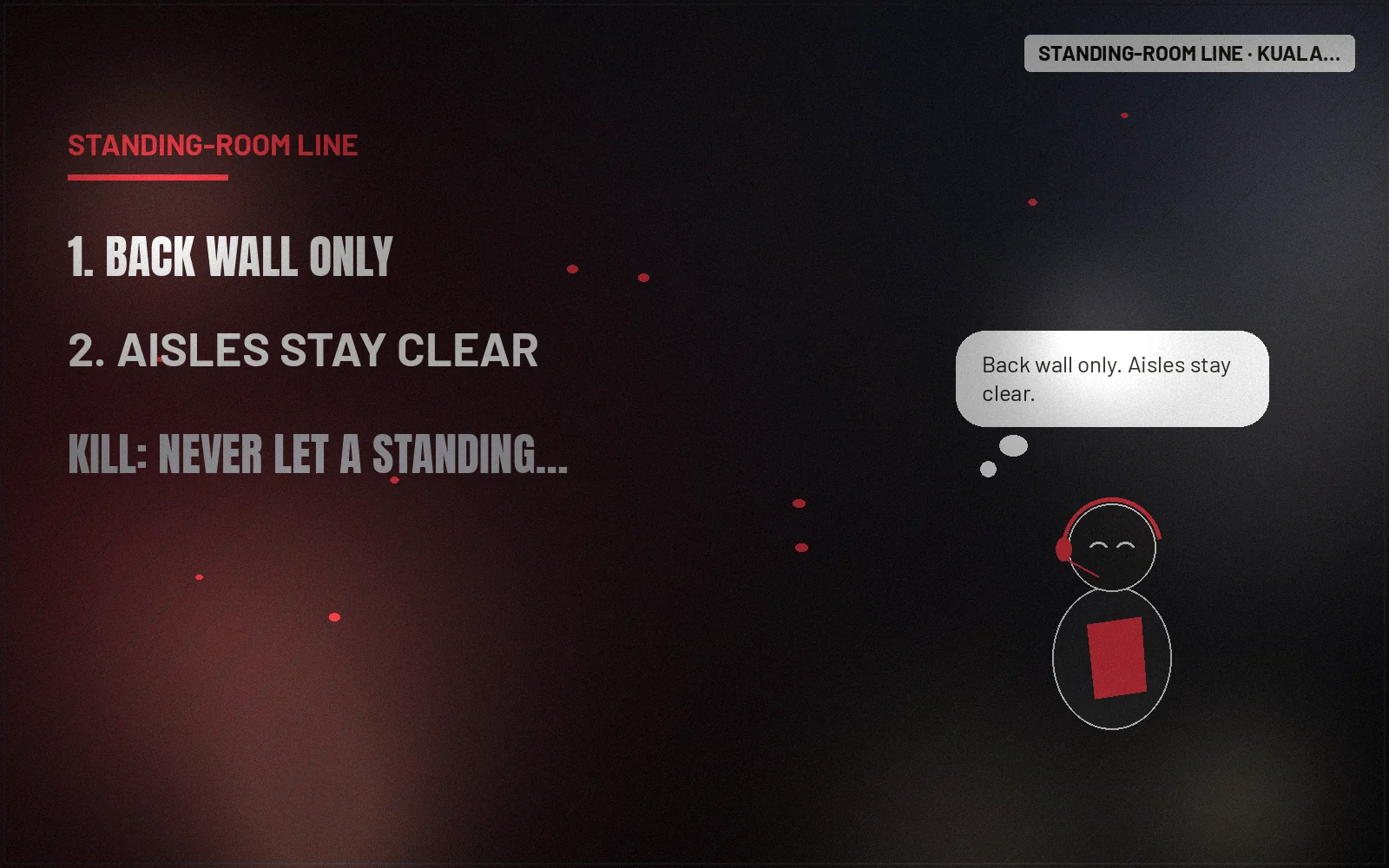
Standing-room line (illustrative):
“Seats are full. Standing room is at the back wall.”
“Please keep the aisles clear.”
“I’ll bring you to a seat as soon as one frees up.”
Where should guests stand when a hall is full?
Along the back wall, behind the last row, never in the side or centre aisles. The back wall keeps standing guests out of sightlines and leaves the aisles open for ushers, roaming mics and anyone stepping out. One usher stays at the back to hold the line and spot free seats.
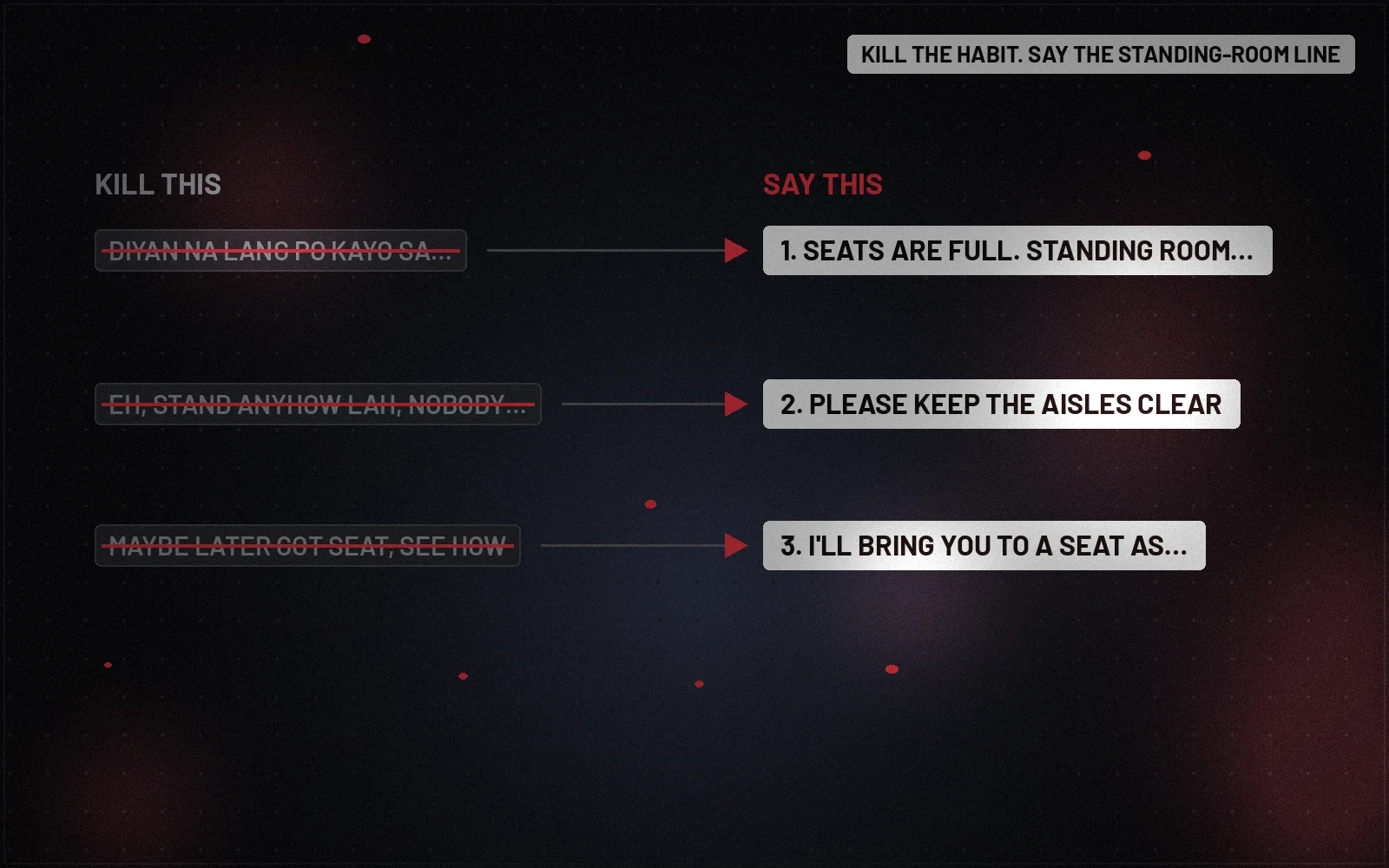
| Kill this | Say this (illustrative) | Why |
|---|---|---|
| Diyan na lang po kayo sa gilid, okay lang. | Seats are full. Standing room is at the back wall. | One place to stand |
| Eh, stand anyhow lah, nobody using the aisle. | Please keep the aisles clear. | Keeps the way open |
| Maybe later got seat, see how. | I’ll bring you to a seat as soon as one frees up. | No vague later |
Lines in this table are illustrative, not quotes from real people.
What if standing guests drift into the aisles?
Walk over, stand beside them rather than in front, and repeat the line quietly: back wall, please, the aisle stays clear. Point to a free spot on the wall. If the back wall is full too, tell the door usher to switch to the at-capacity line and hold new arrivals outside. Thank the guest by name if you know it; a calm usher keeps the rest of the row calm.
How does the line play out on PH and SG desks?
Philippines desk. In PH halls, latecomers often stand near friends who already have seats. Add po and sir or ma’am: sa likod po, back wall only. Post free-seat counts in the usher Viber group so the back-wall usher knows where to send people.
Singapore and wider APAC desk. In Bangkok, Kuala Lumpur and Singapore, keep it brisk and plain: back wall only, aisles clear. A simple point and a smile carry the line when English is a second language for many guests. Keep the back-wall usher near the doors so new arrivals meet the line before they find their own spot.
Paste-ready lock
Speakable lock (illustrative): “Back wall only, aisles stay clear.”
Print it on every usher card and say it in the same words at every door and at the back of the hall. Point to the wall first, then say the line, then watch the aisles.
Monday field kit
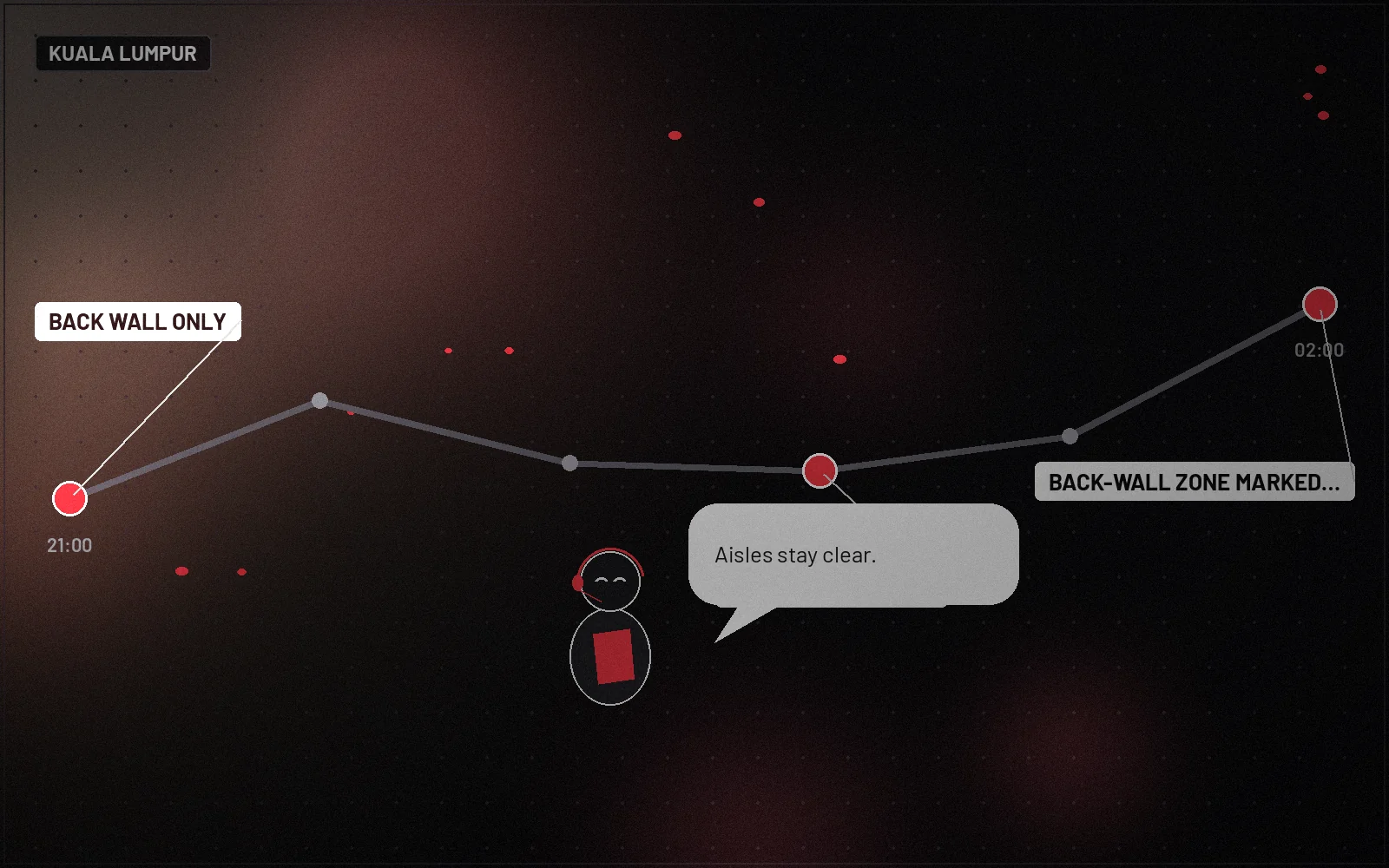
- Back-wall zone marked behind the last row.
- One usher posted at the back wall throughout.
- Side and centre aisles kept clear.
- Free-seat signal agreed with the row ushers.
- Kill rule: never let a standing guest block an aisle.
What to do this week
- Mark the back-wall standing zone.
- Assign one back-wall usher per session.
- Agree the free-seat signal with row ushers.
- Add the line to every usher card.
- Agree when the door switches to the at-capacity line.
FAQs
What is a standing-room line English APAC?
A standing-room line English APAC is the usher’s short script for a full hall: back wall only, aisles stay clear. It lets latecomers watch without blocking the way.
Where should people stand when an event hall is full?
Behind the last row, along the back wall. Side and centre aisles stay clear for ushers, mics and anyone stepping out.
What do you say to guests standing in the aisle?
Say it quietly, beside them: back wall, please, the aisle stays clear. Then point to a free spot on the wall.
Who owns the standing-room line in a full hall?
The back-wall usher owns the spoken line and the free-seat spotting. The floor lead decides when the door switches to the at-capacity line.
Neuwark Communications writes event scripts through strategy and messaging and digital and social. More lines live in Insights.
Talk to us about your next event script.
Illustrative lines only. Communications craft, not legal advice.