
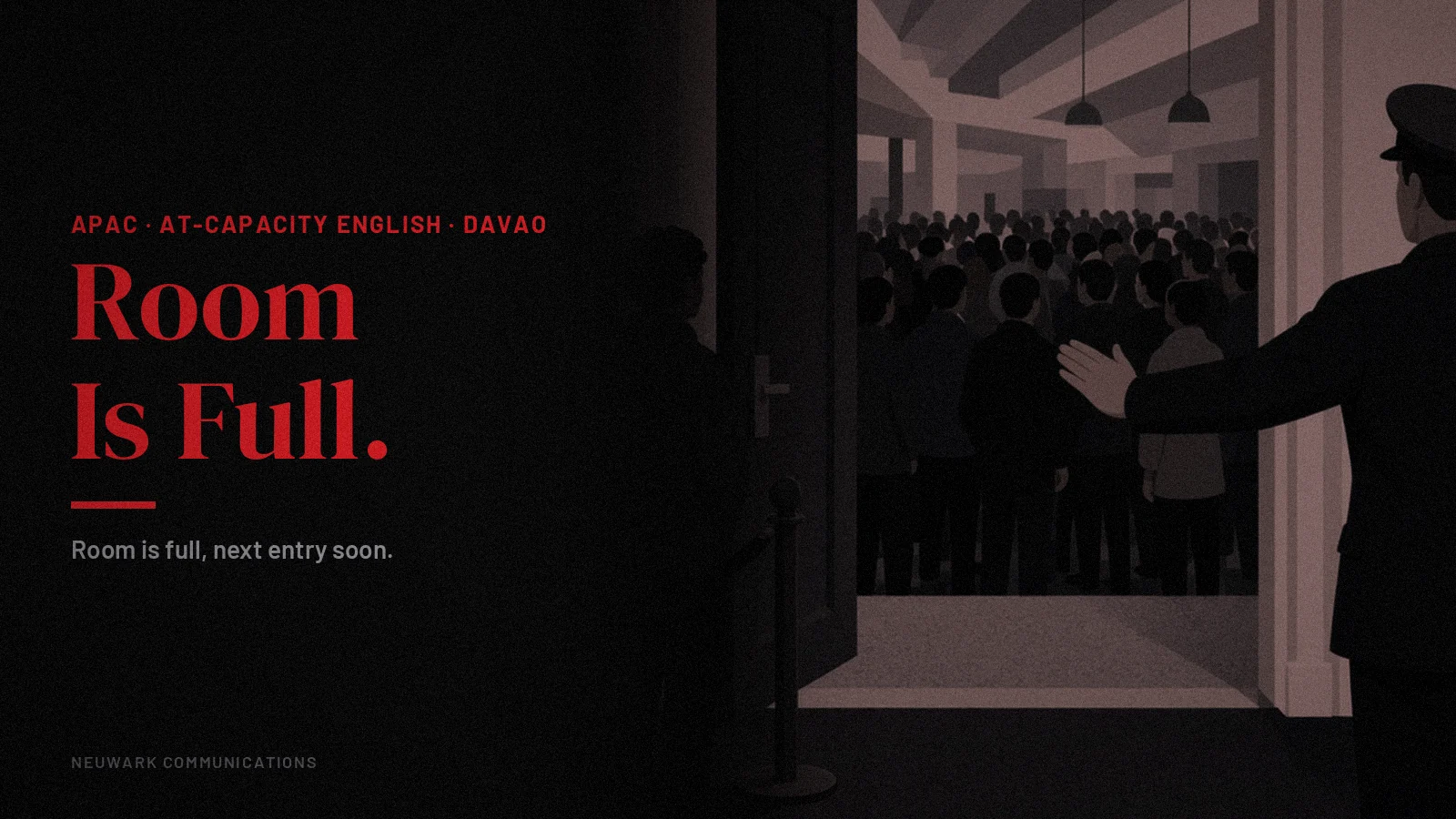
A policy forum in Davao, five minutes in. The hall is full, and guests are still arriving.
At-capacity line English APAC is the short door line for a full room: we’re at the safe limit, next entry is soon, and here’s where to wait.
Quick answer: An at-capacity line English APAC is what door staff say when the room is full: sorry, the hall is at its safe limit, we’ll let people in as others leave, and you can wait here or watch next door. Say it before guests reach the door, and keep the queue informed.
Street-smart APAC English: short sentences a tired operator can say out loud.
It is the moment the doors hold; the overflow room line English APAC sends guests to a screen elsewhere. It also differs from the queue update announcement English APAC, which speaks to a long queue about delays; here the room itself is full.
What goes in an at-capacity line English APAC?
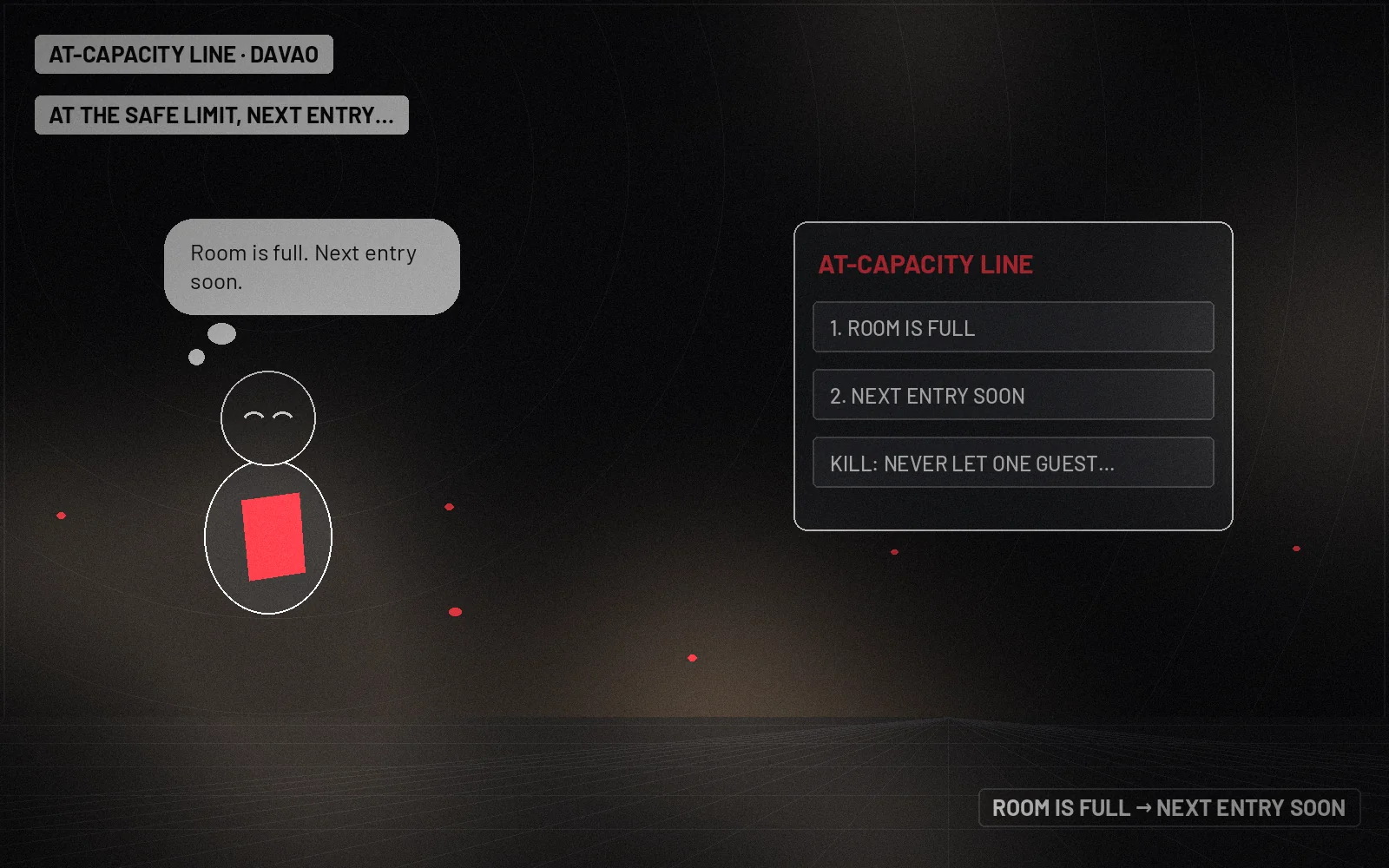
An at-capacity line English APAC has three parts: the room is at its safe limit, how entry will work next, and where to wait. Naming safety, not popularity, keeps it from sounding like favouritism. Explaining the next entry turns a closed door into a short, fair wait that guests can plan around.
At-capacity line (illustrative):
“Sorry, the hall is at its safe limit right now.”
“We’ll let people in as others leave.”
“Please wait here, or watch on the screen next door.”
How do I tell guests the room is full without a scene?
Say it early, before guests reach the door, and say it the same way to everyone. Stand to the side, not in front of the door, and keep your voice calm. Give the reason, safety, and the next step. People accept a full room more easily when the rule is clear and fair.
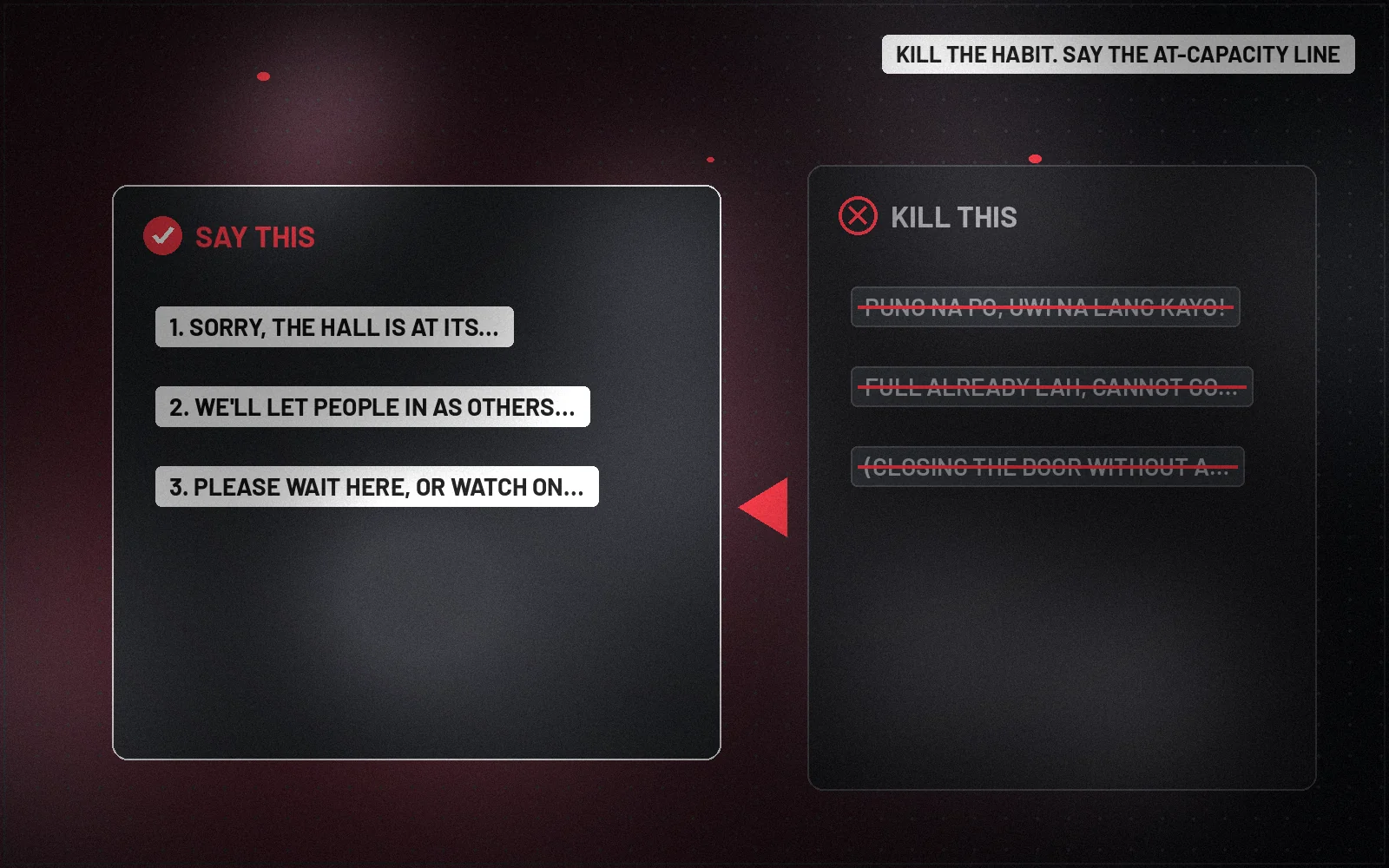
| Kill this | Say this (illustrative) | Why |
|---|---|---|
| Puno na po, uwi na lang kayo! | Sorry, the hall is at its safe limit right now. | Names safety |
| Full already lah, cannot go in, go home. | We’ll let people in as others leave. | Gives a next step |
| (closing the door without a word) | Please wait here, or watch on the screen next door. | Offers a place |
| Sige, isisingit na lang kita, kilala naman kita. | Sorry, it’s one in, one out, for everyone. | No favours |
Can speakers or guests of honour still go in when the room is full?
Only if the host organisation agreed it in advance, and only for people with a role, such as speakers or staff. Say it openly so the queue understands: this guest is on the programme. Release held seats for guests who never arrive, and say the release out loud.
How do I keep a waiting queue calm?
Give updates every few minutes, even if nothing has changed. Say what is happening: two seats free, next two people please. Keep one staff member at the head of the queue and one at the door. If the wait will be long, say so honestly and offer the screen or a later session.
How does this play out in PH and SG?
The three parts hold in both markets, but crowds react differently to a closed door. Use the desk notes below to adjust tone and wording for Philippine and Singapore events, and agree the safe limit and the entry rule with the venue team before doors open.
Philippines desk. At Philippine events, guests may say a friend inside is saving them a seat. Hold the rule kindly: sorry, it’s one in, one out for everyone. Use English or Filipino, and keep it warm.
Singapore and wider APAC desk. In Singapore, guests often expect the rule to be clear and applied the same way to all. Say it plainly and early, keep the event language short, and give a time for the next update.
Paste-ready lock
Speakable lock (illustrative): “Sorry, the hall is at its safe limit right now, we’ll let people in as others leave, and you can wait here or watch next door.”
Monday field kit
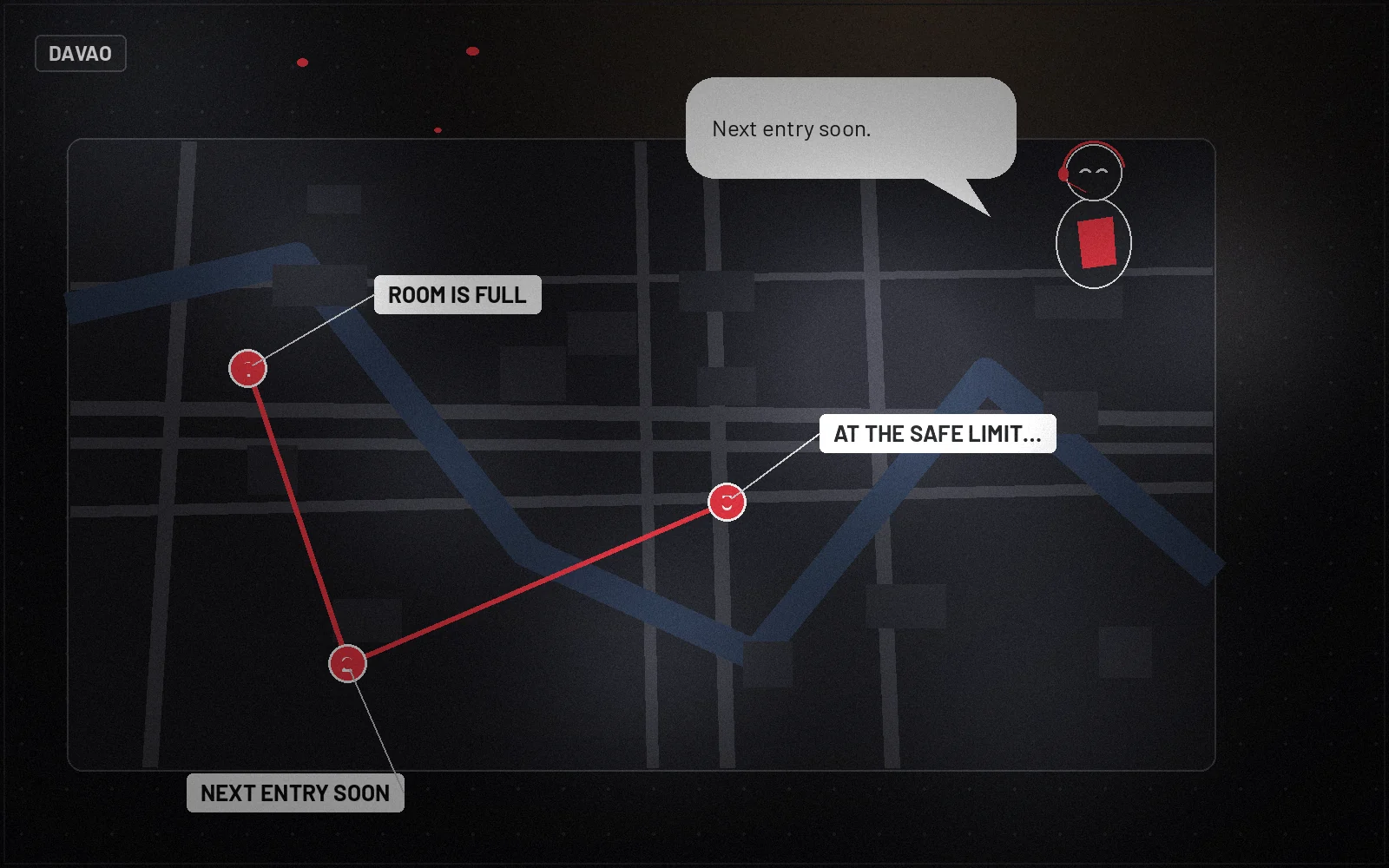
- At the safe limit, next entry as others leave, where to wait.
- A head count agreed with the venue team.
- A door sign: room full, please wait here.
- A screen or overflow plan, if there is one.
- Kill rule: never let one guest past a full door while turning the next away.
What to do this week
- Confirm the safe limit with the venue team.
- Agree the entry rule and who may skip it.
- Write the line on the door card.
- Print the room-full sign.
Kill rule: if you keep the door, keep the count too.
FAQs
What is an at-capacity line English APAC?
An at-capacity line English APAC is the short door line for a room that is full. It names the safe limit, says how the next entry works and points guests to a place to wait.
What do you say when an event room is full?
When an event room is full, say it is at its safe limit and that people will go in as others leave. Then point guests to a place to wait or a screen.
Who decides the room capacity at an event?
The venue team decides the room capacity at an event, and door staff follow it. Staff should never guess the number on the day.
Can guests save seats for friends in a full room?
Guests should not save seats for friends once a room is full, because it breaks the one in, one out rule. Door staff say this kindly and the same way to everyone.
Neuwark Communications builds event scripts and campaign communications as part of our strategy and messaging and digital and social work and wider services. More street-smart lines live in Insights.
Related: Overflow room line English APAC · Queue update announcement English APAC
Talk to us about your next event script.
Illustrative lines only. Communications craft, not legal advice.