
The principal spoke for four minutes. The bulletin had twelve seconds.
The producer does not have time to find the point. If the point is not in the first breath, the clip is the throat-clear.
Radio actuality English APAC is the 12-second cut a producer can air without rewriting you: frame, one proof, close.
Street-smart APAC English: short sentences a tired operator can say out loud.
This sits next to clip-safe debate answers. That piece is the television cut. This piece is the radio actuality, where there is no picture to save a mushy line.
What does a 12-second actuality sound like?
About 30 to 35 words. Three beats. Each beat can air alone.
| Beat | Time | Job | Say this (illustrative) |
|---|---|---|---|
| Frame | 0–3 sec | Name the problem in the listener’s words | “Jeepney fares are up again this week.” |
| Proof | 3–8 sec | One checkable fact | “The new matrix adds four pesos on the short hop.” |
| Close | 8–12 sec | The line that still works if the front is cut | “Riders should see the posted matrix before they pay.” |
Write the close first. Then build the other two beats so they lead to it.
What kills the cut?
| Kill this | Why it dies on air | Say this instead |
|---|---|---|
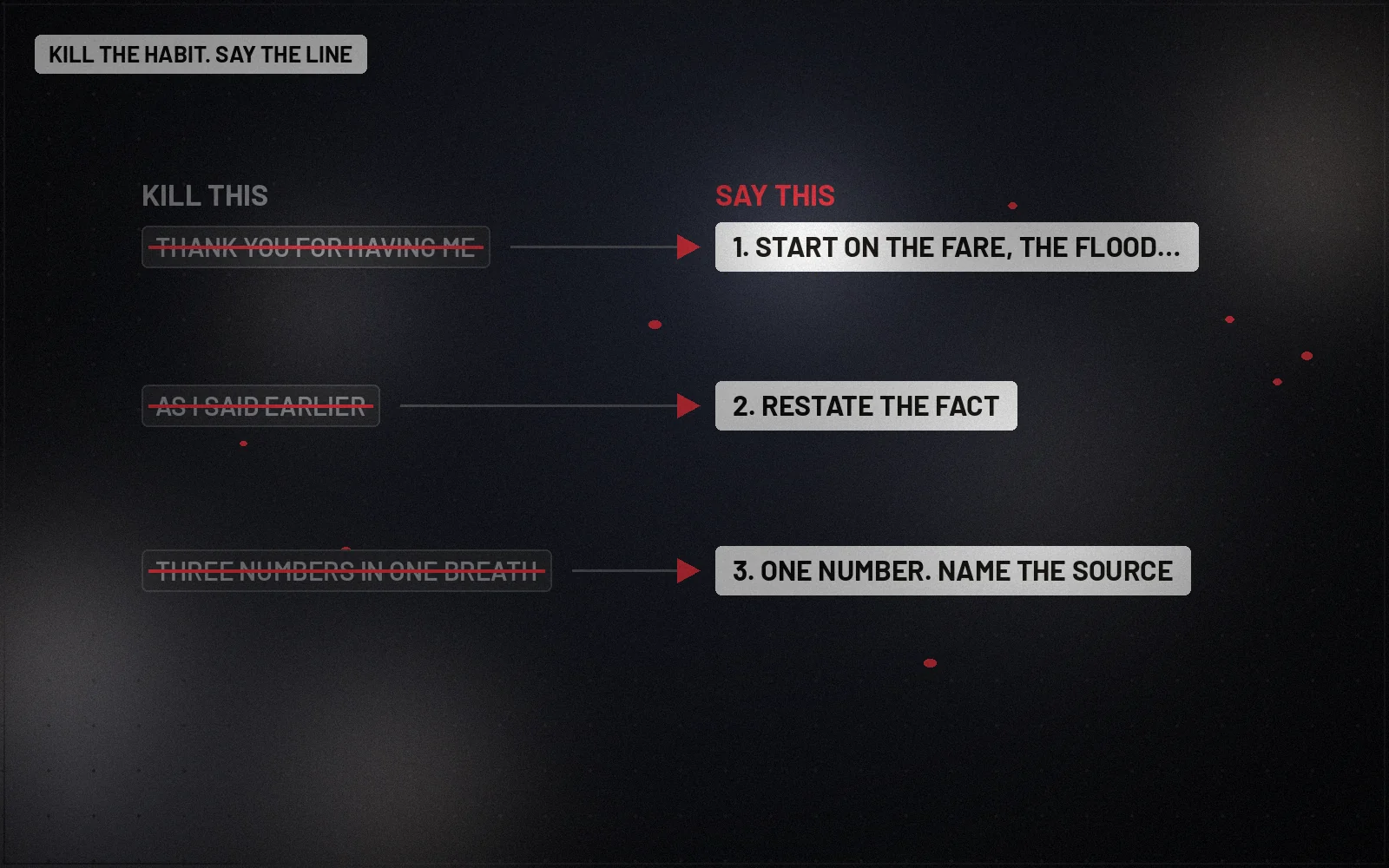
| “Thank you for having me” | Burns the only seconds you get | Start on the fare, the flood, the hearing |
| “As I said earlier” | The listener did not hear earlier | Restate the fact |
| Three numbers in one breath | The producer cannot pick one | One number. Name the source. |
| A slogan as the close | Sounds like an ad, gets dumped | A line a commuter can repeat |
| English that only works with a slide | Radio has no slide | Say the object out loud |
How do you hand it to the desk?
Four fields. Not a transcript.
Actuality card (illustrative):
Who speaks: the transport lead, not the agency.
Clock: 12 seconds, close first.
Line: “Riders should see the posted matrix before they pay.”
Do not say: legal advice, a second fare figure, a donate ask.
Kill rule: if the close does not stand alone, do not send the file.
What does a good close sound like?
Read these two aloud (illustrative):
Weak close: “We will continue to fight for the riding public.”
Strong close: “Riders should see the posted matrix before they pay.”
The weak close is a promise with no object. A producer cannot use it because a listener cannot act on it.
The strong close names the thing, the place and the action. It airs alone. It still makes sense if the bulletin cuts the frame and the proof.
Test it on someone outside the team. Play only the last four seconds. If they can repeat the line, it is a close.
Where does a radio actuality English APAC cut get used?
Morning bulletins. Top-of-hour news. A host read before a call-in segment. A provincial station that runs the national story with a local voice.
Each one has its own clock. None of them has time for your preamble.
The same 12 seconds can serve all of them if the close stands alone. That is the whole design.
How do you record it so the desk can use it?
Quiet room. Phone close to the mouth, not flat on the table. No fan roar if you can help it.
Say the cut three times. Send the cleanest take, not all three.
Name the file with the date, the speaker role and the object, so a producer can find it before the bulletin. Illustrative: 2026-10-01-transport-lead-fare-matrix.mp3.
What about English and the local language?
Many APAC desks will want both. Record the English cut and the local-language cut as two files: same three beats, same proof, same close.
Do not mix languages inside one 12-second cut unless that is how the speaker actually talks on air. A code-switched line can work for a host. It is harder to clip for a spokesperson quoted in a bulletin.
Same fact in both files. If the number differs, you have two stories.
Who approves the close?
The spokesperson owns the voice. The comms lead owns the close. Counsel sees any line that names a person, a contract or a legal process.
Approve the close before you record. Re-recording at dawn because one word changed costs the slot.
Monday field kit
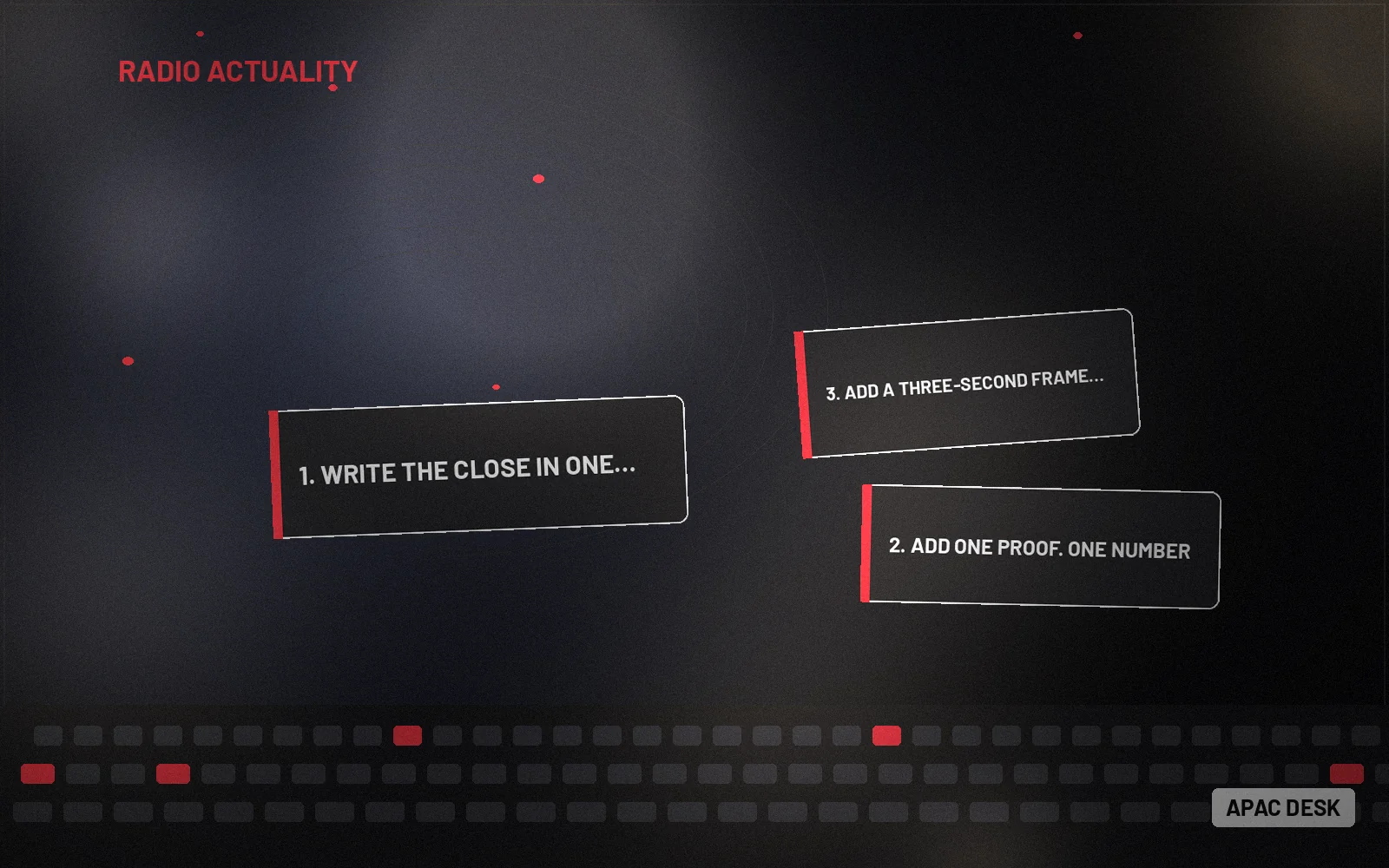
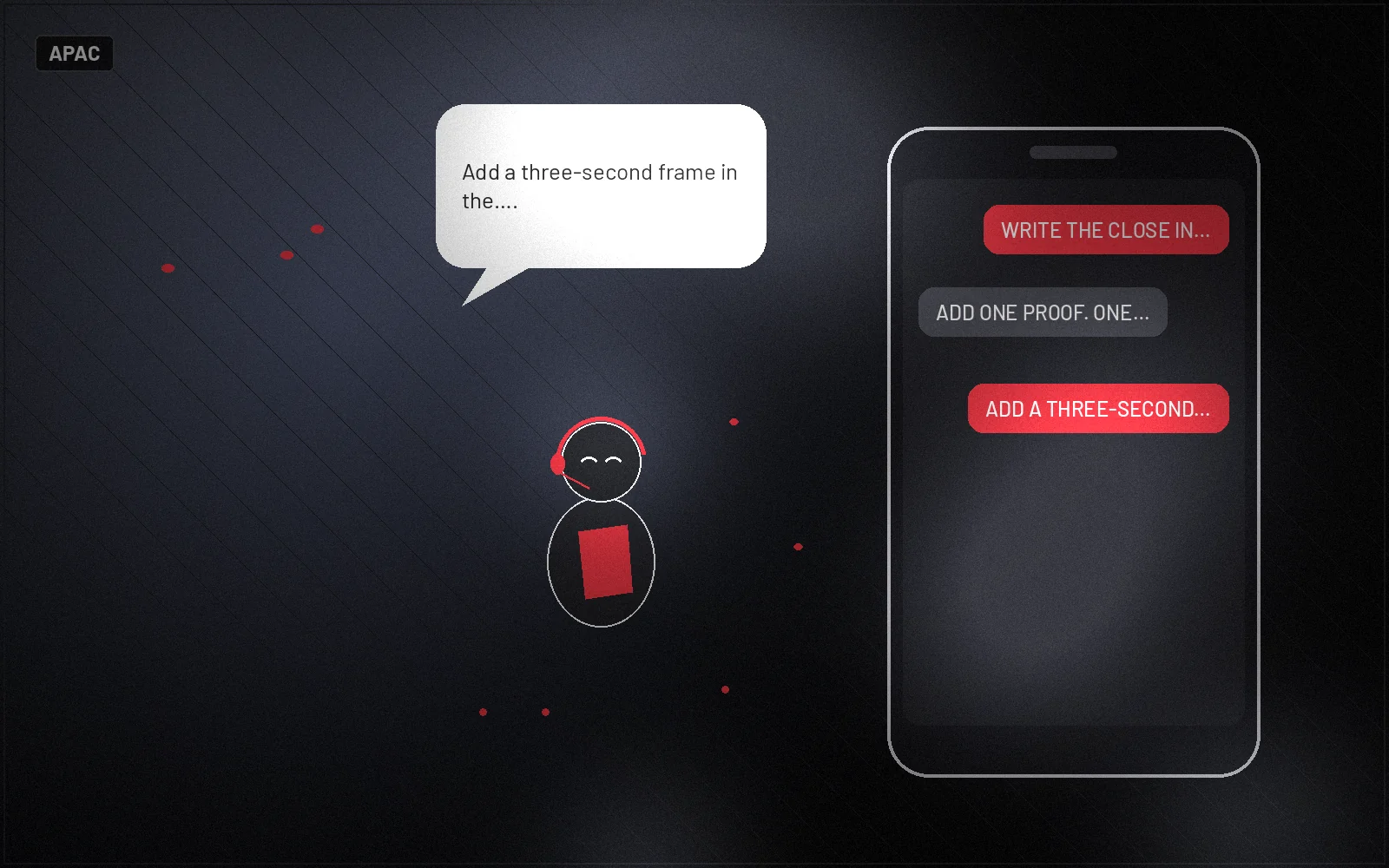
- Write the close in one sentence.
- Add one proof. One number.
- Add a three-second frame in the listener’s words.
- Time it. Over 12 seconds, cut the frame, not the close.
- Send the card with the file. Not a four-minute tape and a hope.
FAQs
What is radio actuality English APAC?
It is the 12-second spoken cut a producer can air: frame, one proof, a close that survives the edit.
Is this the same as a clip-safe debate answer?
Cousin, not copy. Debate clips have a picture. Radio has only the sentence.
Can we put two asks in the close?
No. One close. The second ask waits for another hit.
How long should the actuality file be?
Twelve seconds of speech and a short clean tail. Producers trim. They do not want to dig through a minute of room noise to find the line.
What to do this week
Pull the last three radio hits. Time the close. If it needs the sentence before it, rewrite the close and resend the card.
Neuwark Communications builds rapid-response language under Crisis and Strategy & Messaging. If your actuality still starts with thank you, talk to us at Contact. More language companions live in Insights.
Communications craft, not legal advice. Any line that names a person, a contract or a case goes past counsel before it airs.
Related: Clip-safe English debate prep · Provincial radio host read English · Press holding line English APAC · Press availability English APAC