
The reporter is already writing. The principal is in a van. The intern is on the phone.
Press holding line English APAC is four sentences a desk can say on a callback or send in a reply before the facts are finished: what we know, what we do not, who owns the next update, and when that update arrives.
Street-smart APAC English: short sentences a tired operator can say out loud.
Most holding lines perform sympathy or perform stone. Sympathy without a clock sounds like spin. Stone without a clock sounds like guilt. The reporter will fill the gap with someone who will talk.
This is the language companion to our crisis holding-statement templates, which cover the public statements a team rehearses before chaos. It is not the on-camera card: that is our doorstep holding English, said while walking to a door. This piece is the phone callback and the written reply a reporter gets before your full statement exists.
Communications craft, not legal advice. Do not invent casualties, fault, or regulator quotes in a holding line.
What are the four press holding line English APAC lines?
| Line | Job | Say this (illustrative) |
|---|---|---|
| 1. What we know | Name the verified object | “We are aware of the report about the site this afternoon.” |
| 2. What we do not | Draw the line | “We do not have a confirmed count, and we will not guess one.” |
| 3. Who owns the next update | A role, not a vibe | “The comms desk owns the next note. Legal reads it before it goes.” |
| 4. When it arrives | A clock you can keep | “Next update at 6pm, or sooner if the fact log changes.” |
If you cannot keep the clock, do not set it. The 6pm here is illustrative. Use a time your desk can actually hit, and write the zone if the reporter is in another market.
How is a callback different from a doorstep?
A doorstep is on camera, face to face, with no time to think. A callback is on the phone or in writing, usually with a few minutes to prepare.
That time is a trap. Desks use it to draft something longer and softer. Don’t. The callback is still four lines. The extra minutes go into checking the fact log and confirming who owns the next update, not into adjectives.
A written reply adds one risk: it gets pasted word for word. Every sentence you email will appear in quotation marks. Write only what you would say on the record.
What does the intern say when they do not know?
They do not invent a principal quote. They read the card.
Paste-ready pickup (illustrative):
“I can confirm we have the question. I cannot confirm the figure. The next note is at 6pm from the comms desk. I will not add a name to that.”
Then they hang up. Then they write the question into the fact log. Then they tell the named owner.
What may the holding line not do?
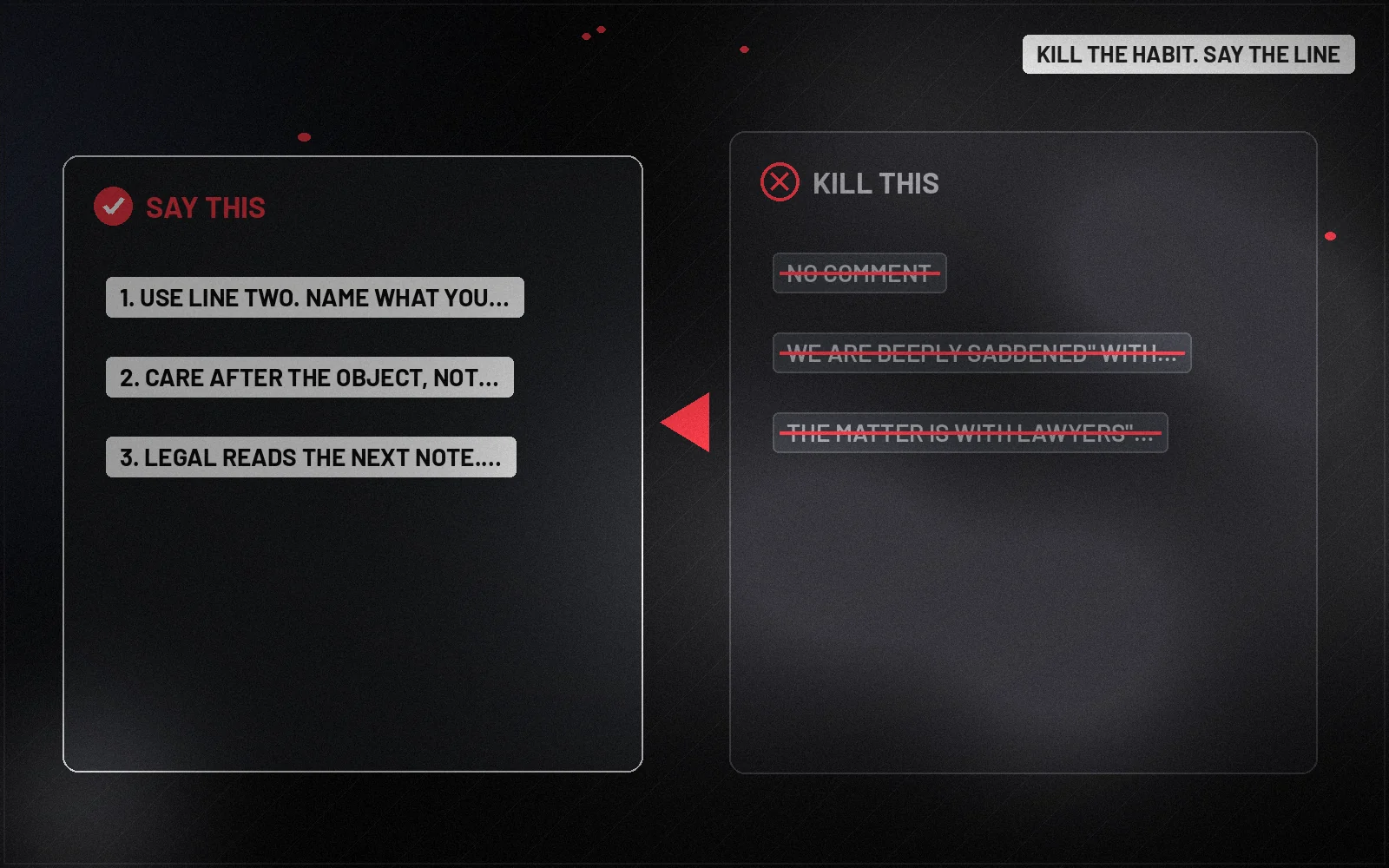
| Kill this | Why it fails on a recording | Say this instead |
|---|---|---|
| “No comment” | Reads as hiding | Use line two. Name what you will not guess. |
| “We are deeply saddened” with no object | Performs feeling, skips facts | Care after the object, not instead of it. |
| “The matter is with lawyers” as a wall | Sounds like a dodge | “Legal reads the next note. The clock is still 6pm.” |
| A blame sentence | You just gave them the lede | Wait for the fact log. |
What goes in the written reply?
The same four lines. A subject line that names the object and the next update time. Your name and role at the bottom, and one phone number someone actually answers.
Paste-ready reply (illustrative):
Subject: Your question on this afternoon’s report: next update 6pm
We are aware of the report about the site this afternoon. We do not have a confirmed count, and we will not guess one. The comms desk owns the next note, and legal reads it before it goes. The next update is at 6pm, or sooner if our facts change.
Do not attach a background document to a holding reply. If it is not ready to be quoted, it is not ready to be sent.
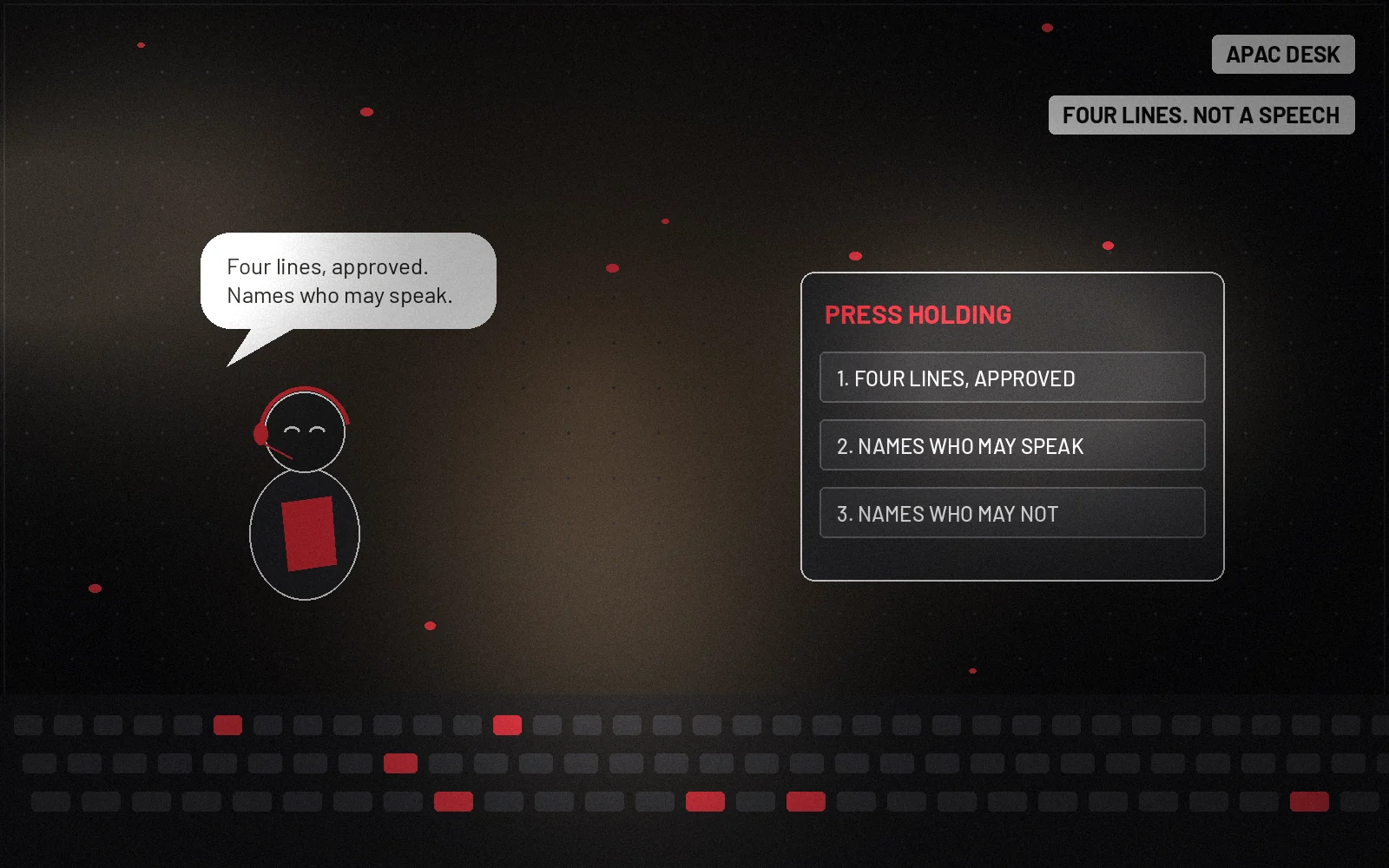
What is the desk card before anyone picks up?
- Four lines, approved.
- Names who may speak.
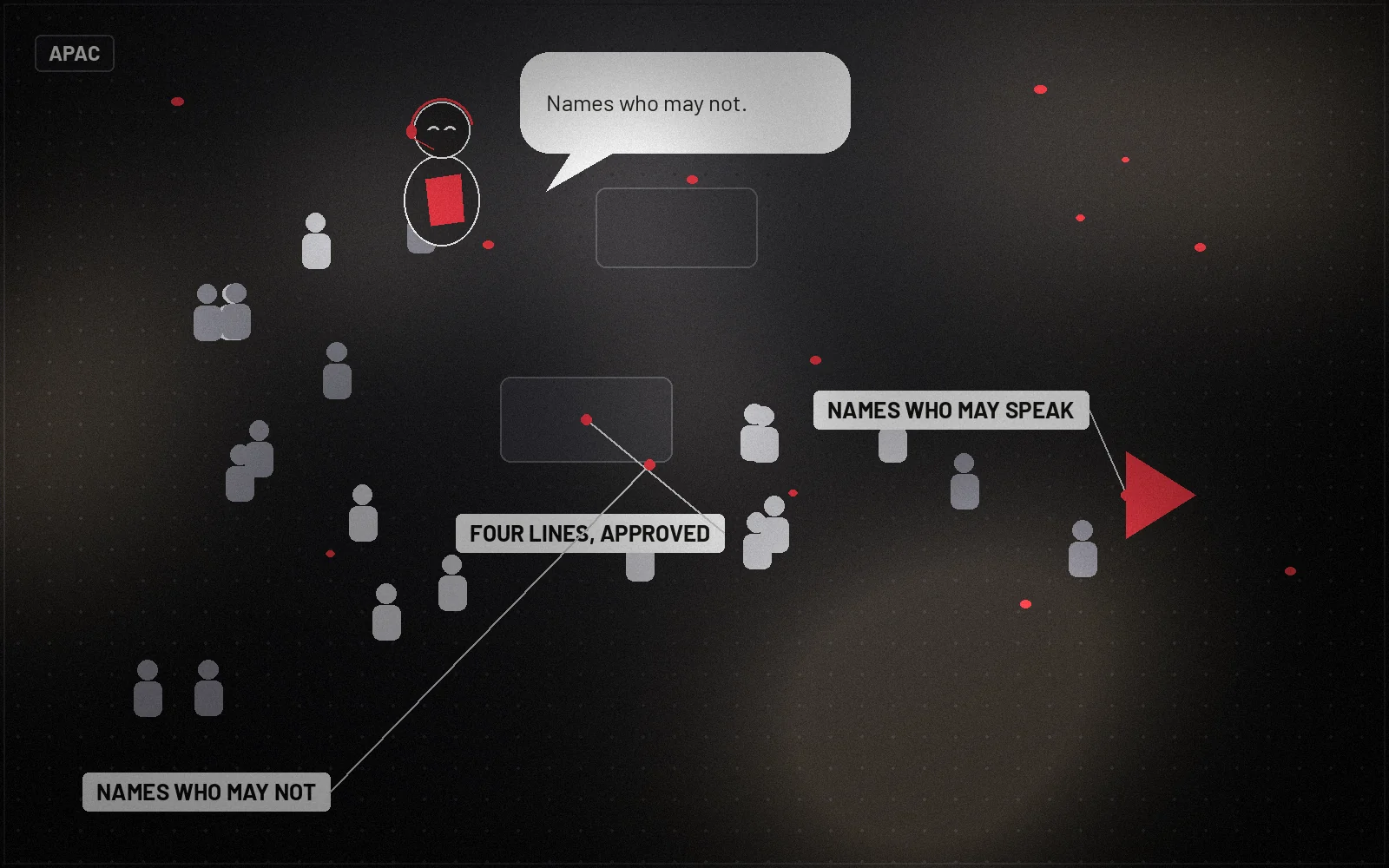
- Names who may not.
- The next-update clock, one you can keep.
Paste-ready approval note:
Approved as written. No new facts on the phone. No principal quote until the next note. Kill rule: if a surrogate adds a number, the line comes down and the next note corrects it.
Monday field kit
- Four lines. Not a speech.
- Object. Gap. Owner. Clock.
- Interns read. They do not improvise.
- The clock is one you can keep.
- The fact log gets the question before the group chat does.
FAQs
What is press holding line English APAC?
Press holding line English APAC is the four-line callback or written reply a desk can give when a reporter asks before the facts are finished. It names what you know, what you do not, who owns the next update and when it comes.
Is a holding line a statement?
No, a statement ships when the fact log can carry it. A holding line covers the hours between the first call and that statement without filling them with fiction.
Can we add a quote from the principal?
Only add a principal quote if the principal said those words today, on the record, about this issue. Recycled stump lines inside a breaking callback are how you earn a “campaign in disarray” paragraph.
What if the reporter wants off-the-record colour?
The holding line does not travel off the record. If you cannot say it on the card, you cannot say it as colour.
What to do this week
Print the four lines. Pin them in the press chat. The next time the phone rings, read them. Do not wait for the van to stop.
Neuwark Communications runs callback language under Crisis & Rapid Response and Public Affairs. If your first line is still “no comment,” talk to us at Contact. More language companions live in Insights.
Communications craft, not legal advice. Check current media-law, defamation and disclosure rules with counsel in each market before a desk goes live.
Related: Crisis holding-statement templates · Doorstep holding English · Crisis dark-site English APAC · Correction note English APAC