
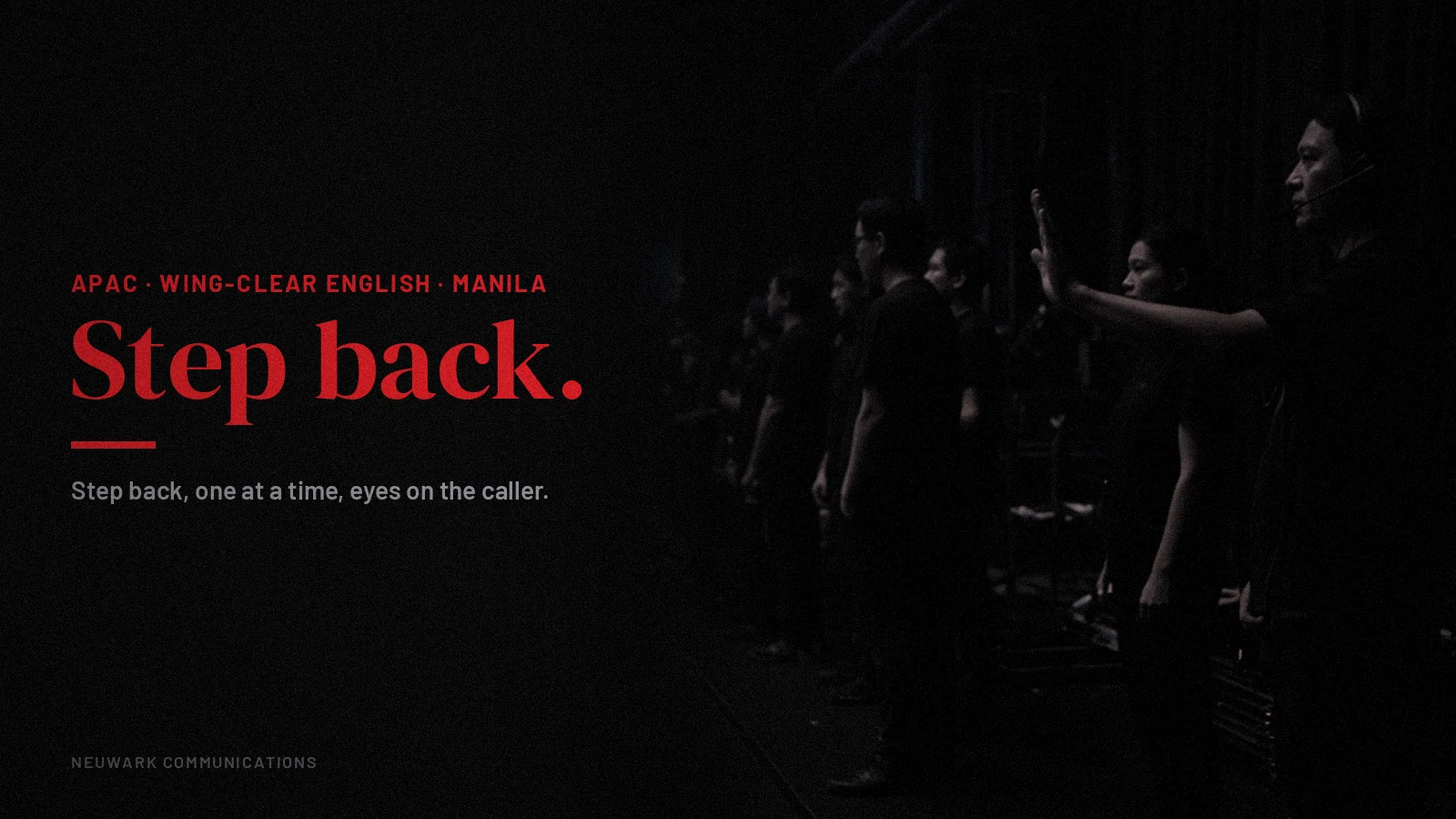
Wing-clear line English APAC is the stage manager’s short rule when the wings fill with guests and crew: step back, one at a time, eyes on the caller.
Street-smart APAC English: short sentences a tired operator can say out loud.
A Singapore convention theatre, awards night, ten minutes to the first walk-up.
Twelve guests, two aides and a photographer pack stage left.
The first awardee cannot reach the steps when her name is called.
Quick answer: A wing-clear line English APAC is what the stage manager says when the wings fill up: step back, one at a time, eyes on the caller. Say it before the first cue, so every walk-up has a clear path and nobody steps on early.
Pair it with the backstage-pass line English APAC for who gets back here and the stage-mark line English APAC once the guest is on stage. Good event language in the wings keeps the walk-up path open and the cue on time.
What goes in a wing-clear line English APAC?
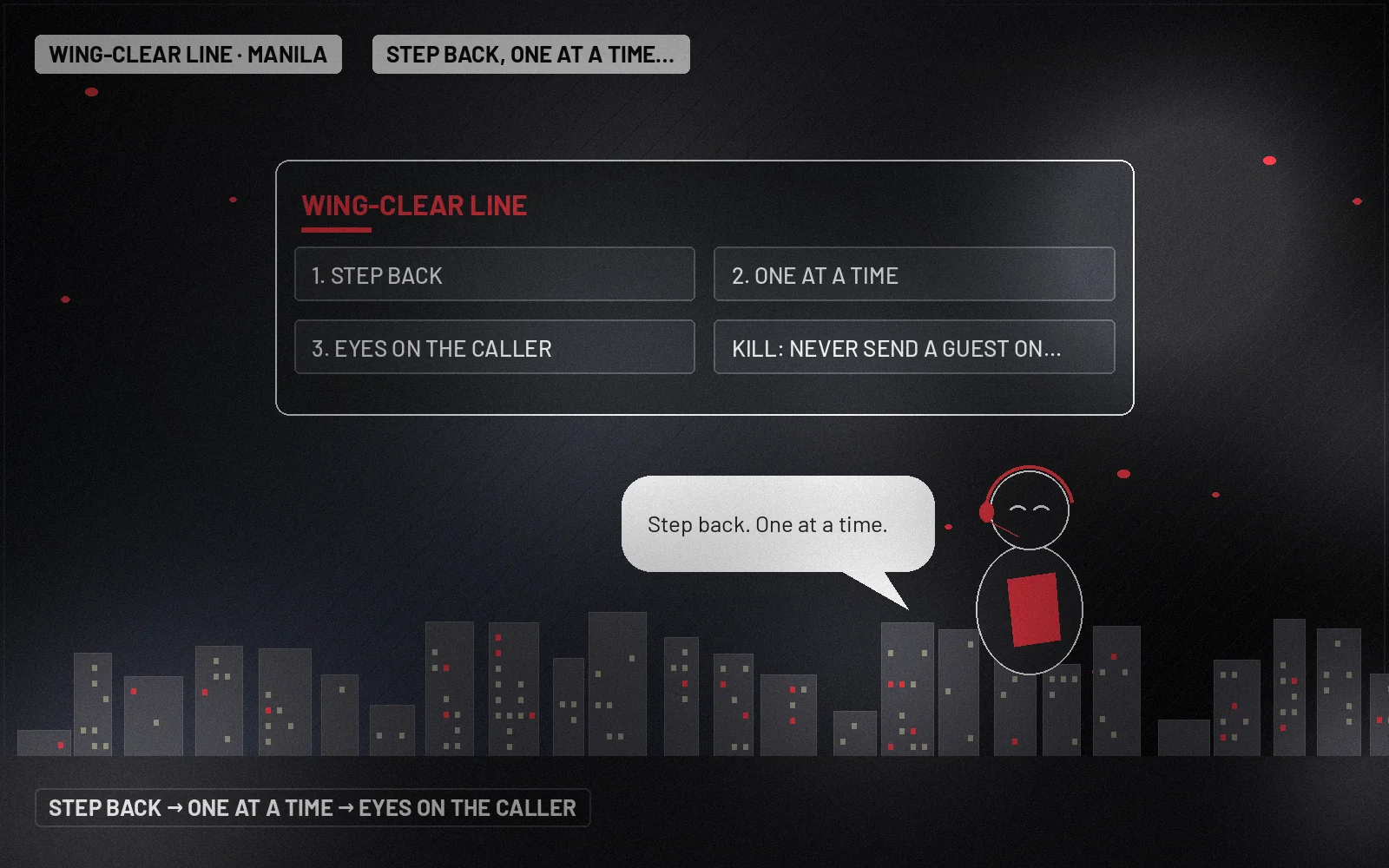
Three parts. Step back, one at a time, eyes on the caller.
Wing-clear line (illustrative):
“Please step back behind the tape so the path stays open.”
“Guests go on one at a time, only on your name.”
“Keep your eyes on me; I will cue you with a hand.”
Speakable lock (illustrative): “Step back behind the tape, go on one at a time, and keep your eyes on me for the cue.”
Eyes on the caller matters most. Guests in the wings cannot hear the emcee clearly, and the only cue they can trust is the stage manager’s hand.
What should the stage manager stop saying in crowded wings?
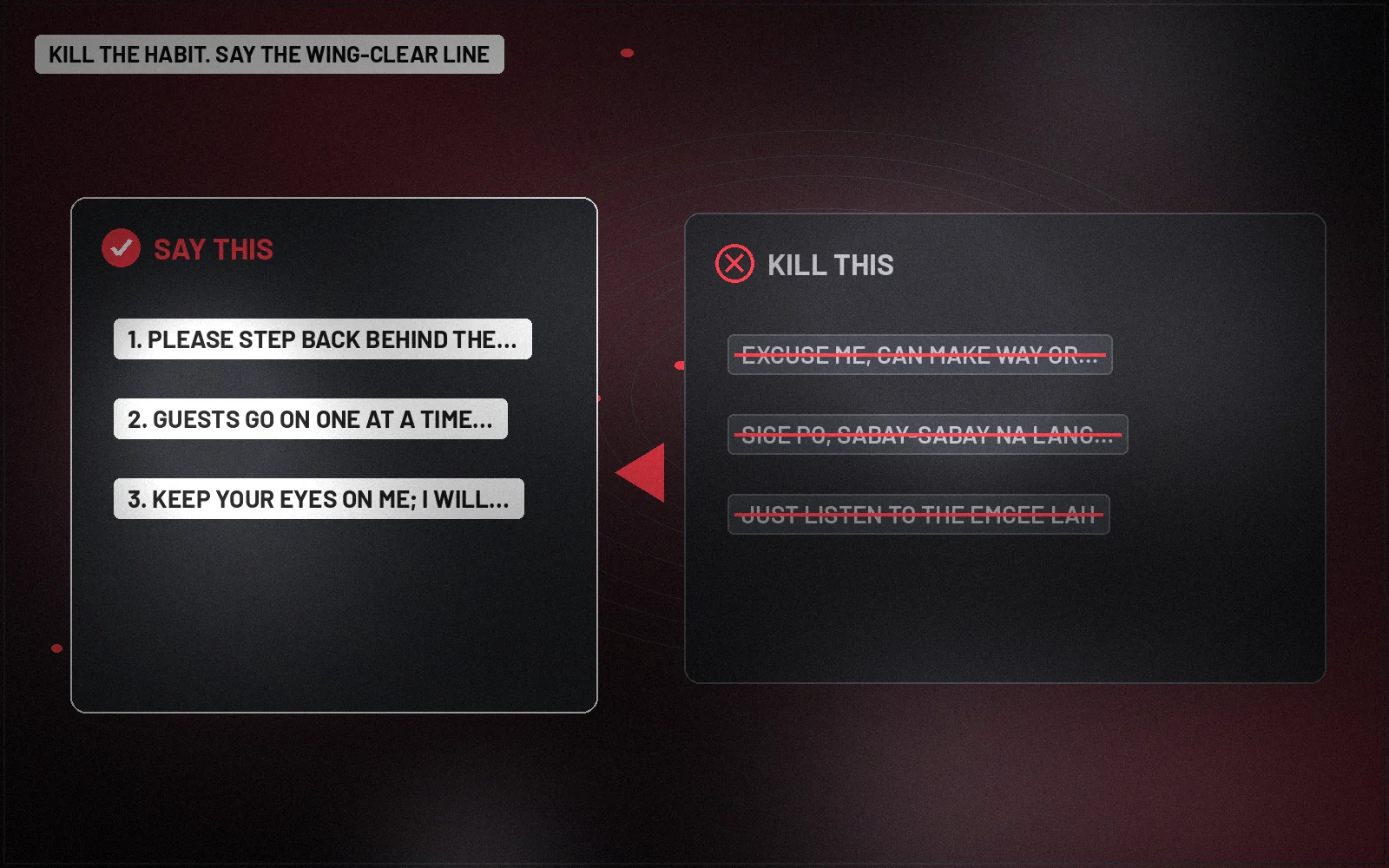
Stop saying please make way and start pointing to the tape. Make way is polite and ignored. Show the line on the floor, say step back once, then name who goes next and lift a hand when it is time.
| Kill this | Say this (illustrative) | Why |
|---|---|---|
| Excuse me, can make way or not? | Please step back behind the tape so the path stays open. | A clear path |
| Sige po, sabay-sabay na lang kayo. | Guests go on one at a time, only on your name. | One walk-up |
| Just listen to the emcee lah. | Keep your eyes on me; I will cue you with a hand. | One visible cue |
| Ay, sino na ba next? Kayo na. | You are next after this name; I will lift my hand. | A named next |
| Photos here also fine, quick quick. | Photos happen at the photo wall after the walk-off. | Wings stay clear |
Lines in this table are illustrative, not quotes from real people.
Who is allowed to stand in the wings during a show?
The next two guests, their one aide, and the crew on the cue list. Everyone else waits in the holding area until called. Photographers shoot from the floor or the photo wall, not from the steps, and phones stay low in the dark.
How do you cue a guest from the wings?
With a raised hand and their name, never with a push. Brief the guest when they arrive in the wings: watch my hand, walk on when it drops. If the emcee runs long, the hand stays up and the guest stays put.
How does this play out on PH, SG and Jakarta desks?
Same three parts. Different desks.
Philippines desk. In Manila and across the Philippines, guests often arrive in the wings with family and staff. Say it kindly, with po and sir or ma’am: step back po, isa-isa po, tingin po sa akin. Offer the companions a seat in the holding area so stepping back feels like care, not a snub.
Singapore desk. In Singapore, awards nights run to tight scripts. Keep the line in plain English, tape a clear path from the holding point to the steps, and brief each guest on the hand cue as they arrive.
Jakarta desk. In Jakarta, open with Bapak dan Ibu, then the same three beats in English and Bahasa Indonesia. Senior guests may arrive with several aides, so agree before the show which one aide may stand in the wings.
Monday field kit
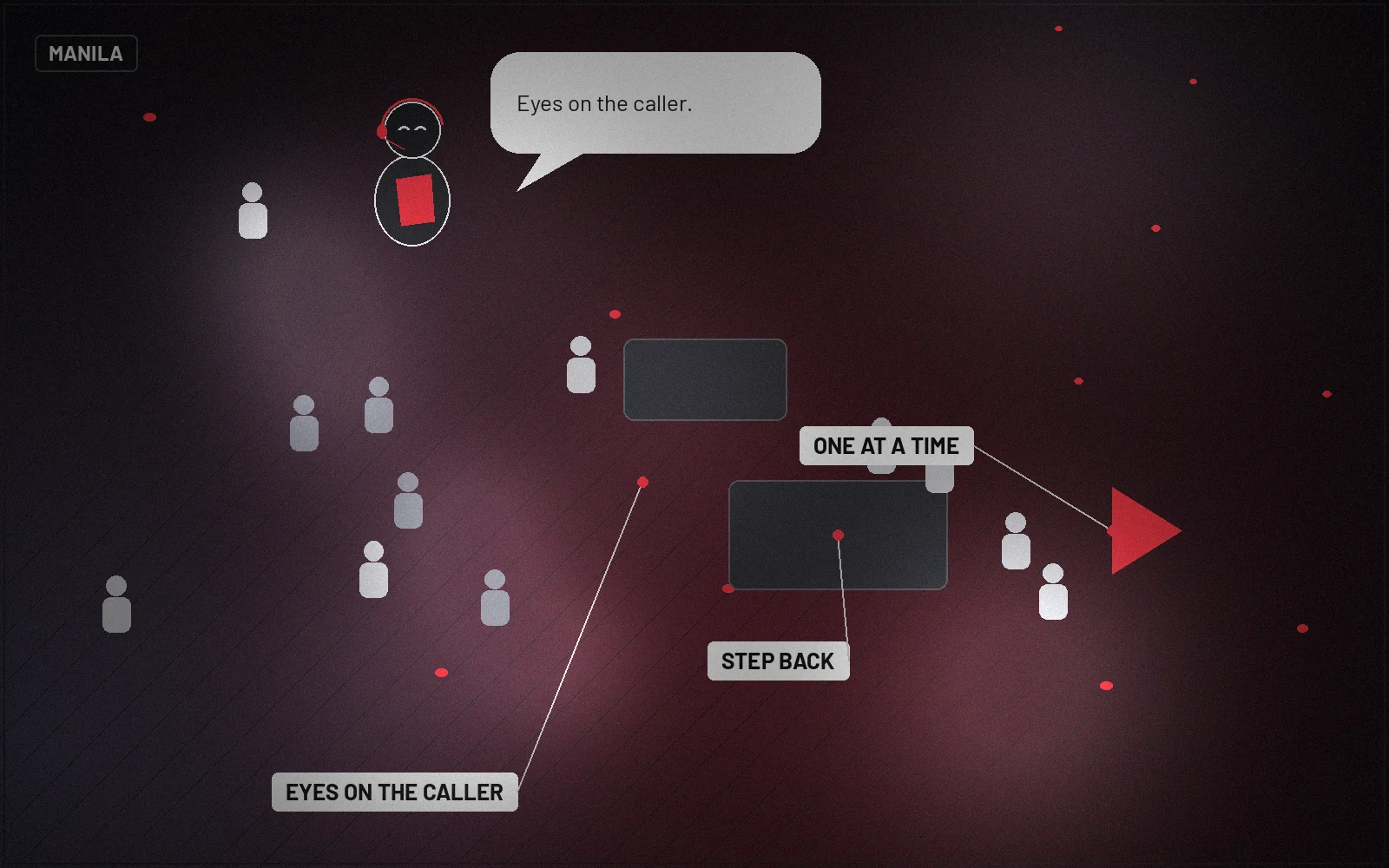
- Step back, one at a time, eyes on the caller.
- Clear path taped from the holding point to the steps.
- Only the next two guests and one aide each in the wings.
- Hand cue briefed to every guest on arrival.
- Kill rule: never send a guest on while the walk-up path is blocked.
FAQs
What is a wing-clear line English APAC?
A wing-clear line English APAC is the stage manager’s rule for crowded wings: step back, one at a time, eyes on the caller. Every guest and aide hears the same words.
How do you keep the stage wings clear during an awards show?
Tape a walk-up path, allow only the next two guests and one aide each in the wings, and cue walk-ons with a raised hand. Everyone else waits in the holding area.
Why should guests watch the stage manager instead of the emcee?
Sound in the wings is muddy and the emcee’s timing can drift. A stage manager’s hand cue is the one signal guests can always see.
Neuwark Communications builds event and campaign communications as part of our public affairs work. More street-smart lines live in Insights.
Related: backstage-pass line English APAC · stage-mark line English APAC
Talk to us about your next event script.
Illustrative lines only. Communications craft, not legal advice.