
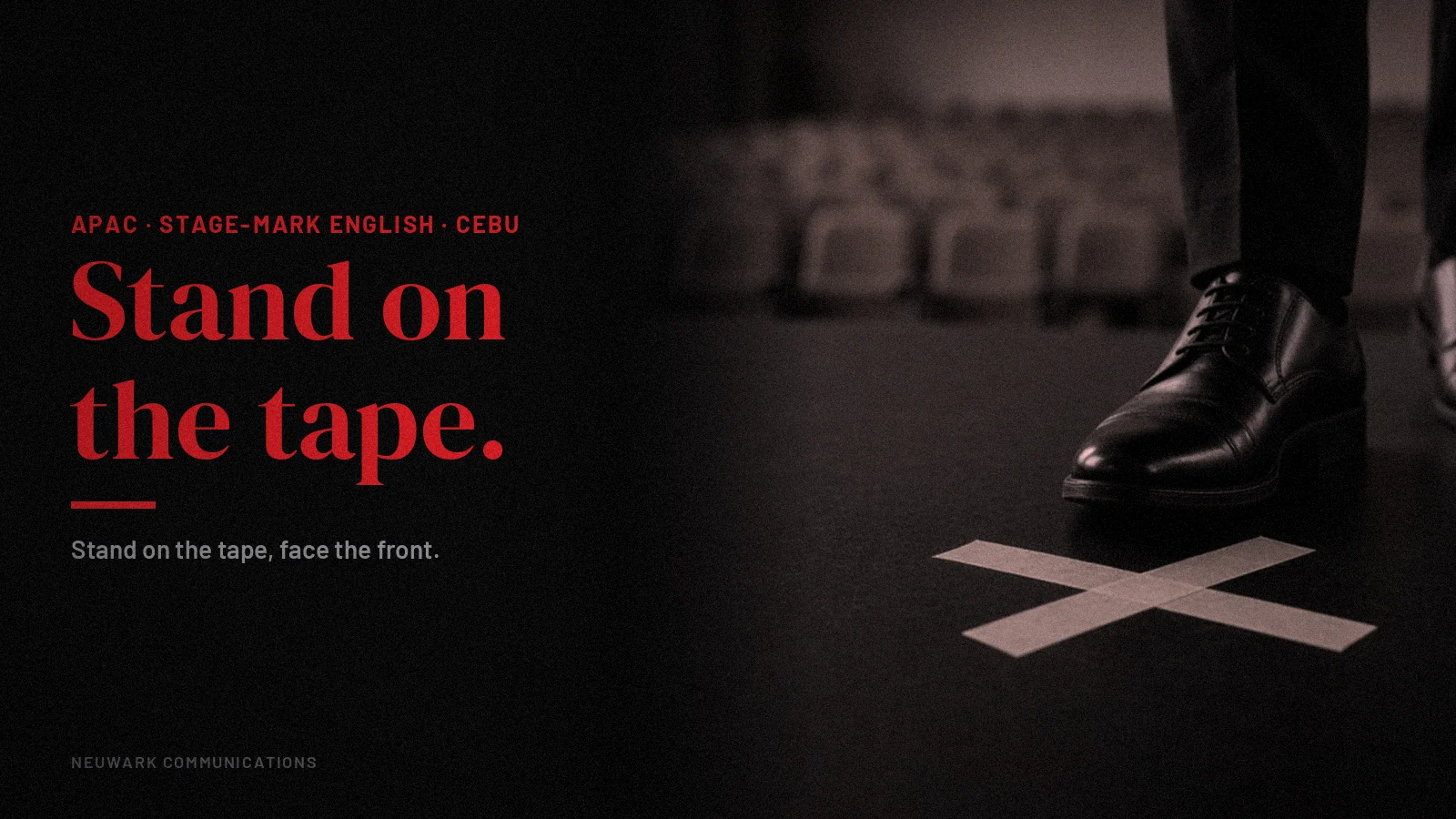
“Stand on the tape, face the front.”
Quick answer: A stage-mark line English APAC is what the stagehand says as a speaker walks on: stand on the tape, face the front, and the light and camera will find you. Point to the mark before the walk-on, not after.
A Cebu ballroom, awards night, house lights down.
The presenter walks on and stops a step short of the tape.
Half her face sits in shadow, and the camera loses her.
Stage-mark line English APAC is the short stagehand line before a walk-on: stand on the tape, face the front, so the light, the mic and the camera all meet the speaker at one spot.
Street-smart APAC English: short sentences a tired operator can say out loud.
Pair it with the stage-steps line English APAC and the award call-up line English APAC for more event language on the floor.
What goes in a stage-mark line English APAC?
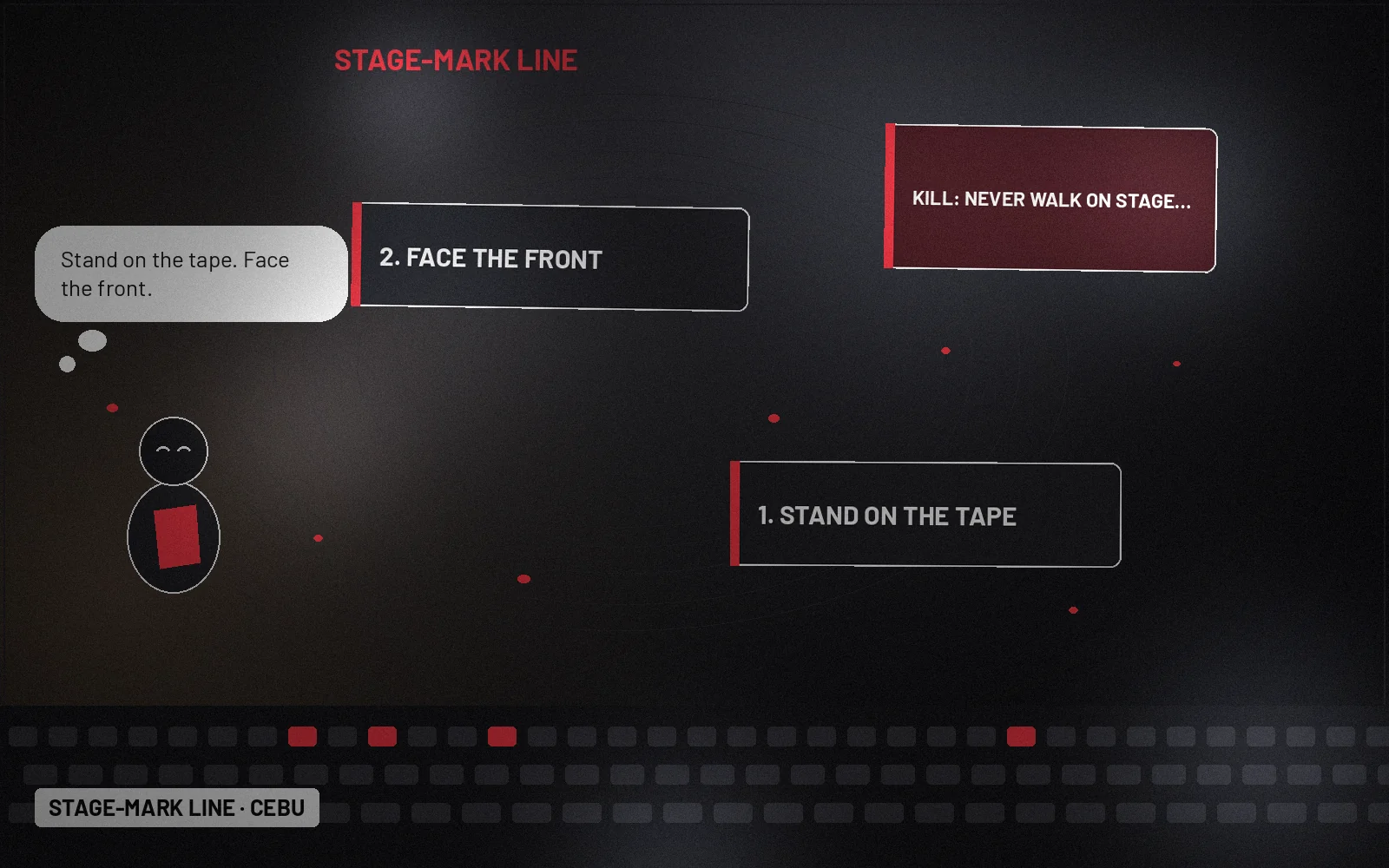
A stage-mark line English APAC has three parts: the mark, the direction and the reason. Stand on the tape names one exact spot, not somewhere near the middle. Face the front turns the body to the house and the camera. The reason, the light finds you, tells the speaker why the spot matters, so they stay on it.
Stage-mark line (illustrative):
“See the tape? Stand right on it.”
“Face the front, toward the camera.”
“Stay there and the light finds you.”
Where should the stagehand give the stage-mark line?
At the wing, before the walk-on, while the speaker can still see the tape from the side. Point to the mark with an open hand and say the line once. Do not shout it from the wing once they are on stage. If they miss the mark, the stage manager decides whether to cue a quiet step.
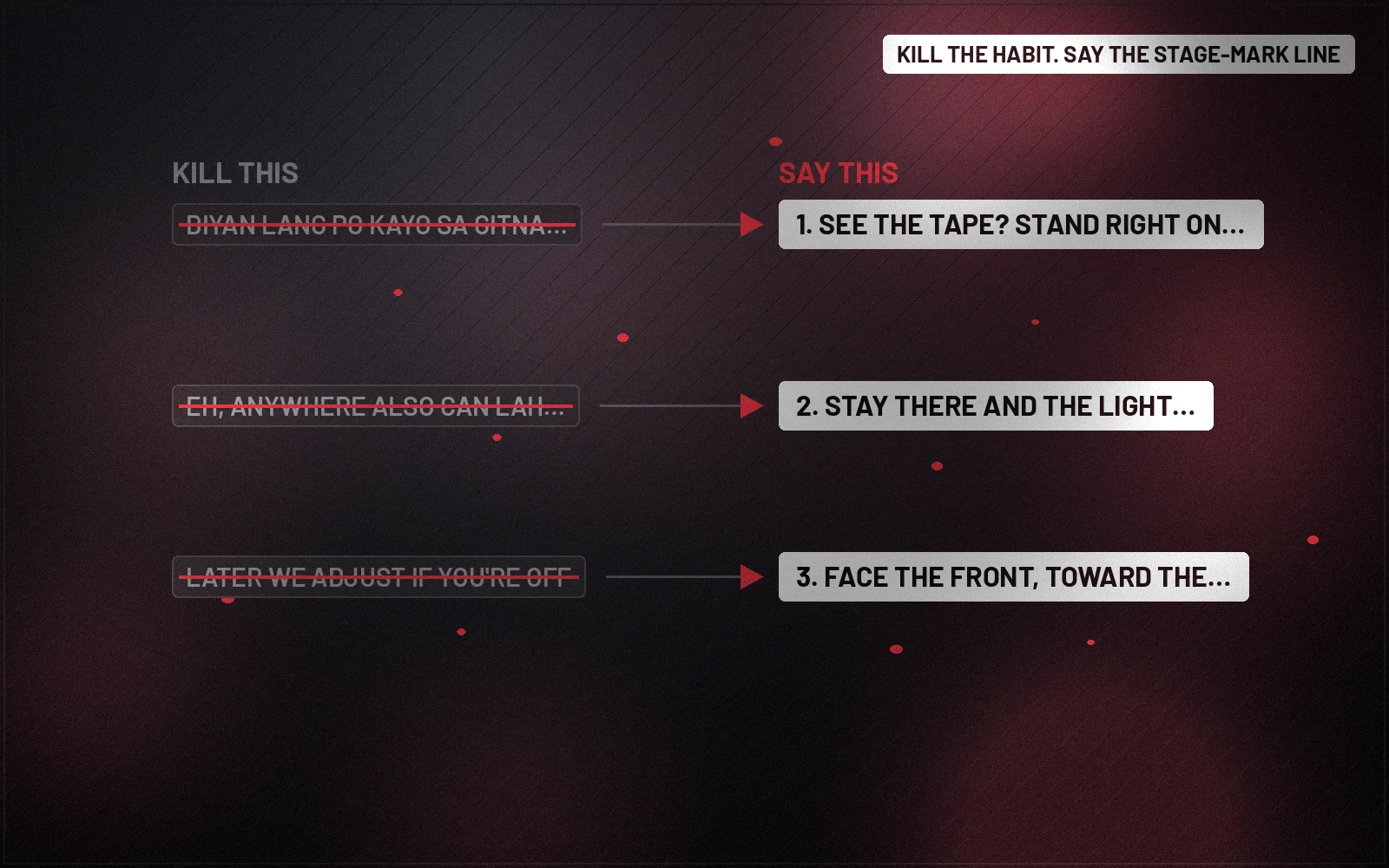
| Kill this | Say this (illustrative) | Why |
|---|---|---|
| Diyan lang po kayo sa gitna, bahala na. | See the tape? Stand right on it. | One exact spot |
| Eh, anywhere also can lah, the light big. | Stay there and the light finds you. | Gives the reason |
| Later we adjust if you’re off. | Face the front, toward the camera. | No vague later |
Lines in this table are illustrative, not quotes from real people.
What if the speaker misses the mark anyway?
Leave them for now; a speaker shuffling mid-line looks worse than a speaker half lit. Lighting can widen or shift the spot, and the camera can reframe. At the next natural pause, a quiet hand signal from the downstage edge can bring them one step over. Never walk on to move a speaker.
How does the line play out on PH and SG desks?
Philippines desk. In Cebu and other PH venues, presenters are often guests of honour who wave off a briefing. Add po and sir or ma’am at the wing: sa tape po, face the front. Post each mark colour in the crew Viber group so every stagehand says the same thing.
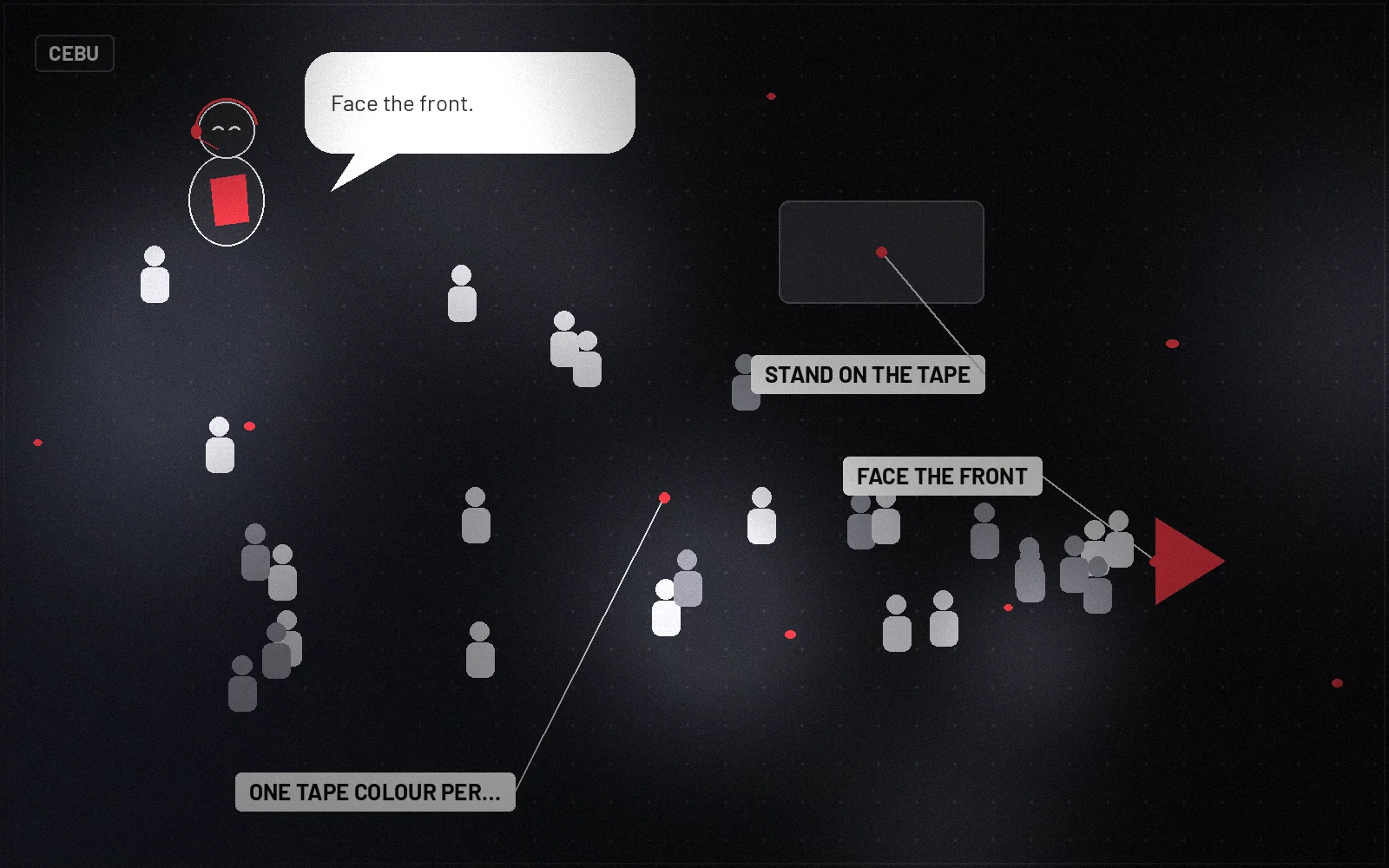
Singapore and wider APAC desk. In Singapore and Malaysia, keep it brisk and plain at the wing: stand on the tape, face the front. Use one tape colour per mark and let the stage manager own every walk-on cue.
Paste-ready lock
Speakable lock (illustrative): “Stand on the tape, face the front.”
Print it on the stagehand card, say it at the wing in the same words for every speaker, and pair it with an open-hand point to the tape. One spot, one direction, one voice.
Monday field kit
- One tape colour per mark, agreed at rehearsal.
- Each speaker walked to their mark once before doors.
- Stagehand at the wing with an open-hand point.
- Lighting focused on the tape, checked on the camera monitor.
- Kill rule: never walk on stage to move a speaker mid-line.
What to do this week
- Walk the stage and tape every mark.
- Match each mark to a light and a camera shot.
- Add the line to the stagehand card.
- Rehearse one walk-on per speaker.
- Agree the quiet hand signal with the stage manager.
FAQs
What is a stage-mark line English APAC?
A stage-mark line English APAC is the stagehand’s short walk-on script: stand on the tape, face the front. It puts the speaker where the light, the mic and the camera already meet.
What do you say to a speaker before they walk on stage?
Say one spot and one direction: stand on the tape, face the front. Point to the mark from the wing so the speaker sees it before the walk-on.
What if a presenter ignores the stage mark?
Let lighting and camera adjust first, and never walk on to move them. At a natural pause, a quiet hand signal from the downstage edge can bring them one step over.
Who owns the stage-mark line on the night?
The stagehand owns the spoken line at the wing. The stage manager owns the walk-on cue, and lighting owns the focus on the tape.
Neuwark Communications writes event scripts through strategy and messaging and digital and social. More lines live in Insights.
Talk to us about your next event script.
Illustrative lines only. Communications craft, not legal advice.