
Engine off, brake on, chock the wheel.
Street-smart APAC English: short sentences a tired operator can say out loud.
Quick answer: A wheel-chock line English APAC is the dock marshal’s rule at a truck bay on the loading dock: engine off, brake on, chock the wheel. The driver stops the engine, sets the handbrake, and the marshal places a chock against the rear wheel before anyone opens the doors or steps behind.
Jakarta, a convention centre dock before dawn load-in, and a box truck idles at the bay with the doors already open. The crew starts pulling cases out the back. The marshal’s chock sits by the wall while the truck creeps on the slope.
A truck bay is only safe to work if the engine is off, the brake is on and a wheel chock is in place before anyone steps behind. Read it alongside the loading dock line English APAC and the forklift line English APAC.
What is a wheel-chock line English APAC?
It is a dock marshal’s three-part rule at a truck bay on the loading dock. Engine first, brake second, chock third.
1. Engine off. Ask the driver to switch the engine off at the bay. No idling while crew stand behind.
2. Brake on. Confirm the handbrake is on before the doors open.
3. Chock the wheel. Place a chock against the rear wheel. Nobody steps behind the truck until it is in.
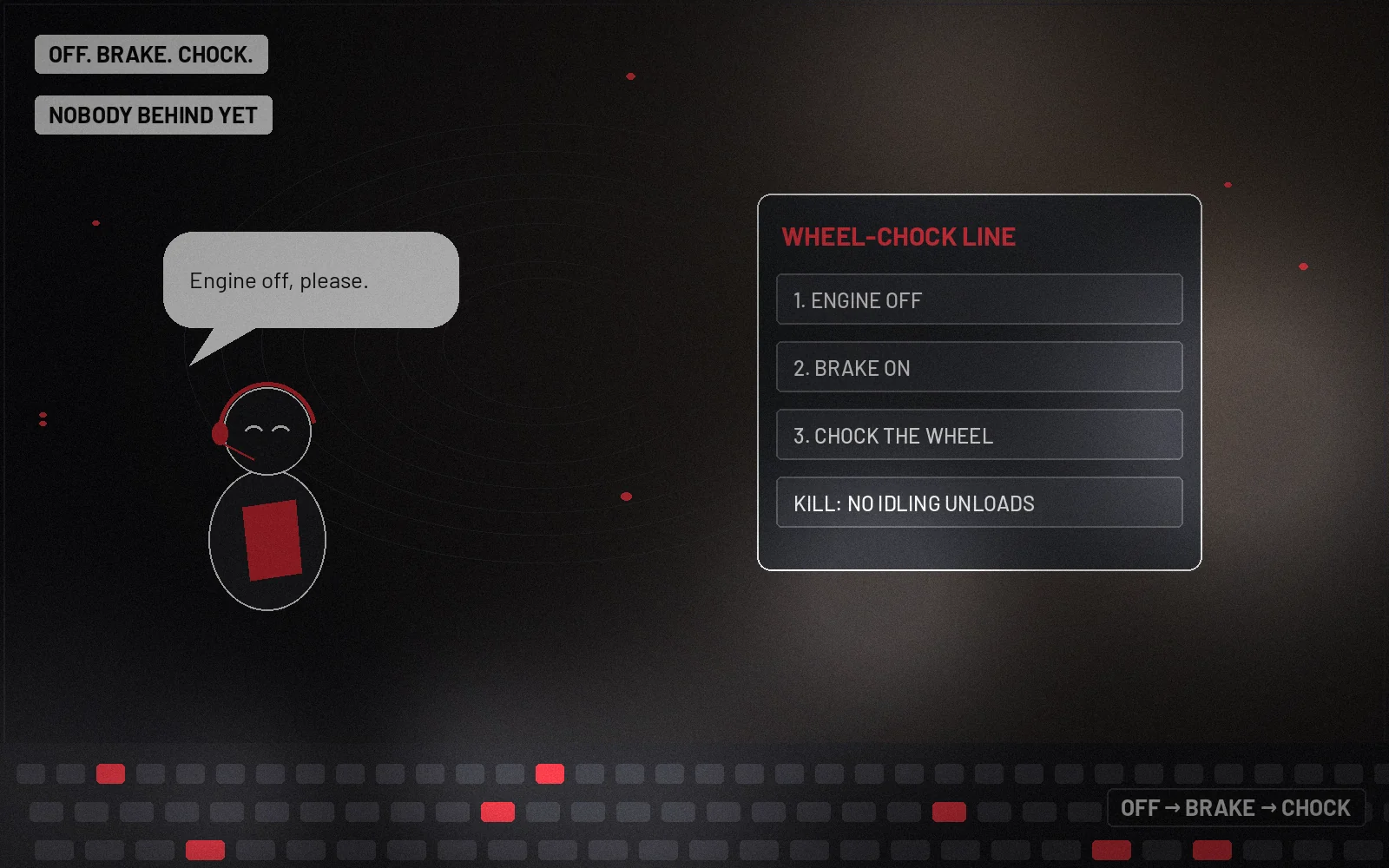
The habit to break is the quick unload. Marshals skip the chock because the stop looks short and the driver says it is fine.
What should a dock marshal stop saying at the truck bay?
Stop letting crews unload a truck that is still idling, and stop leaving the chock by the wall. Say the three bay parts at the dock brief instead.
| Kill this | Say this (illustrative) | Why |
|---|---|---|
| Sige po, iwan n’yo lang naka-andar, saglit lang ‘to. | Engine off. | A stopped engine means no surprise roll and no fumes on the dock (PH Tagalog habit) |
| No need chock lah, quick unload only. | Brake on. | The handbrake holds the truck while crew work behind it (SG lah habit) |
| Gak usah diganjal, Pak, cuma sebentar. | Chock the wheel. | A chock is the backup if a brake slips on a slope (Jakarta Bahasa habit) |
Lines in this table are illustrative, not quotes from real people.
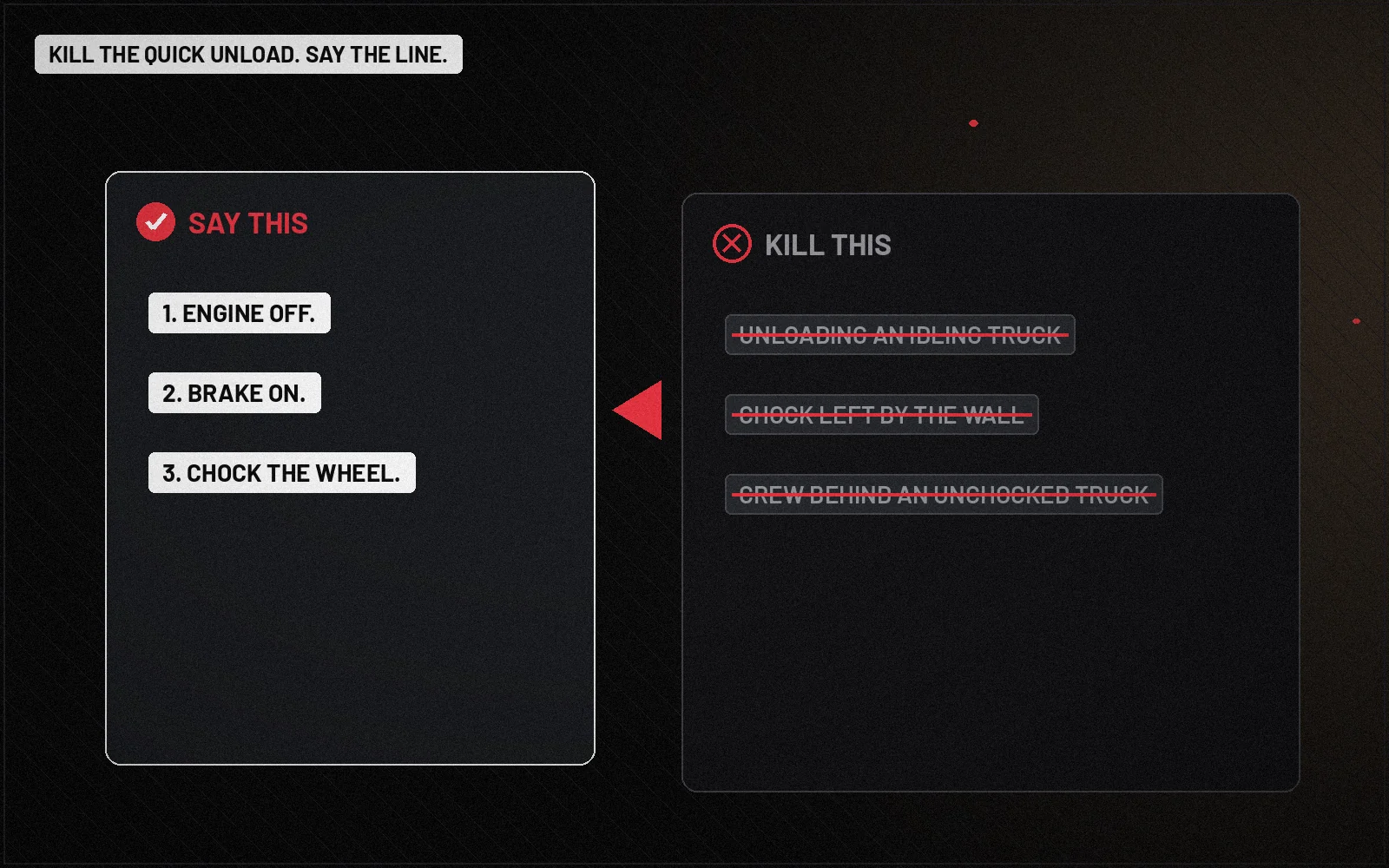
Say the line at the dock brief, before the first truck backs into the bay.
What if the driver refuses to switch off the engine?
Do not let the crew start unloading anyway. Hold the doors shut, radio the dock or production lead, and wait until the engine is off and the chock is in.
Who plans wheel-chock checks before load-in?
The production manager plans it with the venue dock master, using the delivery schedule. They agree bay order, who carries chocks and who signals the crew to start.
PH / SG / Jakarta desk notes
Same three parts. Different desks.
Philippines desk. Firm and polite. Engine off po. Brake on po, sir. Chock the wheel po, salamat.
Singapore desk. Brisk and even. Engine off. Brake on. Chock the wheel. Thank you.
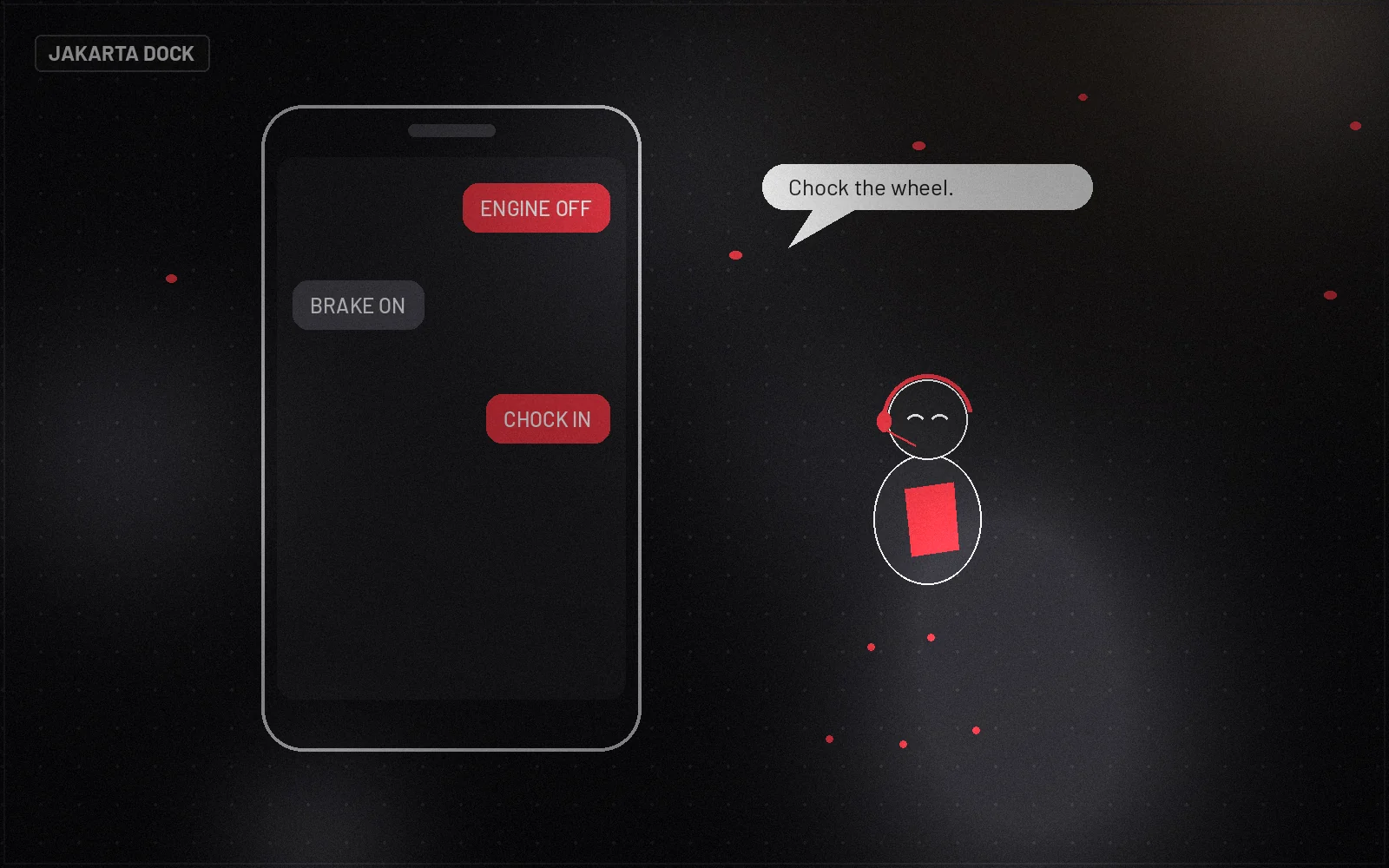
Jakarta desk. Local drivers here often take instructions in Bahasa first. Keep the three parts in English for mixed crews and use Bapak or Ibu only if the house style asks for it.
Monday field kit
- Confirm bay order and chock count with the dock master.
- Put a chock at every bay before the first truck.
- Brief marshals on the lock: engine off, brake on, chock the wheel.
- Practise one driver refusal with the doors held shut.
- Kill rule: no idling unloads, no chocks left by the wall, no one behind an unchocked truck.
Illustrative only. Follow the venue’s own dock safety rules; this wording is a template.
FAQs
What is a wheel-chock line English APAC?
A wheel-chock line English APAC is the dock marshal’s rule at a truck bay on the loading dock: engine off, brake on, chock the wheel. The driver stops the engine, sets the handbrake, and the marshal places a chock against the rear wheel before anyone opens the doors or steps behind.
What should a dock marshal stop saying at the truck bay?
Stop letting crews unload a truck that is still idling, and stop leaving the chock by the wall. Say engine off, brake on, chock the wheel, in that order.
What if the driver refuses to switch off the engine?
Hold the doors, radio the dock lead and wait for engine off and chock in. Never unload an idling truck.
Who plans wheel-chock checks before load-in?
The production manager plans chock checks with the venue dock master on the delivery schedule. Marshals brief the line before load-in.
What to do this week
Speakable lock (illustrative): “Engine off, brake on, chock the wheel.”
Stand at the dock for one delivery with your dock master and check whether the chock goes in before the doors open. We draft dock wording like this at our Manila HQ in Makati and review it with colleagues at MBFC Tower 2 in Singapore before marshals use it.
Neuwark Communications builds event and campaign communications as part of our strategy and messaging work. More street-smart lines live in Insights.
Related: loading dock line English APAC · forklift line English APAC
Talk to us about your next event script.
Illustrative lines only. Communications craft, not legal advice.