
On 8 September 2026, Prime Minister Lawrence Wong announced up to 9% political-office salary adjustments—the MR4 reference moving from roughly S$1.1M toward S$1.2M—effective 15 October, the first change since 2011. Opposition parties criticized timing amid cost-of-living pressure. The government framed talent retention and governance continuity. Love the policy or hate it, the communications lesson is older than the spreadsheet: public affairs narrative unpopular policy work is the craft of saying why in one human paragraph when the polls are cold.
Unpopular policy survives only if someone can say why in one human paragraph—not a communiqué. Corporates learn the same craft when pricing, subsidy cuts, or restructuring poll badly. Neuwark Communications builds unpopular-policy narrative retainers and stakeholder sequencing for leaders who cannot wait for perfect popularity. Soft path: Services · Contact. This deepen is distinct from the legacy hub public affairs narrative for unpopular policy.
When the spreadsheet and the polls disagree: a narrative problem
Every board has lived this. Finance proves the number. Research shows the public winces. Legal wants precision. Communications is asked to “soften” a decision that cannot be softened—only explained. Softening without explanation is gaslighting. Explanation without sequence is chaos.
Singapore’s ministerial-pay week is a clean teaching case because the stakes are public and the arguments are familiar: competence markets vs living-cost optics; long-term governance vs short-term fairness feelings. You do not need to endorse the policy to study the narrative problem. Corporates face cousins of the same fight: fare hikes, fee resets, plant closures, subsidy sunsets, AI headcount shifts.
Narrative problems show up as:
- Leaders defaulting to jargon when dinner-table questions arrive
- Stakeholder groups hearing different “whys” on the same day
- Timing that looks tone-deaf even when the substance is defensible
- Opposition (or competitors) owning the emotional frame while you own the PDF
If your “why” cannot survive a taxi conversation, it will not survive a week of headlines.
One human paragraph vs communiqué voice
Communiqué voice hides behind passive constructions and institutional nouns. Human paragraph voice answers three questions in under 120 words: what changed, why now, what you will protect for people who feel the cost.
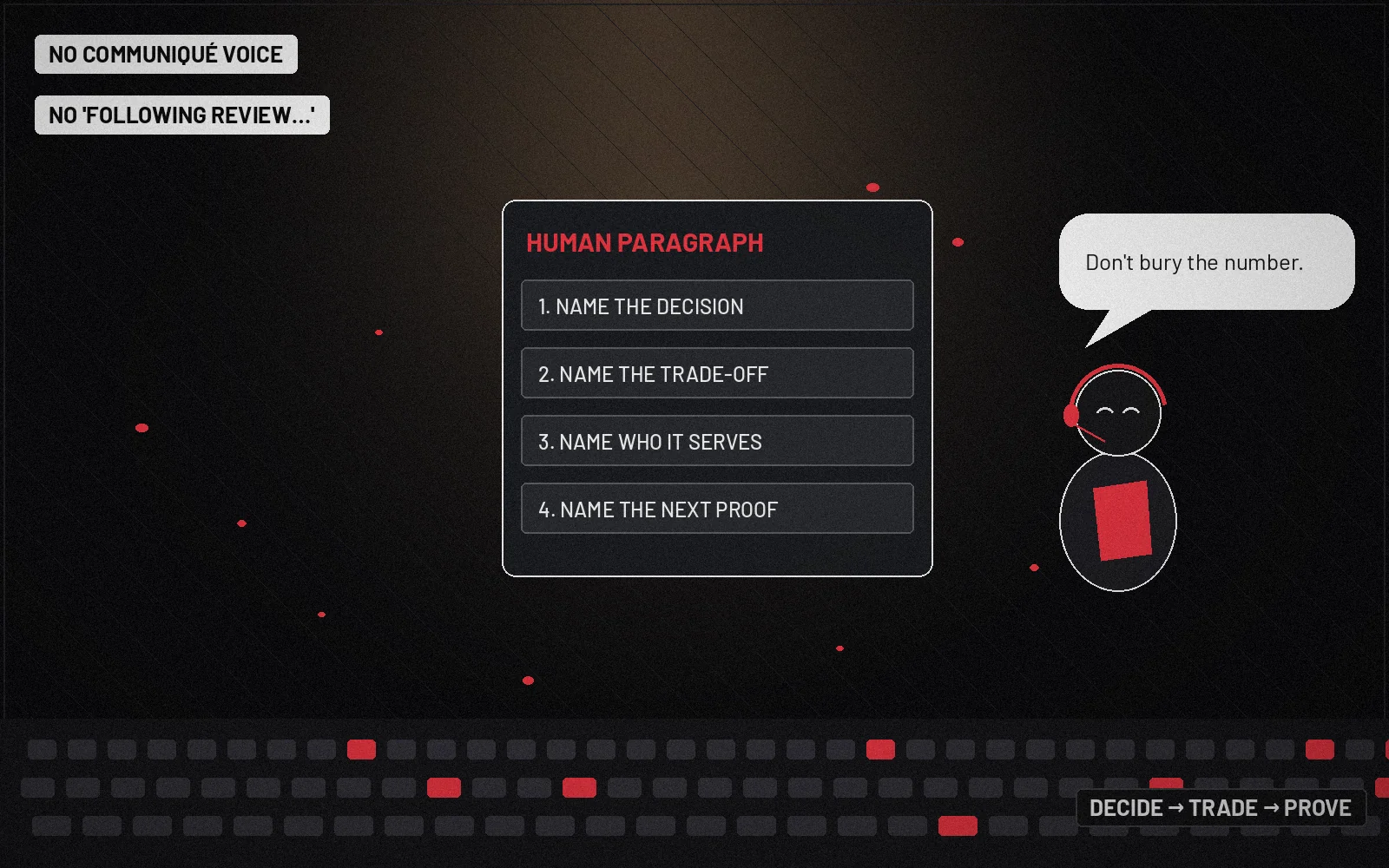
A usable paragraph pattern:
- 1. Name the decision without euphemism
- 2. Name the trade-off you are accepting
- 3. Name the public or customer interest you claim to serve
- 4. Name the next proof point (date, review, safeguard)
Do not open with “Following extensive review…” unless you enjoy being mocked. Do not bury the pay number, the price increase, or the job impact below a hymn to excellence. People forgive hard news faster than they forgive hide-and-seek.
Practice the paragraph out loud. If a high-school student cannot repeat it, rewrite. Public Affairs & Advocacy work that cannot clear that bar is theater.
Stakeholder sequence: employees, customers, investors, public
Sequence is strategy. Blast everyone at once and you guarantee someone feels last. A practical order for unpopular-but-defended decisions:
- 1. Employees / internal — they are your first amplifiers and your first leak risk; brief with the human paragraph and Q&A, not a slide dump
- 2. Key customers / partners — especially those who will be asked for comment
- 3. Investors / boards — continuity and risk framing without spin
- 4. Public / media — one paragraph, one proof calendar, one owner for follow-ups
- 5. Critics / opposition space — do not ignore; prepare factual corrections without feuds that elevate them
For corporate transfers: pricing changes need customer care scripts before the press note; restructuring needs employee dignity before the market wire; subsidy shifts need beneficiary FAQs before the ministerial-style announcement envy.
Link this discipline to energy and cost narratives when markets wobble—see Singapore energy security corporate communications—and to budget-story craft in narrative frames for budget fights.
Timing risk: cost-of-living weeks and message discipline
Timing is not PR superstition. Announcing pay rises, fee hikes, or benefit cuts during acute cost-of-living weeks changes how fair the same number feels. You may still proceed. You must then spend message discipline like insurance:
- Acknowledge the living-cost context without surrendering the decision
- Avoid lifestyle optics the same week (celebratory creatives, tone-deaf events)
- Keep every spokesperson on the same paragraph
- Cap side debates; do not invent new justifications mid-cycle
- Log every correction so you do not “clarify” into a new story
Message discipline fails when leaders freestyle on podcasts. Appoint one narrative owner. Everyone else quotes the paragraph or stays quiet. That sounds authoritarian until you watch a single offhand joke become the story.
Corporate transfer: pricing, subsidy, restructuring that polls badly
Singapore’s case is political. Your next case may be a telco fee, a hospital package, a platform take-rate, or a factory shift. The transfer rules are the same:
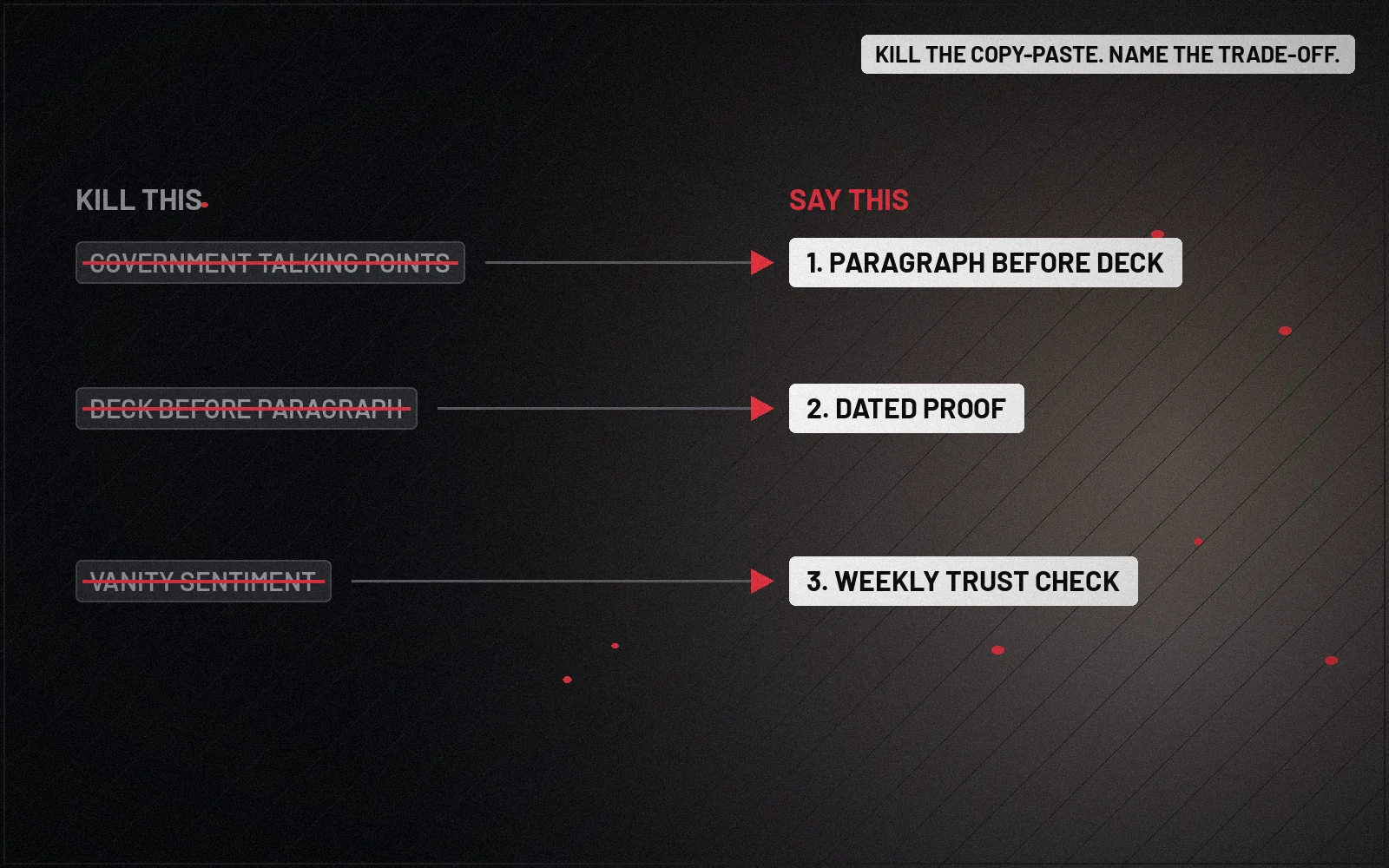
- Write the human paragraph before the deck
- Sequence stakeholders before the wire
- Pair the hard news with a dated proof of what you will protect
- Train managers for dinner-table questions, not just media
- Measure trust recovery weekly, not vanity sentiment alone
Do not copy-paste government talking points into a brand voice. Do copy the structural honesty: name the trade-off. Customers smell outsourced courage.
If your team only knows crisis holding statements, you will treat unpopular policy like an accident. It is not. It is a planned narrative event. Budget for it like a product launch with worse polls.
Distinct from the legacy unpopular-policy hub: what this deepen sells
The legacy hub public affairs narrative for unpopular policy covers the general craft. This deepen sells the live case transfer—ministerial-pay week as a template for corporate pricing, subsidy, and restructuring narratives under cost-of-living pressure. Different examples. Different SOW emphasis on sequencing and timing risk. Do not cannibalize the hub; interlink it.
More reading lives on Insights. Firm context: About. Home: [neuwarkcommunications.com](/).
Building the Q&A that survives dinner and Parliament
The human paragraph is necessary but not sufficient. Unpopular-policy weeks die in the Q&A. Build a living FAQ with answers that a manager can say without notes:
- Why now, not after inflation cools?
- Who is carved out, and why?
- What review date exists if conditions change?
- What are you not claiming?
- How does this compare to private-sector peers without sounding arrogant?
For corporates transferring the craft: swap “ministerial pay” for “fee reset” or “restructuring.” The structure holds. Ban answers that attack the questioner’s motives. Ban answers that invent new justifications not in the approved paragraph. If a spokesperson needs a novel metaphor on live radio, they are freelancing—and freelancing is how you get a second bad week.
Train with hostile questions first. Friendly townhalls create false confidence. Record practice sessions. Cut the clever lines that do not survive a transcript.
Measurement: polls are not the only dashboard
Unpopular policy can be right and still poll badly for a stretch. That does not mean you ignore trust metrics. Track:
- Employee understanding (can they restate the why?)
- Customer complaint themes (confusion vs disagreement)
- Investor note quality (did the story stay on the decision?)
- Media frame share (are you still explaining, or already defending a gaffe?)
- Correction count (each clarification is a mini-crisis)
If confusion dominates, your paragraph failed—not the public. Rewrite. If disagreement dominates with high understanding, you may be in a values fight; keep discipline and stop chasing unanimous applause.
Public affairs narrative for unpopular policy is not about manufacturing consent. It is about earning a fair hearing. Singapore’s pay story is a reminder that fair hearings still require craft when cost-of-living nerves are high.
War-room kit for the week the decision ships
Treat unpopular-but-defended policy like a product launch with hostile reviews. Pack a war-room kit before announcement day:
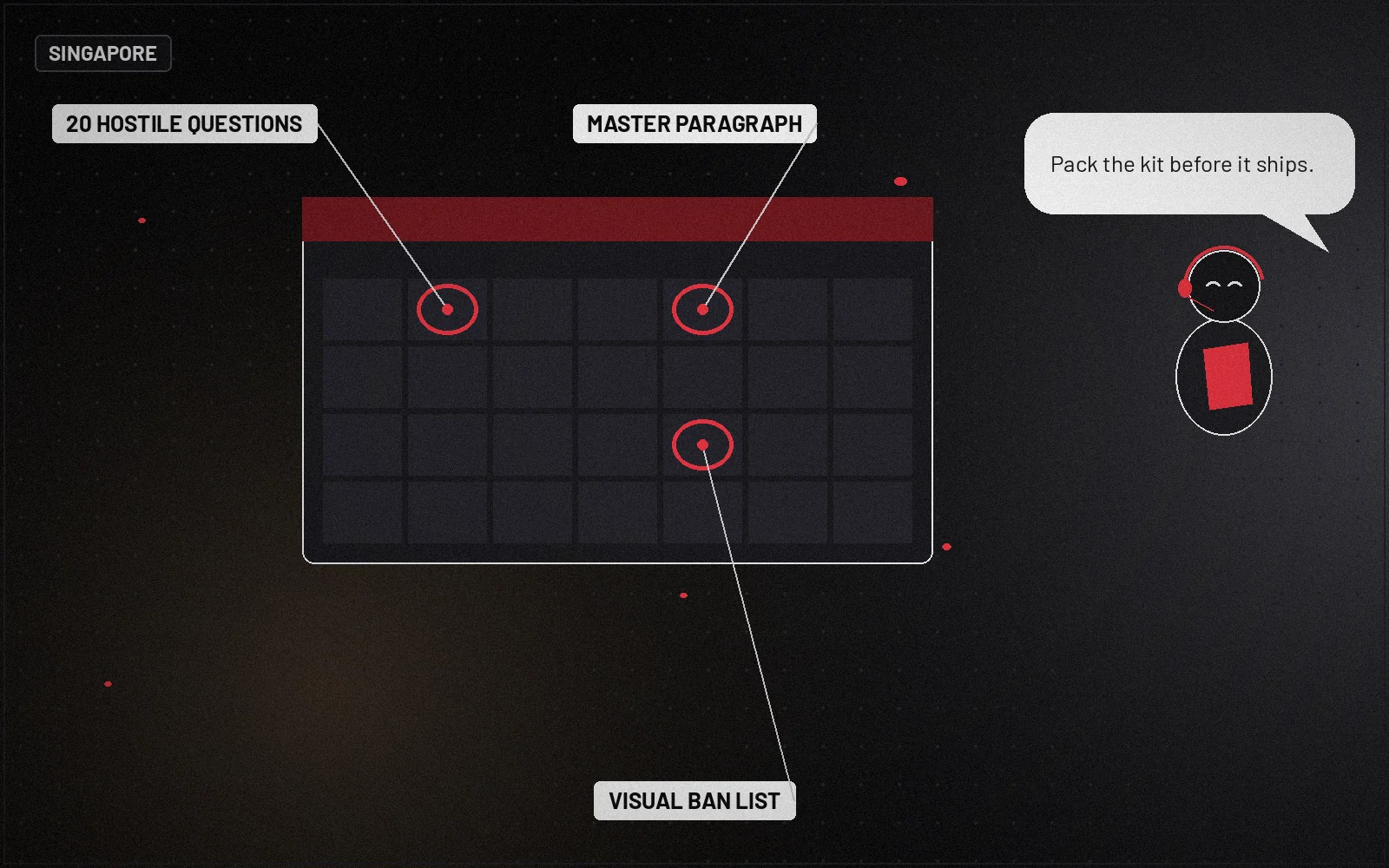
- One-paragraph master narrative (approved)
- Hostile Q&A (20 questions minimum)
- Stakeholder sequence with owners and timestamps
- Internal Slack/Teams script so managers do not freestyle
- Media lines for print, broadcast, and short-form—same facts, different length
- Visual ban list (no champagne optics, no tone-deaf lifestyle creative)
- Correction protocol with a single publisher
- After-action review scheduled for day 7
Corporate teams shipping fee changes should add customer-care macros and refund/exception rules so frontline staff are not inventing fairness on the phone. Public affairs narrative unpopular policy work dies when the call center contradicts the press note.
If you cannot name the narrative owner, you do not have a plan—you have a hope. Hope is not a retainer deliverable. Neuwark scopes owners, kits, and rehearsal into the engagement so announcement week is execution, not invention.
Language traps that turn a hard decision into a gaffe
Watch for these traps in drafts:
- Comparative arrogance (“anyone serious already knows…”)
- Fake inevitability (“there was no alternative”) when alternatives were debated
- Moralizing at people who feel squeezed
- Statistic stacking that never answers “so what for my household?”
- Humor that punches down
Replace with plain trade-off language. Adults can handle trade-offs. They punish contempt. Singapore’s debate—talent markets versus living-cost optics—shows both sides can speak seriously. Your corporate version should aim for the same adult register even when the decision hurts.
Soft CTA: unpopular-policy public affairs narrative engagement
If your next board decision will poll badly but still must ship, do not wait for the headline to invent the paragraph. Neuwark’s Public Affairs & Advocacy retainers cover human-sentence narrative, stakeholder sequencing, and message discipline under timing risk.
Ask for an unpopular-policy narrative working session: Contact or Services. Bring the draft decision memo and the worst poll question you fear. We will pressure-test the paragraph before the public does.
For companies that need ongoing policy clarity — not just one article — see our Singapore public affairs hub.