
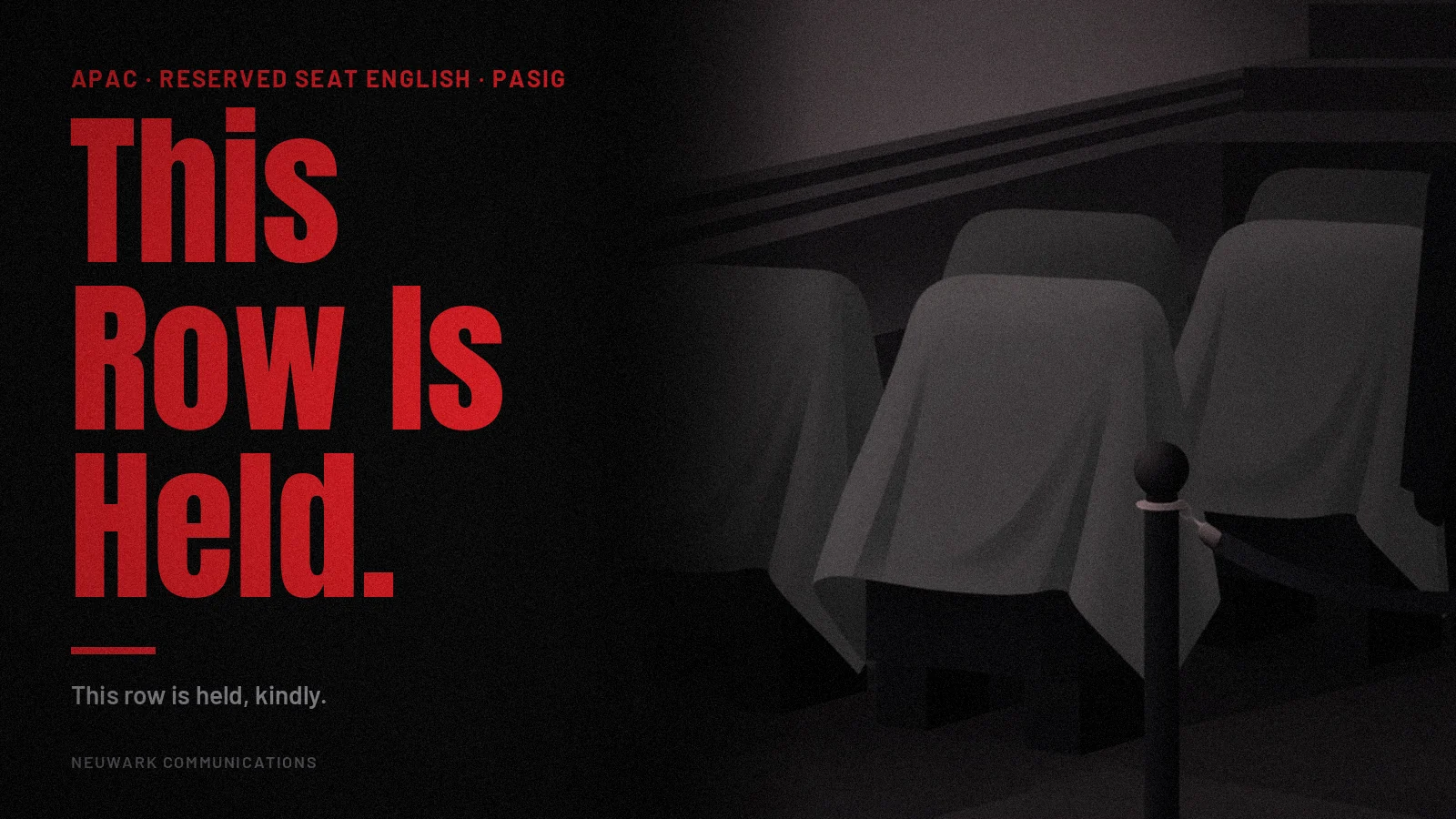
Reserved seat line English APAC is the short line that redirects a guest from a held row: this row is held, here is a good seat, let me walk you there.
Lead with the good seat, not the no, and the guest moves without losing face.
A forum in a Pasig hotel ballroom, twenty minutes before the keynote. A guest sits in the front row, an usher says “Ma’am, bawal po diyan, reserved,” and three rows of people turn to look.
Street-smart APAC English: short sentences a tired operator can say out loud.
It works with our wristband line English APAC, which tells guests which zones are theirs. When every seat is full, our overflow room line English APAC takes over.
Quick answer: A reserved seat line English APAC is the usher’s kind line for a guest in a held row: this row is held, here is a good seat, and I will walk you there. Offer the alternative in the same breath, keep your voice low, and give every usher a seat chart so the offer is real.
What goes in a reserved seat line English APAC?
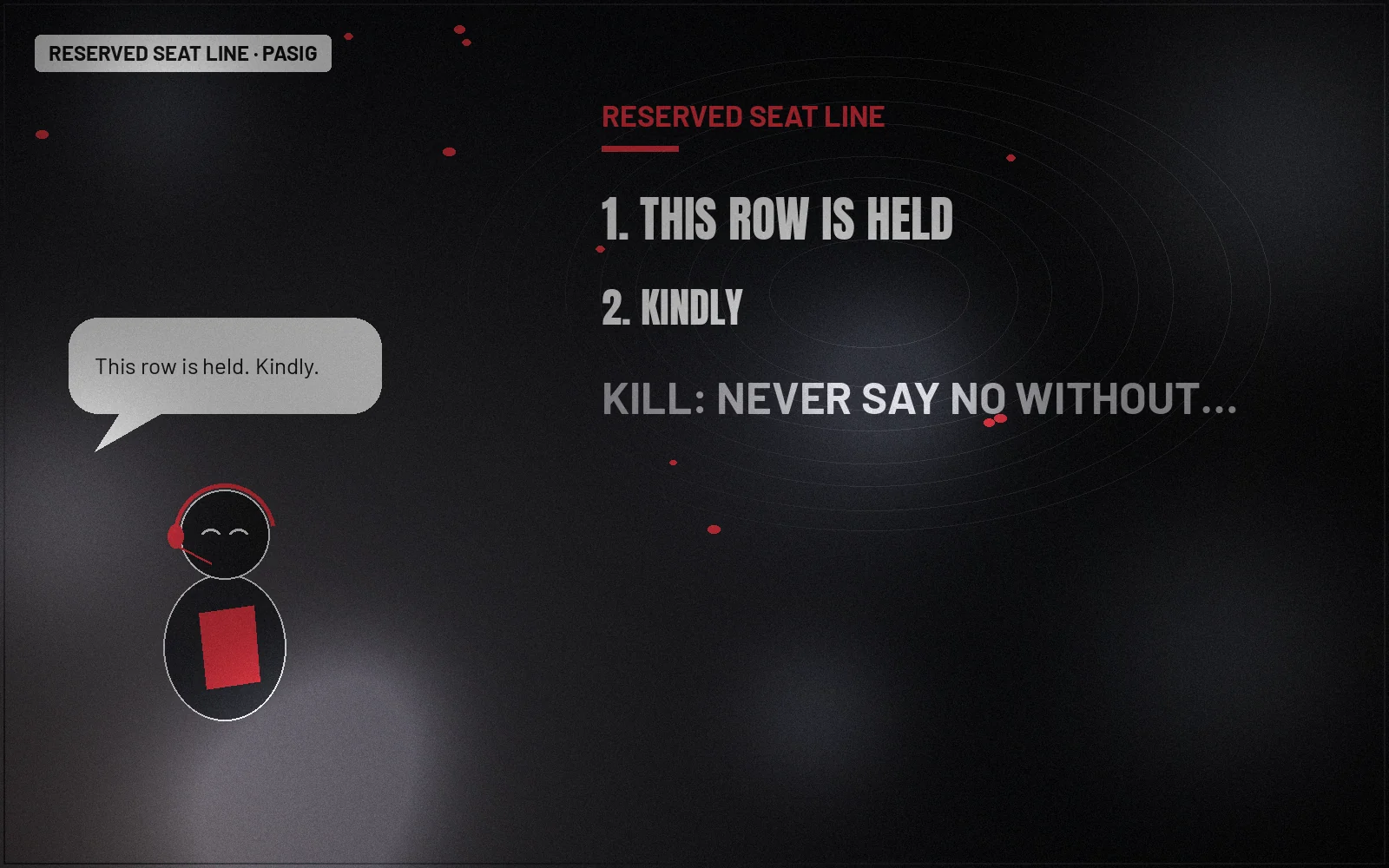
Three parts. This row is held, here is a good seat, let me walk you there.
Reserved seat line (illustrative):
“Good morning. This row is held for the speakers.”
“There are good seats in row four, with a clear view of the screen.”
“Let me walk you there.”
Say “held”, not “reserved for VIPs”. It is true, it is neutral, and it does not rank the guest below anyone.
Why offer a seat before you say no?
Because a guest who hears only “you can’t sit here” has to stand up in front of the room with nowhere to go. That is the moment they feel embarrassed, and embarrassed guests argue. A held row with a better seat on offer feels like help, not a telling-off.
Walk with them. Two steps beside a guest says “you are welcome here” louder than any words.
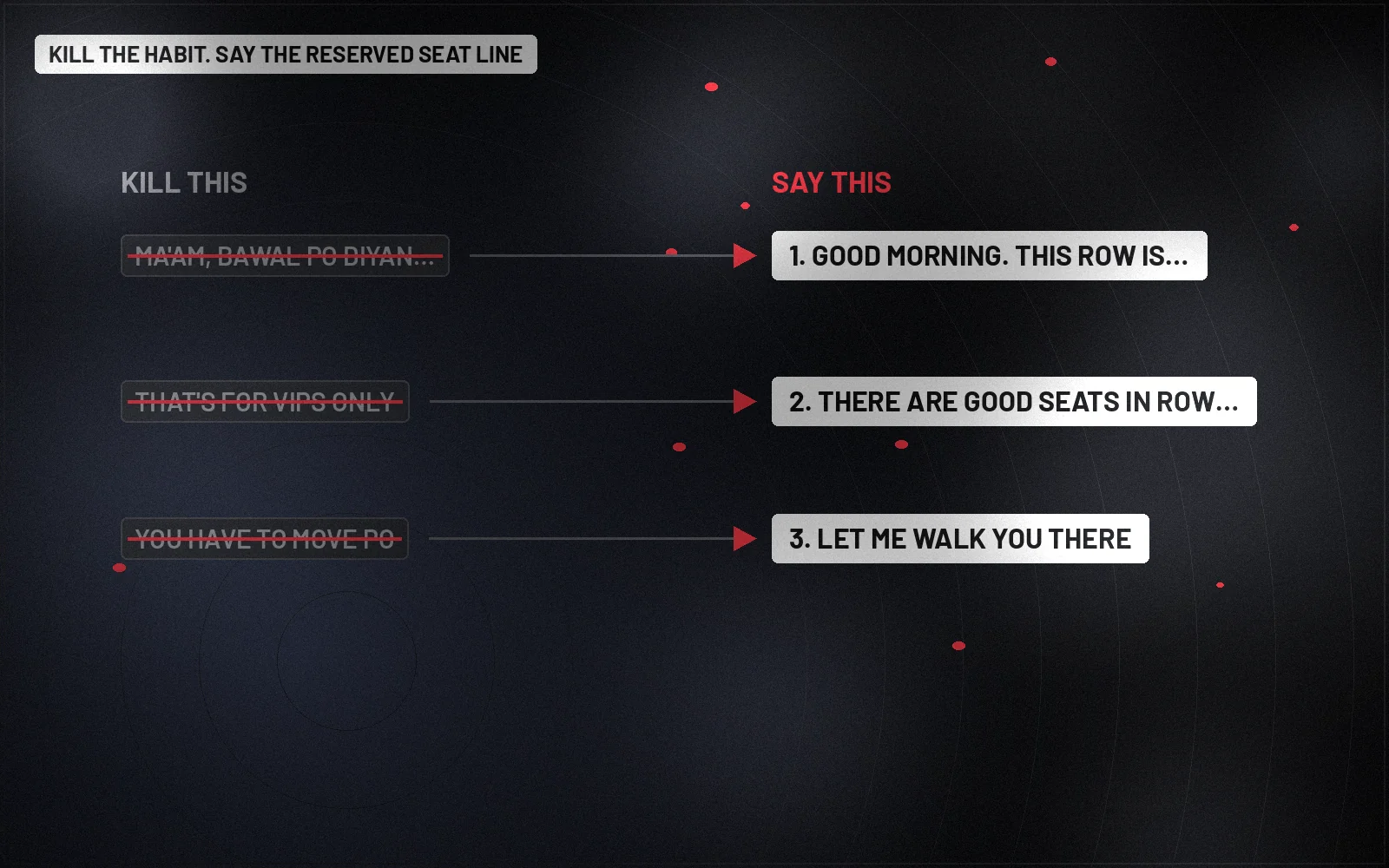
| Kill this | Say this (illustrative) | Why |
|---|---|---|
| Ma’am, bawal po diyan, reserved. | Good morning. This row is held for the speakers. | Neutral reason, no scolding |
| That’s for VIPs only. | There are good seats in row four, with a clear view. | Offer first, no ranking |
| You have to move po. | Let me walk you there. | Help, not an order |
| Sorry, I don’t know where you can sit. | (checks seat chart) Row four, aisle seat, this way. | The usher knows |
| (lifting the rope while the guest is seated) | (crouching beside the seat, low voice) This row is held. May I show you a good seat? | Quiet, at their level |
How do you mark a held row so fewer people sit there?
Mark it before doors open: a rope at the row end, a card on each held seat, and a seat cover if the venue has them. Most guests read the signal and never sit down. Keep the cards plain, “Held”, so the usher’s line and the card say the same thing.
Release held seats you no longer need. Five minutes before the start, the floor lead checks the chart and opens the empty ones: “These seats are now open. Please come forward.”
What if the guest says they were told they could sit there?
Believe them first, then check. “Thank you. Let me check the seat chart for you.” If their name is on the chart, seat them with an apology. If not, offer the best seat you have and, if they still object, call the floor lead. Never argue about who said what in the aisle.
Who gives the reserved seat line?
The usher assigned to that section, with a seat chart on a clipboard or phone. Not the registration desk, not a security guard. The usher knows which rows are held, which seats are free, and who to call. Brief ushers on the line and the chart at the same time.
How does this play out in PH and SG?
Same three parts. Different front rows.
Philippines desk. At a barangay or city hall event, the front rows may be held for officials and elders, and guests may sit there out of respect or habit. Use po and opo, offer the seat warmly, and say the line in Filipino if needed. Send the seating plan to the officials’ staff in the Viber or WhatsApp group, so their people know where to go.
Singapore and wider APAC desk. At a Suntec or Marina Bay conference, held seats are often for speakers and sponsors, and guests may be travelling in a second language. Keep the line in plain English, point to the seat as you speak, and use the same “Held” card wording in every room.
Paste-ready lock
Speakable lock (illustrative): “Good morning, this row is held for the speakers, and there is a good seat in row four that I can walk you to.”
Monday field kit
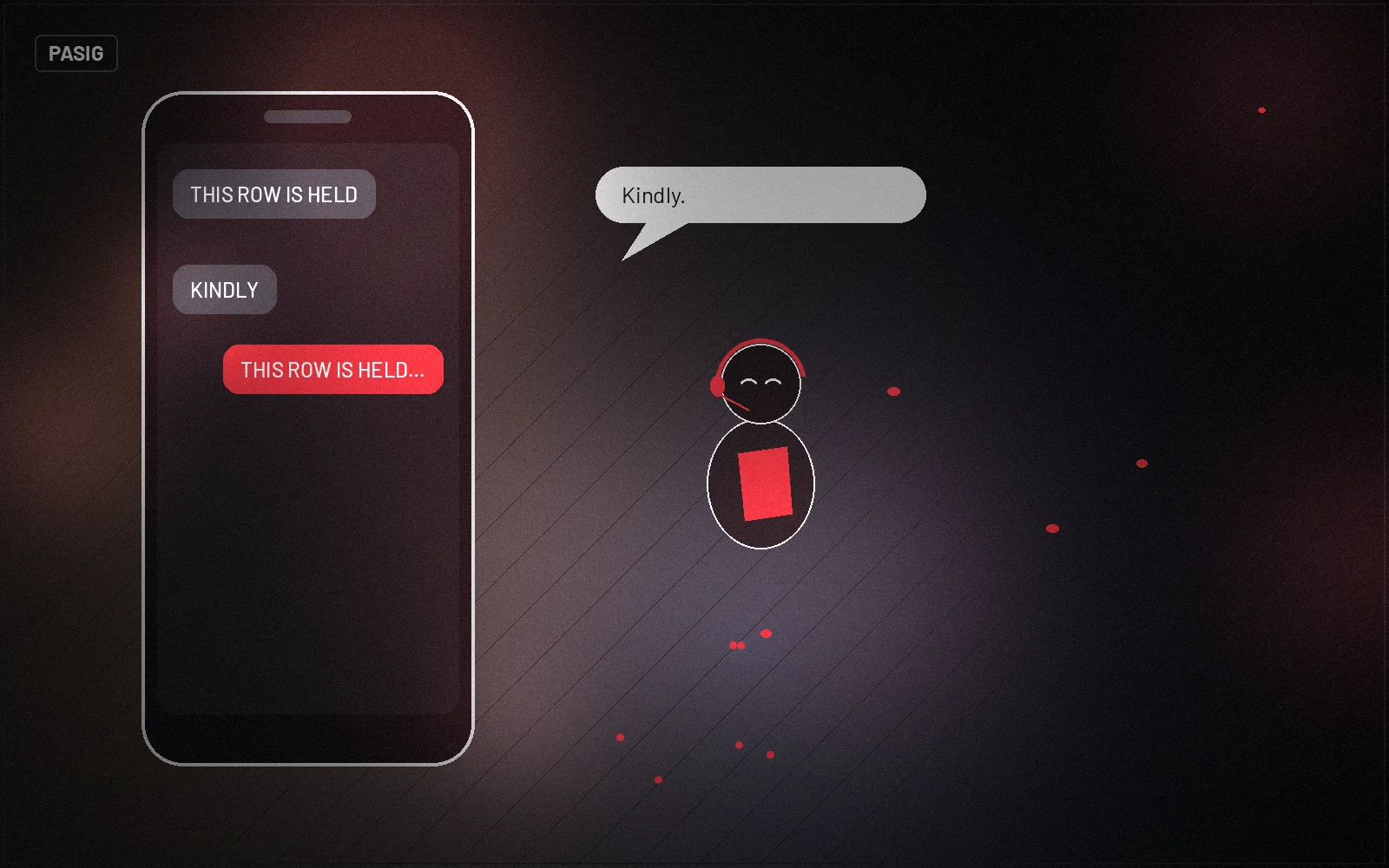
- This row is held, here is a good seat, let me walk you there.
- Rope, cards and seat covers set before doors open.
- Every usher has the seat chart for their section.
- Release empty held seats five minutes before the start.
- Kill rule: never say no without a seat on offer; if you have none, call the floor lead.
What to do this week
- Draw the seat chart with held rows marked.
- Print plain “Held” cards for each seat.
- Brief ushers on the line, the chart and who to call.
- Agree with the floor lead when held seats are released.
FAQs
What is a reserved seat line English APAC?
It is the short line that redirects a guest from a held row: this row is held, here is a good seat, let me walk you there. The usher offers the seat in the same breath.
How do you ask someone to move from a reserved seat politely?
Speak quietly at their level and offer a good seat before anything else. Then walk them there yourself.
What if a guest refuses to leave a held seat?
Check the seat chart first, in case they are meant to be there. If they still refuse, call the floor lead rather than arguing in the aisle.
Neuwark Communications plans event and field messaging as part of our services, including Strategy and Messaging for seating plans and usher briefings. Front-row standoffs before every keynote? Talk to us at Contact. More language companions live in Insights.
Illustrative lines only. Communications craft, not legal advice; counsel checks election-period and platform rules.
Related: Wristband line English APAC · Overflow room line English APAC