
“One full pass, then we stop.”
Street-smart APAC English: short sentences a tired operator can say out loud.
A Singapore hall, two hours before doors.
The crew starts the final run-through, then stops at every small slip.
By the second segment, the room has run out of time.
Quick answer: The run-through line English APAC is the stage manager’s call before the final rehearsal: one full pass, then we stop, so the crew runs the whole show once and saves every fix for the notes. The stage manager says it on the crew channel and in the room before the run starts.
Pair it with the standby-cue line English APAC and the teleprompter line English APAC for more event language on the floor. Earlier rehearsals can stop and fix; this line is for the last full run.
What goes in the run-through line English APAC?
The run-through line English APAC has three parts: the count, the scope and the stop. One means a single run, not a loop of fixes. Full pass means top of show to the last cue, at real speed, with every transition. Then we stop puts the stop at the end, where notes and fixes happen, instead of at every slip.
Run-through line (illustrative):
“Crew, final run. One full pass from the top.”
“Real speed, no stops for small slips.”
“Then we stop. Notes at the end.”
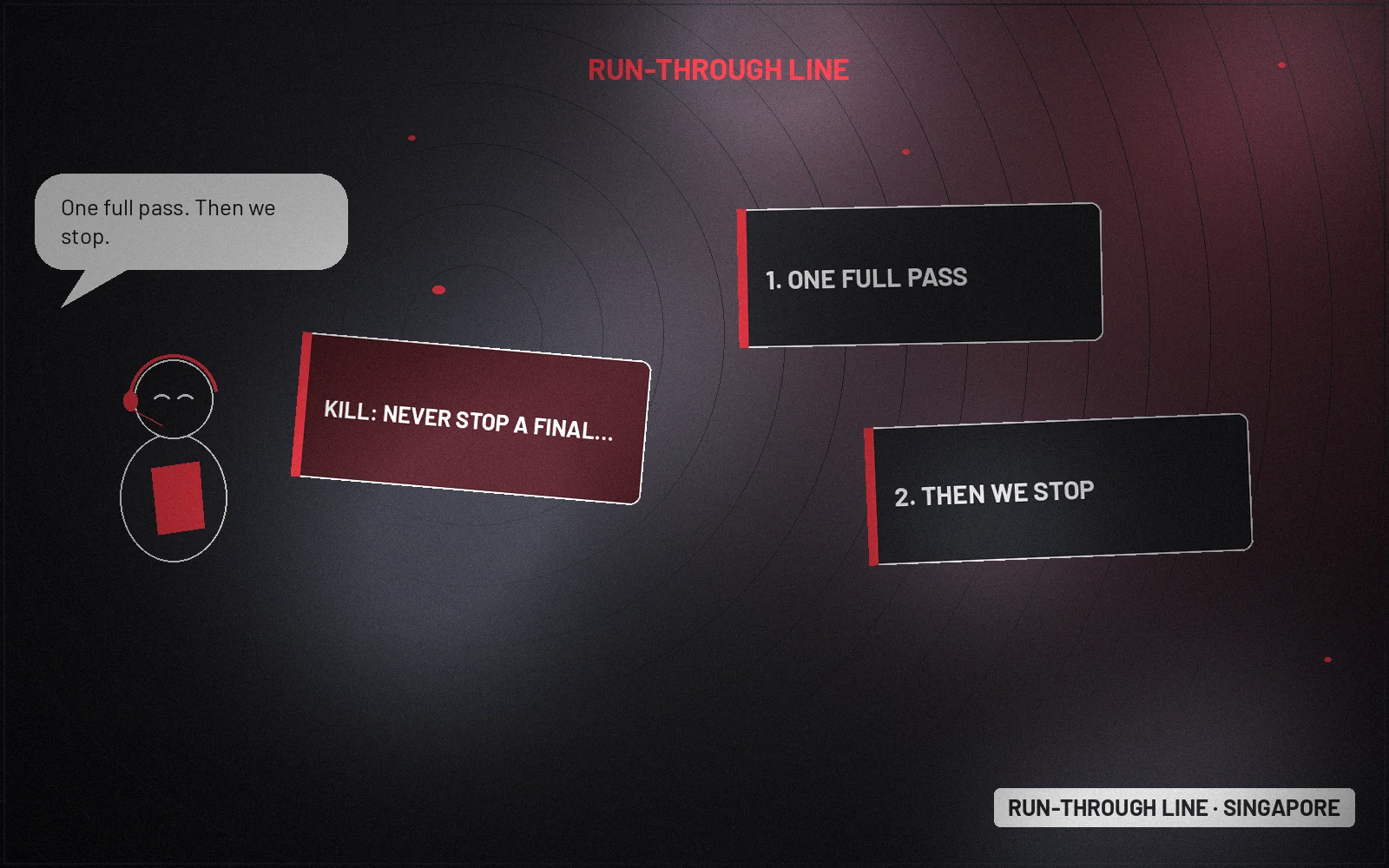
Speakable lock (illustrative): “One full pass, then we stop.”
Print it at the top of the running order and say it the same way before every final run. One pass, the whole show, then the stop.
When should the stage manager give the run-through line?
Give it once everyone is in places and on channel, just before the first cue. Check each department answers ready before you say go. Say the line once, plainly, and start. If anyone asks to stop for a small fix, answer with the same words: one full pass, then we stop.
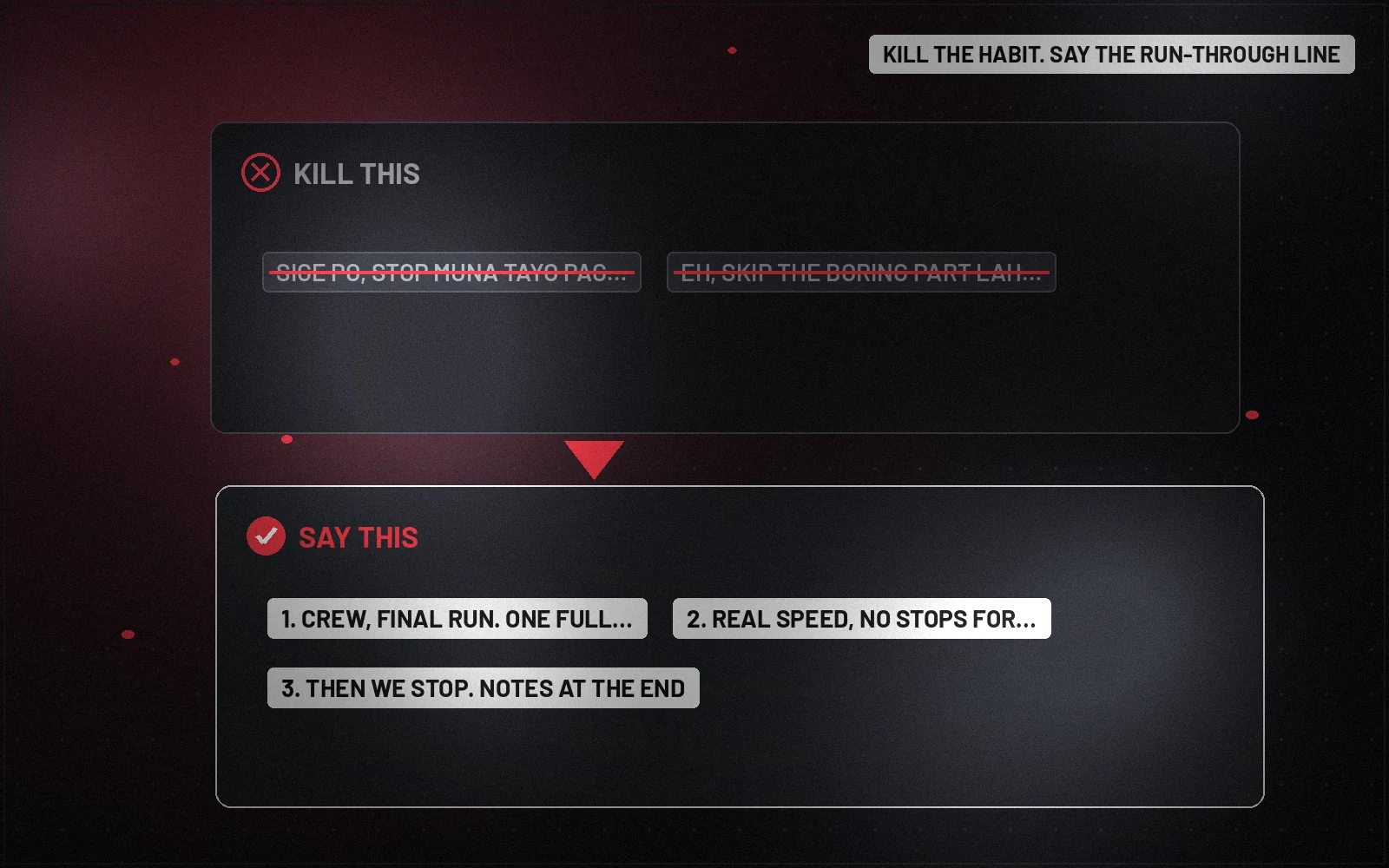
| Kill this | Say this (illustrative) | Why |
|---|---|---|
| Sige po, stop muna tayo pag may mali. | Crew, final run. One full pass from the top. | Sets the scope |
| Eh, skip the boring part lah, go to the award. | Real speed, no stops for small slips. | Real timings |
| We fix later, as we go. | Then we stop. Notes at the end. | No vague later |
Lines in this table are illustrative, not quotes from real people.
What if something breaks during the run?
Only stop for a hard failure, such as a dead mic, a missing file or a set piece that will not move. Then call it plainly: hold, hold, hold, fix it, and restart from the last cue, not from the top. Everything smaller goes in the notes. The stage manager decides; nobody else calls a stop.
How do you brief the crew on the run-through line?
Brief the heads of department at the production meeting, before the run starts. Say the line once, agree what counts as a hard stop and who takes notes for each team. Give the notes slot a time on the running order. Crew who arrive late get the same short brief before they put on a headset.
Why does the line work?
Crews stop at every slip because fixing feels responsible. But a show with stops never gets timed, and transitions never get tested. The line protects the one thing a final run is for: seeing the whole show, in order, at the real speed, once before guests arrive.
How does the line play out on PH and SG/MY desks?
Philippines desk. In PH productions, the organiser’s team often wants to stop and change things during the run. Add po and sir or ma’am when you brief them: one full pass po, then we stop for notes. Post the notes slot in the crew Viber group so everyone knows when changes get discussed.
Singapore and Malaysia desk. In Singapore and Malaysia, keep it brisk on the channel: one full pass, then we stop. Name the notes time and the person taking notes for each department.
Monday field kit
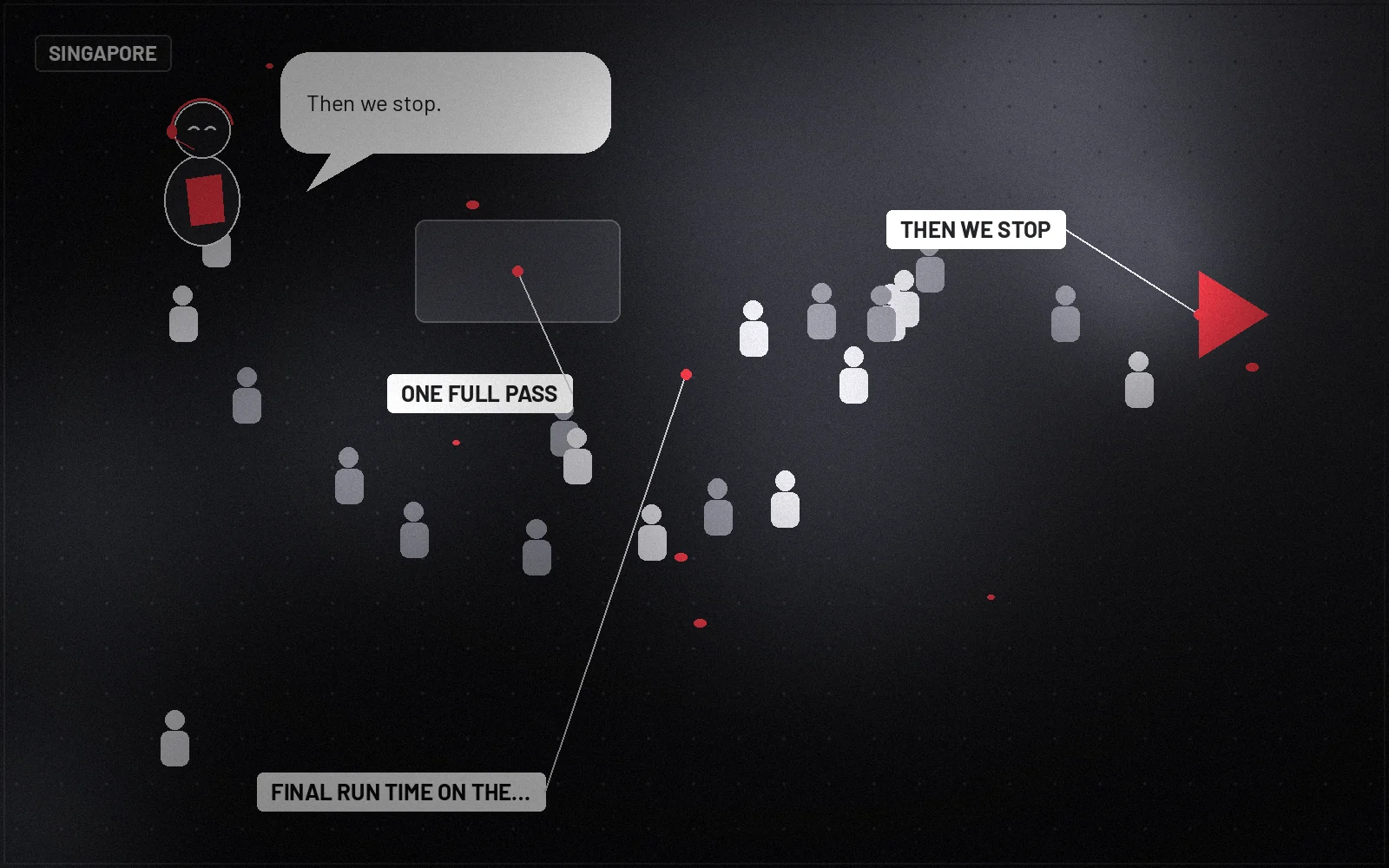
- Final run time on the running order.
- Notes slot scheduled straight after the run.
- One note-taker per department.
- Hard-stop list agreed at the production meeting.
- Kill rule: never stop a final run for a slip that can wait for notes.
FAQs
What is the run-through line?
The run-through line is the stage manager’s call before the final rehearsal: one full pass, then we stop. The crew runs the whole show once and saves every fix for the notes.
When do you say the run-through line?
Say it just before the final rehearsal starts. Say it on the crew channel and in the room.
Who owns the run-through line?
The stage manager owns the run-through line. The stage manager says it and decides any stop.
Neuwark Communications writes event scripts like this through strategy and messaging.
Talk to us about your next event script.
Illustrative lines only. Communications craft, not legal advice.