
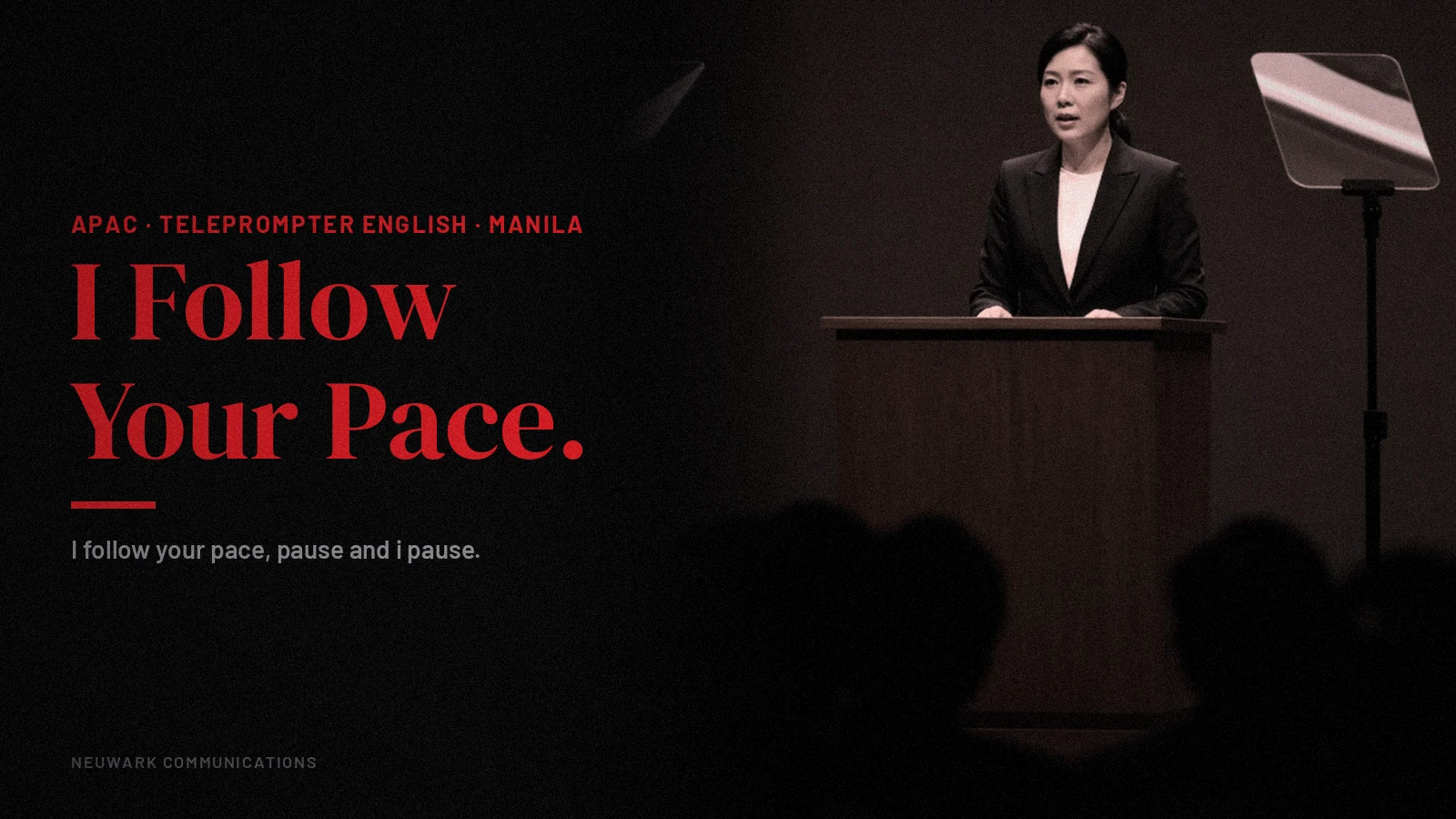
A Singapore function hall, first rehearsal before a townhall.
The speaker grips the lectern and reads too fast.
Behind the room, the prompter operator lifts one hand.
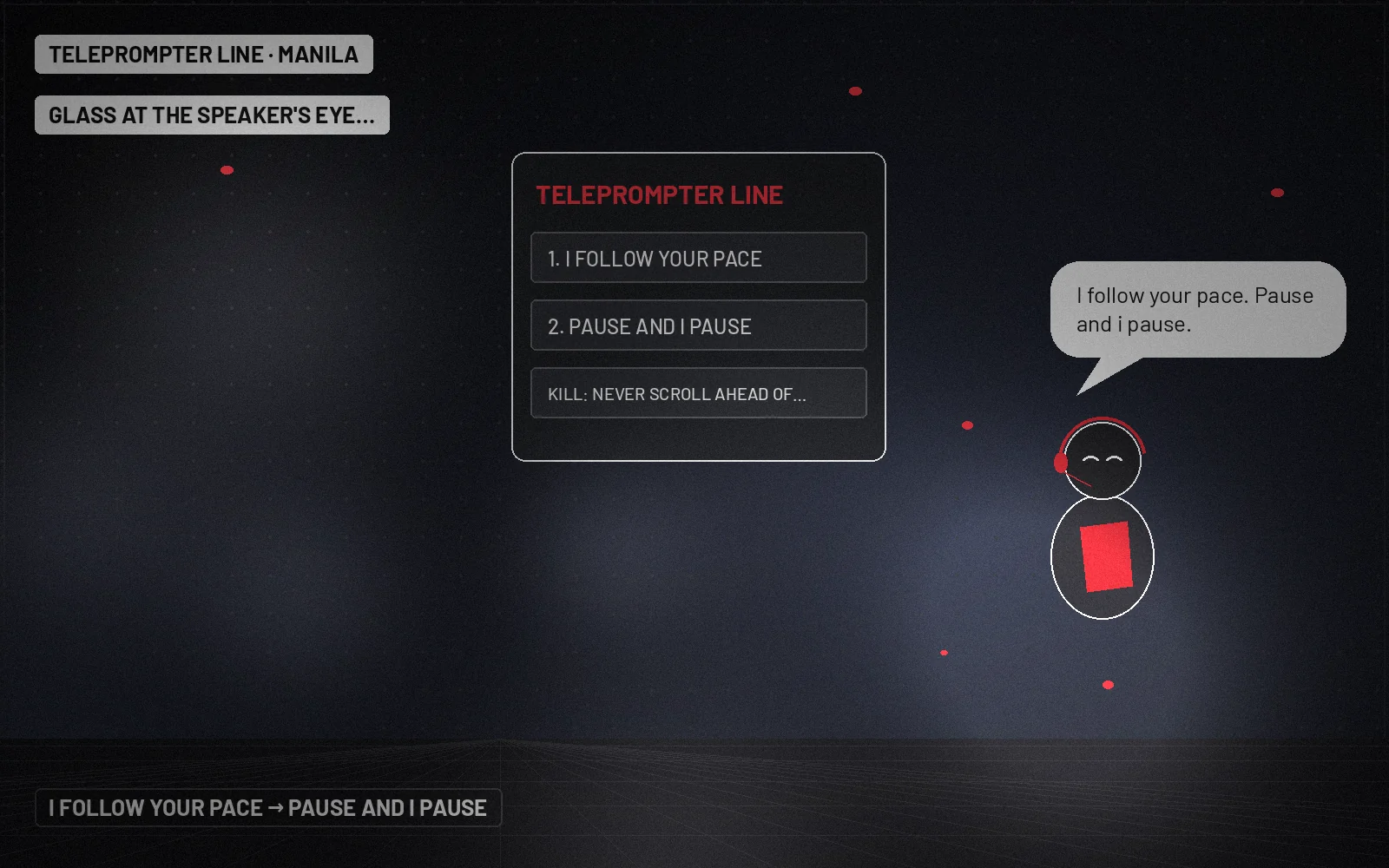
Teleprompter line English APAC is the short prompter briefing line: I follow your pace, pause and I pause, look at the glass then the room, and say the last line if you get lost.
Street-smart APAC English: short sentences a tired operator can say out loud.
Quick answer: A teleprompter line English APAC is what the prompter operator tells a speaker before rehearsal: I follow your pace, pause and I pause. Look at the glass, then the room, and if lost, say the last line. Keep campaign communications and event language aligned on PH and SG desks.
Pair it with the holding-slide line English APAC and the standby-cue line English APAC.
What goes in a teleprompter line English APAC?
A teleprompter line English APAC has three parts: the pace, the pause and the recovery. The pace belongs to the speaker; the operator follows the voice. A pause in the voice stops the scroll. The recovery, say the last line, gives a lost speaker one move instead of a frozen stare.
Teleprompter line (illustrative):
“I follow your pace. You never chase the text.”
“Pause, and I pause. Take your time.”
“If you lose your place, say the last line and I catch up.”
Where should the speaker look with a teleprompter line English APAC?
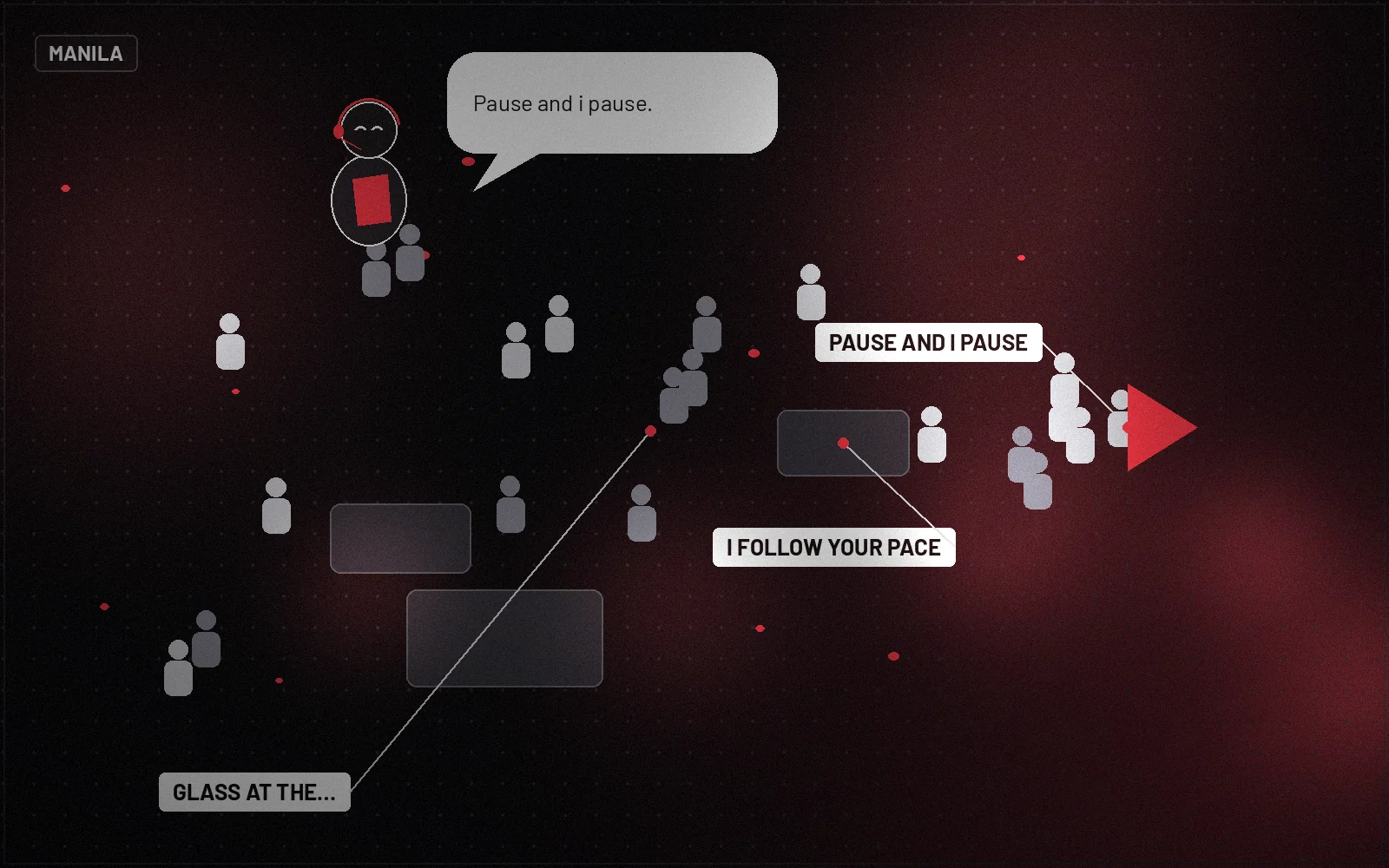
At the glass for the words, then at the room for the point. Read a phrase, lift the eyes, land it on a face, then come back. Glass panes sit left and right so the turn looks natural. Rehearse it once before the live mic.
Question ladder (illustrative):
- Typed question: “What if I go off script?” Opener: “I wait, then I find you.”
- Follow-up: “Can you make it faster?” Opener: “Speak faster and the text moves faster.”
- Practical rung: “Will the audience see the text?” Opener: “No. They see you.”
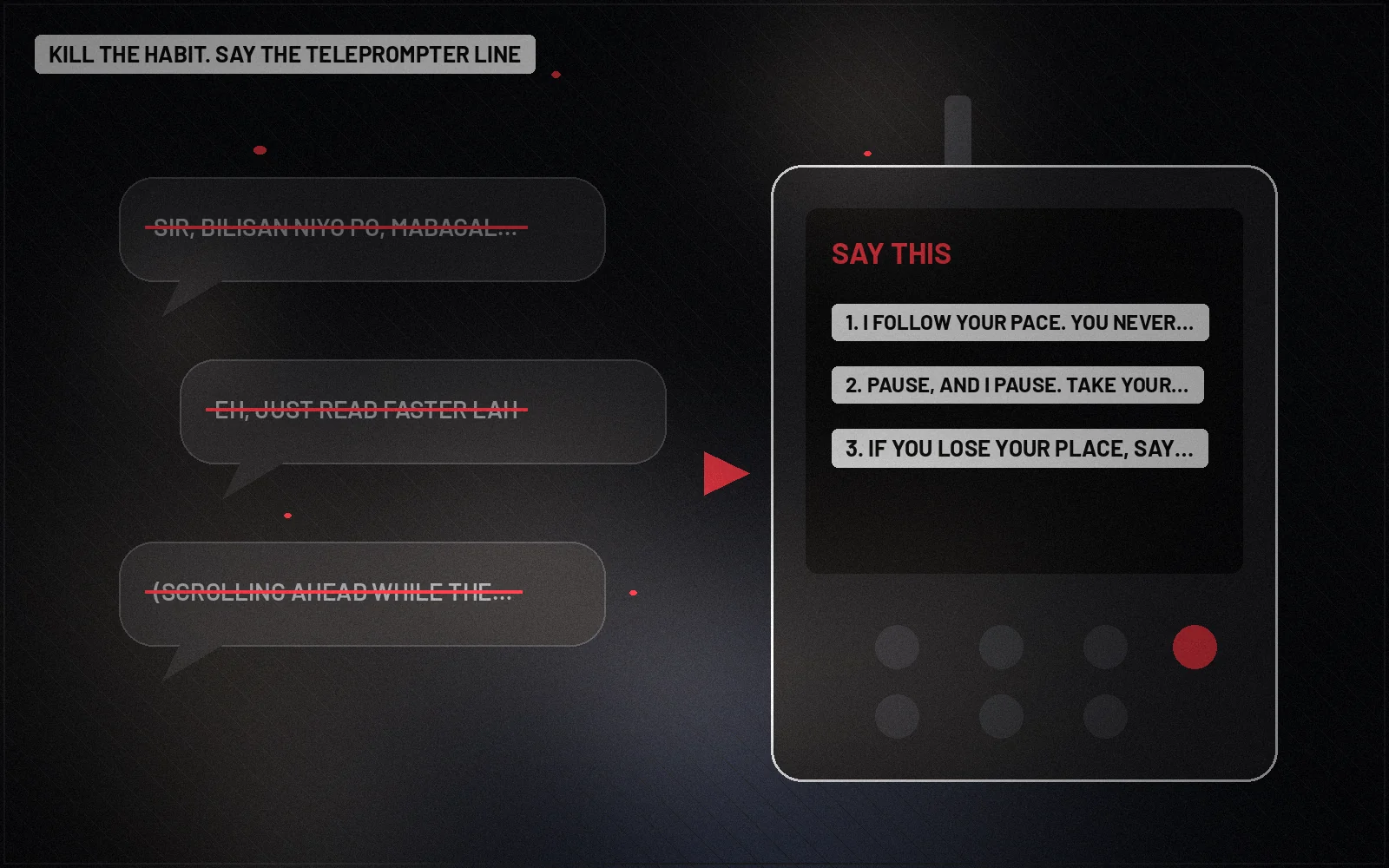
| Kill this | Say this (illustrative) | Why |
|---|---|---|
| Sir, bilisan niyo po, mabagal kayo sa script. | I follow your pace. You never chase the text. | Speaker owns speed |
| Eh, just read faster lah. | Pause, and I pause. Take your time. | Ends the race |
| (scrolling ahead while the speaker ad-libs) | If you lose your place, say the last line and I catch up. | One recovery move |
What if the speaker gets lost on the teleprompter line English APAC?
Say the last line you remember, out loud, and keep going. The operator hears it, finds it and moves the text to match. No stopping to apologise, no looking at the desk. A short pause reads as calm from the room; a hunt for the operator reads as trouble.
Why does this line work?
It answers the fear most speakers bring to the lectern: what if the words run away from me? The operator follows and stops when they stop, so control goes back to the speaker. With the recovery line, nobody has to freeze or stare at the crew.
The line shifts in word choice only: in the Philippines, add po or sir and ma’am; in Singapore and Malaysia, keep it brisk and plain; in Indonesia, open with Bapak dan Ibu.
PH and SG desk notes
Philippines desk. In Manila halls, speakers often switch to Filipino for a joke or a thank-you. Mark Taglish asides in the script so the scroll holds.
Singapore and wider APAC desk. In Singapore, run one rehearsal on talkback, glass at eye height, and let the stage manager own the start.
Paste-ready lock
Speakable lock (illustrative): “I follow your pace, pause and I pause, and say the last line if lost.”
Monday field kit
- Glass at the speaker’s eye height.
- Script locked, Taglish asides marked.
- One talkback rehearsal.
- Recovery line on the lectern card.
- Kill rule: never scroll ahead of the speaker’s voice.
FAQs
What is a teleprompter line English APAC?
A teleprompter line English APAC is the short briefing script: I follow your pace, pause and I pause, glass then room. It puts the speaker in charge of speed before the first rehearsal.
When do you say the teleprompter line English APAC?
Say the teleprompter line at rehearsal, with the operator on talkback. Repeat the recovery line before the live start.
Who owns the teleprompter line English APAC on show day?
The prompter operator owns the spoken teleprompter line and the scroll on show day. The stage manager owns the start cue, so the speaker hears one voice for pace and one for go.
What to do this week
- Book one talkback rehearsal.
- Mark pauses in the script.
- Set the glass at eye height.
- Print the recovery line.
Neuwark Communications writes event scripts through public affairs, crisis and rapid response, strategy and messaging and digital and social within our services. More lines live in Insights.
Related: Holding-slide line English APAC · Standby-cue line English APAC
Talk to us about your next event script.
Illustrative lines only. Communications craft, not legal advice.