
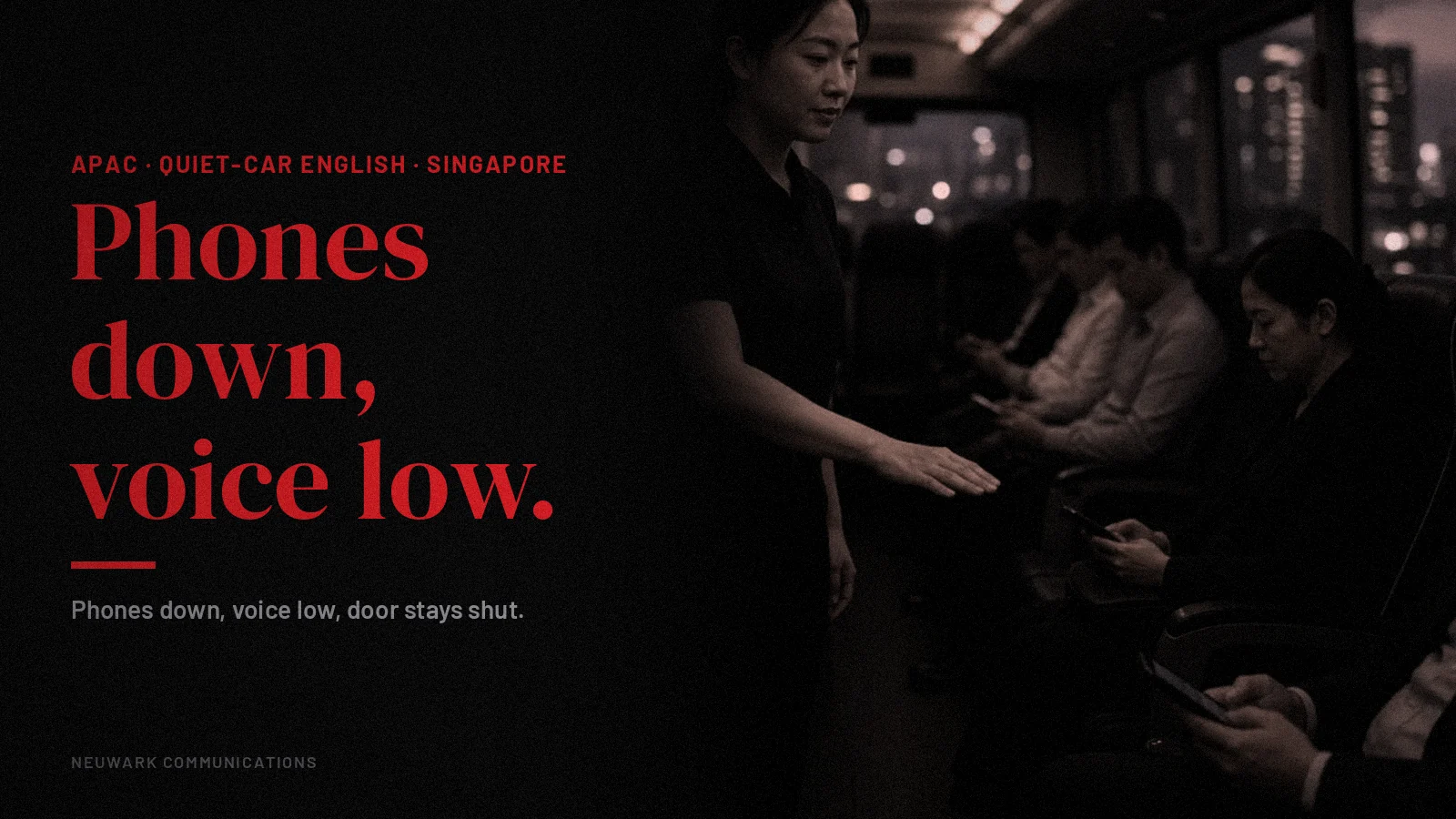
Phones down, voice low, door stays shut.
Street-smart APAC English: short sentences a tired operator can say out loud.
Quick answer: A quiet-car line English APAC is the shuttle steward’s rule: phones down, voice low, door stays shut. Delegates rest or prep in the quiet section, and the noise stays on the other side of the door.
A Singapore summit, the delegate shuttle from the hotels to the venue, the last run before the opening plenary.
The front section of the coach is booked as quiet.
Two speakers are reading their notes, and a panel chair is trying to sleep for ten minutes.
Pair it with the shuttle-pickup line English APAC for the boarding point and the quiet-hold line English APAC for the hall before a speech. Same craft: one short rule, said early and said the same way.
What is a quiet-car line English APAC?
It is the steward’s three-part rule for the quiet section. Phones down, voice low, door stays shut. The steward says it once at boarding and again, the same way, if the noise climbs.
1. Phones down. No calls, no speaker, no video with sound. A message on silent is fine. A voice note is not.
2. Voice low. Talk the way you would in a library. A group debrief waits for the venue.
3. Door stays shut. The connecting door between sections stays closed. If you need to talk or take a call, step through and close it behind you.
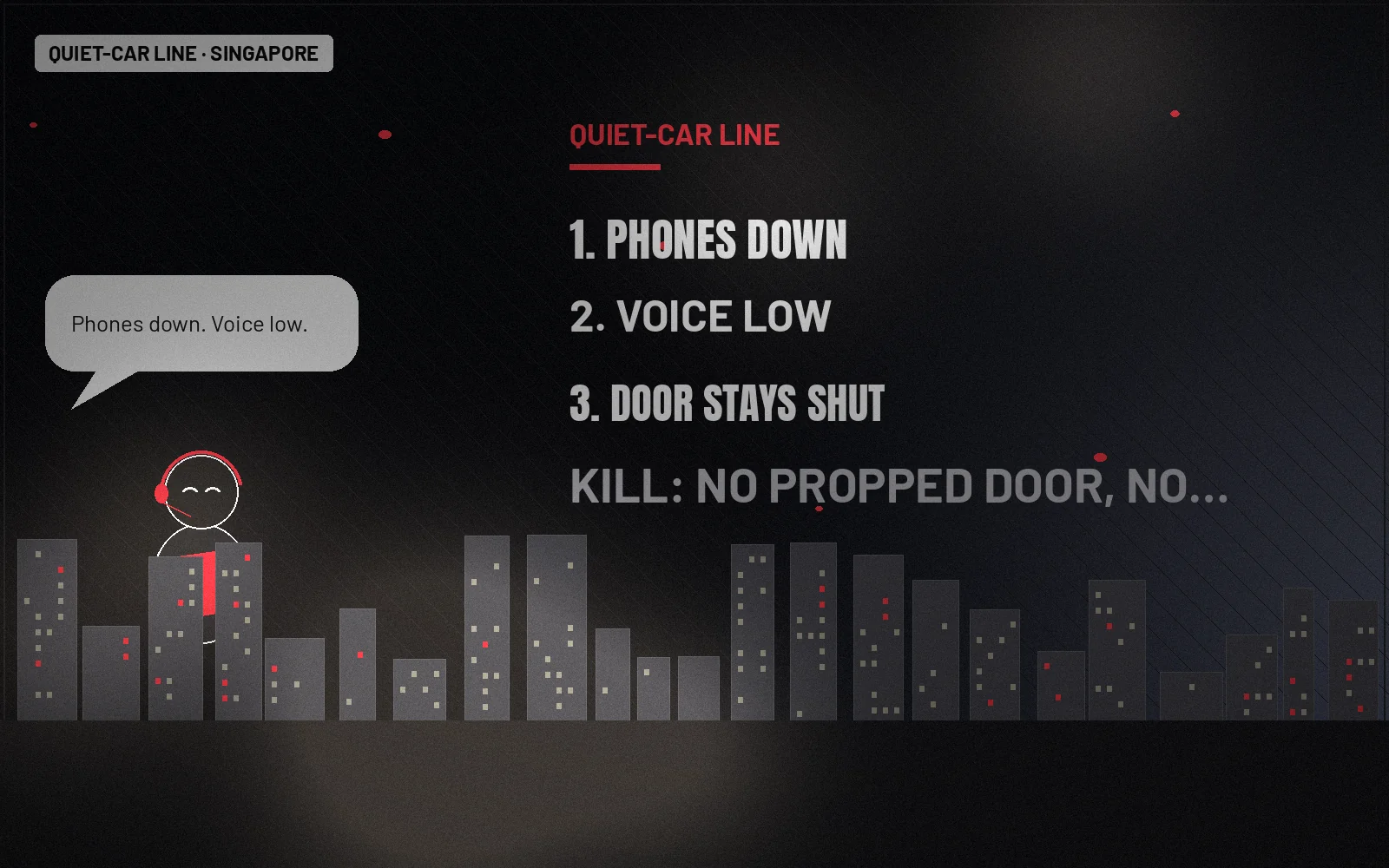
The habit to break is a steward who says nothing until someone complains. By then a speakerphone call is ten minutes in, the door is propped open with a bag, and the people who booked quiet have given up.
What should a steward stop saying on a quiet shuttle?
Stop apologising for the rule and stop asking the whole coach at once. Say the three parts to the one person, at their seat.
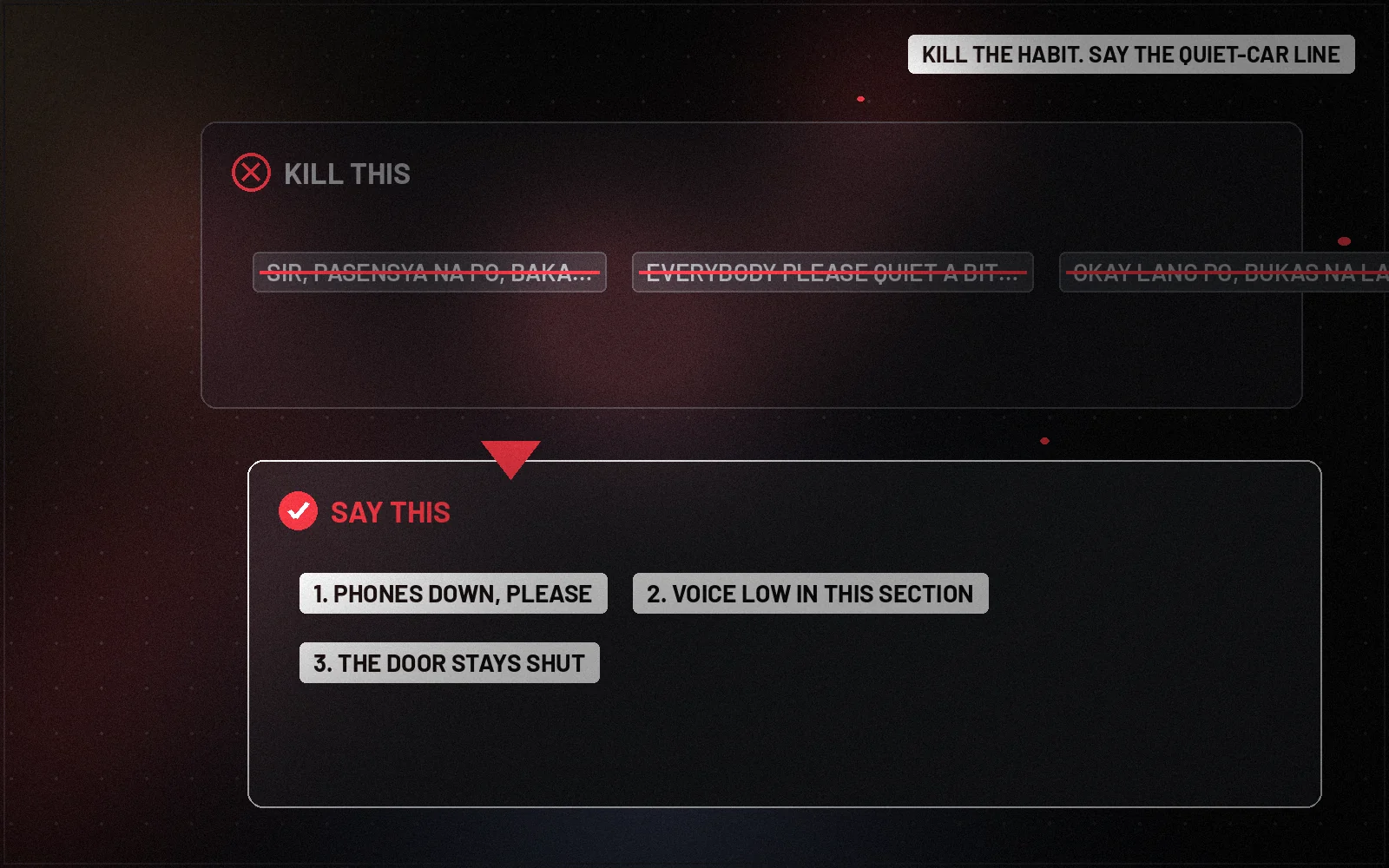
| Kill this | Say this (illustrative) | Why |
|---|---|---|
| Sir, pasensya na po, baka pwede lang po hinaan nang konti? | Phones down, please. | One clear ask, not a plea |
| Everybody please quiet a bit lah, thank you. | Voice low in this section. | Names the section, not the coach |
| Okay lang po, bukas na lang yung pinto, mainit. | The door stays shut. | Noise stays on the other side |
Lines in this table are illustrative, not quotes from real people.
Say it at seat level, beside the person, not over the coach microphone.
Who decides which section of the shuttle is quiet?
The transport lead decides before the first run, not the steward on board. The run sheet names which coach or which section is quiet, and the steward gets that brief at the bay.
Delegates do not vote on it once the coach is moving. One decision, made early, means the steward only has to say the line, not defend it.
What if a senior guest takes a call in the quiet section anyway?
Say the line once, quietly, and offer the other side of the door. “Phones down in this section, sir. You can take it through the door.” Then step back and let them choose.
This is the uncomfortable rung. Some senior guests will keep talking. The steward does not argue in front of the other delegates. If it goes on, the steward tells the transport lead at the next stop and lets the lead handle it.
PH / SG / Jakarta desk notes
Same three parts. Different desks.
Philippines desk. Warmth first, then the rule. Phones down po, sir. Voice low lang po in this section, ma’am. The door stays shut po, thank you.
Singapore desk. Brisk and plain works. Phones down, voice low, door stays shut. One line, a small nod, and move on down the aisle.
Jakarta desk. Lead with a polite permisi and a slight bow of the head, then the three parts in plain English. Keep the tone soft and the words the same for every seat.
Paste-ready lock
Speakable lock (illustrative): “Phones down, voice low, and the door stays shut.”
Monday field kit
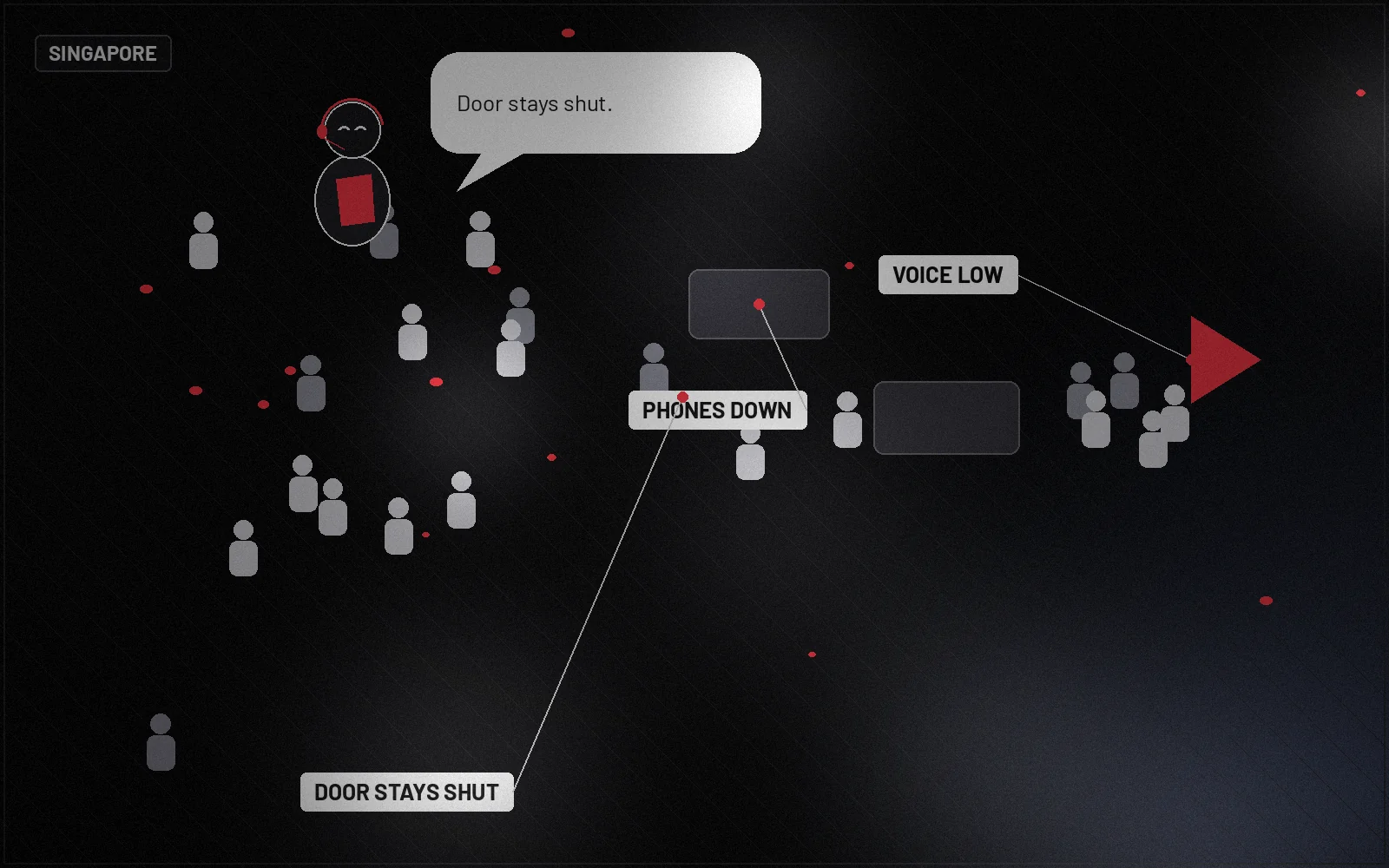
- Ask the transport lead which coach or section is quiet on each run.
- Put a picture-only quiet card on the connecting door, no long notice.
- Brief every steward on the lock: phones down, voice low, door stays shut.
- Agree where a guest goes to take a call, and say it the same way each time.
- Kill rule: no propped door, no speakerphone, no group debrief in the quiet section.
Illustrative only. The event’s transport plan and run sheet come first.
FAQs
What is a quiet-car line English APAC?
A quiet-car line English APAC is the shuttle steward’s rule: phones down, voice low, door stays shut. Delegates rest or prep in the quiet section, and the noise stays on the other side of the door.
What should a steward stop saying on a quiet shuttle?
Stop apologising for the rule and stop asking the whole coach at once. Say the three parts to one person at their seat.
Who decides which section of the shuttle is quiet?
The transport lead decides before the first run and puts it in the run sheet. Delegates do not vote on it once the coach is moving.
What if a senior guest takes a call in the quiet section anyway?
Say the line once, quietly, and offer the other side of the door. If it continues, the steward tells the transport lead at the next stop.
Neuwark Communications builds event and campaign communications as part of our strategy and messaging work. More street-smart lines live in Insights.
Related: shuttle-pickup line English APAC · quiet-hold line English APAC
Talk to us about your next event script.
Illustrative lines only. Communications craft, not legal advice.