
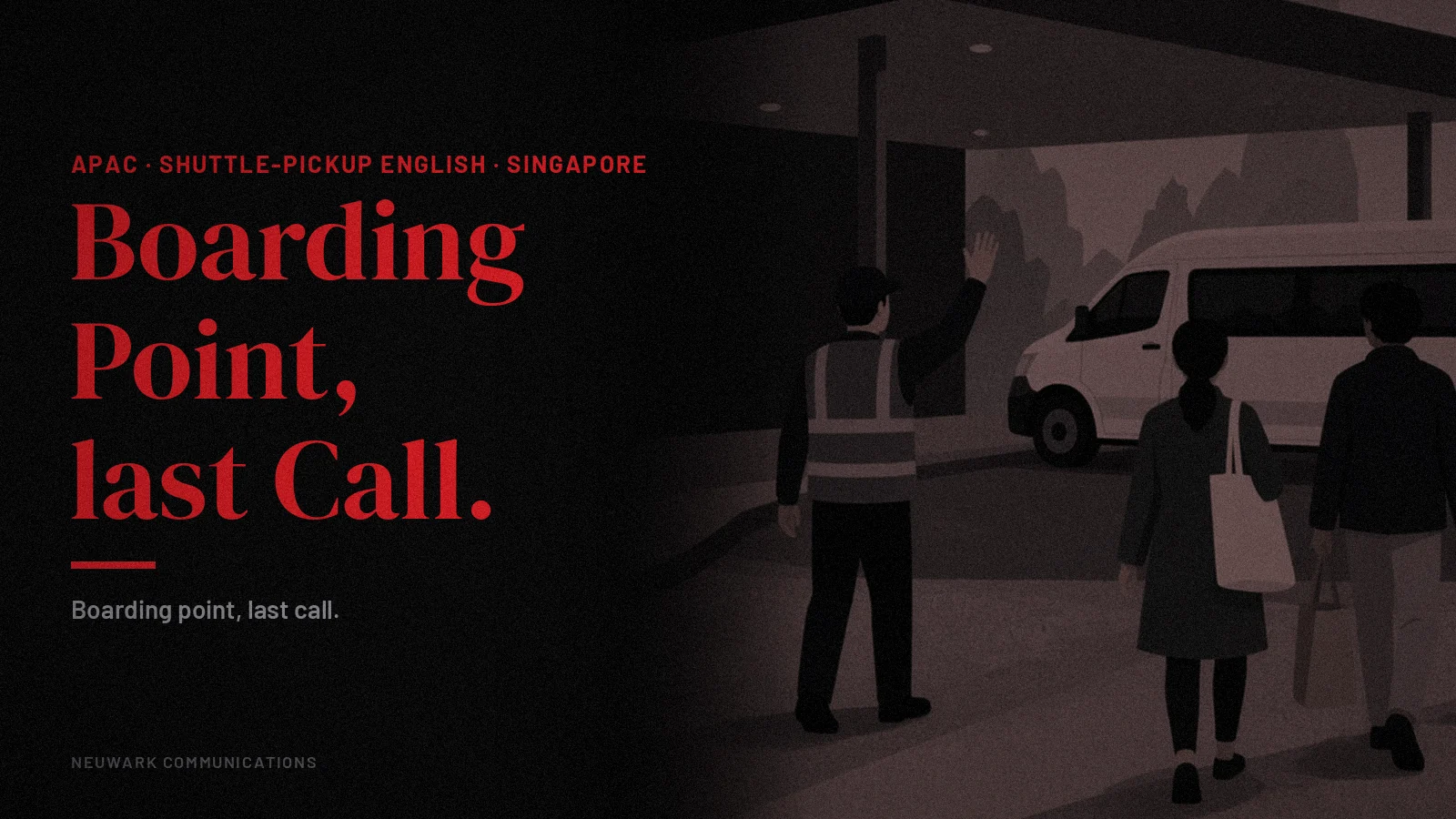
Closing night of a summit in Clark. Three vans wait at the bay, and nobody knows which one is theirs.
Shuttle-pickup line English APAC is the short marshal line at the boarding point: where to stand, which van, and when the last call is.
Quick answer: A shuttle-pickup line English APAC is the marshal’s line at the shuttle boarding point: please wait here, the first van goes to the hotel, and last call is in five minutes. Name the bay, name each van by its sign or destination, and give one clear last call before it leaves.
Street-smart APAC English: short sentences a tired operator can say out loud.
It is the spoken line at the bay, not a text: the shuttle delay text English APAC covers a late van, and the ride-share pickup text English APAC helps guests who book their own ride. This one boards the van in front of you.
What goes in a shuttle-pickup line English APAC?
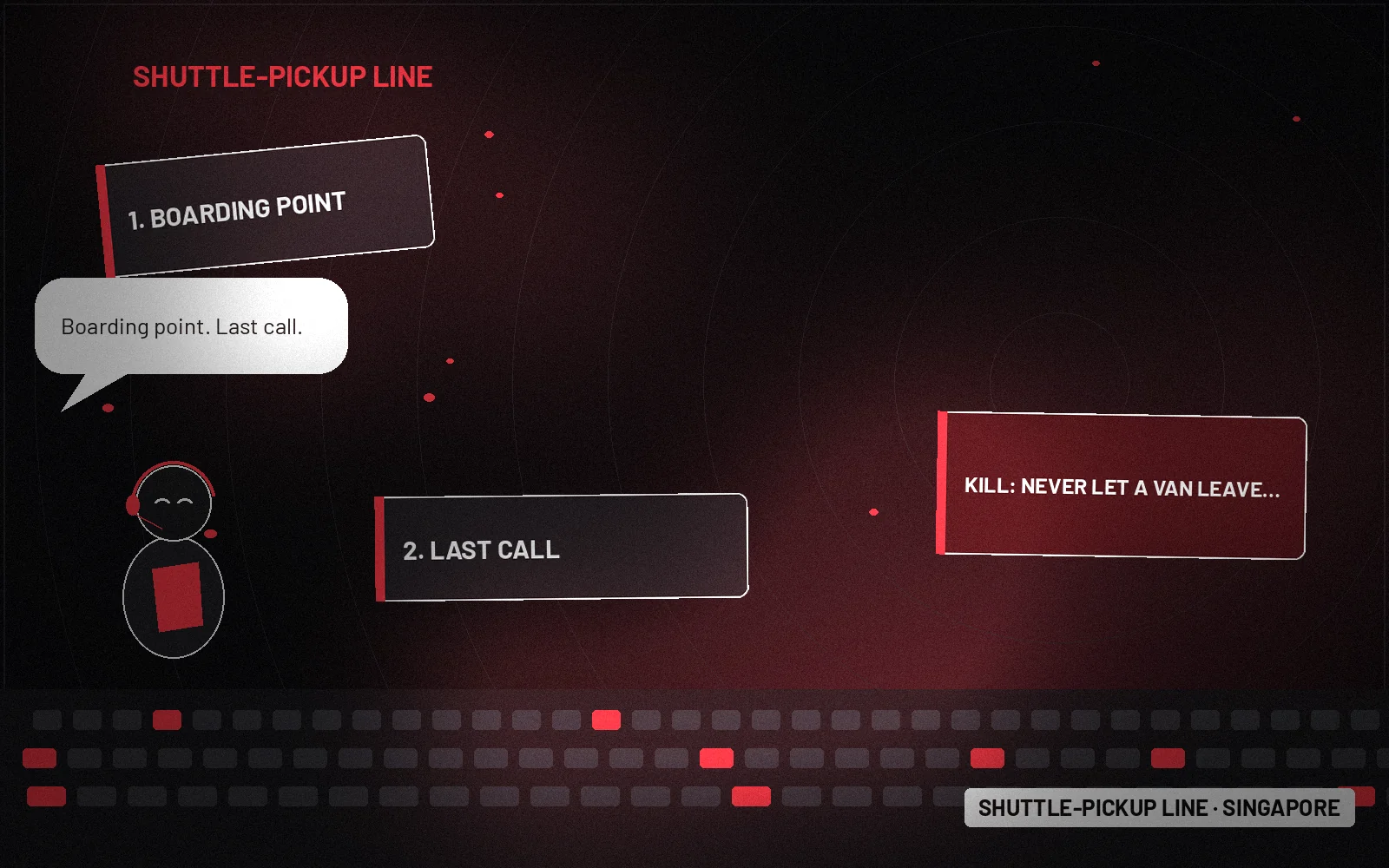
A shuttle-pickup line English APAC has three parts: where to wait, which van goes where, and when the last call is. The marshal says it at the boarding bay, points to each van’s sign, and repeats the destination at the door so nobody boards the wrong van.
Shuttle-pickup line (illustrative):
“Hotel shuttle, please wait here at Bay 2.”
“The first van goes to the hotel, the second to the train station.”
“Last call for the hotel van, leaving in five minutes.”
How do I stop guests boarding the wrong van?
Put a clear sign on every van and say the destination at each door as guests step up. Ask, “Hotel?” and wait for the nod. Simple event language at the door catches mistakes before the doors close, which is far easier than turning a van around later.
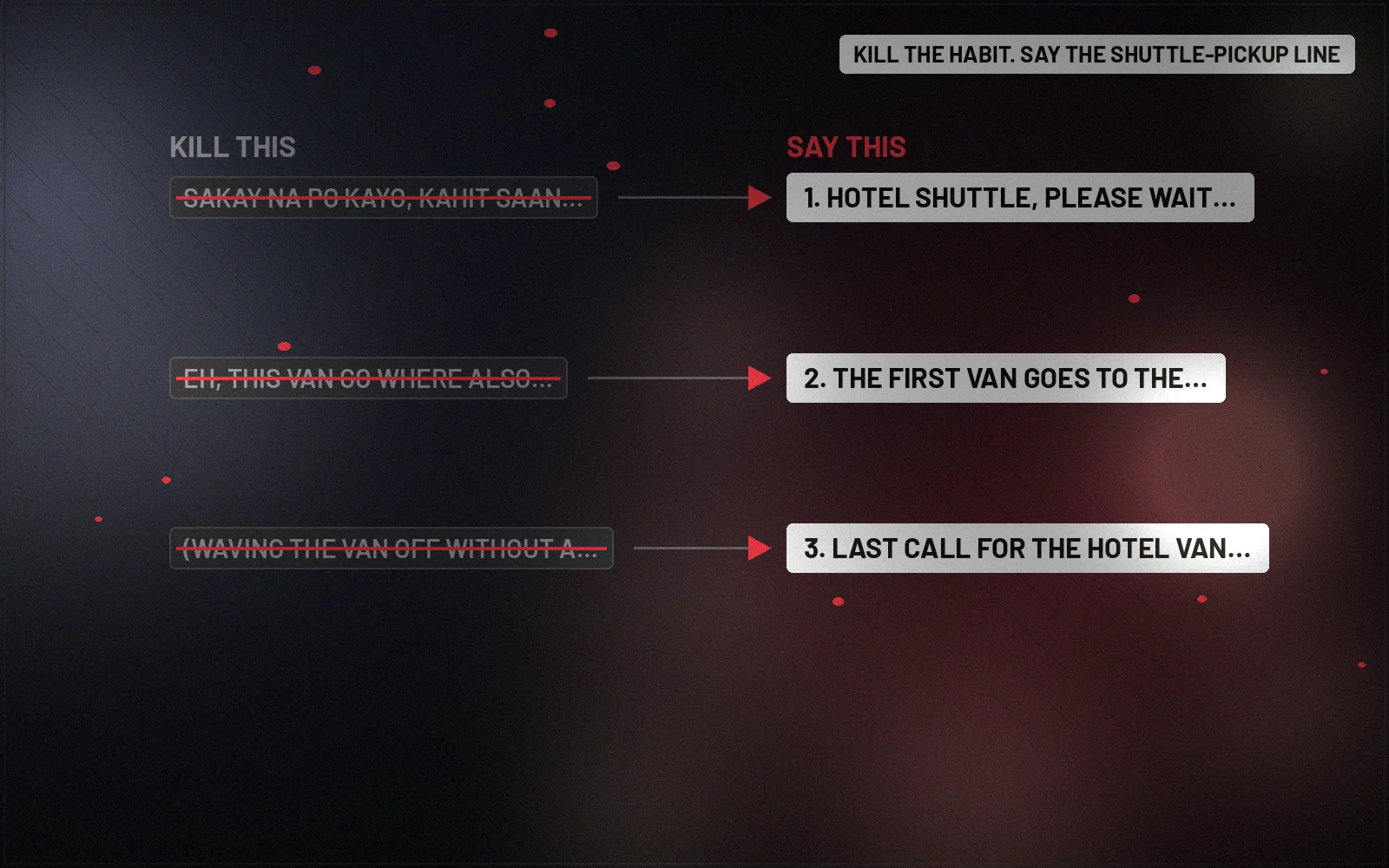
| Kill this | Say this (illustrative) | Why |
|---|---|---|
| Sakay na po kayo, kahit saan diyan! | Hotel shuttle, please wait here at Bay 2. | One place to wait |
| Eh, this van go where also can lah. | The first van goes to the hotel, the second to the train station. | Names each van |
| (waving the van off without a call) | Last call for the hotel van, leaving in five minutes. | One clear last call |
| Naiwan? Bahala na sila. | Anyone else for the hotel? Last chance now. | Checks before it goes |
When should the marshal give the last call?
Give it a few minutes before the van leaves, loudly and once, with the destination and the time. Then look around the bay and check with the desk for anyone still on their way. After the last call, close the door and tell the driver the van can go.
What if a guest misses the last shuttle?
Do not leave them guessing. Tell them when the next van runs, or point them to the ride-share pickup point and the help desk. Keep the transport lead’s number on the marshal card, so a missed shuttle becomes a quick phone call rather than an argument at the kerb.
How does this play out in PH and SG?
The three parts hold in both markets, but traffic and kerbside rules differ. Use the desk notes below to adjust the bay set-up, the timing and the line for Philippine and Singapore pickups, and agree the boarding point with the venue before the event closes.
Philippines desk. In the Philippines, traffic can delay vans, and guests may crowd the kerb in groups. Keep guests behind the marshal at one bay, call each van by destination, and say the line in English or Filipino.
Singapore and wider APAC desk. In Singapore, pickup bays often allow only short stops, so boarding must be quick. Keep the line in plain English, have guests ready before the van pulls in, and keep campaign communications staff on the same boarding list as guests.
Paste-ready lock
Speakable lock (illustrative): “Hotel shuttle, please wait here at Bay 2, the first van goes to the hotel, and last call is in five minutes.”
Monday field kit
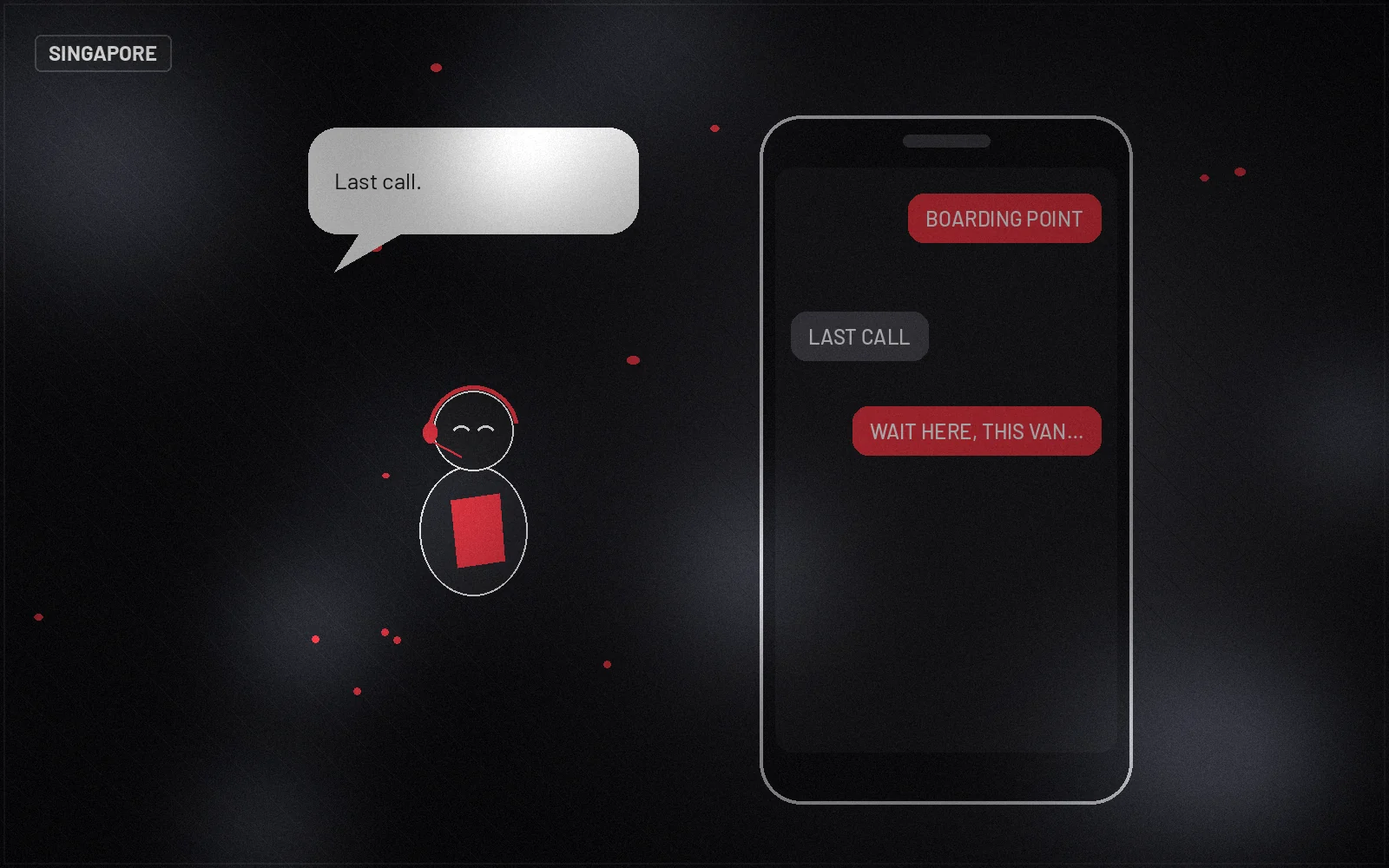
- Wait here, this van goes there, last call.
- A destination sign on every van.
- One bay per destination where possible.
- The transport lead’s number on the marshal card.
- Kill rule: never let a van leave without a last call.
What to do this week
- Agree the boarding bay with the venue.
- Print a destination sign for every van.
- Write the line on the marshal card.
- Share the van schedule with the help desk.
Kill rule: if a van is late, switch to the shuttle delay text rather than guessing a time at the bay.
FAQs
What is a shuttle-pickup line English APAC?
A shuttle-pickup line English APAC is the short marshal line at the boarding point. It says where to wait, which van goes where and when the last call is.
How do you organise shuttle pickup after an event?
Organise shuttle pickup after an event with one boarding bay, a sign on every van and a marshal at the door. The marshal gives one clear last call before each van leaves.
When should the last call for a shuttle be made?
The last call for a shuttle should be made a few minutes before it leaves. Say the destination and the time once, clearly.
What if a guest misses the last shuttle?
If a guest misses the last shuttle, tell them when the next van runs or point them to the ride-share pickup point. The help desk can call the transport lead.
Neuwark Communications builds event scripts and campaign communications as part of our strategy and messaging work and wider services. More street-smart lines live in Insights.
Related: Shuttle delay text English APAC · Ride-share pickup text English APAC
Talk to us about your next event script.
Illustrative lines only. Communications craft, not legal advice.