

A ceremony rehearsal in Iloilo, an hour before doors. The emcee’s script is full of names, and some look tricky.
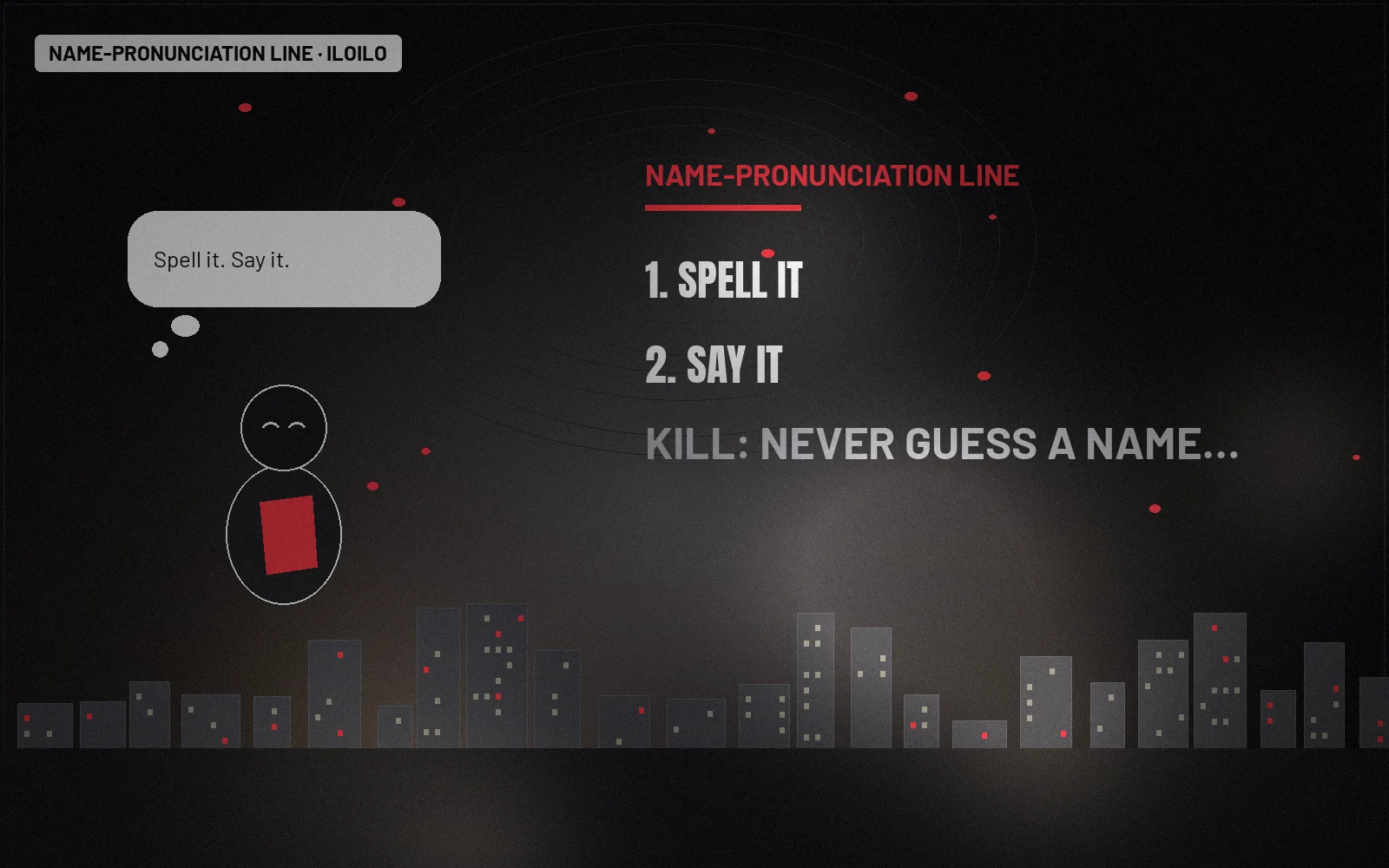
Name-pronunciation line English APAC is the short desk line before a call-up: spell your name, say it, and I’ll check it back.
Quick answer: A name-pronunciation line English APAC is what the desk or emcee asks before a call-up: could you spell your name for me, how do you say it, and is this right? Ask privately, write it down as it sounds, say it back once, and use the same version on stage.
Street-smart APAC English: short sentences a tired operator can say out loud.
It happens before the stage, not on it; the award call-up line English APAC is the script that uses the name once it is right. If a speaker changes late, the speaker swap notice English APAC covers the announcement, and this line checks the new name.
What goes in a name-pronunciation line English APAC?
A name-pronunciation line English APAC has three parts: spell it, say it, and check it back. The desk asks the person to spell their name, writes a simple sound-it-out version next to it, then says it back once and asks if it is right before passing it to the emcee.
Name-pronunciation line (illustrative):
“Before we start, could you spell your name for me?”
“And how do you say it? I want to get it right on stage.”
“Let me say it back: is that right?”
How do I ask someone how to say their name?
Ask early and privately, and make it about respect: you want to get it right on stage. Write the sound-it-out version in your own notes, not on a slide. Courteous event language shows care, and most people are glad to be asked rather than mispronounced in front of a full room.
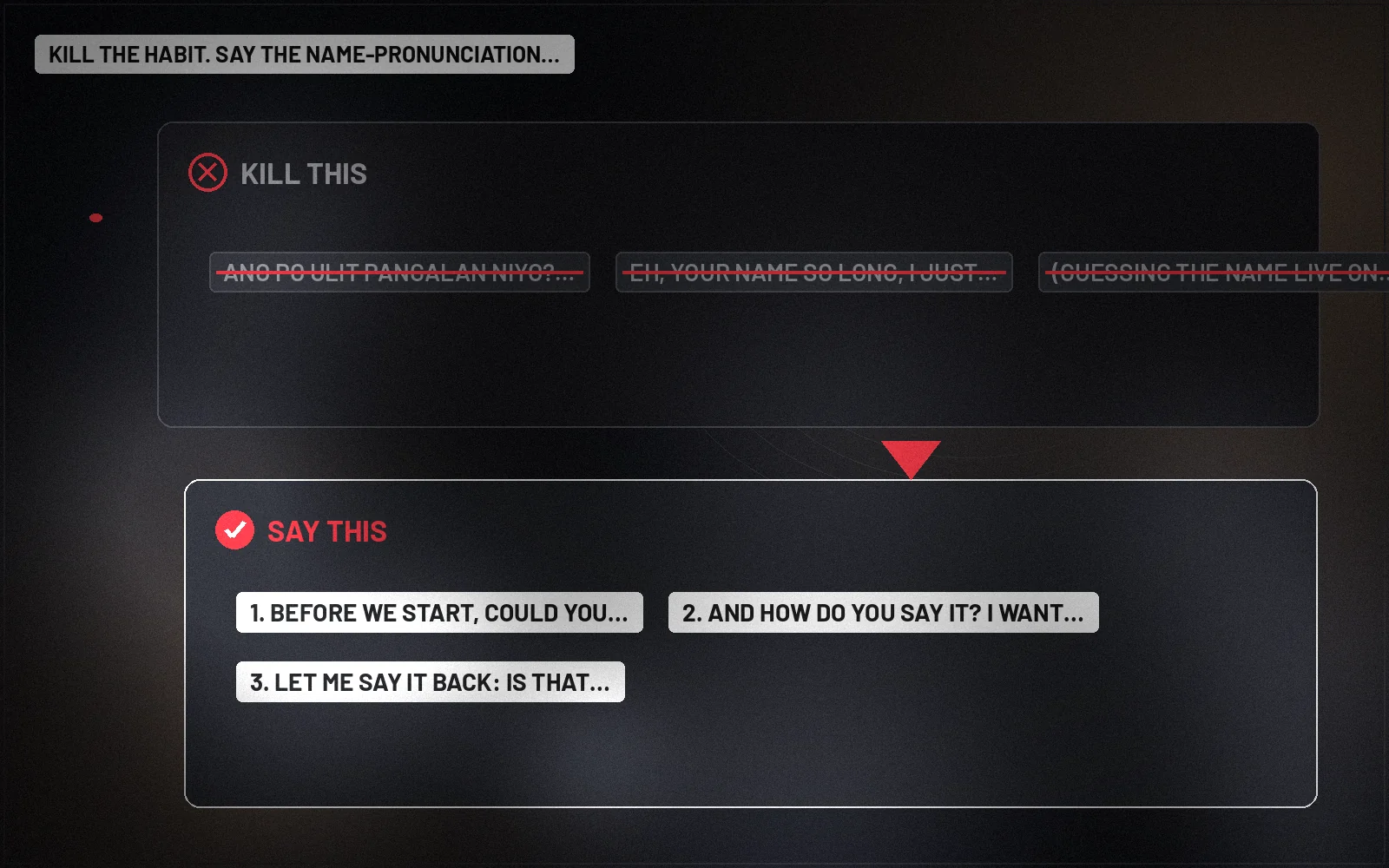
| Kill this | Say this (illustrative) | Why |
|---|---|---|
| Ano po ulit pangalan niyo? Basta, babasahin ko na lang. | Before we start, could you spell your name for me? | Asks properly |
| Eh, your name so long, I just say short form lah. | And how do you say it? I want to get it right on stage. | Respects the full name |
| (guessing the name live on stage) | Let me say it back: is that right? | Checks before the stage |
| Okay na ‘yan, close enough naman. | Thank you, I’ll use exactly that. | Commits to their version |
Should the emcee use a nickname or the full name?
Use the version the person asks for, and note it on the card. Some prefer a full formal name with titles, others a short name. Do not shorten or change a name for convenience, and check honorifics too, such as a title the person uses at work or in the community.
What if I still get the name wrong on stage?
Correct it briefly and move on: my apologies, [awardee name], and say it properly once. Do not joke about it or repeat the mistake. Afterwards, check the card and fix it for any later mention, such as the closing thanks or the photo caption.
How does this play out in PH and SG?
The three parts hold in both markets, but names and honorifics differ. Use the desk notes below to adjust the questions, the honorifics and the card format for Philippine and Singapore events, and collect spellings at registration where you can.
Philippines desk. In the Philippines, many names mix Spanish, English and local roots, and some guests use professional titles such as Attorney or Engineer. Ask which title to use, say the line in English or Filipino, and write the sound-it-out version on the emcee card.
Singapore and wider APAC desk. In Singapore, names may follow Chinese, Malay, Tamil or English conventions, and family names may come first. Ask which name to use and in what order, keep the line in plain English, and keep campaign communications materials consistent with the confirmed spelling.
Paste-ready lock
Speakable lock (illustrative): “Before we start, could you spell your name for me and tell me how you say it, so I get it right on stage?”
Monday field kit
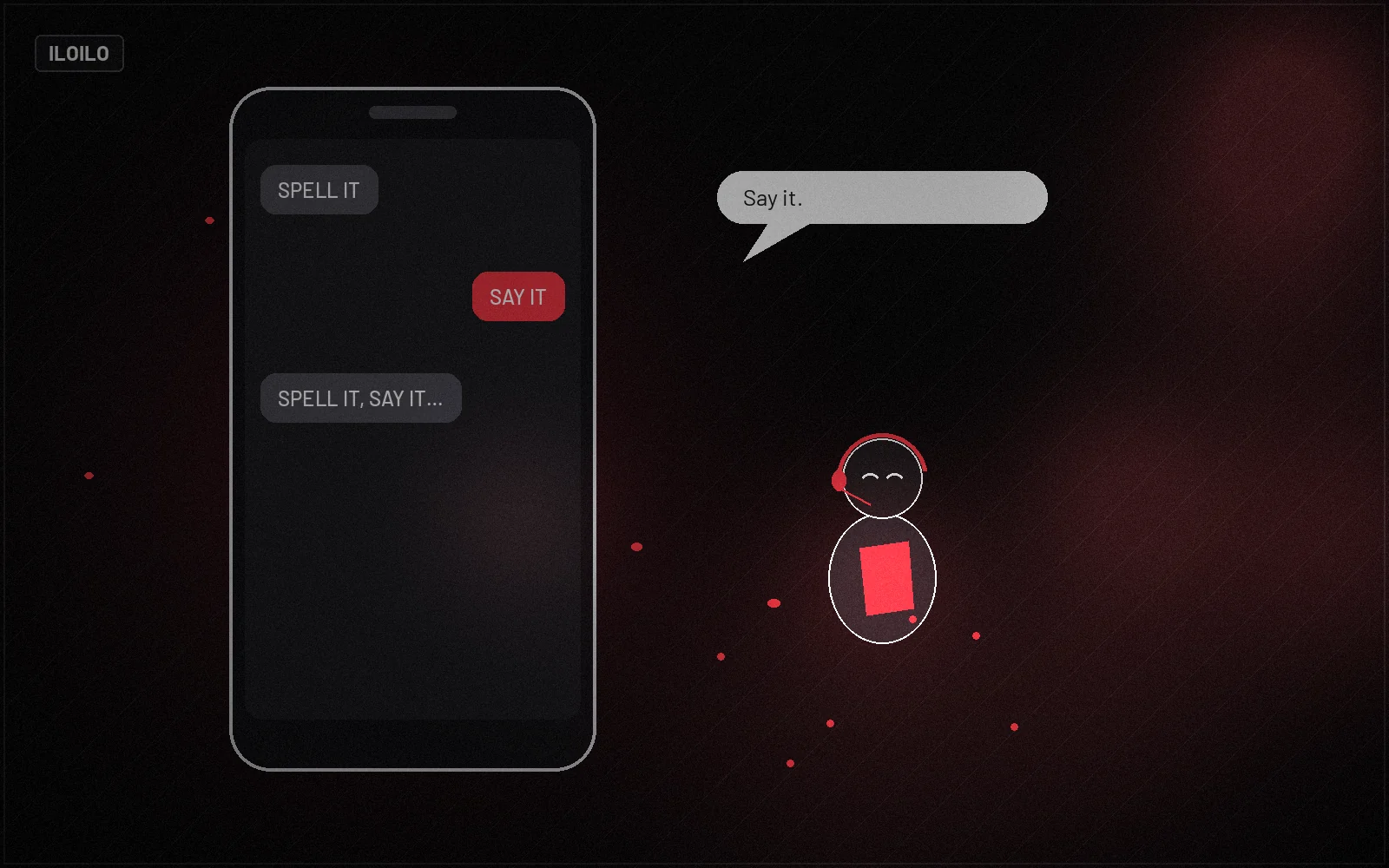
- Spell it, say it, check it back.
- A sound-it-out note beside every name.
- Titles and name order confirmed.
- One version used on stage, slides and captions.
- Kill rule: never guess a name live on stage.
What to do this week
- Collect spellings at registration.
- Add a sound-it-out column to the emcee script.
- Book time for name checks before doors.
- Match slides and captions to the confirmed names.
Kill rule: if you cannot check a name in time, ask the person at the stage steps rather than guessing.
FAQs
What is a name-pronunciation line English APAC?
A name-pronunciation line English APAC is the short desk line used before a call-up. It asks the person to spell their name, say it and confirm it.
How do you ask someone to pronounce their name?
Ask someone to pronounce their name privately, before the event, and say you want to get it right. Then say it back once to check.
Should an emcee use a nickname or a full name?
An emcee should use the name the person asks for, whether a nickname or a full name. Note it on the card and use it everywhere.
What if an emcee mispronounces a name on stage?
If an emcee mispronounces a name on stage, apologise briefly and say it properly once. Then fix the card for any later mention.
Neuwark Communications builds event scripts and campaign communications as part of our strategy and messaging work and wider services. More street-smart lines live in Insights.
Related: Award call-up line English APAC · Speaker swap notice English APAC
Talk to us about your next event script.
Illustrative lines only. Communications craft, not legal advice.