

A volunteer finds a wallet under a chair. She takes the mic and reads the name on the ID card to the whole court.
Now everyone knows who lost it, and anyone can walk up and say it is theirs.
Lost-and-found announcement English APAC is the short line that says what was found, where to claim it and until when, without details that identify anyone.
Street-smart APAC English: short sentences a tired operator can say out loud.
Each found item gets a line in our incident log English APAC, and anything unclaimed goes into the shift handover note English APAC for the next desk.
What goes in a lost-and-found announcement English APAC?
Three things. A general description, the claim point, the closing time.
Lost-and-found announcement (illustrative):
“We found a wallet near the east seats.”
“Claim it at the help desk by the main gate.”
“The help desk closes at 9pm. Be ready to describe it.”
The owner proves it is theirs by describing it.
What should you never say?
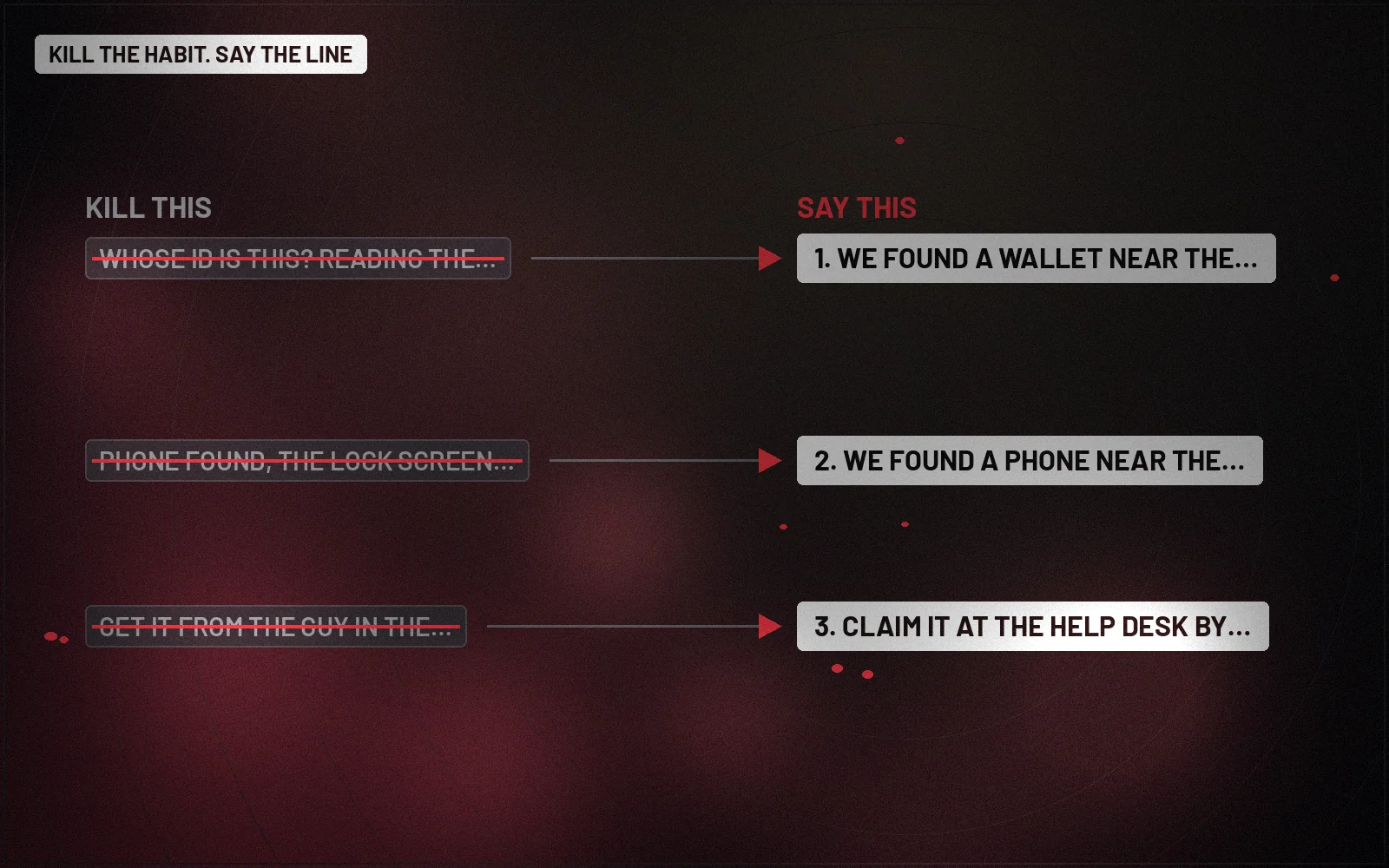
Anything that points to one person: a name on a card, photos inside a wallet, a lock screen, writing on a bag tag.
Say the type of item and roughly where it was found. Details only the owner would know are the claim questions.
| Kill this | Say this (illustrative) | Why |
|---|---|---|
| Whose ID is this? Reading the name now | We found a wallet near the east seats. | No names |
| Phone found, the lock screen shows a family photo | We found a phone near the stage. | No personal clues |
| Get it from the guy in the blue shirt | Claim it at the help desk by the main gate. | One fixed claim point |
| Unclaimed items will be thrown away | The help desk closes at 9pm. | A clear time, no threat |
How does the claim work?
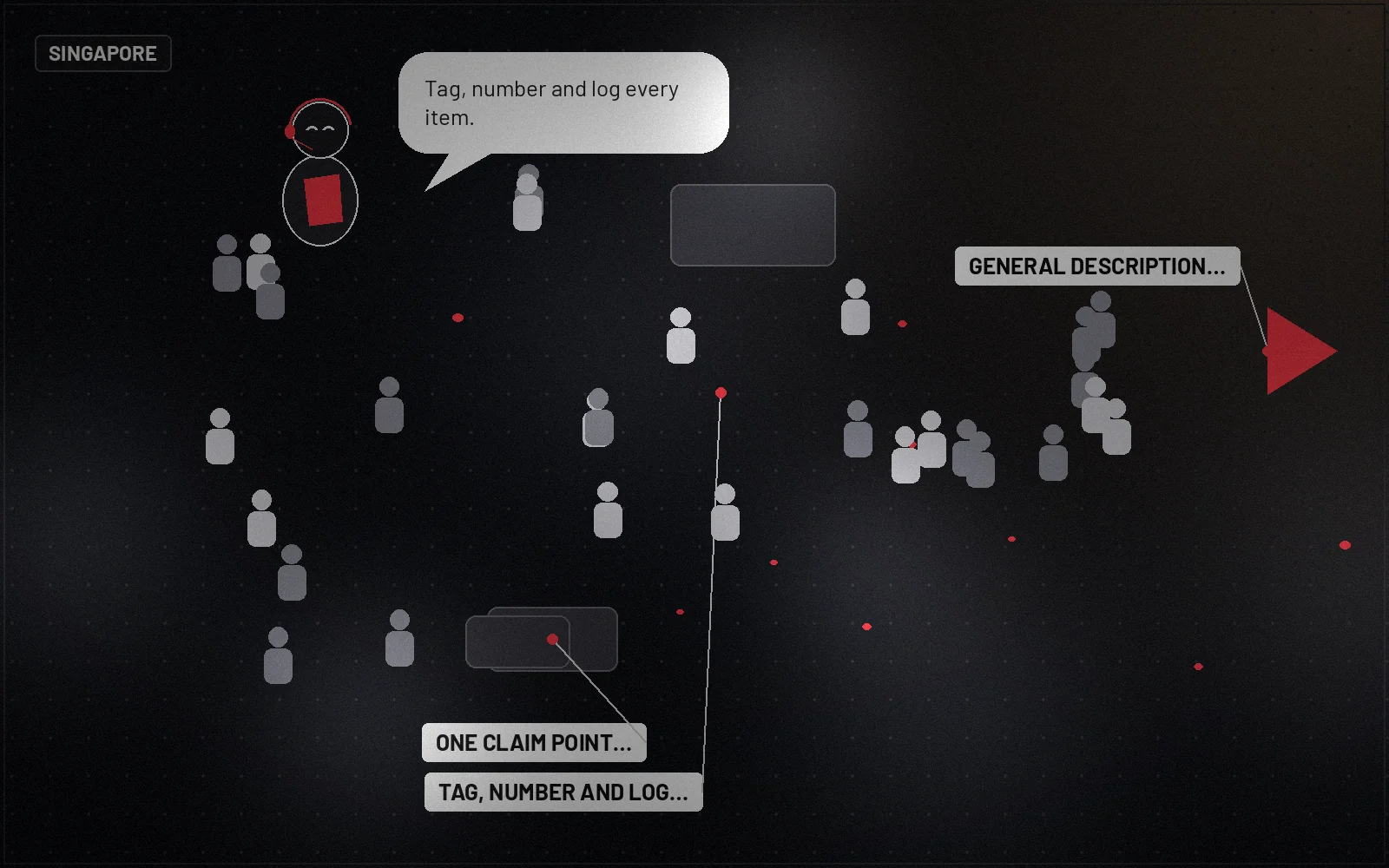
At one desk, with one log. Each found item gets a numbered tag with the time and the place it was found. The tag goes in the log. The item goes in one tray.
The owner describes the item before seeing it. If it matches, they sign the claim form. If not, the item stays.
Phones and wallets stay with the help-desk lead, not on an open table.
When should you announce?
Once when the item is logged, and once before the end of the event. Announcing valuables over and over invites false claims.
How does this play out in PH and SG?
Same three things. Different venues.
Philippines desk. Covered courts and plazas are loud. Announce from the PA during a break, not over the program, in English and in the language of the crowd, with the same plain description.
Singapore and wider APAC desk. Many venues run their own lost-property process. Follow it, tell guests where the claim point is, and log the time you handed items to venue staff.
Monday field kit
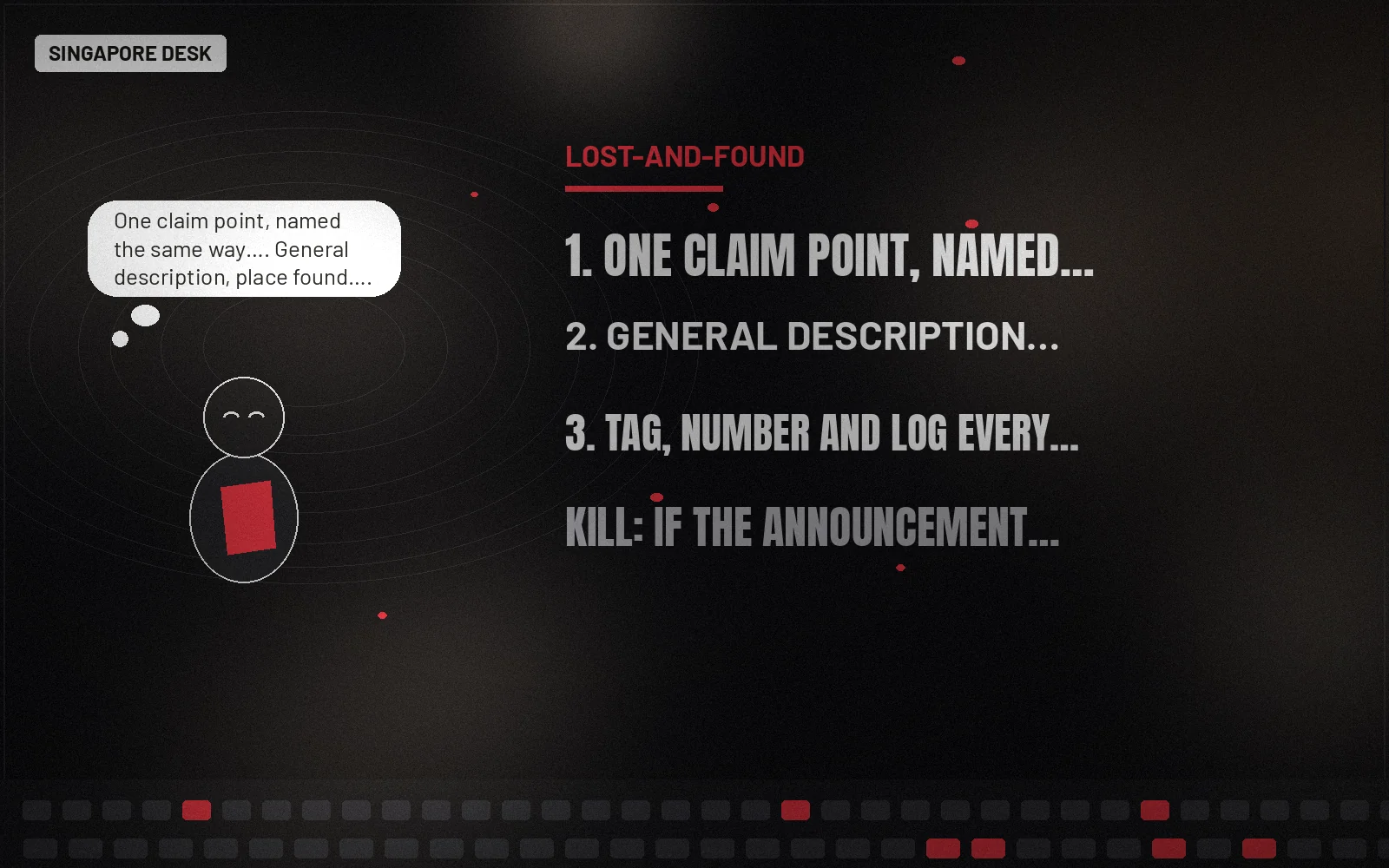
- One claim point, named the same way everywhere.
- General description, place found, closing time.
- Tag, number and log every item.
- Owner describes first, then signs.
- Kill rule: if the announcement would let a stranger claim the item, cut the detail before you speak.
What to do this week
- Set up a claim form, tags and one tray for your next event.
- Name the help-desk lead who holds valuables.
- Agree with counsel how long unclaimed items and claim forms are kept.
- Write the announcement card.
FAQs
What is a lost-and-found announcement English APAC?
It is the short line that says what was found, where to claim it and until when, without details that identify anyone. The owner proves it is theirs at the claim point.
Should we read the name on an ID?
No. Keep names off the PA and out of group chats. Contact the owner privately only if your data rules allow it.
What happens to unclaimed items?
Follow the venue’s process or your own written policy, agreed with counsel. Note the handover in the log.
Neuwark Communications sets up event operations and crisis protocols as part of our services, including Crisis & Rapid Response. If your help desk is reading names over the PA, talk to us at Contact. More language companions live in Insights.
Communications craft, not legal advice. Counsel checks privacy, data retention and venue rules before you announce, store or return found items.
Related: Incident log English APAC · Shift handover note English APAC