
Last question line English APAC is the short line that closes a presser: time for one more, then where follow-ups go, then thank you.
Signal the end before it arrives, and every reporter knows how to get their answer after the cameras stop.
A press conference in a Quezon City hall. The spokesperson says “okay, last na,” takes four more questions, then leaves while three reporters shout after her into the corridor.
Street-smart APAC English: short sentences a tired operator can say out loud.
It is the closing bookend to our press availability English APAC, which tells reporters when and where. When a question needs an answer you do not have yet, our press holding line English APAC covers the follow-up.
Quick answer: A last question line English APAC is the press officer’s close: a warning that time is nearly up, one last question, then where follow-up questions go. Agree it with the spokesperson beforehand, say it from the podium, keep the count honest, and make sure the follow-up channel is staffed before you walk out.
What goes in a last question line English APAC?
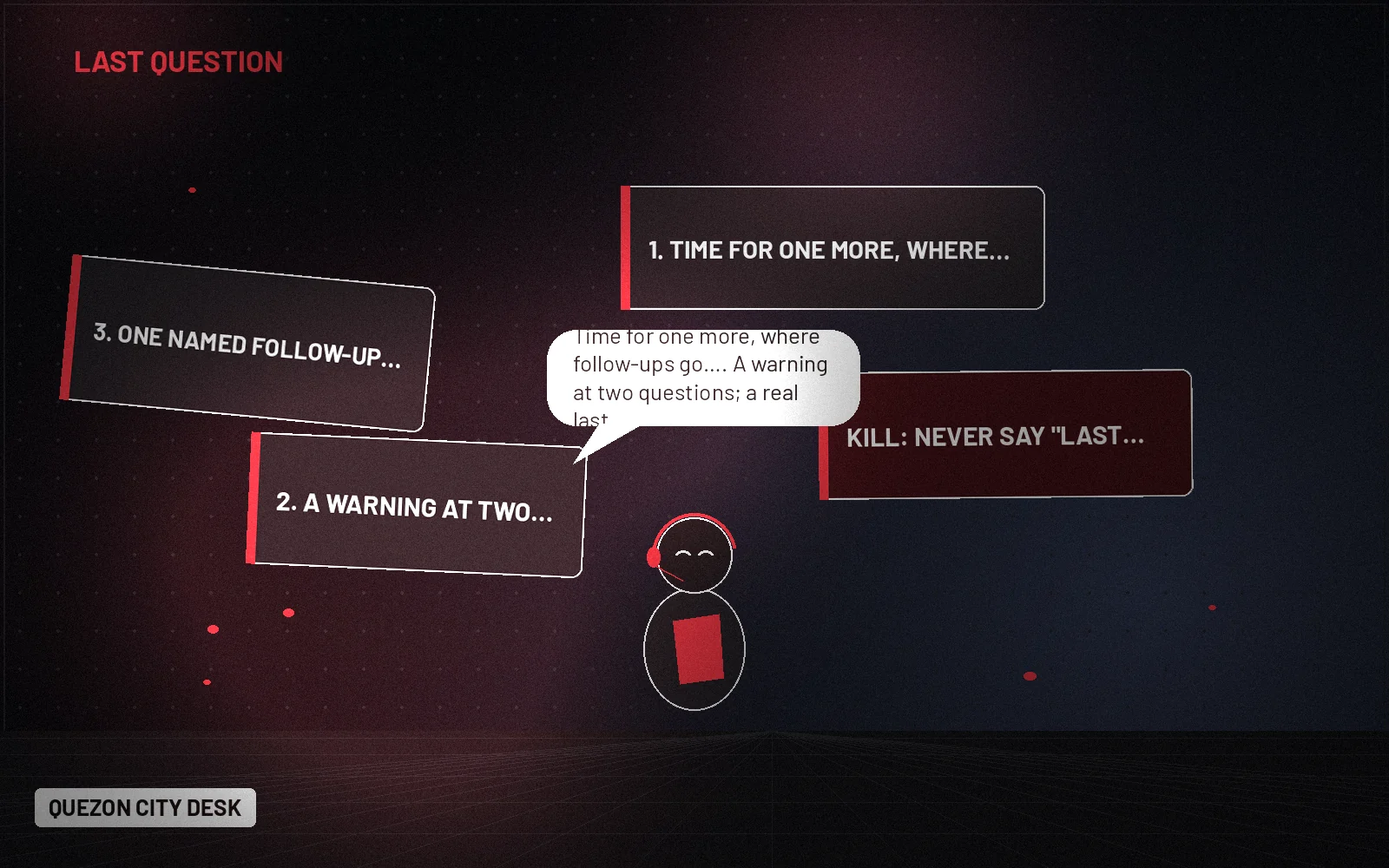
Three parts. Time for one more, where follow-ups go, thank you.
Last question line (illustrative):
“We have time for two more questions.”
“Last question, please. Yes, in the second row.”
“Thank you. Follow-up questions go to the press office by email, and we will reply by 5 PM today.”
The press officer says it, not the spokesperson. That keeps the spokesperson from looking like they are running away.
Why give a warning before the last question?
Because reporters plan their questions. A warning, “two more questions”, lets them choose the one that matters and stops the scramble when you say “last”. It also gives the spokesperson a moment to prepare a closing line.
Then keep the count. If you say “last question” and take three more, nobody believes you next time.
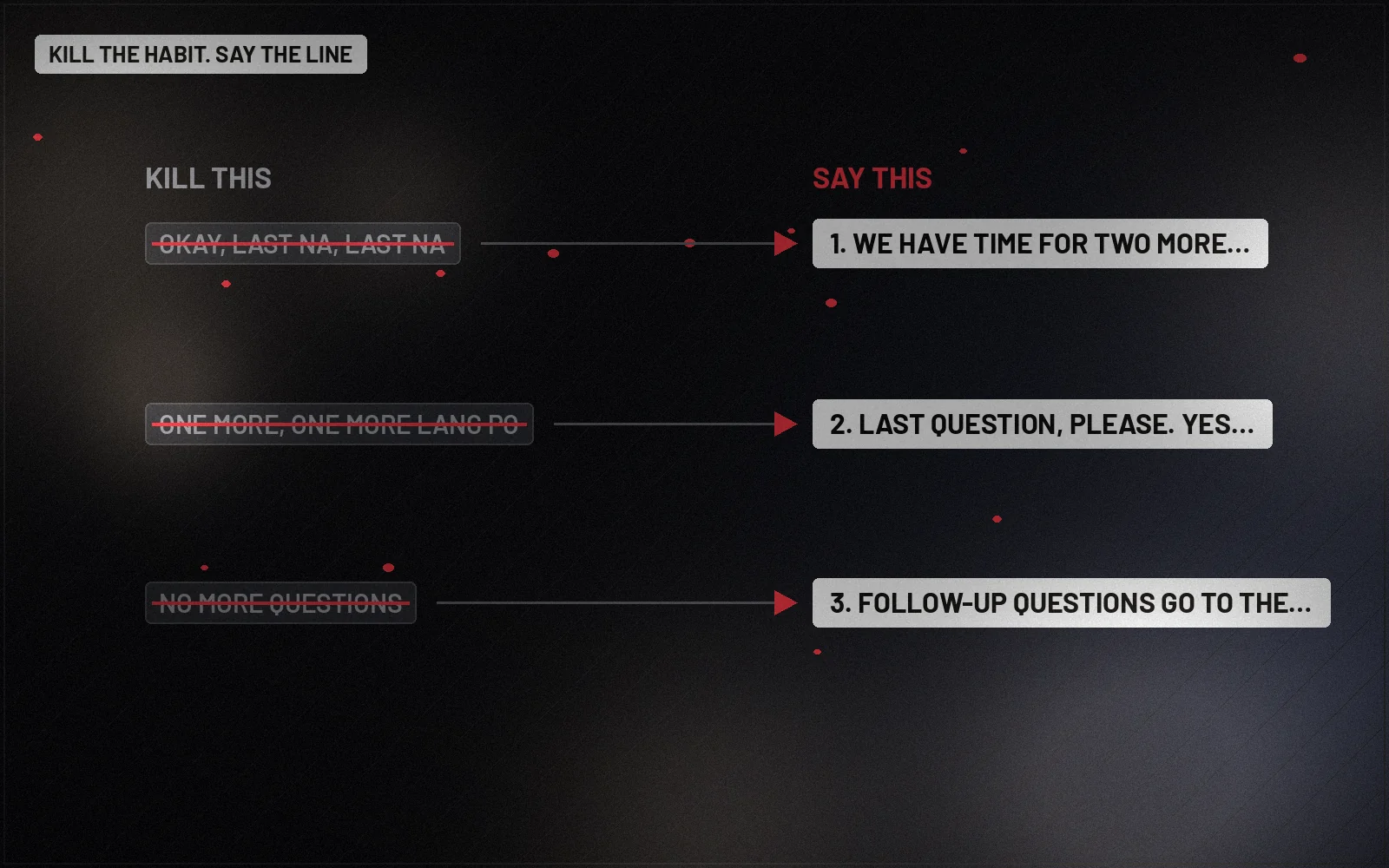
| Kill this | Say this (illustrative) | Why |
|---|---|---|
| Okay, last na, last na. | We have time for two more questions. | A real count |
| One more, one more lang po. | Last question, please. Yes, in the second row. | Chooses and closes |
| No more questions. | Follow-up questions go to the press office by email. | A channel, not a wall |
| We’ll get back to you. | We will reply by 5 PM today. | A time you will keep |
| (spokesperson walking off mid-question) | Thank you, everyone. (press officer walks the spokesperson out) | A clean, shared exit |
Where should follow-up questions go?
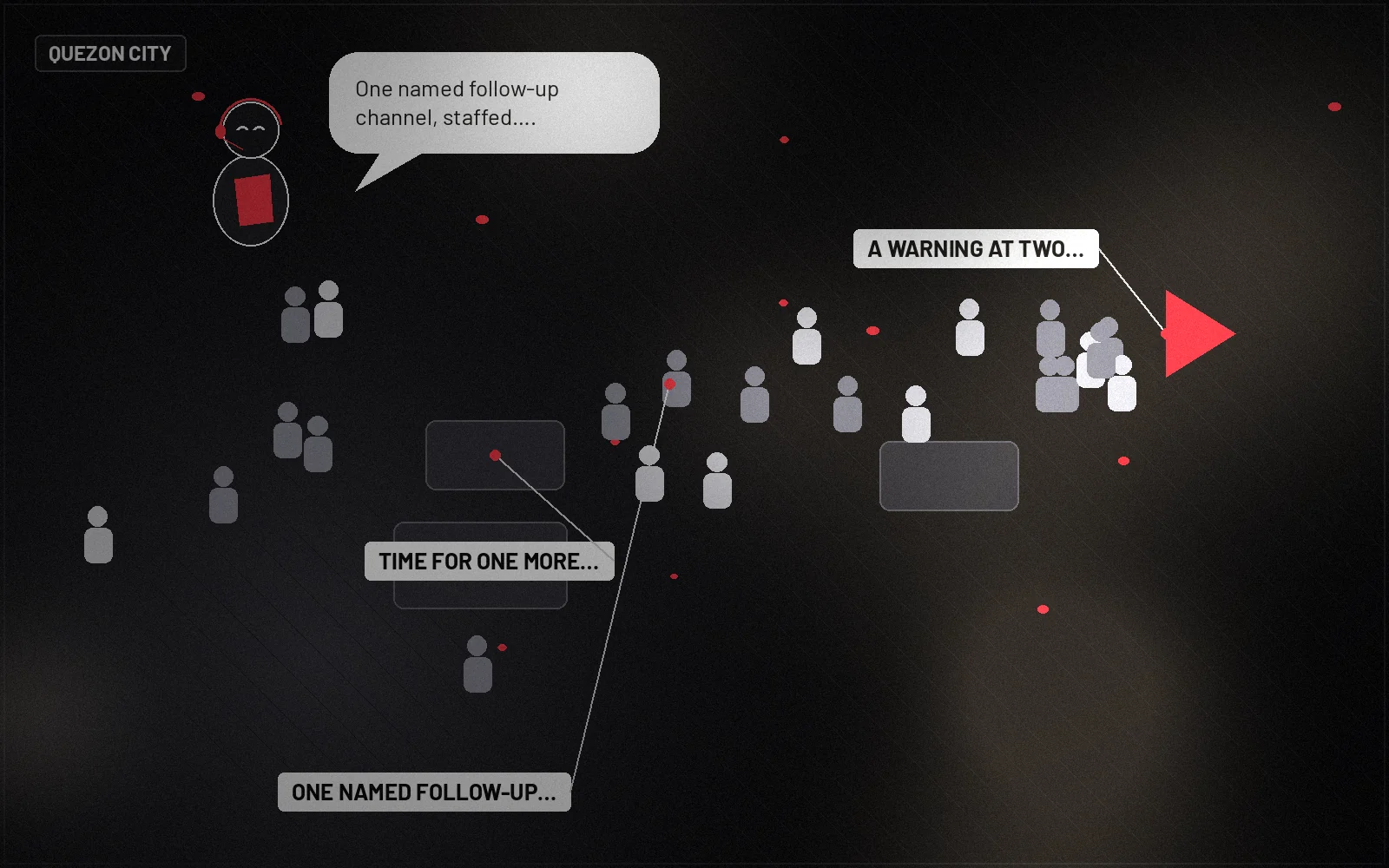
To one named channel that someone is actually watching: a press office email, a named press officer’s number, or the Viber or WhatsApp media group. Say it from the podium and put it in the press release. Give a reply time you can keep.
If a reporter asks a question you cannot answer on the spot, say, “We will come back to you on that by email today.” Then do it.
What if reporters keep asking after you close?
Thank them, repeat the follow-up channel once, and walk the spokesperson out together. Do not answer questions shouted in the corridor; anything said there is still on the record. The press officer can stay behind for a minute to collect contact details and questions.
Who chooses the last question?
The press officer, by pointing and naming a seat. Pick a reporter who has not asked yet if you can. Agree with the spokesperson in advance whether there are any outlets they want to make sure get a question.
How does this play out in PH and SG?
Same three parts. Different press rooms.
Philippines desk. At a Philippine presser, reporters from radio, TV and online may all want a sound bite, and ambush interviews after the close are common. Say the follow-up channel clearly, plan a short doorstop slot if you can, and post the follow-up line in the Viber or WhatsApp media group.
Singapore and wider APAC desk. At a Singapore or regional briefing, press rooms are often quieter and more scheduled. Keep the line in plain English, give the email channel, and send a transcript or key lines afterwards if you promised them.
Paste-ready lock
Speakable lock (illustrative): “Last question, please, and after that, follow-up questions go to the press office by email and we will reply by 5 PM today.”
Monday field kit
- Time for one more, where follow-ups go, thank you.
- A warning at two questions; a real last question.
- One named follow-up channel, staffed, with a reply time.
- Press officer chooses and closes; spokesperson leaves with them.
- Kill rule: never say “last question” and keep taking more; the count must be true.
What to do this week
- Agree the closing line with the spokesperson.
- Name the follow-up channel and who staffs it.
- Put the follow-up channel in the press release.
- Plan the exit route from the podium.
FAQs
What is a last question line English APAC?
It is the short line that closes a presser: time for one more, then where follow-ups go, then thank you. The press officer says it from the podium.
How do you end a press conference politely?
Warn reporters when two questions are left, then take one last question. Name the follow-up channel and thank everyone before you walk out.
What should you say to reporters who did not get a question?
Tell them where to send follow-up questions and when you will reply. Then make sure someone answers them on time.
Neuwark Communications plans press and media messaging as part of our services, including Strategy and Messaging for press conferences and spokesperson briefings. Pressers that never quite end? Talk to us at Contact. More language companions live in Insights.
Illustrative lines only. Communications craft, not legal advice; counsel checks election-period and platform rules.
Related: Press availability English APAC · Press holding line English APAC