
South Korea’s amended Personal Information Protection Act took effect on 11 September 2026, raising conditional surcharges to as much as 10% of revenue and hardening CEO and CPO duties plus early breach notification. That is not a legal footnote for communications leaders. It is a live Korea PIPA communications playbook problem: breach day now risks double damage—fine plus trust collapse—and your first draft of the statement cannot be written after midnight.
Neuwark Communications builds privacy-incident crisis retainers, dark-site readiness, and stakeholder scripts for brands that touch Korean data, customers, or partners—whether HQ sits in Seoul, Singapore, or Manila.
What “10% surcharge live” means for communications leaders
The surcharge is conditional and fact-specific—but the communications reality is blunt. When the law prices privacy failure as a material revenue event, boards will ask why the first public sentence sounded like fog. Regulators will ask who was notified when. Customers will ask whether you treated their data with adult seriousness. Employees will ask whether leadership is present or hiding behind counsel-only language.
Three shifts for brand and corporate teams:
- CEO/CPO visibility — Duties hardened in law become duties hardened in narrative. Who speaks, in what order, matters.
- Early notification clocks — “We’ll know more Monday” is not a strategy when the statute expects speed.
- Trust as a balance-sheet item — Fine risk and reputation risk compound; either one can move customers and partners.
If you already rehearse holding statements for other crises, extend that muscle to privacy. Start with crisis holding-statement templates and dark-site readiness—then specialize the language for personal data events. Privacy incidents are not “IT problems with a press release.” They are trust events with technical facts underneath.
Also prepare investor and analyst language if you are listed or preparing a raise. A 10% surcharge headline will appear in decks whether you brief it or not. Better you write the first slide than a short-seller’s Twitter thread.
Pre-breach pack: notification language, CEO/CPO lines, FAQ
Write the pack before the call:
- Regulator notification draft — factual, timed, owned by counsel + CPO, with a comms twin that does not contradict it.
- Customer notification variants — what you can say before forensics finish; what you must not invent.
- Employee lines — staff hear rumors first; give them a spine, not a shrug.
- Partner and vendor lines — processors and platforms will ask; answer from one sheet.
- CEO/CPO briefing cards — short, human, non-theatrical; dual hats lose minutes.
Lock roles on one page: incident lead, legal, CPO, corporate comms, customer care, IT/security liaison, and who can approve external language in under an hour. If approval requires three time zones and a sleeping VP, you have already lost the first news cycle.
Translate the pack into Korean and English if both audiences matter—and keep the meaning identical. “Localized tone” is fine. “Localized facts” is how you create two truths. Apply the same spine you use for [multilingual message discipline]({MULTI}).
FAQ that survives the screenshot
Customers and journalists will forward your words into group chats. Write FAQ answers that stay true when cropped. Avoid absolute promises you cannot keep (“this will never happen again”). Prefer dated next steps (“we will update by Tuesday 18:00 KST with X”). Screenshot survival is a creative brief for privacy statements, not only for advocacy fundraising.
Include a simple “what we are not saying yet” list for internal use so executives do not freestyle root cause on live television. Ambition to sound smart is how brands invent facts under adrenaline.
Dark site and holding-page readiness before the call
Stage a privacy-incident holding page offline: short acknowledgment, what you know, what you are doing, how people can get updates, and how to reach support. Do not invent root cause. Do not blame a vendor in public before facts are solid. Keep design boring and fast—this is not a brand campaign. Details and checklists live in dark-site readiness before you need it.
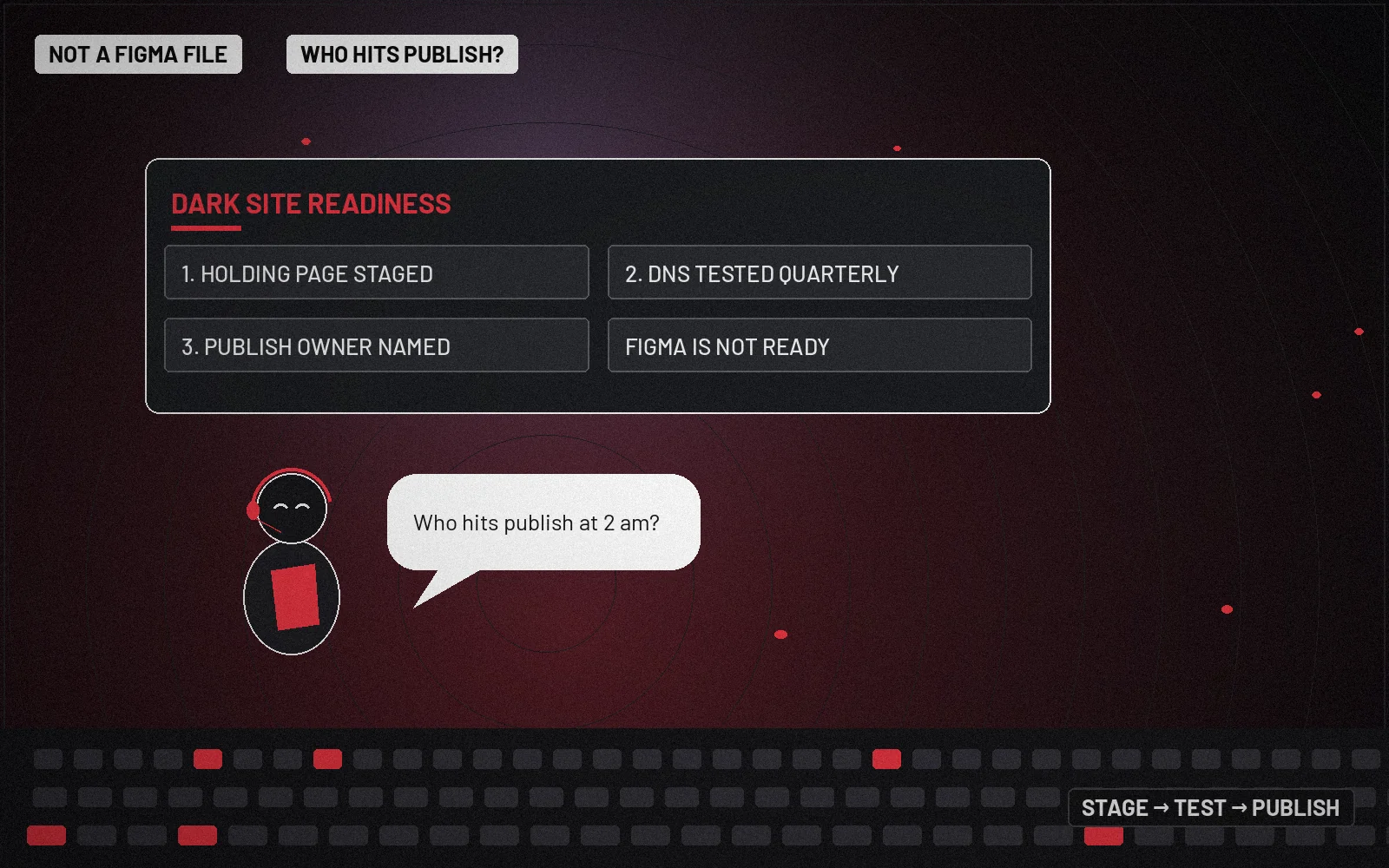
Test DNS and publish rights quarterly. A dark site that only exists in a Figma file is not ready. Assign who hits publish, who updates the FAQ block, and who monitors social for fake “official” accounts that appear within hours of a breach rumor. Add a status page pattern if you have high-frequency digital products—customers will look there first.
Stakeholder sequence: regulators, customers, employees, partners
Sequence matters. Align regulator notification language with public language so you do not create two truths. Brief employees before or in parallel with external posts—staff screenshots leak. Tell partners what they can say, not only what they cannot. Customer care needs three approved lines and a path to escalate edge cases without inventing comfort.
For KR-touching brands outside Korea—regional HQ in Singapore, shared CRM, Korean travelers on a PH app—assume spillover narrative risk. Korean media and diaspora chats will ask what your brand did, even if the legal nexus is narrow. Have a spillover paragraph ready: what applies, what does not, and where people can get accurate updates.
Map your data touchpoints quarterly: which products process Korean personal information, which vendors sit in the chain, which executives are named in Korean filings. Communications cannot invent that map on breach night. Security and legal own the map; comms owns the words that ride on top of it.
Drill calendar: tabletop before the surcharge becomes the story
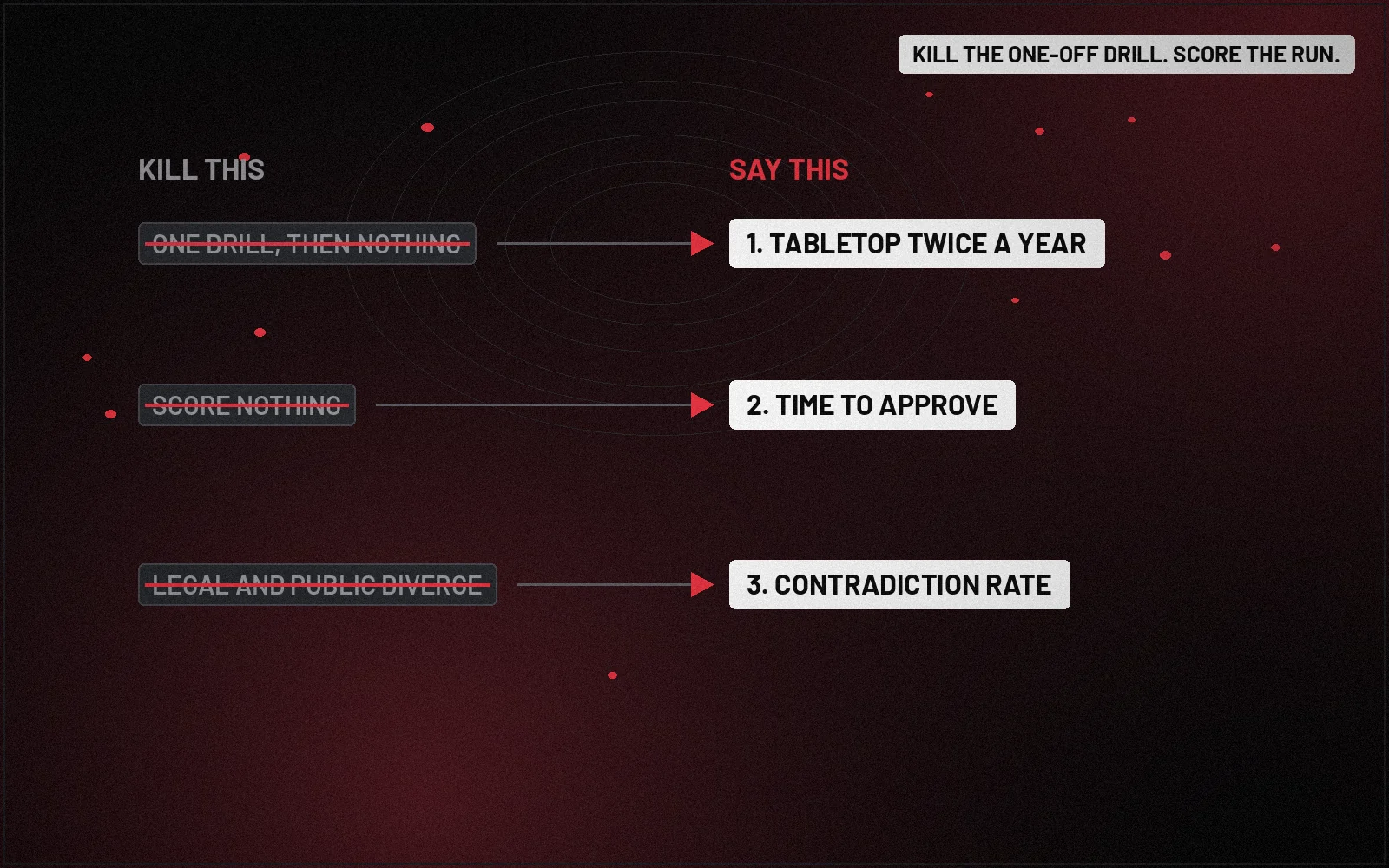
Run a privacy tabletop at least twice a year: ransomware-style exfiltration, vendor breach, insider leak, and misconfigured cloud bucket. Time how long until (1) regulator language is ready, (2) dark site can publish, (3) CEO card is cleared, (4) customer care is briefed. Log gaps. Fix owners and access, not slogans.
Connect drills to your broader crisis rhythm—the same discipline you use for other shocks applies: named roles, pre-cleared language, and a kill switch for bad drafts. Browse more operator playbooks in Insights. After each drill, update the Korea PIPA communications playbook packet the same week—do not wait for the annual planning cycle.
Score drills like you score media buying: time-to-approve, time-to-publish, contradiction rate between legal and public lines, and employee briefing completion. What you measure improves. What you romanticize stays theater.
Soft CTA: privacy-incident crisis retainer
Silence reads as indifference when the law prices privacy at a material share of revenue. Clarity without overclaim reads as adulthood. The brands that look ready already have the playbook drafted: notification language, dark site, CEO lines, and a drill log that is not theater.
Neuwark scopes privacy-incident crisis retainers and stakeholder script systems for KR-touching brands. Explore services—Crisis & Rapid Response and Public Affairs—or start a conversation. Learn more about how we work.
When the law prices privacy at 10% of revenue, your first draft of the breach statement can’t be written after midnight.
First 72 hours: a communications run-of-show
Hour 0–4. Confirm the incident lead, freeze speculative external posts, and open the pre-drafted notification pack. Legal and the CPO align on what is known versus unknown. Corporate communications drafts the first public sentence against that fact sheet—not against hope.
Hour 4–12. Publish the dark-site holding page if customer exposure is confirmed or highly likely. Brief customer care and employee channels. Notify partners who may be asked for comment. Keep Korean and English meanings identical if both audiences are in play—tone can localize; facts cannot.
Hour 12–72. Update on a dated cadence even when the update is “forensics ongoing.” Silence invites rumor. Coordinate regulator-facing language with public language so you do not create two truths. Log every clearance: who approved which line, at what time. That log is how you defend process later.
For holding-line craft under pressure, reuse the discipline in crisis holding-statement templates. For the publish surface itself, keep dark-site readiness checked quarterly—not annually.
Common failure modes (and how to kill them)
Counsel-only fog. Pure legal prose reads as evasion to customers. Pair counsel accuracy with human clarity.
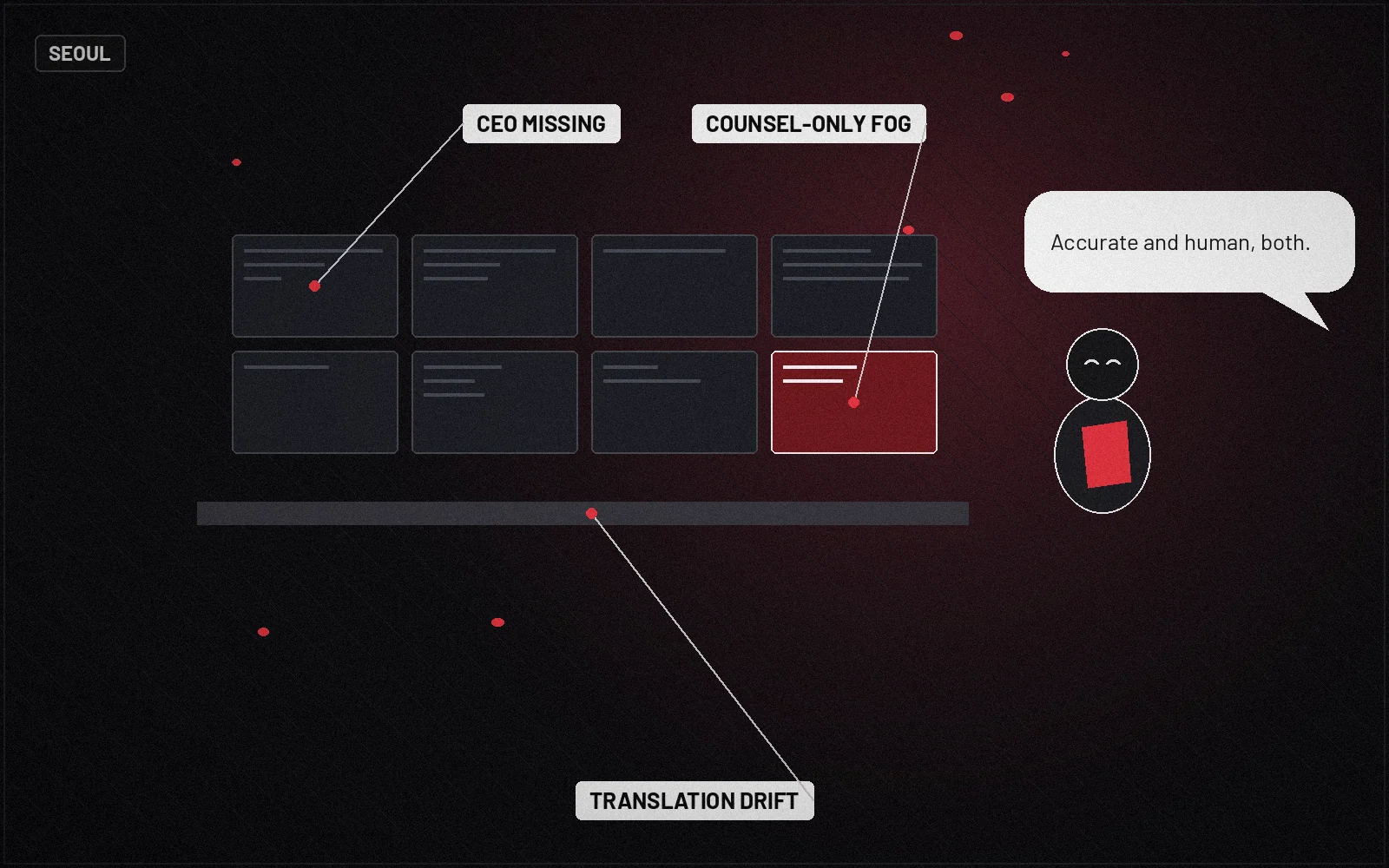
CEO missing. Hardened duties mean hardened visibility. A silent C-suite becomes the story.
Vendor blame cosplay. Naming a processor before facts are solid can create defamation and partner risk. Stick to verified roles.
Timezone theater. If approval requires three regions and a sleeping VP, redesign approval—not the apology.
Translation drift. Two languages with two meanings become two scandals. Keep multilingual message discipline on the same spine.
These failure modes are how brands turn a privacy incident into a leadership incident. The Korea PIPA communications playbook exists to make the boring path the default path.
Operator FAQ: Korea PIPA communications
Is the 10% surcharge automatic? No—it is conditional and fact-specific. Treat it as a ceiling that forces adult readiness, not as a guaranteed fine calculator. Boards still expect a prepared narrative.
Who owns the first public sentence? Corporate communications with legal and CPO on the same card. Counsel alone produces fog. Comms alone can invent facts. The triad clears one line.
What belongs on the dark site on hour one? What you know, what you are doing, how people get updates, and how to reach support. Not root cause theater. See dark-site readiness.
Do non-Korean HQ brands need this? If you process Korean personal data, sell to Korean customers, or share systems with KR entities, yes. Spillover narrative risk does not wait for your org chart.
What does a retainer include? Pre-drafted notification language, CEO/CPO cards, dark-site stub, stakeholder sequence, and tabletop drills—plus on-call hours when the breach call lands. Start via contact or browse services. Pair with holding-statement discipline.