
“Card up, read it, then down.”
Street-smart APAC English: short sentences a tired operator can say out loud.
A Manila hotel function room, a guest speaker at the front.
He reads every word off his cards, chin on his chest.
The back rows lose him by the second paragraph.
Quick answer: The cue-card line English APAC is the speaker coach’s reminder before a speaker goes on: card up, read it, then down, and say the line to the room. The coach says it at the side of the stage, just before the walk-on.
Pair it with the lectern-light line English APAC and the teleprompter line English APAC for more event language on the floor.
What goes in the cue-card line English APAC?
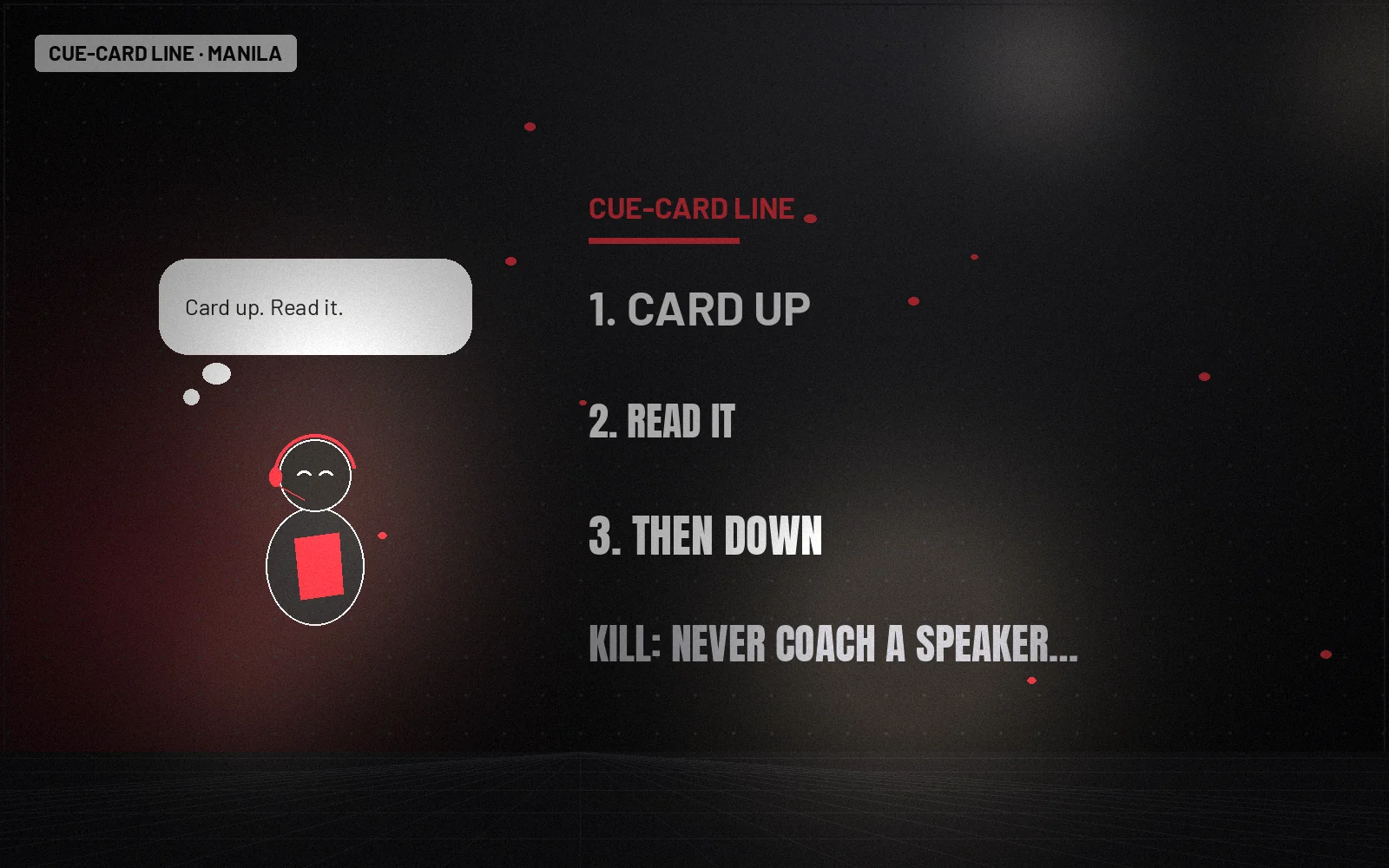
The cue-card line English APAC has three parts: lift, glance and lower. Card up brings the card to chest height, so the chin stays level. Read it means one glance for one line, not the whole paragraph. Then down returns the card, so the speaker says the line to the room with their eyes up.
Cue-card line (illustrative):
“Card up to your chest.”
“Read the line, one glance.”
“Card down, eyes up, say it to the room.”
Speakable lock (illustrative): “Card up, read it, then down.”
Print it on the coach’s card and say it in the same words to every speaker at the wing. Up, read, down: three moves a nervous speaker can remember.
When should the coach give the cue-card line?
At the side of the stage, just before the walk-on, while the speaker still has the cards in hand. Say it once, quietly, and mime the three moves. Check the cards are numbered and clipped in order. Do not coach mid-speech; a hand signal from the side is enough.
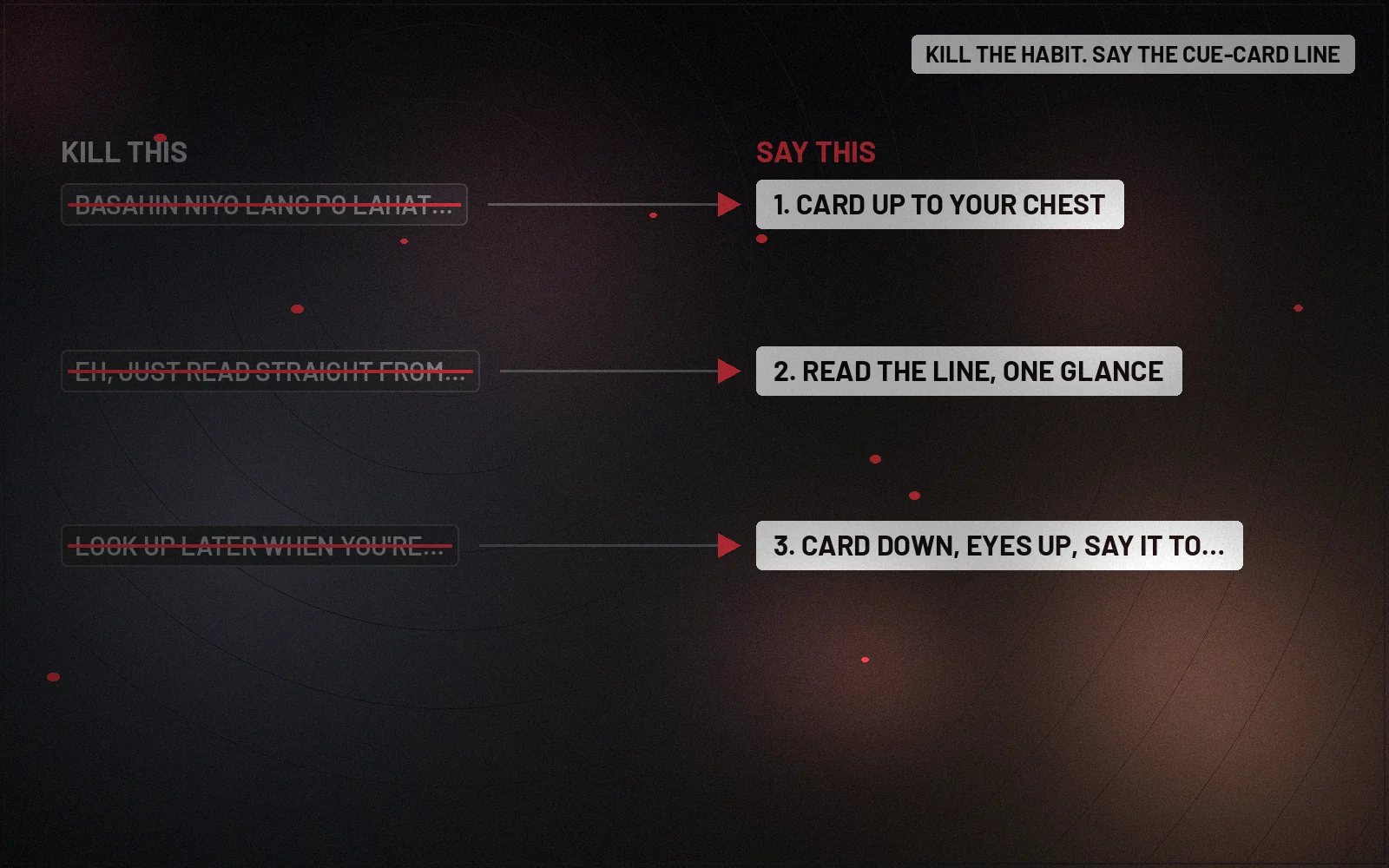
| Kill this | Say this (illustrative) | Why |
|---|---|---|
| Basahin niyo lang po lahat, okay lang yan. | Card up to your chest. | Keeps the chin level |
| Eh, just read straight from card lah, nobody notice. | Read the line, one glance. | One line at a time |
| Look up later when you’re comfortable. | Card down, eyes up, say it to the room. | No vague later |
Lines in this table are illustrative, not quotes from real people.
What if the speaker drops or mixes up the cards?
Let them pause; a short silence reads as thought, not failure. Numbered, clipped cards make it a quick fix: find the number, carry on from the top of that card. The emcee can fill with one plain sentence if needed, never a joke. Afterwards, say the line again before their next segment.
How do you brief speakers on the cue-card line?
Brief each speaker when the cards arrive, ideally at the tech run, not only at the wing. Say the line once, show the three moves with a spare card and check the cards are numbered and clipped. Ask the speaker to try one card out loud. Speakers who arrive late get the short version at the wing: card up, read it, then down. The coach keeps a spare clip and a marker at the side of the stage for last-minute reordering, and hands cards back face down so the first card is always on top.
Why does the line work?
Speakers hide in their cards because reading feels safe. The line keeps the cards but changes the rhythm: look down for the words, look up to say them. The room sees a speaker talking to them, and the speaker still has every line in hand.
How does the line play out on PH and SG/MY desks?
Philippines desk. In Manila functions, guest speakers are often senior officials who skip rehearsal. Add po and sir or ma’am: card up po, then look at the audience. Post the running order in the crew Viber group so the coach reaches each speaker at the wing in time.
Singapore and Malaysia desk. In Singapore and Malaysia, keep it brisk and plain: card up, read it, then down. Show the three moves once with a spare card rather than explaining them.
Monday field kit
- Speaker cards numbered and clipped in order.
- Large print, one line per card.
- Spare blank card for showing the three moves.
- Coach at the wing before each walk-on.
- Kill rule: never coach a speaker mid-speech.
FAQs
What is the cue-card line?
The cue-card line is the speaker coach’s reminder before a speaker goes on: card up, read it, then down. The speaker says each line to the room.
When do you say the cue-card line?
Say it at the side of the stage. Say it just before the walk-on.
Who owns the cue-card line?
The speaker coach owns the cue-card line. The coach says it at the side of the stage.
Neuwark Communications writes event scripts like this through strategy and messaging.
Talk to us about your next event script.
Illustrative lines only. Communications craft, not legal advice.