
On 17 September 2026 an airline customer-relations chatbot message claiming a bomb in a NAIA Terminal 3 restroom triggered Avsegroup sweeps with explosive-detection dogs. Areas were cleared. The source stayed under investigation. The operational lesson is blunt: digital channels can create the crisis page you needed yesterday. If your incident URL is not live before the rumor, Google and group chats write your first draft for you.
That is the money case for crisis dark site SEO readiness—pre-built incident landing pages with FAQ schema, a holding URL, and IndexNow-ready publish—so false alerts do not become your homepage narrative. Soft path: Services · Contact.
When the chatbot creates the incident page you needed yesterday
False alerts used to start as anonymous tips or copied screenshots. Now they can start inside your own customer stack: a chatbot hallucination, a misfired template, a support script that sounds definitive when it should sound provisional. Airport and airline brands learned in one afternoon that “we are investigating the source” is not enough if passengers’ phones are already full of the chatbot’s wording.
Search behavior in that window is predictable:
- People type the terminal name + bomb / alert / threat
- They open the first calm-looking official URL
- If none exists, they open the loudest social thread
Your dark site is not vanity SEO. It is the page that prevents rumor SEO from ranking first. Pair this stack with the operational readiness hub on crisis dark-site readiness before you need it—ops readiness and SEO readiness are siblings, not duplicates.
Dark site vs holding statement: different jobs, same retainer
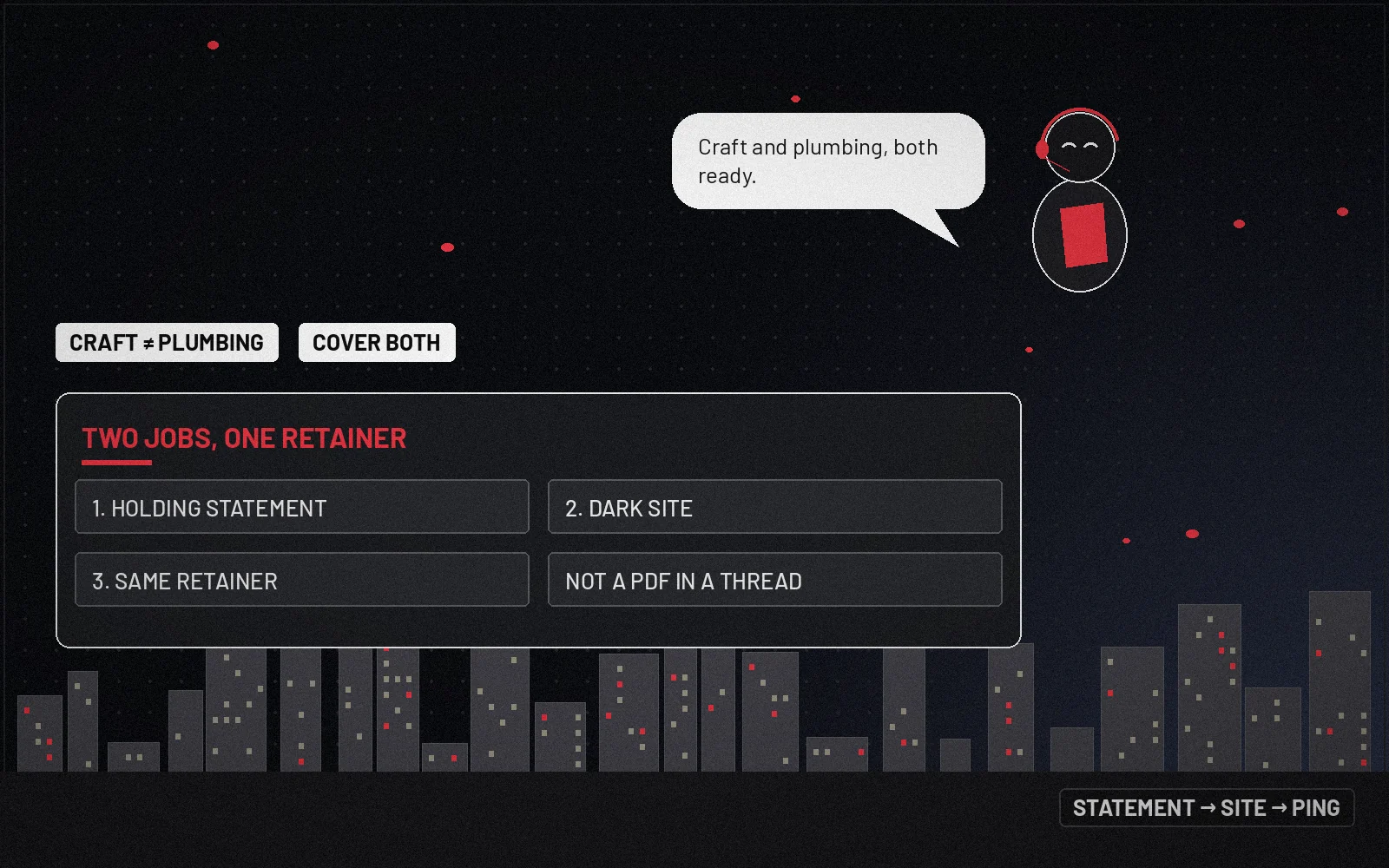
A holding statement is message craft. A dark site is infrastructure. Confusing them is how teams publish a PDF into a Twitter reply and call it done.
| Asset | Job | Failure mode |
|---|---|---|
| Holding statement | Cleared language for spokespeople | Sounds careful but has nowhere to live |
| Dark site | Indexed, shareable, FAQ-structured URL | Beautiful CMS page that takes six hours to approve |
| Social posts | Distribution and rumor triage | Become the only “official” record by default |
Same retainer should cover both. Crisis & Rapid Response on Services is the commercial sink; Insights educate. Do not make stressed airport ops dig through six product pages while dogs are still clearing a restroom.
Incident FAQ schema that answer engines can quote safely
Answer engines and Discover-adjacent surfaces reward clean structure. For incident pages, FAQ schema is not a blog trick—it is how you control the quotable sentences.
Safe FAQ pattern for false-alert weeks:
- 1. What happened (confirmed facts only)
- 2. What is still under investigation
- 3. What passengers / customers should do now
- 4. Where to find official updates
- 5. How to report rumors claiming to be from us
Write answers a human can read aloud. Avoid legalese dumps. Avoid speculative cause language. If you need Discover-grade publishing discipline for advocacy or newsroom teams, cross-link NewsArticle schema and IndexNow ops without turning every crisis page into a BlogPosting.
GEO-friendly FAQ pages for campaigns live in a different cluster—see GEO FAQ pages—but the craft transfers: short questions, cite-ready answers, no keyword stuffing.
Pre-built modules: false alert, breach, product, executive integrity
Do not wait for the next chatbot glitch to invent IA. Pre-build modules with placeholders:
- False alert / security sweep — NAIA-class pattern
- Data breach / account compromise — notification + steps
- Product / safety incident — status + recall adjacency
- Executive integrity — process without gossip
Each module needs: H1 pattern, FAQ block, contact path, last-updated stamp, and a go/no-go checklist owned by counsel + comms. Store them unpublished or behind a staging gate. The SEO win is speed-to-index when you flip status to publish—not a secret URL that never gets crawled because nobody submitted it.
Publish path: news sitemap / IndexNow without chaos
Chaos publish looks like: five people editing live HTML while legal rewrites paragraph three. Clean publish looks like:
- 1. Module selected and facts filled
- 2. Rank Math / schema validated (Article + FAQ where appropriate)
- 3. Featured media unique and non-graphic
- 4. Status → publish
- 5. IndexNow ping for Bing-class freshness
- 6. News sitemap inclusion if you run a news-capable stack
- 7. Social distribution of the URL, not a paraphrased thread as the source of truth
IndexNow is not magic. It is a freshness signal when your ops are already clean. If your CMS cannot publish in under an hour under stress, fix the CMS before you buy more monitoring tools.
What to measure before the incident (not vanity traffic)
Vanity metrics: raw pageviews on a quiet Tuesday. Useful pre-incident metrics:
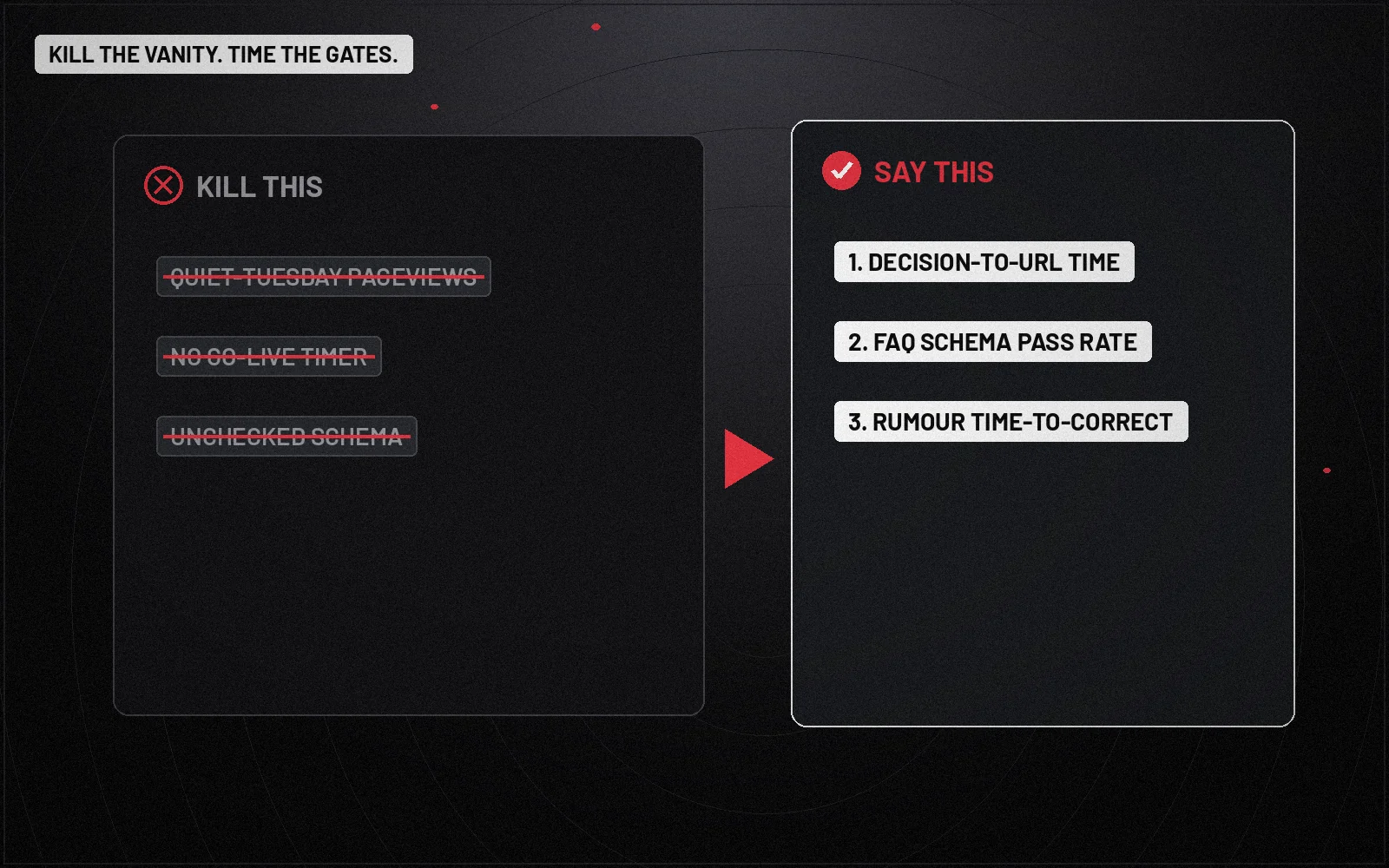
- Time from go-decision to live URL (tabletop)
- FAQ schema validation pass rate
- Mobile readability of the first screen
- Share-path clarity (can a supervisor paste one link?)
- Rumor desk time-to-correct after a false claim names you
After an incident, measure whether your URL outranked rumor pages for the head queries, how long corrections took, and whether customer-care teams reused the FAQ answers without inventing new ones.
Soft CTA: crisis dark-site SEO readiness engagement
NAIA Terminal 3’s chatbot week was a reminder that digital can manufacture the incident narrative. Neuwark builds crisis dark site SEO readiness—modules, FAQ schema, IndexNow-ready publish—for airlines, airports, and brands that refuse to let group chats draft page one.
See Services, Insights, Contact, and About. Home: [/](/). If the incident URL is not live before the rumor, you are already late.
Airport and airline specifics that travel to other brands
Airports need terminal-level clarity without naming every partner incorrectly. Airlines need chatbot audit trails so “the bot said it” does not become “the brand meant it.” Ground handlers and retailers inside the terminal need redirect language that does not invent security facts. The same crisis dark site SEO readiness pattern applies to malls, rail, ferries, hospitals, and any operator whose customer channel can misfire into a public safety rumor.
Run a quarterly tabletop: inject a false chatbot message, start the clock, and require a live URL with FAQ schema before the hour ends. Record who blocked the publish. Fix that person or process before the real night. Crisis dark site SEO readiness is not a brochure line. It is the difference between owning the SERP and watching a screenshot of your bot become the national story.
How false-alert weeks rewrite your information architecture
Most brand sites bury “updates” under newsrooms that take a CMS ticket and a brand review. False-alert weeks punish that architecture. Passengers do not want your brand story. They want one URL that answers: is the terminal open, is the claim real, what should I do, where do I get the next update.
Information architecture for crisis dark site SEO readiness:
- A stable path pattern such as `/updates/incident/` or a dedicated subdomain you can flip live
- Module templates that do not require designers at midnight
- FAQ blocks that validate as schema without a developer on WhatsApp
- A last-updated field that humans can trust
- A contact path that does not dump everyone into a marketing chatbot—the same class of tool that just sparked the sweep
If your only “official” channel is a social account with character limits, you have already lost the long-form SERP to whoever publishes a calmer page first—even if that page is wrong.
Tabletop script for airlines, airports, and adjacent brands
Run this drill quarterly. Time every gate.
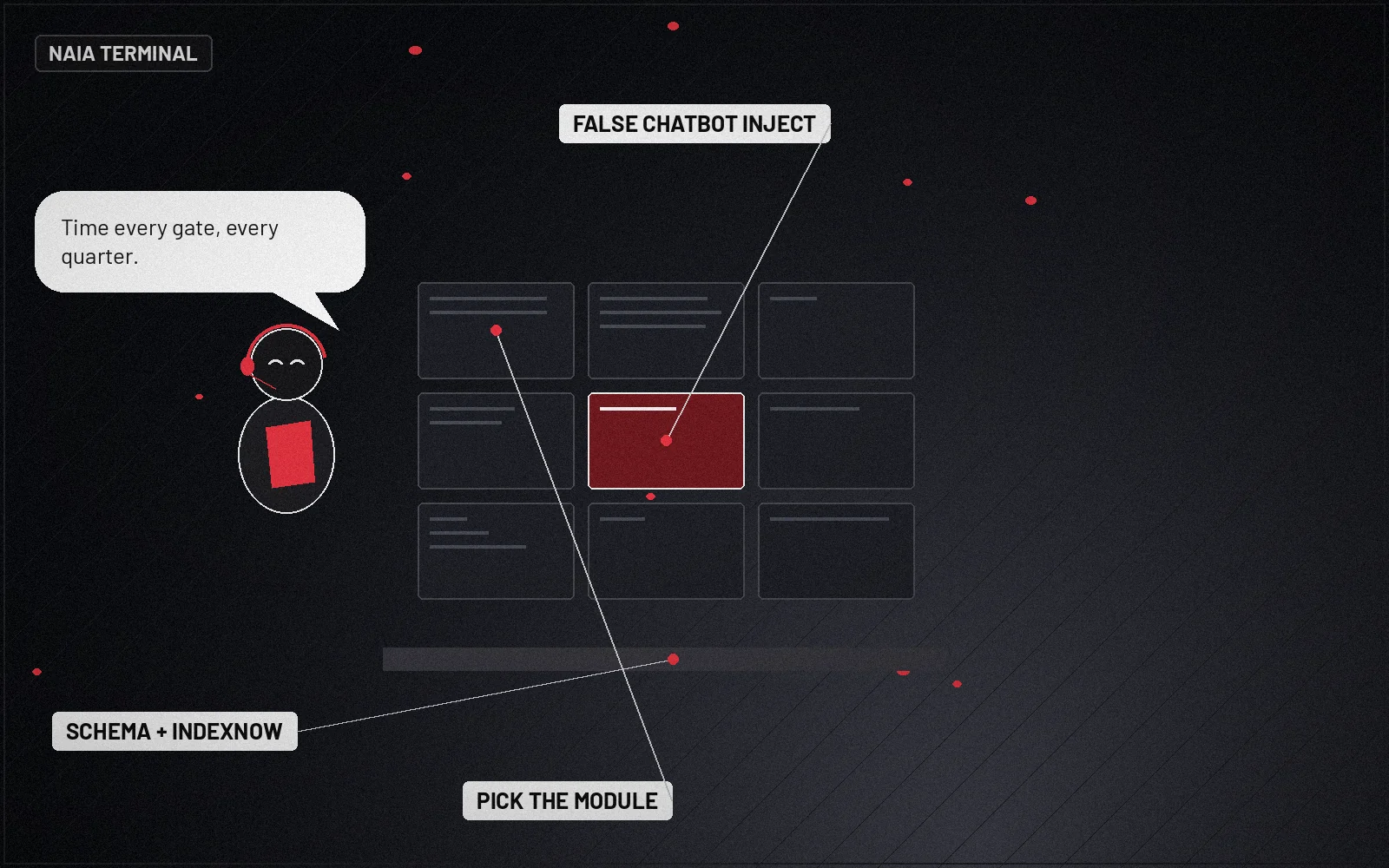
- 1. Inject a false chatbot message into a staging support channel
- 2. Start the clock when the rumor desk sees the first external screenshot
- 3. Require counsel + comms to select a pre-built false-alert module
- 4. Fill confirmed / unknown / actions fields only
- 5. Validate FAQ schema
- 6. Publish and IndexNow ping
- 7. Distribute the URL to customer care and airport partners
- 8. Kill competing draft posts that paraphrase without linking
Pass criteria: live URL under 60 minutes with schema clean and no unverified cause language. Fail criteria: anyone inventing passenger instructions that security has not cleared. Record blockers in the decision log and fix them in the next sprint—not after the next Avsegroup-class week.
What “good” looks like on the first screen of the dark site
Above the fold on mobile:
- Plain-language headline naming the location and the nature of the update without gore or panic adjectives
- Timestamp and “under investigation” where true
- Three bullets: confirmed, unknown, action for the public
- Link to official security or airline status if you are not that authority
- FAQ accordion starting with “Was there a bomb?” answered with precision, not spin
Below the fold: longer FAQ, rumor-reporting path, language for partners, archive of prior updates. Do not lead with CEO photo essays. Stressed thumbs never scroll to brand theater.
Crisis dark site SEO readiness is how you keep a chatbot misfire from owning your homepage narrative. Build the modules now. Tabletop them. Then sleep better than the team that is still arguing about URL structure while explosive-detection dogs are already on the floor.