
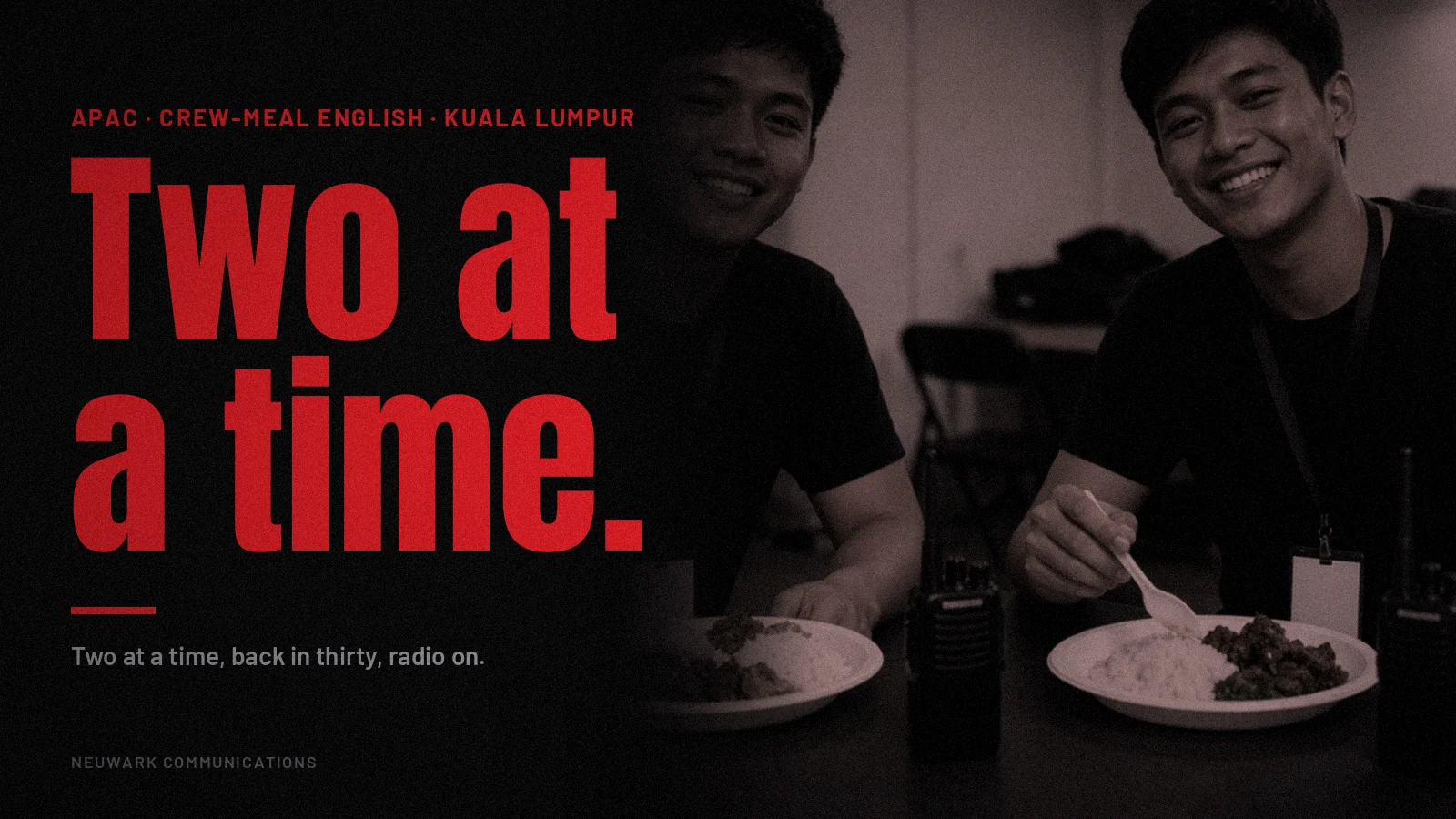
Street-smart APAC English: short sentences a tired operator can say out loud.
A Cebu convention hall, a full-day conference, lunch for four hundred guests.
The crew meal arrives, and the whole registration team walks off to eat at once.
Ten minutes later, a speaker arrives at an empty desk.
Quick answer: A crew-meal line English APAC is the floor lead’s short call for meal breaks: two at a time, back in thirty, radio on. Say it when the crew meal lands, so every post stays covered and nobody skips a meal.
Pair it with the walkie-check line English APAC for the radio and the load-in line English APAC for the morning. Good event language for crew keeps the floor covered right through lunch.
What goes in a crew-meal line English APAC?
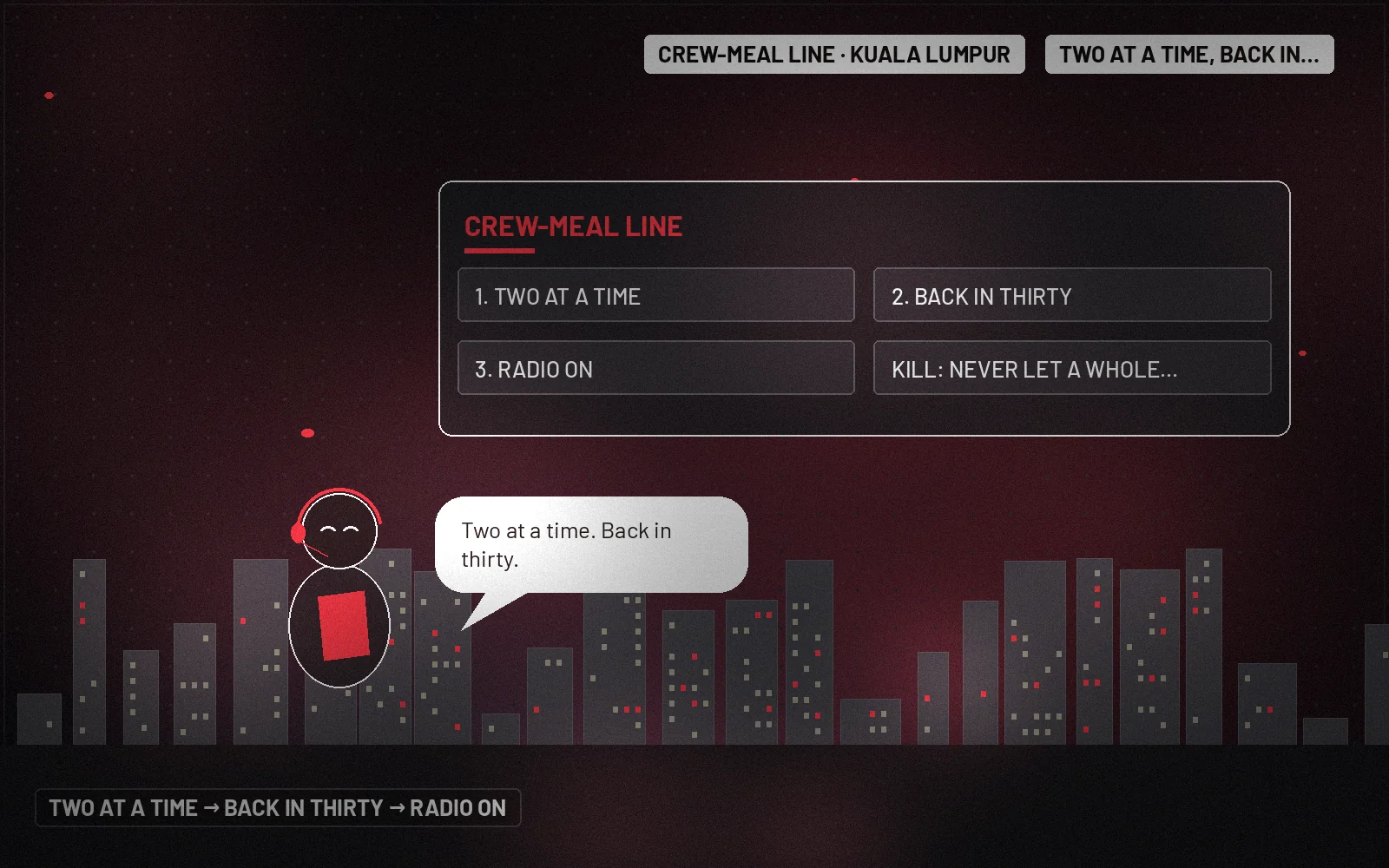
Three parts. Two at a time, back in thirty, radio on.
Crew-meal line (illustrative):
“Crew meal is here. Two at a time, starting with the door team.”
“Back in thirty, please. I’ll call the next pair.”
“Radio stays on while you eat.”
Speakable lock (illustrative): “Two at a time, back in thirty, and your radio stays on while you eat.”
Two at a time matters most. A desk with one person still works; a desk with nobody fails the first guest who walks up.
What should the floor lead stop saying at meal time?
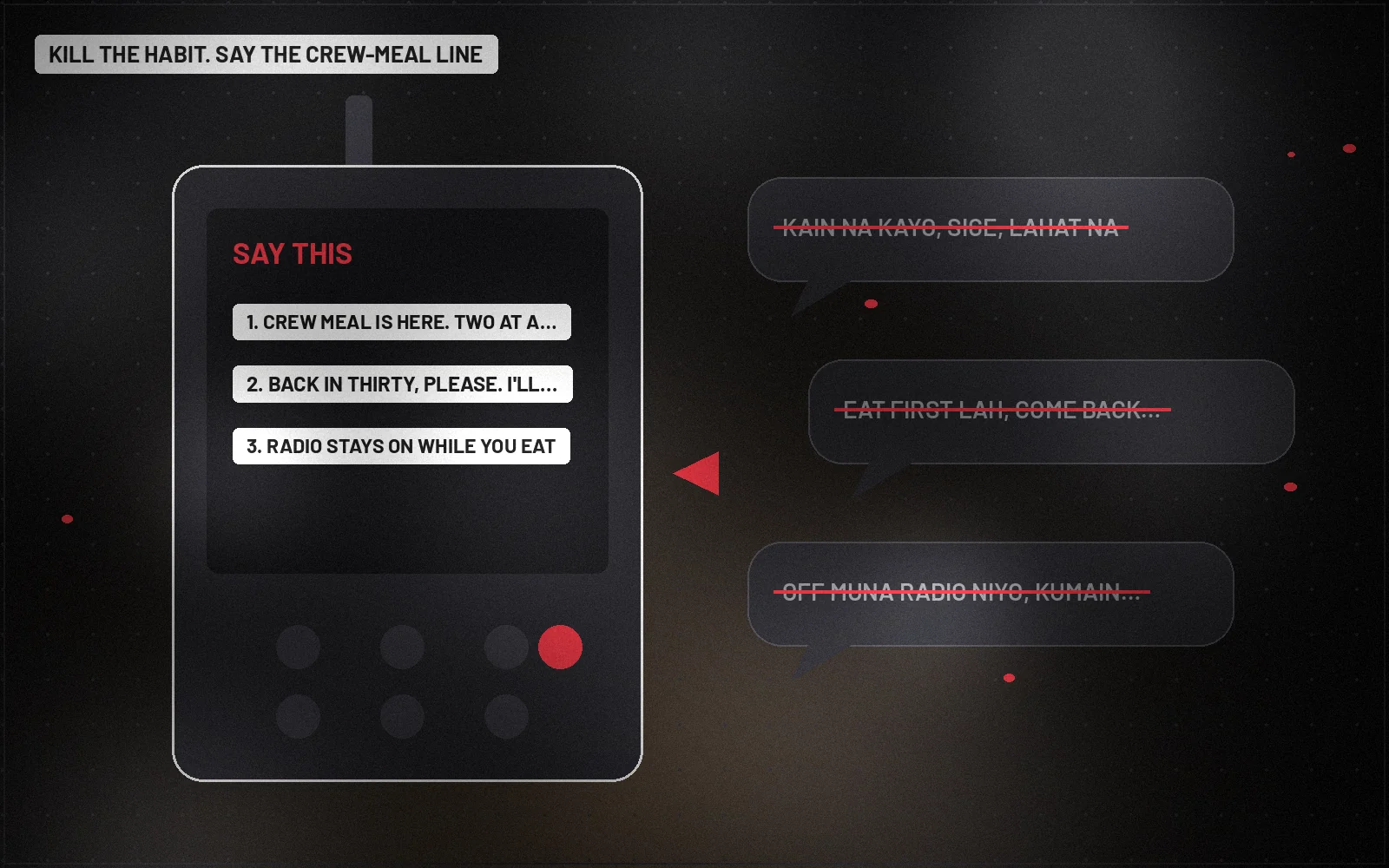
Stop saying eat now and start saying who eats when. A crew that hears eat na kayo will all go at once. Give the order, the time and the radio rule in one breath, and keep a written list so nobody is missed.
| Kill this | Say this (illustrative) | Why |
|---|---|---|
| Kain na kayo, sige, lahat na. | Crew meal is here. Two at a time, starting with the door team. | Pairs, not everyone |
| Eat first lah, come back whenever. | Back in thirty, please. I’ll call the next pair. | A clock time |
| Off muna radio niyo, kumain kayo. | Radio stays on while you eat. | Still reachable |
| Later we see who never eat. | I’ll tick you off when you’re back. | Nobody is missed |
| Eat at the desk, faster. | Eat in the crew room, away from guests. | Guest areas stay clear |
Lines in this table are illustrative, not quotes from real people.
How long should a crew meal break be?
Thirty minutes is a fair default for a full-day event, with pairs staggered. Set the length with the event lead before the day starts and say it the same way to everyone. If the programme runs late, shorten the gap between pairs, not the break itself.
Who covers a post while the crew eats?
The partner who stays, with a floater on call. Pair people who can cover each other’s job. Name one floater who can step into any desk, and keep that person’s meal for the last slot.
How does this play out on PH and SG desks?
Same three parts. Different desks.
Philippines desk. In Cebu and across the Philippines, crews often include volunteers and venue staff who wait to be told it is okay to eat. Say it clearly, with po for older crew: kain na po kayo, two at a time. Post the pair order in the crew Viber group.
Singapore and wider APAC desk. In Singapore and Kuala Lumpur, crew meal times are often written into the run sheet. Keep the line in plain English, give the return time as a clock time, and call the next pair on the radio by name.
Monday field kit
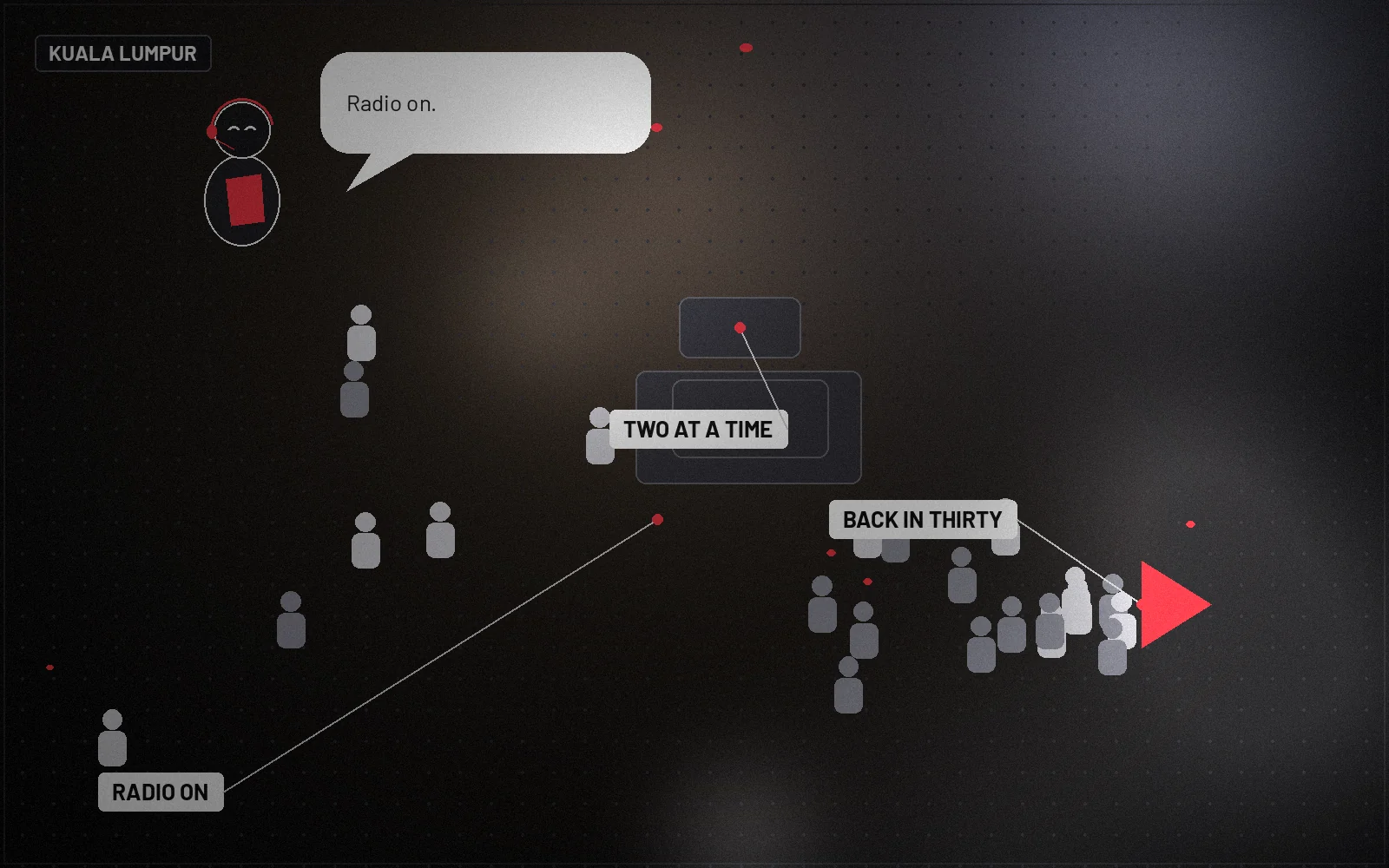
- Two at a time, back in thirty, radio on.
- Pair order written on the floor lead’s sheet.
- One floater on call for any post.
- Crew room set away from guest areas.
- Kill rule: never let a whole team break at once.
What to do this week
- Write the three lines on the floor lead’s card.
- Agree the meal time and length with the event lead.
- Pair the crew so each partner can cover the other.
- Name one floater for every shift.
- Book a crew room away from guest areas.
FAQs
What is a crew-meal line English APAC?
A crew-meal line English APAC is the floor lead’s short call for meal breaks: two at a time, back in thirty, radio on. Every crew member hears the same words.
How do you schedule meal breaks for event staff?
Stagger breaks in pairs so every post stays covered, starting with the team that will be busiest later. Keep a written list and call each pair by name.
Should event crew keep radios on during meal breaks?
Yes, radios stay on at low volume during meals. The floor lead calls only if a post needs help.
Neuwark Communications writes event scripts like this through strategy and messaging. More street-smart lines live in Insights.
Related: walkie-check line English APAC · load-in line English APAC
Talk to us about your next event script.
Illustrative lines only. Communications craft, not legal advice.