
A Saturday town hall in Cavite, forty minutes before doors. The volunteers have radios clipped on, but nobody is sure who is on which channel, and the first real call goes unanswered.
Walkie-check line English APAC is the short staff radio check: the call sign you want, your own call sign, and copy to confirm you heard.
Street-smart APAC English: short sentences a tired operator can say out loud.
It is the staff radio check, not the stage manager’s headset call; for that, use the standby-cue line English APAC. Run it straight after the volunteer huddle brief English APAC, while everyone is still in one place.
Quick answer: A walkie-check line English APAC is the staff radio check before doors: call the post by its call sign, give your own, and wait for copy. Assign call signs and channels on paper, check every radio in one round, and repeat the check whenever someone swaps a battery, a radio or a channel.
What goes in a walkie-check line English APAC?
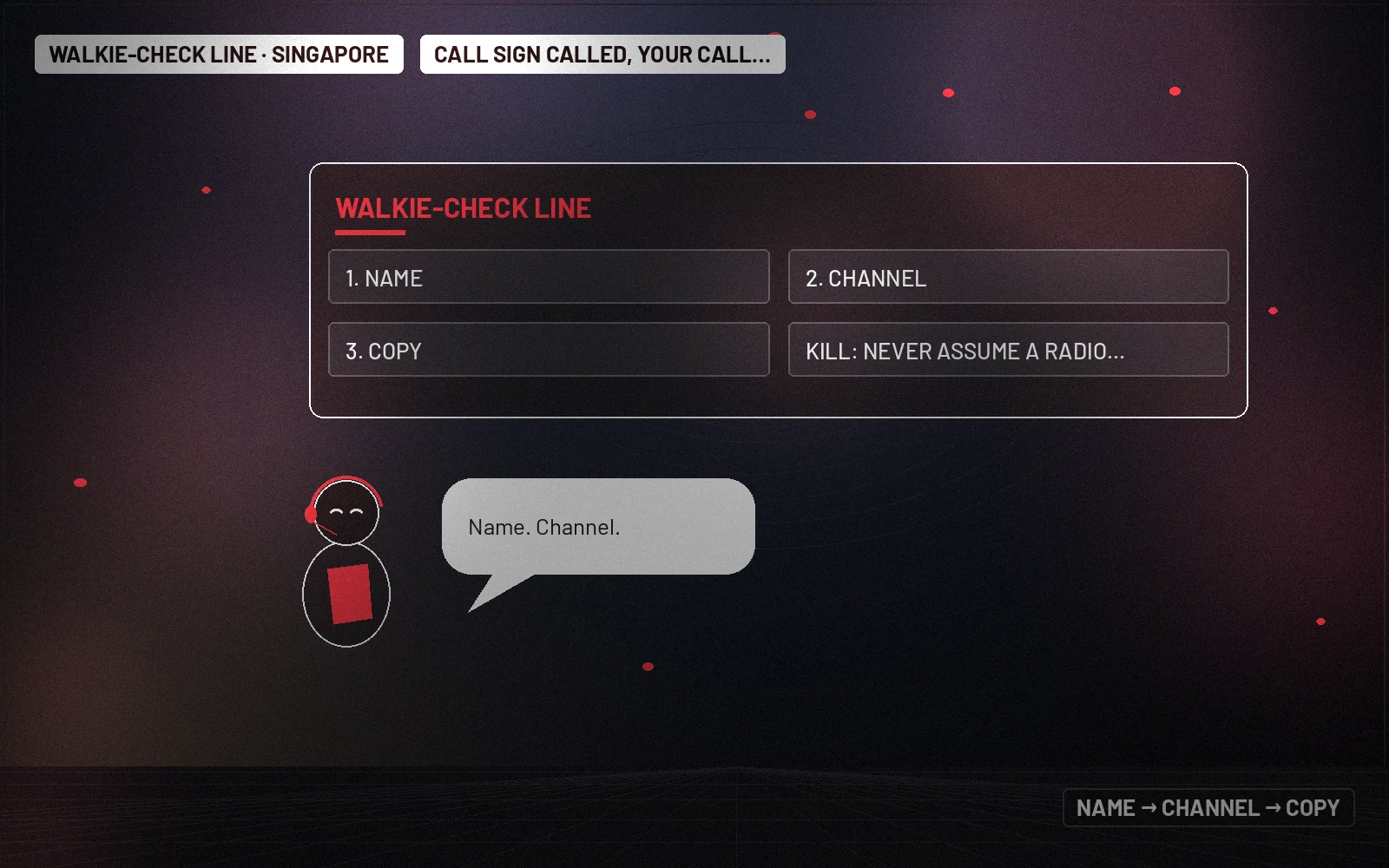
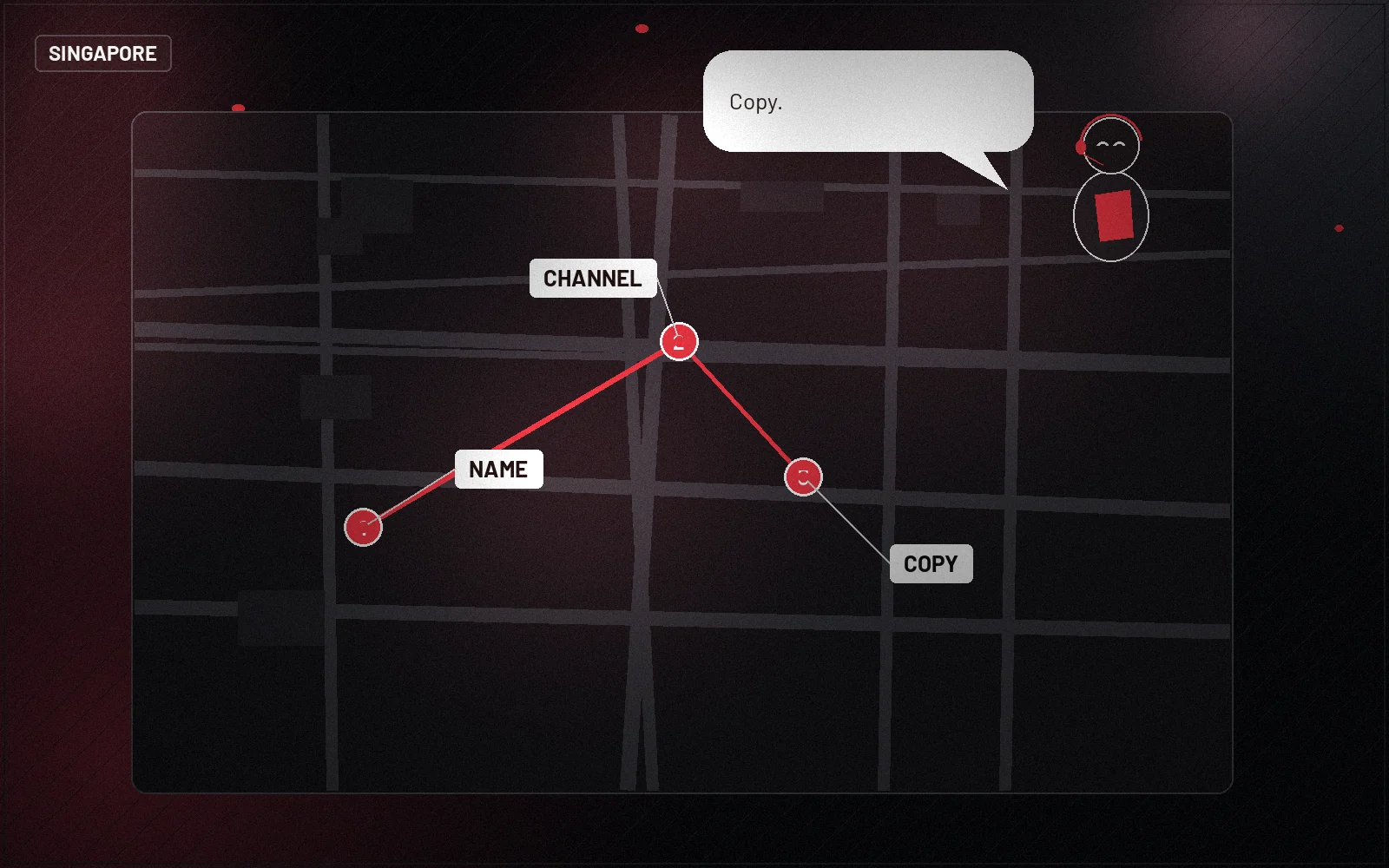
A walkie-check line English APAC has three parts: the call sign you are calling, your own call sign, and copy. The control desk calls each post in turn, each post answers with copy, and the desk ticks it off the list. Anyone who does not answer gets checked in person.
Walkie-check line (illustrative):
“Door One, this is Control, radio check.”
“Control, Door One, copy, loud and clear.”
“Thanks, Door One. Control out.”
How do I run a radio check before doors?
Gather the team, confirm everyone is on the agreed channel, then call each post in order from a written list. Keep each call short and wait for the reply. Plain event language on the radio matters, because the same words must work in a noisy hall, in a hurry and on a weak battery.
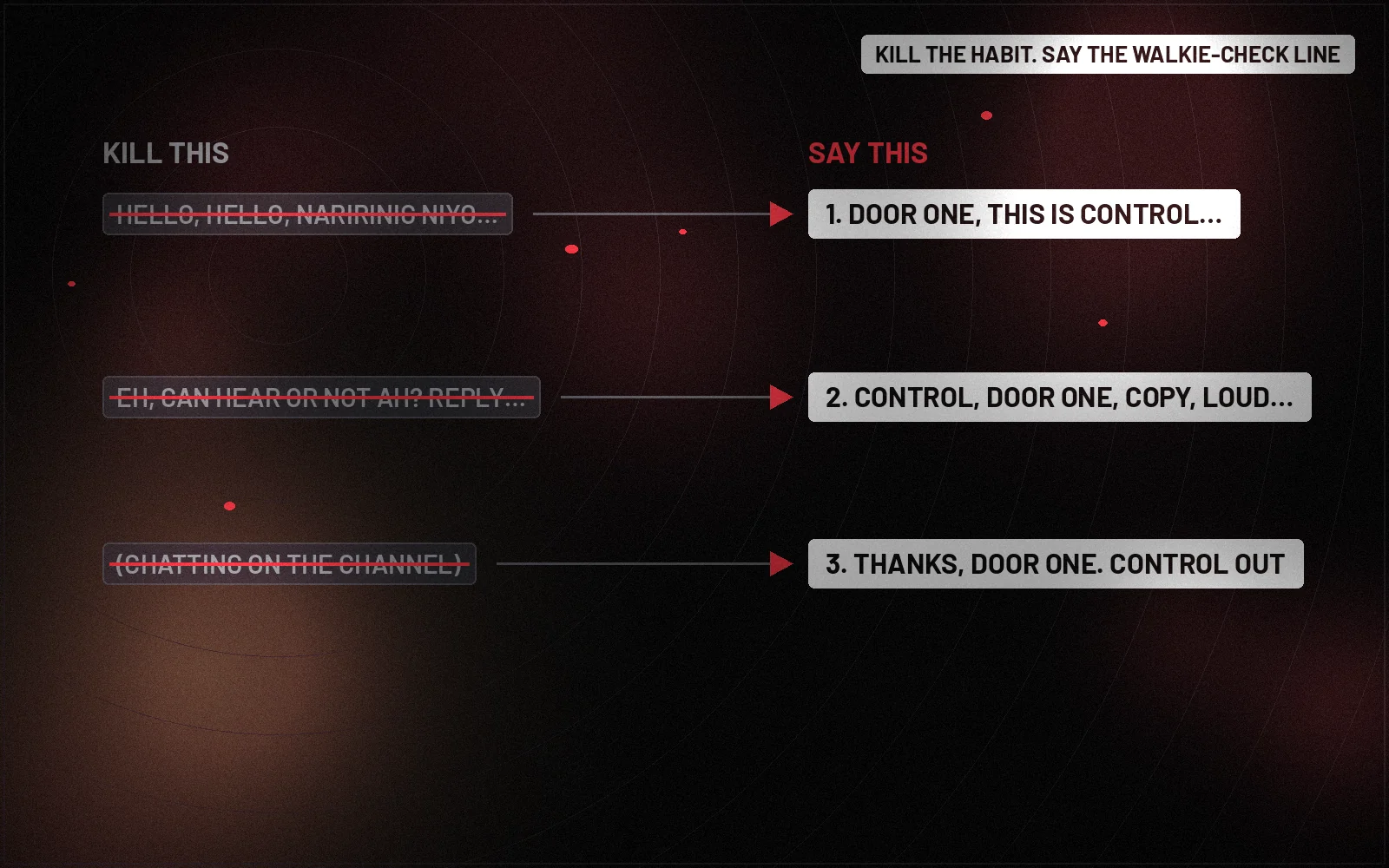
| Kill this | Say this (illustrative) | Why |
|---|---|---|
| Hello, hello, naririnig niyo po ba ako? | Door One, this is Control, radio check. | Says who and to whom |
| Eh, can hear or not ah? Reply lah. | Control, Door One, copy, loud and clear. | One standard reply |
| (chatting on the channel) | Thanks, Door One. Control out. | Clears the channel |
| Sige, okay na ‘yan, gumagana naman lahat. | Gate Two, no reply. I’ll come to you. | Checks in person |
How should we choose call signs?
Name posts, not people: Door One, Gate Two, Stage, Control. Post names survive shift changes and are easy to hear over noise. Write the list on a card for every radio holder, and avoid call signs that sound alike on a crackly radio, such as Gate and Eight, or Stage and Exit Gate.
What if a radio fails during the event?
Swap it for a spare from the control desk instead of fixing it at the post. Keep charged spares and batteries in one box with a simple log. After the swap, run a quick radio check on the new set, so the team knows that post can hear and be heard again.
How does this play out in PH and SG?
The three parts hold in both markets, but crews and venues differ. Use the desk notes below to adjust the call signs, the language on the channel and the check timing for Philippine and Singapore teams, and agree the channel plan with the venue’s own security team.
Philippines desk. In the Philippines, volunteer teams often mix English and Filipino on the radio, and some volunteers use one for the first time. Keep call signs and replies in English, show new volunteers how to press and wait, and repeat the check after each shift change.
Singapore and wider APAC desk. In Singapore, venue security often runs its own radio channels, so agree which channel is yours. Keep the line in plain English, use post names as call signs, and keep campaign communications staff on a separate channel from operations.
Paste-ready lock
Speakable lock (illustrative): “Door One, this is Control, radio check, and when you hear me, reply with Control, Door One, copy.”
Monday field kit
- Call sign called, your call sign, copy.
- A written list of posts and channels.
- Charged spares at the control desk.
- A recheck after every swap or shift change.
- Kill rule: never assume a radio works until it has answered a check.
What to do this week
- Name every post with a call sign.
- Print a call-sign card for each radio.
- Charge and number every radio and spare.
- Schedule the check straight after the huddle.
Kill rule: if a post fails the check twice, send a runner with a spare.
FAQs
What is a walkie-check line English APAC?
A walkie-check line English APAC is the short staff radio check on walkie-talkies. It uses the call sign being called, your own call sign and copy.
How do you do a radio check on a walkie-talkie?
Do a radio check on a walkie-talkie by calling the post, giving your call sign and asking for a radio check. The other person replies with copy, loud and clear.
What does copy mean on a radio?
On a radio, copy means I heard and understood your message. It confirms the call without repeating it.
What if a radio fails during the event?
If a radio fails during the event, swap it for a charged spare from the control desk. Then run a quick radio check on the new set.
Neuwark Communications builds event scripts and campaign communications as part of our strategy and messaging work and wider services. More street-smart lines live in Insights.
Related: Standby-cue line English APAC · Volunteer huddle brief English APAC
Talk to us about your next event script.
Illustrative lines only. Communications craft, not legal advice.