
A breadcrumb that says “Home > Blog > Uncategorized” is not navigation. It is a shrug with schema.
Breadcrumb label English is the short names that tell a searcher, and a machine, which hallway they are in. Insights. Crisis. Public affairs. Not “Our thinking.”
Street-smart APAC English: short sentences a tired operator can say out loud.
This is a companion to our title-tag lock for APAC night desks, which makes title, H1, meta and slug say one claim. That piece names the page. This one names the hallway the page lives in.
Every crumb in this piece is illustrative. Map your own lanes before you paste anything.
What should each crumb say?
The real lane. The same word you used in articleSection. The same word a night desk would file the page under.
A breadcrumb is not a menu and it is not a tagline. It answers one question for someone who landed from search: where am I, and what is one step up?
| Kill this crumb | Why it fails | Say this crumb |
|---|---|---|
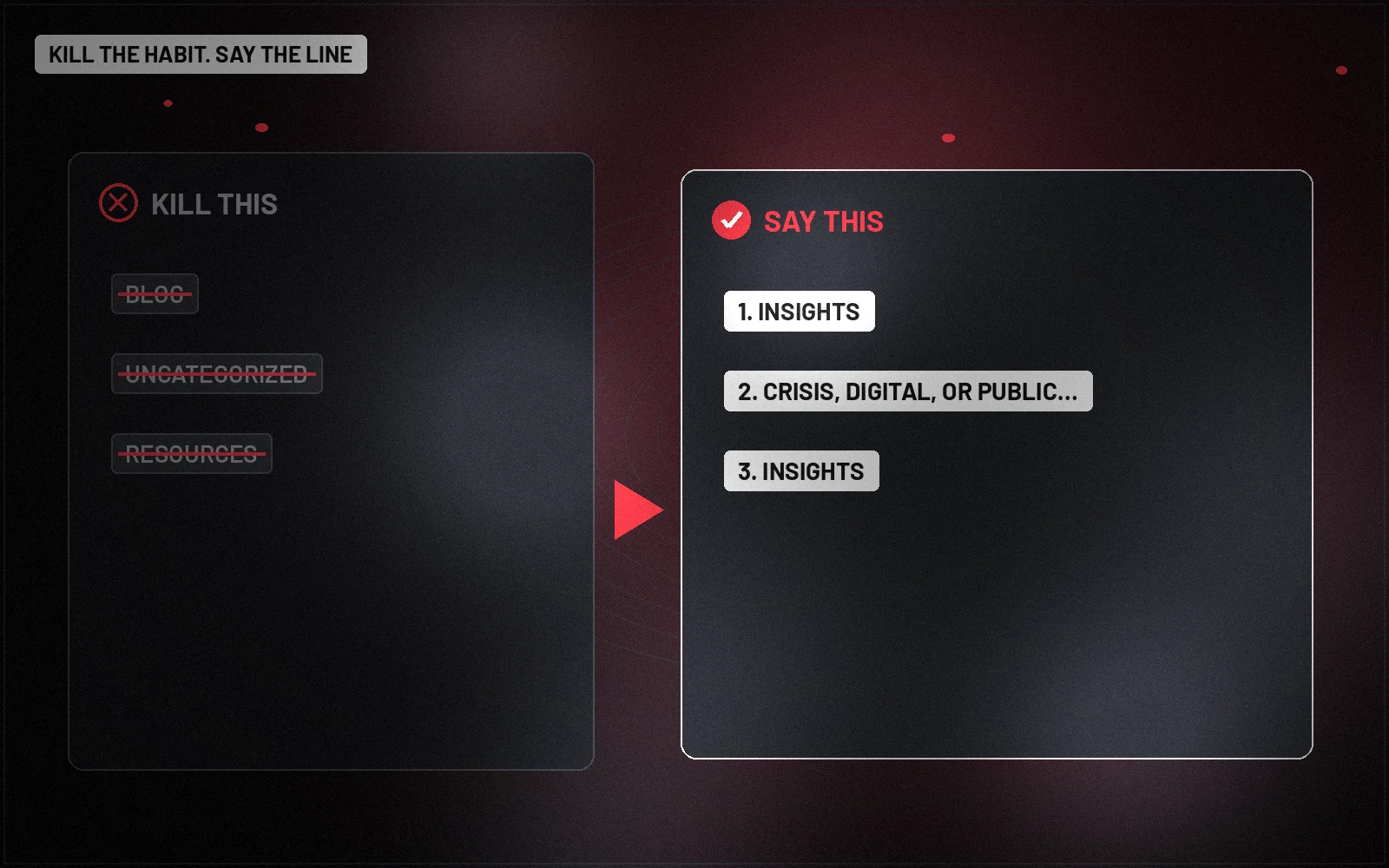
| Blog | Your section is called Insights | Insights |
| Uncategorized | The engine files you as nobody | Crisis, Digital, or Public Affairs |
| Resources | A junk drawer | Insights |
| Our work | Vague. Work is a different index | Work |
| Latest | A date is not a lane | Insights |
What does a clean breadcrumb label English path look like?
Three crumbs is usually enough. Home. The lane. The page.
Paste lock for an Insights URL:
Home > Insights > Alt text English APAC
Do not invent a fourth crumb that restates the H1 in slogan form. The last crumb can be a short title. It cannot be a second fight.
If you run sub-lanes, earn them. A sub-lane needs its own index page and more than a handful of posts. Otherwise the extra crumb is a dead end that looks like a door.
Why do breadcrumbs matter for GEO?
BreadcrumbList schema is a map. If the map says Blog and the H1 says Crisis holding English, you taught two taxonomies.
Search and answer engines have to pick one reading of where the page sits. If your signals argue, you have made that choice harder, and the cleaner page from someone else may look like the safer source.
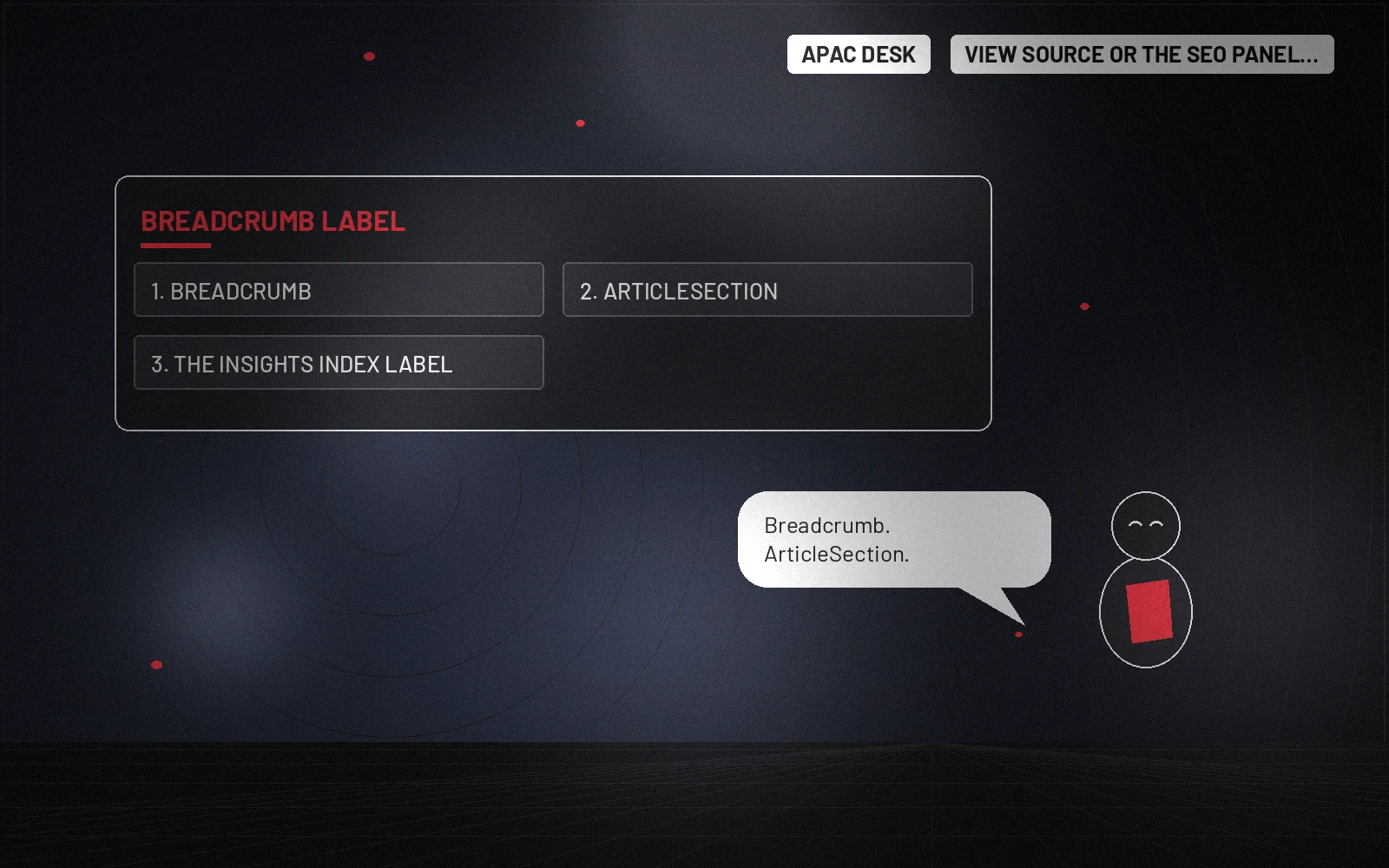
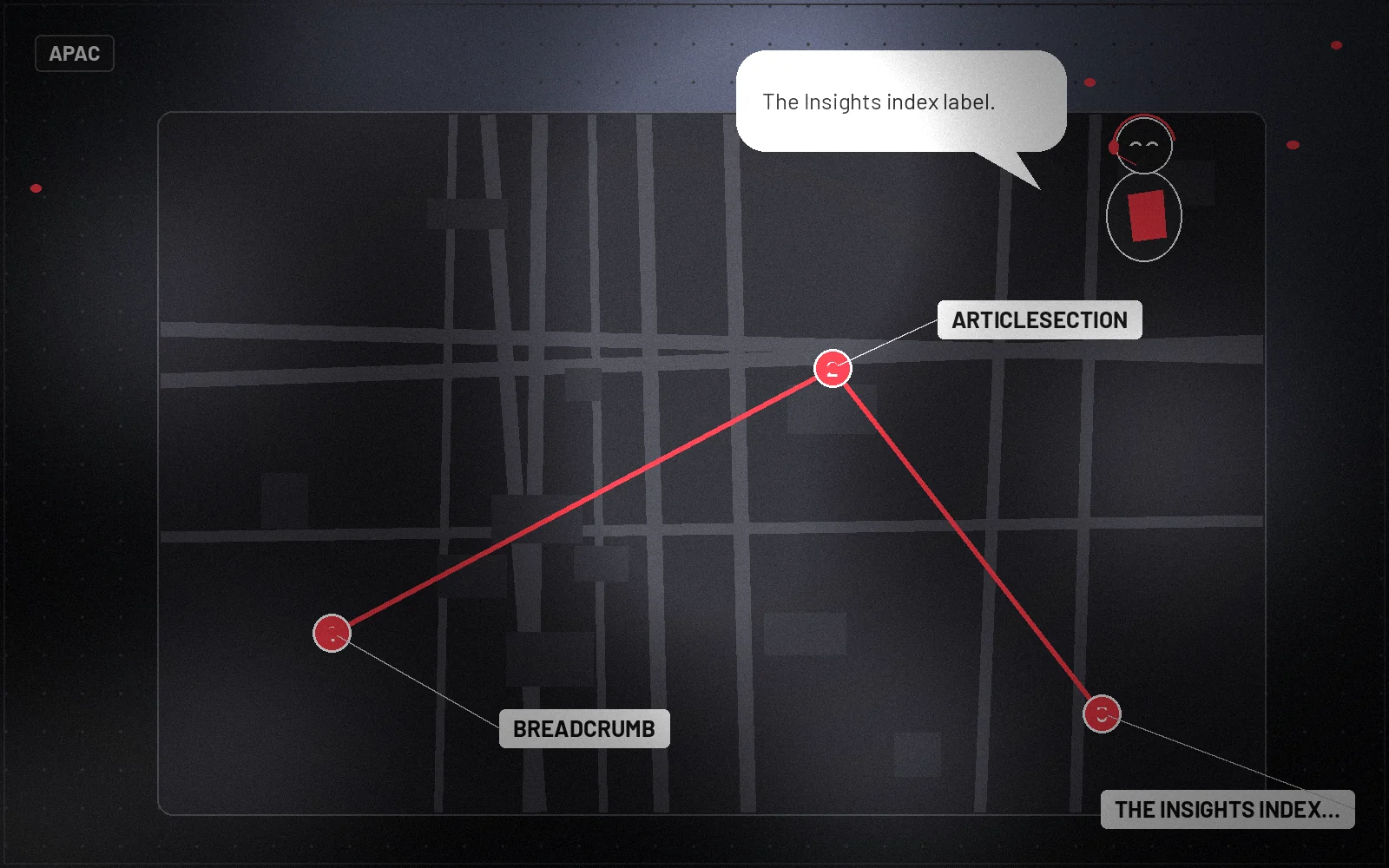
Keep three locks aligned:
- Breadcrumb
- articleSection
- The Insights index label
If they argue, the page apologizes.
This is not a ranking trick. It is filing. A reporter, a partner, or a machine that lands on one page should be able to guess what the rest of the lane holds before they click anything.
Where do breadcrumb labels come from in the CMS?
Usually from the category, the parent page, or an SEO plug-in setting. Rarely from someone who thought about it.
That is the problem. The first category a developer created at launch often becomes the permanent crumb. “Blog” survives three redesigns because nobody owns it.
Name an owner. One person decides the lane words, and the same person approves any new category. A new lane is a taxonomy decision, not a Friday-night fix.
How do breadcrumbs work across languages?
Each language gets its own lane words, written fresh. Do not machine-translate “Insights” into three variants across three pages.
Pick one word per language and lock it. The Filipino page, the Bahasa page, and the English page can each have their own crumb, but each crumb must stay the same across every page in that language.
If you do not publish in a language yet, do not ship a translated crumb that leads to an empty index.
What goes in the breadcrumb audit sheet?
One row per URL. Four columns. No commentary.
| URL | Breadcrumb | articleSection | Index label |
|---|---|---|---|
| /insights/example-page/ | Home > Insights > Example page | Insights | Insights |
| /insights/old-page/ | Home > Blog > Old page | Uncategorized | Insights |
Both rows are illustrative. The second row is the one you are hunting: three fields, three different answers. Fix it at the source, usually the category, not by hand-editing one crumb.
Paste-ready note for the desk sheet:
Crumb check: three crumbs, one lane word, same word in schema and index. No slogan in the last crumb.
Run the sheet again after any theme update. Themes and plug-ins can reset breadcrumb settings without telling anyone.
Monday field kit
- View source or the SEO panel on five live Insights.
- Write down breadcrumb, articleSection, and the index chip.
- Make them the same word.
- Kill “Blog” and “Uncategorized” wherever they still live.
- Do not add emoji to crumbs.
- Name one owner for lane words and write the owner’s name in the desk sheet.
FAQs
What is breadcrumb label English?
Breadcrumb label English is the short path text that names the hallway: Home, the lane, then the page. It should match the lane word in your schema and your index.
Should the last crumb match the H1?
The last crumb should be close enough to the H1 to recognize and short enough for a phone. Do not paste the full title if it wraps into mush.
Do we need breadcrumbs on every page?
Breadcrumbs belong on Insights, services, and work pages. On a one-screen holding page, a single Home link may be enough, so do not decorate a dark site.
Can we rename a lane after launch?
A lane can be renamed, but treat it as a migration, not a label edit. Update the crumb, the section, the index and the redirects on the same day, then check that old links still land.
What to do this week
Pick ten URLs. Align crumb, section, and index chip. Then stop adding lanes.
Neuwark Communications builds search-ready site structures under Digital & Social and Research & Insights. If your crumbs still say Uncategorized, talk to us at Contact. More desks: Insights.
Communications craft, not legal advice. Check platform and data rules with counsel in each market before you change live site structure.
Related: Title-tag English APAC · NewsArticle schema English · Meta description English APAC · People Also Ask English APAC