
Algorithm and open-exchange inventory still park advocacy and corporate ads next to content that burns coalitions, donors, and boards. In PH, SG, MY, TH, and ID, the failure mode is rarely “we forgot a keyword blocklist.” It is screenshot politics: a placement screenshot lands in a group chat, a funder thread, or a newsroom tip line—and your brand safety story becomes the story.
A brand safety audit for paid media APAC is not a vendor toggle. It is an evidence pack you can defend to a board: where money ran, what adjacency looked like, what you excluded, what you will change in ten business days, and who owns the monitor after the audit.
Neuwark Communications runs brand-safety audits and retainers for progressive campaigns and corporate teams that cannot afford a placement scandal mid-cycle. Soft path: Services for audit scope, Contact for a kickoff, and Insights for adjacent playbooks like brand safety for progressive paid media in PH/APAC.
What a real brand-safety audit covers (beyond keyword blocklists)
Keyword lists are table stakes. A real audit inspects paths money can take when humans are tired:
- Exchange and open-web inventory — where “cheap reach” hides unsafe adjacency
- App environments — especially reward apps and opaque SDK chains
- YouTube / long-form adjacency — suitability tiers vs hope
- CTV and OOH digital — screenshots travel from living rooms and streets too
- Partner and reseller chains — who actually bought what you think you bought
- Creative rules — assets that become unsafe in certain contexts even on “safe” inventory
- Governance — who can pause spend in sixty minutes without a committee novel
Deliverables should look like an audit, not a mood board: sample placements (redacted), risk tiers, exclusion recommendations, partner questions, and a remediation timeline. If the output cannot survive a finance or funder meeting, it is not an audit.
Inventory hygiene: exchanges, apps, YouTube adjacency, CTV
Hygiene is continuous, but the audit forces a baseline.
Exchanges. Demand path transparency. Prefer allowlists for high-risk categories (advocacy, health, children-adjacent, contested policy). Cheap CPM is not a strategy if one screenshot costs a coalition.
Apps. Treat opaque apps as guilty until documented. Require category clarity and block junk traffic sources that inflate metrics while poisoning brand.
YouTube. Suitability settings are not a personality test. Document the tier you chose and why. Review adjacency samples weekly during hot news cycles.
CTV. Living-room screenshots are brutal. Align genre exclusions with brand risk, not only with “performance.”
For progressive campaigns, also read ethical retargeting for progressive campaigns—privacy-safe remarketing failures often arrive in the same board packet as placement failures.
Progressive / advocacy-specific risk (screenshot politics)
Corporate brand safety playbooks underweight political and advocacy realities. Your risk is not only “next to hate content.” It is:
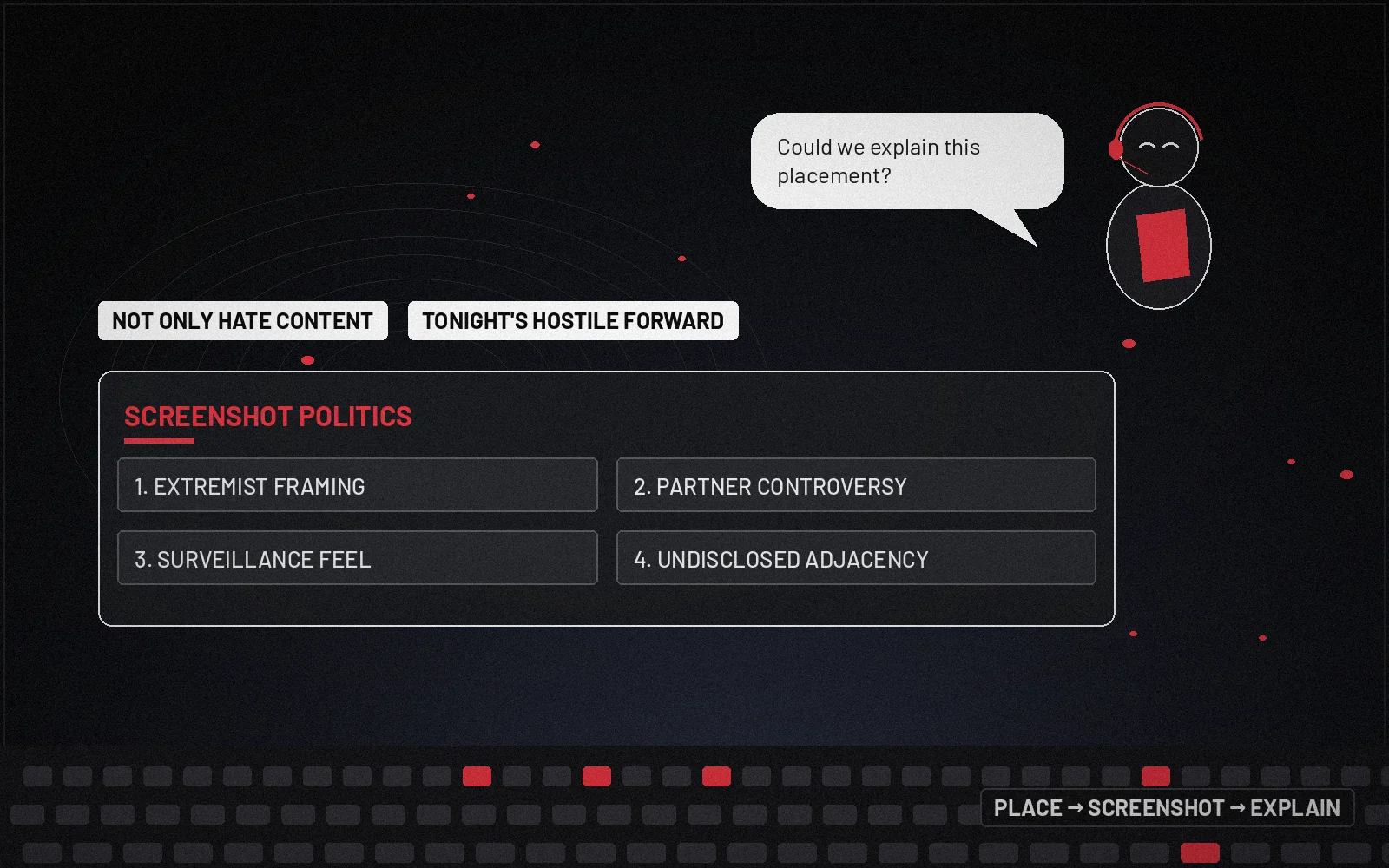
- Appearing beside content that frames your coalition as extremist
- Funding platforms while a partner org is in an active controversy
- Retargeting that feels like surveillance to the communities you claim to serve
- Influencer adjacency without disclosure discipline in markets tightening rules
Run a screenshot politics test on every major flight: if this placement appears in a hostile WhatsApp forward tonight, can we explain it in two sentences with evidence? If not, do not buy it.
Donors and members forward first and read later. Design for that. Brand safety for advocacy is message discipline plus inventory discipline.
Findings format boards and funders accept
Executives do not want a 90-page PDF of ad-tech jargon. They want:
- 1. Executive summary — top five risks and money at stake
- 2. Evidence sheet — redacted screenshots / path notes
- 3. Decision table — keep / fix / kill by channel
- 4. Ten-day remediation plan — owners and dates
- 5. Retainer recommendation — what continuous monitoring costs vs one-off hope
Write in high-school clear language. If a board member outside media cannot parse it, rewrite. Street-smart here means honest about uncertainty: “we sampled; here is residual risk” beats fake certainty.
Remediation sprint: exclusions, partners, creative rules
Week 1 — Kill the bleeding. Pause unsafe paths. Apply emergency exclusions. Notify partners in writing.
Week 2 — Rebuild rules. Update allowlists, suitability tiers, and creative do-not-run contexts. Brief buyers and agencies in one room so freestyle dies.
Week 3 — Prove the fix. Resample placements. Document before/after. Update the board packet.
Ongoing — Retainer monitor. Weekly samples during hot cycles; monthly otherwise. Tie alerts to a named on-call owner.
Remediation without ownership returns to chaos by the next flight. Put names in the SOW.
Retainer vs one-off audit: when each pays
A one-off audit pays when you are entering a market, changing agencies, launching a sensitive campaign, or recovering from a screenshot incident. A retainer pays when spend is continuous and news cycles are violent—which describes most APAC advocacy and many corporate PA-adjacent brands in 2026.
Buy the audit to see. Buy the retainer to stay clean. Mixing them—“we audited once in January”—is how September surprises happen.
Sample evidence worksheet (operators can run this week)
For each active flight, capture:
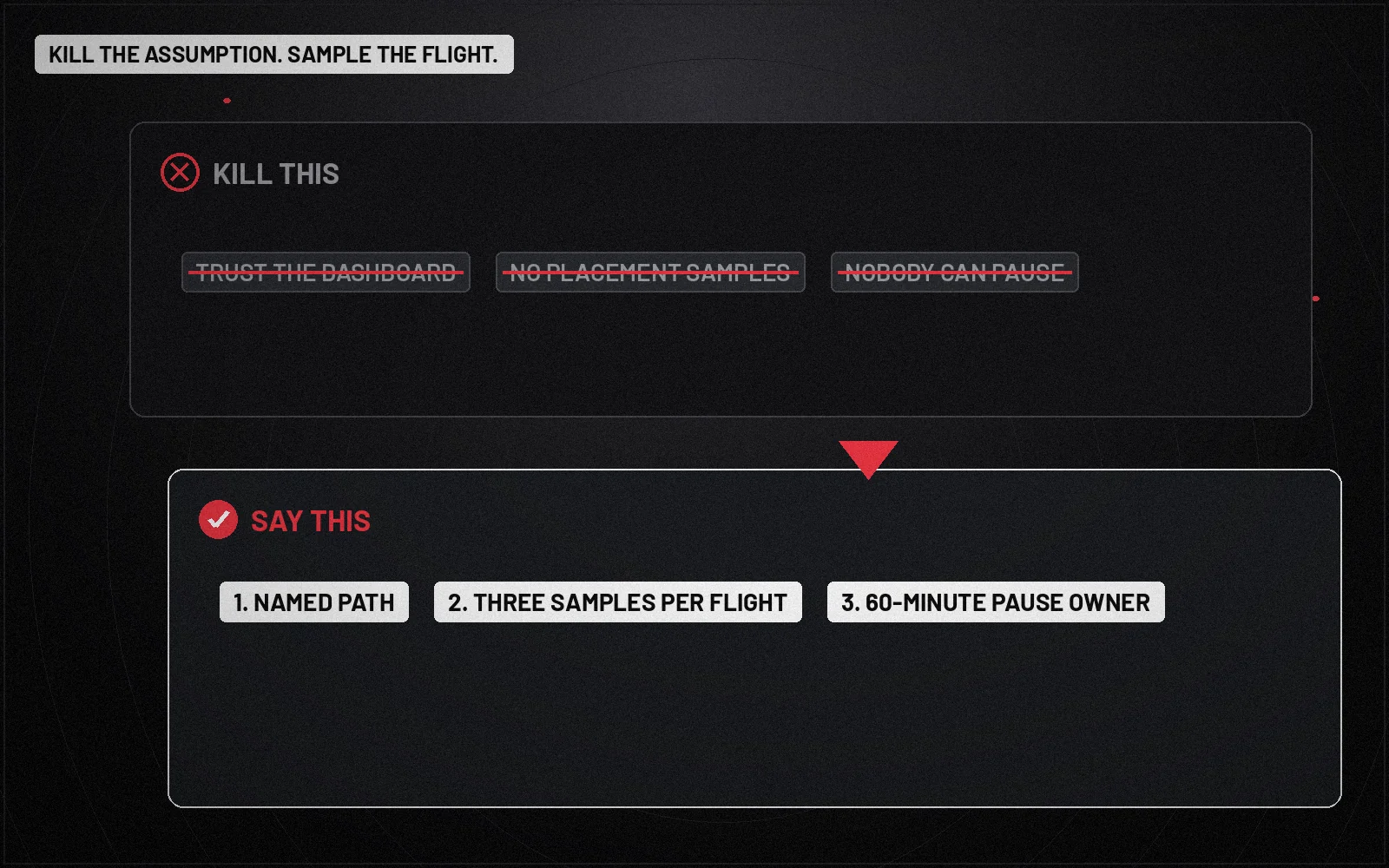
- 1. Platform / path (named exchange, app list, or walled garden)
- 2. Suitability / brand-safety settings actually applied
- 3. Three placement samples (screenshots redacted for privacy)
- 4. Risk tier (green / watch / red) with one-sentence reason
- 5. Money in the last seven days on that path
- 6. Owner who can pause within sixty minutes
Do this for the top 80% of spend first. Perfect coverage is a myth; prioritized honesty is an audit.
How screenshot politics escalates in APAC group chats
A placement lands in a coalition WhatsApp. Someone forwards it to a funder. The funder forwards it to a board member. By morning you are answering a question you should have answered in the media plan: “Why were we next to that?”
Speed matters. Pre-write a holding explanation for known residual risks (“we block X categories; residual open-web risk is sampled weekly; here is last sample date”). Silence reads as guilt even when the placement was within policy. Policy without communication is incomplete brand safety.
Vendor questions that separate partners from excuses
Ask in writing:
- Can you provide placement-level logs for the audit window?
- Which resellers sit between us and inventory?
- What is your default for advocacy / contested-issue categories?
- How fast can you implement a global exclusion update?
- What independent verification exists beyond your portal screenshots?
Partners who dodge these questions are telling you something. Believe them—and move spend.
Integrating brand safety with creative and landing hygiene
Unsafe adjacency is only one failure. Creative that overclaims, landings that bait-and-switch, and retargeting that feels invasive will all show up in the same funder packet. Bundle brand-safety audits with creative clearance rules and landing-page claim checks when the campaign is progressive or regulated. One memo, one remediation sprint, one owner list.
That integration is often what turns a one-off audit into a retainer: continuous monitoring across inventory, creative, and destination—not a quarterly PDF that expires the week after it is admired.
APAC market notes that change the audit
Philippines. Progressive and advocacy flights face intense screenshot politics. Prioritize open-web and app hygiene; document suitability choices for video. Assume every placement can be forwarded to a coalition chat within minutes.
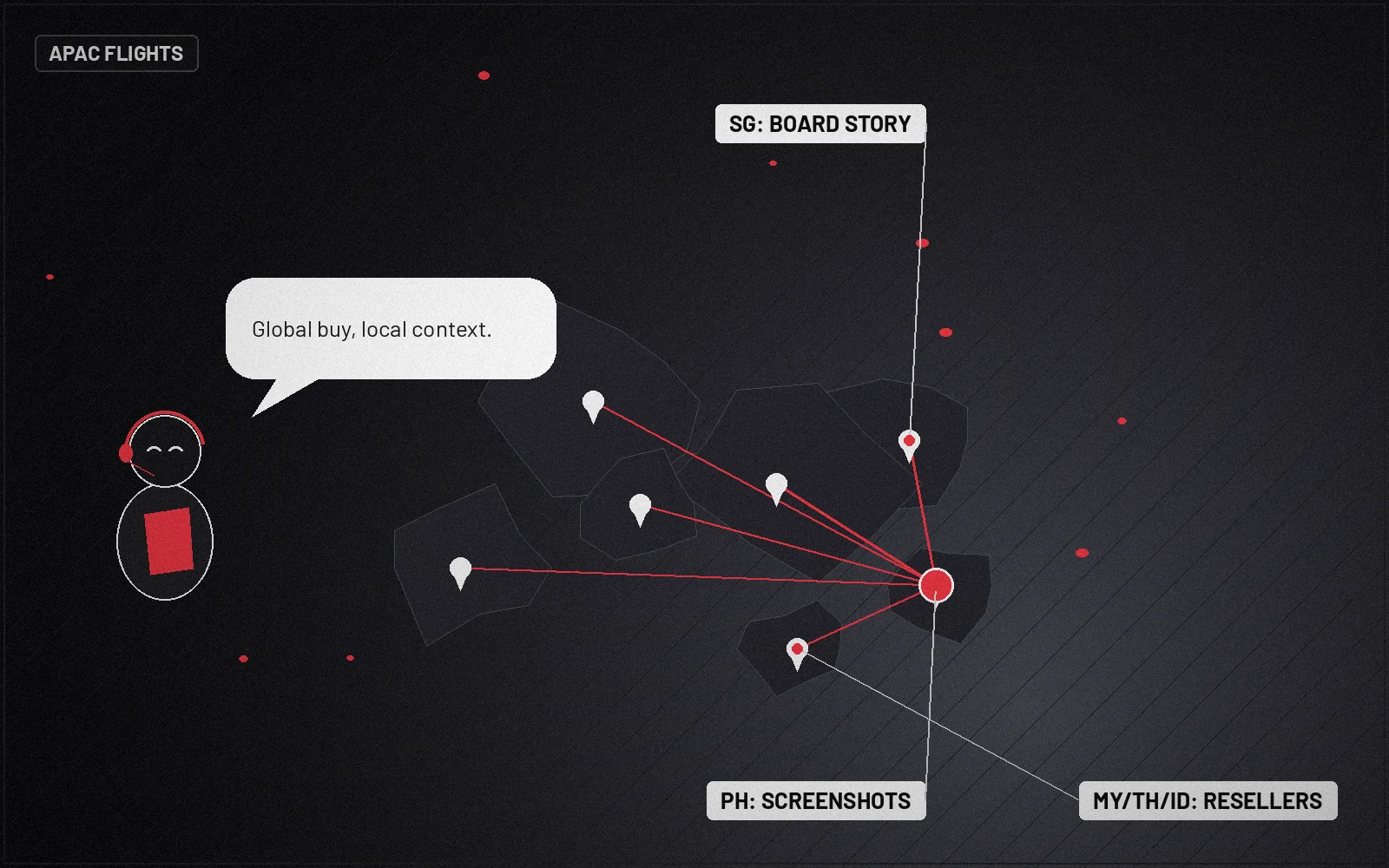
Singapore. Corporate and PA-adjacent brands need cleaner inventory stories for boards and regulators. Document residual risk honestly; overclaiming “brand safe 100%” destroys credibility when one sample fails.
Malaysia / Thailand / Indonesia. Reseller chains and marketplace-adjacent apps can muddy paths. Demand transparency in writing. Local language content adjacency needs local reviewers—not only English keyword lists.
Run market-specific samples even when the buying platform is “global.” Global platforms still deliver local contexts that boards will judge locally.
After the audit: ninety-day hygiene calendar
- Weekly: sample top spend paths during hot news
- Biweekly: exclusion list refresh and partner ticket review
- Monthly: board/funder one-pager with residual risk
- Quarterly: full path re-audit or agency change review
Put the calendar in the retainer SOW. Brand safety without a calendar becomes a forgotten January PDF.
What success looks like thirty days after remediation
You will not eliminate residual risk. You will make risk explainable. Success means: top spend paths sampled on schedule, exclusions updated after each hot-news week, partners answering tickets in writing, and leadership receiving a one-page residual-risk note without drama. When a screenshot appears, you respond with evidence and a date—not with surprise.
That posture is what brand safety retainers sell. Audits create the baseline. Retainers keep the baseline true while algorithms and news cycles keep moving.
Soft CTA: paid-media brand-safety audit
Brand safety is not a vendor checkbox. It is an audit you can defend when the screenshot lands. Neuwark scopes brand safety audits and retainers for paid media across PH, SG, MY, TH, and ID—inventory hygiene, exclusion systems, and board-ready findings.
See more operator notes on Insights, packaging on Services, who we are on About, or contact us to start with a placement-sample review. Bring last month’s paths. We will tell you what a funder would ask first.