

Author page English is the four bio lines that tell a reader, and a machine, who wrote a page: their role, what they actually touched, what they won’t claim, and how to reach the desk.
Advocacy sites publish serious pages under unserious bylines. “Admin.” “Team.” A photo-free bio that says “passionate thought leader.” Then the same site wonders why a page about a budget line or a data breach does not read as trustworthy.
This is the language companion to our answer-engine GEO inbound playbook, which argues that entity clarity is what makes an organisation quotable. An E-E-A-T author bio is entity clarity for a person. This piece gives you the lines.
Street-smart APAC English: short sentences a tired operator can say out loud.
What is E-E-A-T, in plain English?
Experience, expertise, authoritativeness, trust. It is the lens Google’s search quality rater guidelines use to judge whether content is helpful and reliable, with trust at the centre.
Two honest limits. Raters do not rank your page by hand. And there is no single “author page” switch that lifts a site. What the lens does tell you is what a careful reader looks for: who made this, what they actually know, and whether they are straight about what they don’t.
That is a writing job before it is a technical one.
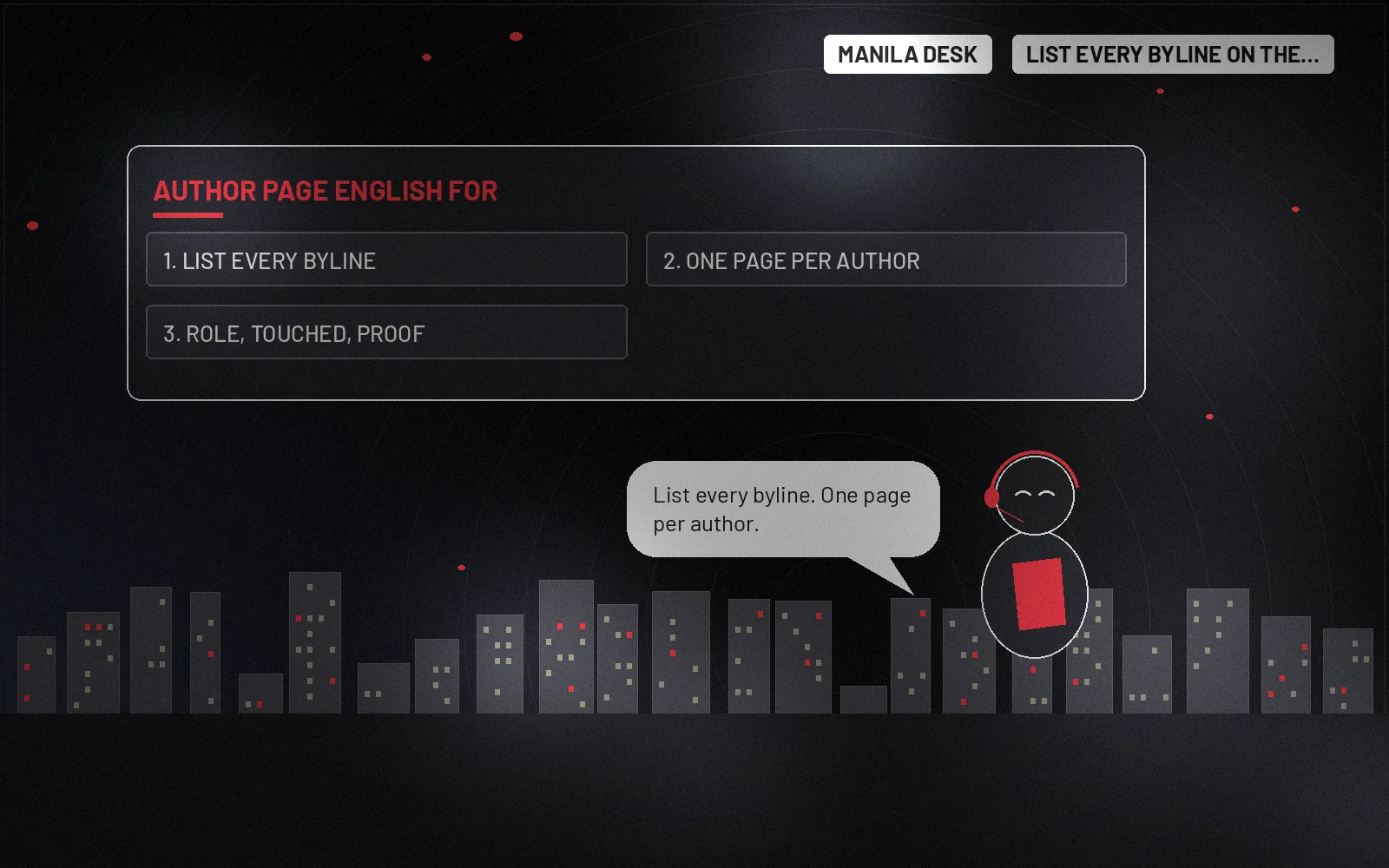
Why do advocacy author bios read like LinkedIn?
Because they were written to impress a recruiter, not to reassure a reader.
A reader on a policy page is asking one thing: should I trust this sentence? Adjectives do not answer that. Verbs do. What did this person draft, edit, check, or sign off?
| Kill this | Say this (illustrative) |
|---|---|
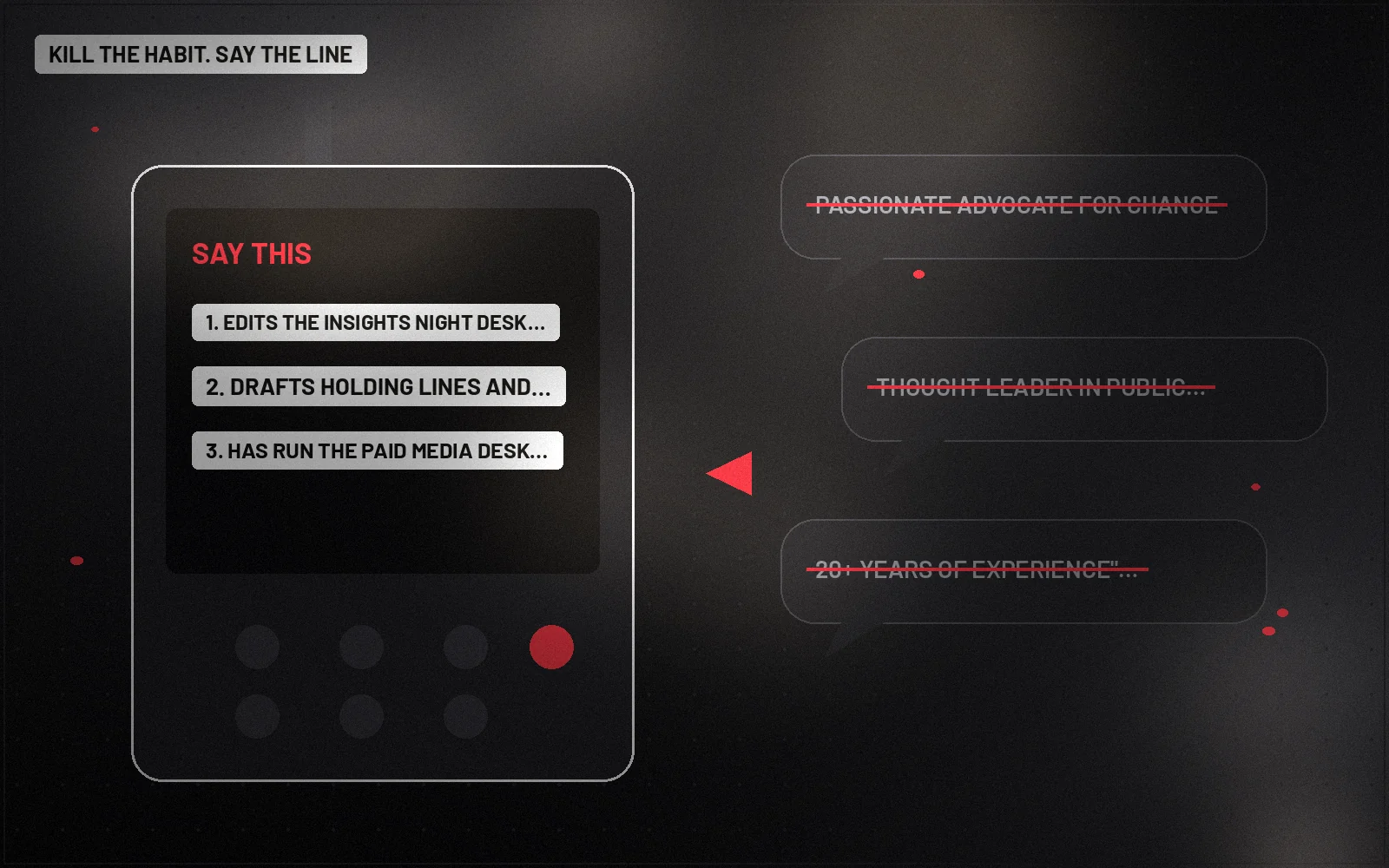
| “Passionate advocate for change” | “Edits the Insights night desk in Manila.” |
| “Thought leader in public affairs” | “Drafts holding lines and consultation responses for advocacy and brand teams.” |
| “20+ years of experience” (unchecked) | “Has run the paid media desk since the site launched.” Only if true. |
| “Award-winning” with no award named | Name the award and year, or cut it. |
| “Expert in everything digital” | One or two areas. The rest belongs to someone else’s bio. |
What four lines go in author page English?
Role, touched, won’t claim, reach. One line each. Nothing cute.
| Line | Job | Pattern |
|---|---|---|
| Role | Says what the person does on this site | “Edits / writes / reviews the … desk.” |
| Touched | Names the kind of work they have actually handled | “Has drafted … for … teams in …” |
| Won’t claim | Draws the boundary | “Does not give legal advice. Does not predict rankings or votes.” |
| Reach | Gives a route that someone answers | “Questions go to the desk through the contact page.” |
The won’t-claim line is the one most sites skip. It is also the one that earns trust fastest, because it is the line a vague bio never has.
What does a paste-ready bio look like?
Illustrative only. Replace roles and work with what is true for your people.
Night desk editor, Manila. Edits the Insights night desk and writes the kill-this, say-this tables. Has drafted holding lines, caption packs and consultation responses for advocacy and brand teams in the Philippines and Singapore. Does not give legal advice and does not predict rankings, votes or outcomes. Questions about a published page go to the desk through the contact page.
Paid media editor, Singapore. Reviews paid media briefs and brand safety lines before they go to a buyer. Has handled campaign briefs for advocacy and brand teams across APAC. Does not sign off on legal or platform-policy questions. Reach the desk through the contact page.
Read them out loud. If a tired colleague could say each sentence without laughing, it ships.
What should the byline say when a desk writes it?
Sometimes a desk writes the page, not one person. That is fine. “Admin” is not.
If the byline must be a desk, the desk gets its own author page. It lists the roles on the desk, who signs off substance, and how to reach it.
Kill: “By Admin.” Say: “By the Insights desk. Reviewed by the desk editor.”
If a named reviewer is claimed, it must be true. “Reviewed by counsel” means counsel reviewed it. Do not borrow a credential for decoration.
Does author schema fix a weak bio?
No. Person markup can help machines connect a byline to a profile, but it describes what is on the page. It does not create experience that is not there.
Keep the markup and the visible bio saying the same thing. If the schema says “expert” and the page says “passionate,” you trained the machine and the reader to doubt you. Our NewsArticle schema English post covers the author field in article markup. The words in the bio still have to carry it.
What if an author needs to stay anonymous?
Advocacy work carries real risk in some markets. Safety comes first.
Use a desk byline with an accountable role instead of a name. Say plainly that bylines are held back for safety, and give a route for corrections that a human answers.
Kill: an invented persona with a stock photo. Say: “Written by the research desk. Names are withheld for staff safety. Corrections go through the contact page.”
An honest anonymous desk is more trustworthy than a fake face.
Monday field kit
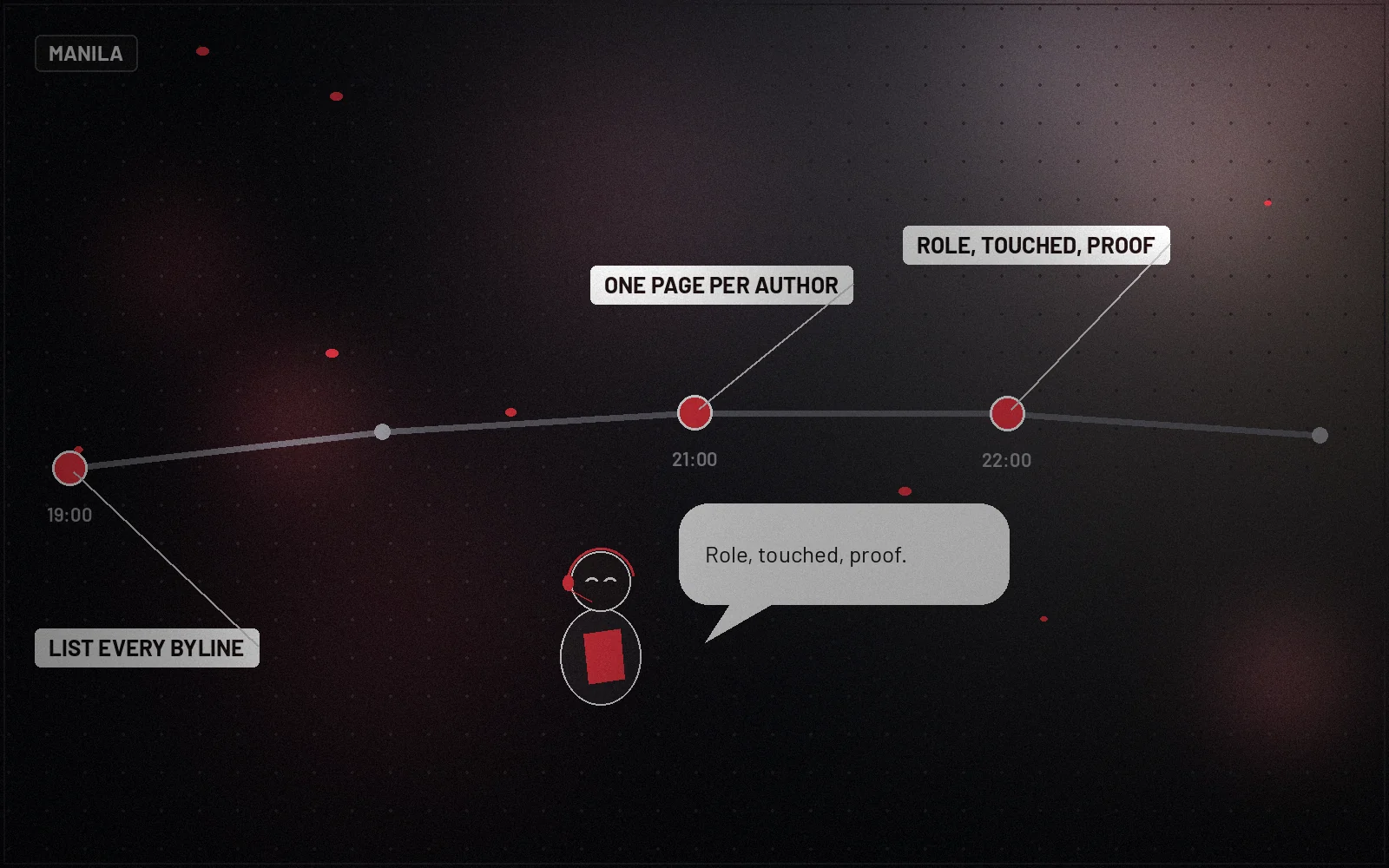
- List every byline on the site, including “Admin.”
- Give each person or desk an author page.
- Write the four lines: role, touched, won’t claim, reach.
- Cut every adjective a stranger cannot check.
- Make the markup match the visible bio.
- Send one bio to a colleague and ask: would you trust this sentence at 2am?
Paste-ready editor comment:
Bio check: role in one line, work touched in verbs, won’t-claim line present, reach route answered by a human. No “passionate,” no “thought leader.”
FAQs
What is author page English?
It is the four-line bio that says who wrote a page: role, what they touched, what they won’t claim, and how to reach the desk. It replaces adjectives with verbs a reader can check.
Does an author page improve rankings?
There is no single author-page switch. A clear author page helps readers and machines see who stands behind the content, which is what E-E-A-T is about.
Can we list awards and years of experience?
Yes, if they are true and specific. Name the award and the year, or leave it out.
What if the author wants to stay anonymous for safety?
Use a desk byline with an accountable role and say why names are withheld. Give a correction route that a human answers.
What to do this week
Open your five most-read pages and click the byline. If it goes to “Admin” or nowhere, write that author page first.
Neuwark Communications writes author pages and entity copy under Digital & Social and Strategy & Messaging. If your bylines still say “passionate,” talk to us at Contact. More language companions live in Insights.
Communications craft, not legal advice. If a bio mentions a licence, credential or regulated role, confirm the wording with counsel and the licensing body before you publish.
Related: Answer-engine GEO inbound playbook · NewsArticle schema English · Title tag English APAC · AI Overview source English