

Campaigns name folders after the org chart. Searchers name them after the problem.
URL slug English APAC is the one path that can sit in a screenshot, a citation, and a night-desk note without apologizing: the object first, in words the searcher already uses.
Street-smart APAC English: short sentences a tired operator can say out loud.
This is a companion to our search query map English, which assigns each question its own URL. That piece decides which page answers which query. This one writes the path itself.
Why do slugs fail?
Because they describe the meeting, not the query.
Three slugs we have all seen (illustrative):
/insights/our-latest-thinking-september/
/blog/untitled-draft-3/
/advocacy/final-final-v7/
A slug is a public sentence with the spaces stripped. If you cannot say it out loud, do not publish it.
The slug is also the part of your page that travels furthest without context. It sits in a pasted link in a group chat, in a reporter’s notes, and in the source line of someone else’s article. Nobody sees your H1 there. They see the path.
What should the URL slug English APAC path say?
| Query intent | Kill this slug | Say this slug |
|---|---|---|
| How to write FAQ markup | faq-thoughts | faqpage-schema-english-apac-markup |
| What to put in a 404 | oops | 404-recovery-english-apac |
| Who speaks on the author page | team | author-page-english-eeat-apac |
| Holding lines before a doorstep | comms-tips | doorstep-holding-english-apac |
Desk rules:
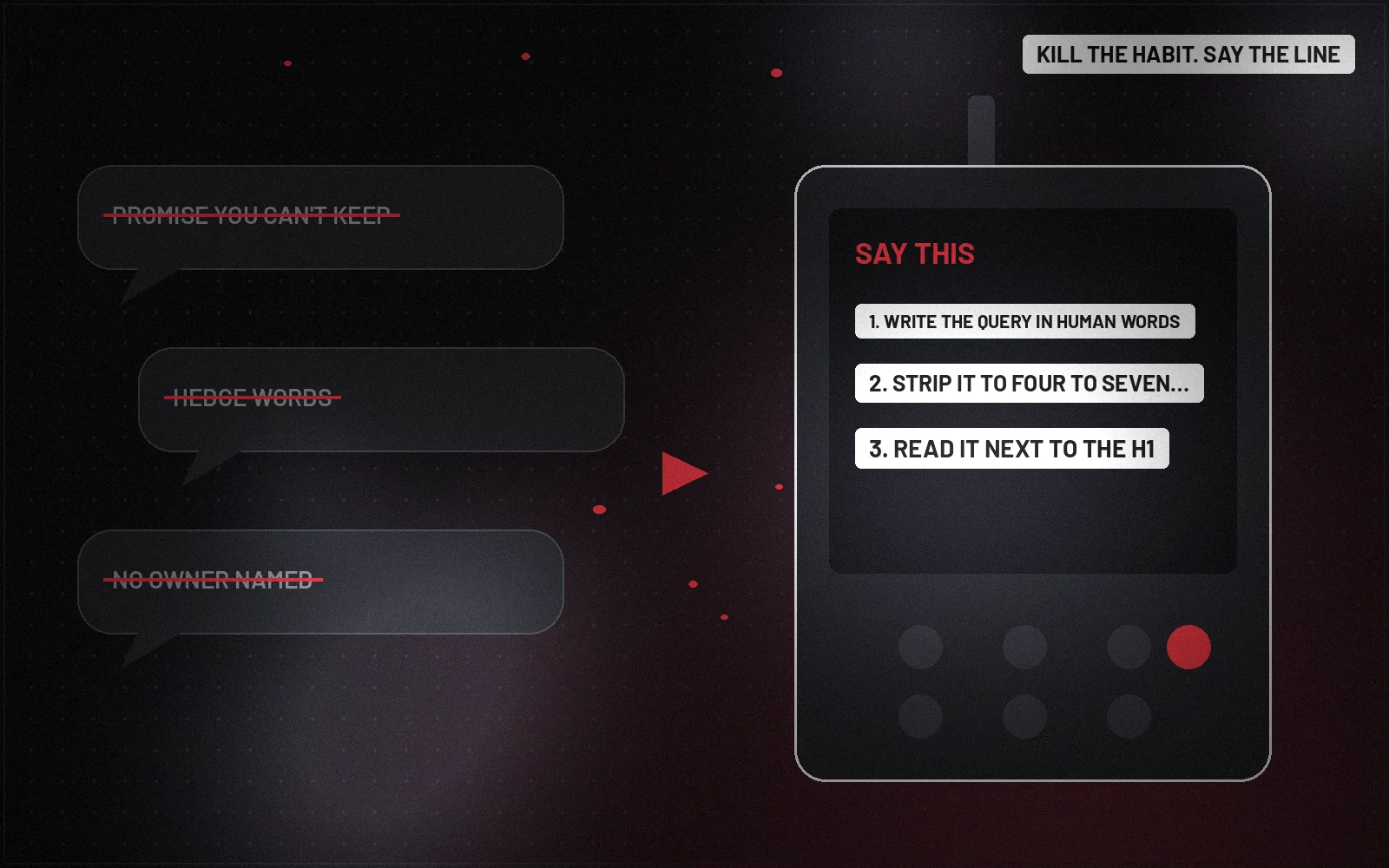
- Object first. Market second if the desk needs it.
- English words a tired operator can type from memory.
- No dates unless the page dies when the date dies.
- No “ultimate-guide.” That is a shrug.
- Hyphens between words. No underscores, no capitals, no emoji.
Paste-ready lock (illustrative)
Slug: url-slug-english-apac-query-path
H1: URL Slug English APAC: Name the Path After the Query
Title tag: same object, short enough for a tab
If those three argue, rewrite the slug before you hit publish.
How long should a slug be?
Short enough to read in one glance. Our desk rule is four to seven words. That is a house habit, not a search rule.
Cut filler words first: “the,” “a,” “how-to,” “our.” Keep the object and the one qualifier that separates this page from its sibling. If two pages would get the same slug, you have a twin, not a slug problem. Go back to the query map.
What must the slug not do?
It must not invent a second fight. If the H1 is about slugs and the path is /insights/brand-purpose/, a citation can point readers at the wrong idea before they ever see the page.
It must not carry a claim you have not cleared. A path like /insights/minister-lied-about-budget/ is a headline, and it will outlive any correction you make to the page. Slugs are hard to take back.
It must not leak a draft state. “v2,” “final,” “copy” and “test” belong in your file names, not in public URLs.
When do you change a live slug?
Rarely. Only when the current slug names the wrong object or carries a line you cannot stand behind.
A rename means a redirect from the old path to the new one, updated internal links, and a note in the log. Links people have already shared will lean on that redirect for as long as the page lives. That is why a cosmetic rename is almost never worth it.
Incident line, for the desk log:
The URL named a different object from the H1. We have redirected the old path to the slug that matches the page.
What is the kill rule?
If the slug, the H1, and the title tag name three different objects, do not publish. Fix the path first. A five-minute rename before publish is cheaper than a redirect after.
What about local-language pages?
Match the page language. An English Insights page gets an English slug. A Filipino page gets a Filipino slug, written by someone who speaks it, not transliterated from the English.
Do not mix a Tagalog H1 with an English-poetry slug. And do not ship a translated slug for a page that does not exist yet.
Monday field kit
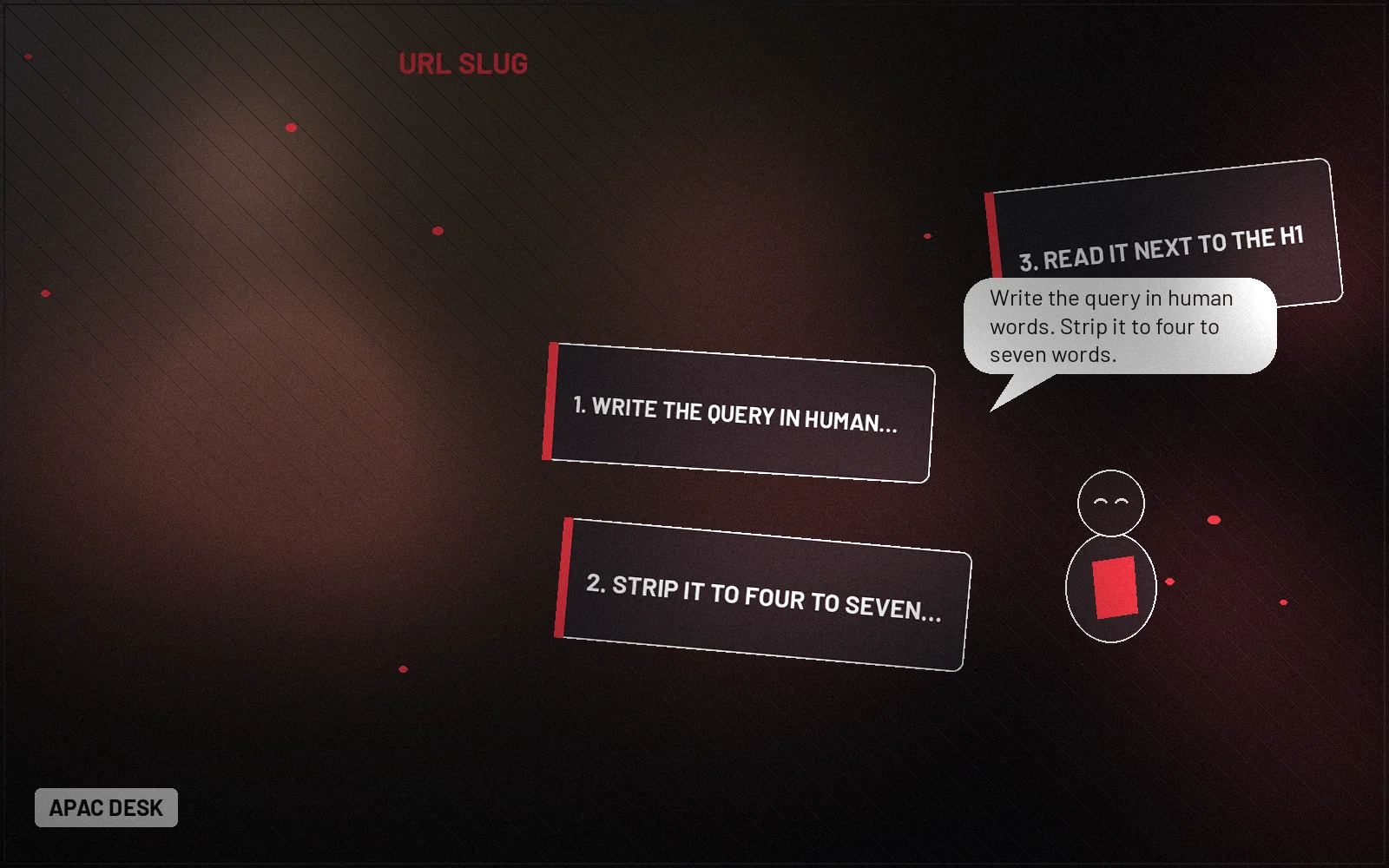
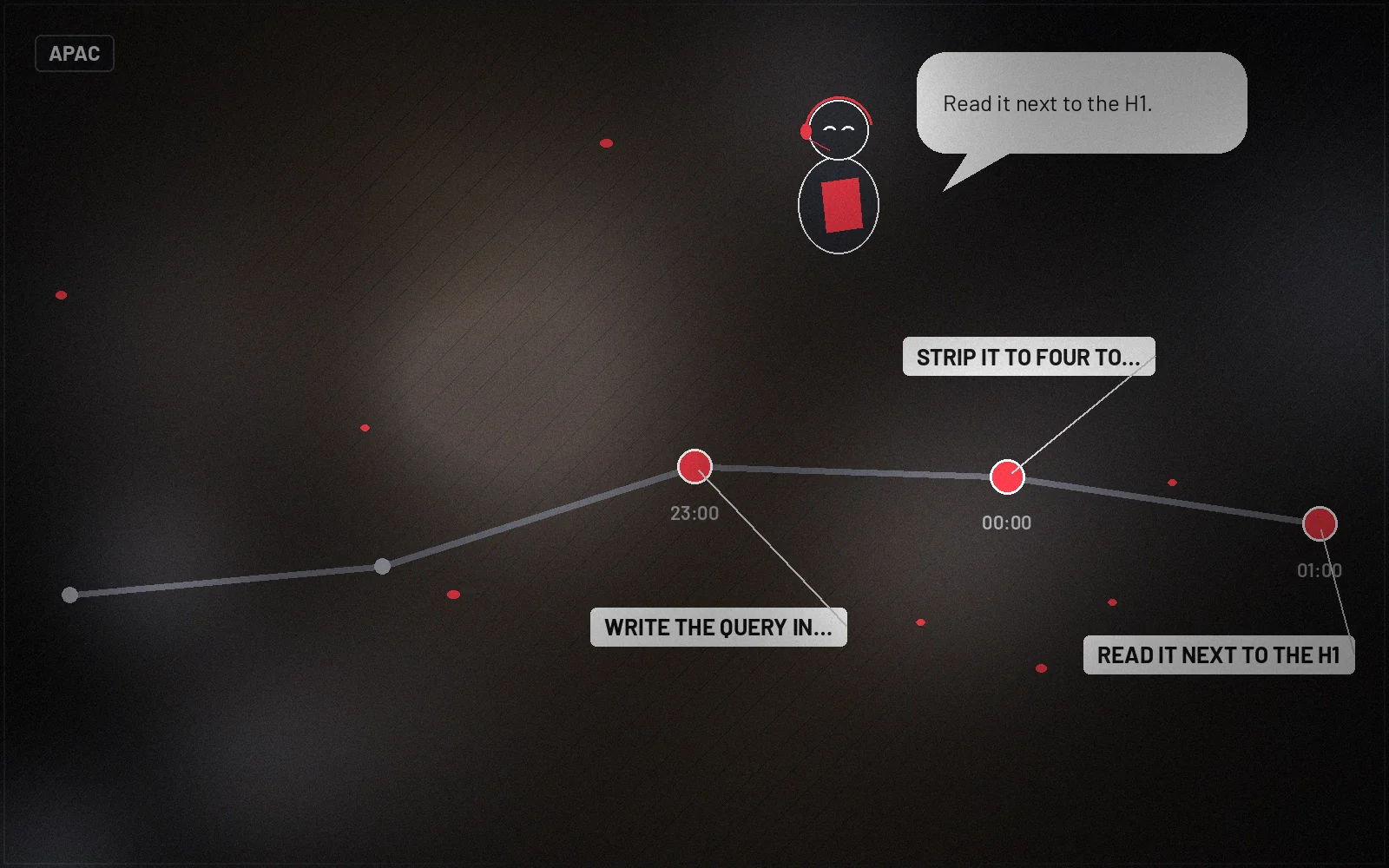
- Write the query in human words.
- Strip it to four to seven words.
- Read it next to the H1.
- If they disagree, the slug loses.
- Log the final path in the night-desk note before IndexNow.
FAQs
What is URL slug English APAC?
URL slug English APAC is the public path written in the same language as the query, short enough to paste into chat. It names the object the page is about, not the meeting that produced it.
Do I change a live slug to make it prettier?
Only change a live slug if it names the wrong object. A cosmetic rename puts every link you already earned behind a redirect, so ask the SEO desk first.
Should the slug include the year?
The slug should include a year only if the page is truly about that year. An evergreen page with a year in the path looks stale the day the calendar turns.
English or local language in the slug?
The slug should match the page language. An English Insights page gets an English slug, and a local-language page gets a slug written in that language.
What to do this week
Audit five live Insights slugs. If one names the meeting instead of the object, schedule a single redirect and a night-desk note. Do not batch-rename the archive for sport.
Neuwark Communications builds search-ready site structures under Digital & Social and Research & Insights. If your URLs still say final-final-v7, talk to us at Contact. More desks: Insights.
Communications craft, not legal advice. Check platform, data and defamation questions with counsel in each market before a claim goes into a public URL.
Related: Search query map English · Title-tag English APAC · IndexNow night-desk English · FAQPage schema English APAC