
A FAQ block without matching markup is a brochure. A FAQ block with markup that says something else is worse.
FAQPage schema English APAC is the lock that makes the visible FAQ and the FAQPage markup say the same sentences: the question people type, the answer the page already gives, and nothing the page does not show.
Street-smart APAC English: short sentences a tired operator can say out loud.
This is the markup companion to our GEO FAQ answer block English. That piece writes the answer copy. This one is about the fields underneath: what goes into the markup, where it comes from in the CMS, and what it will not do for you.
Why do FAQ pages and their markup drift apart?
Because two people write them. An editor writes the visible FAQ. A plug-in, a developer or an SEO tool writes the markup. Nobody reads both.
The questions on the page get edited for tone. The questions in the markup stay as the first draft. Three weeks later, one URL carries two versions of the same answer. A machine reading the code sees one page. A reader sees another.
FAQPage schema English APAC is the rule that closes that gap. The markup is a copy of the page, not a second draft.
What does FAQPage schema English APAC markup contain?
Less than people think. One FAQPage. A list of questions. One accepted answer per question.
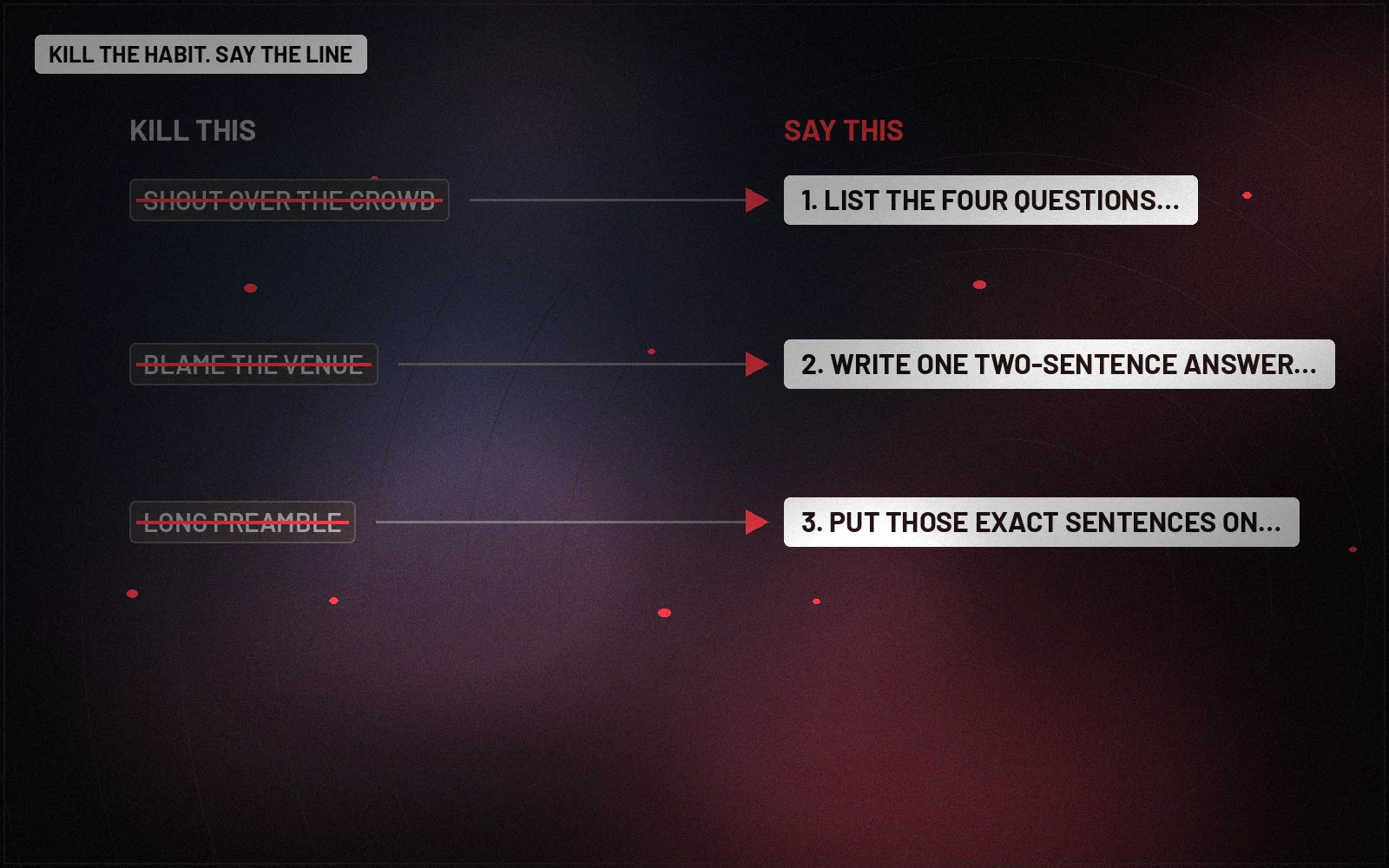
| Field | Kill this | Say this (illustrative) |
|---|---|---|
| Question name | “Understanding our approach to the issue” | The sentence a searcher types, as it appears in the H3 |
| acceptedAnswer text | A mission paragraph | The same two sentences that sit under that H3 on the page |
| Question count | Twenty pairs “for coverage” | The four the page actually answers |
| Page section | “Blog” or “Uncategorized” | Insights, Crisis, Digital, or Public Affairs |
If the schema question and the visible question disagree, you shipped two pages on one URL.
Paste-ready pair (illustrative)
Question: What is FAQPage schema English for advocacy desks?
Answer: It is the question-and-answer wording you put both on the page and in FAQPage markup. The question is the query, and the answer is two sentences a night desk can stand behind.
Put that exact pair on the page first. Then copy it into the markup. Never the other way around.
What will FAQPage schema not do?
It will not buy you a dropdown in search results. Since August 2023, Google has limited FAQ rich results to well-known, authoritative government and health sites. Most advocacy and agency sites should expect no FAQ dropdown at all.
So why mark up? Because it labels the page. Markup tells a machine which sentences are questions and which are answers. That labeling only helps if the labeled sentences are clean. A marked-up mush answer is still mush.
Do not tell a client that FAQ markup will win a box. Tell them it keeps the page honest and easy to parse. That is a promise you can keep.
What may you not mark up?
- A question the page does not answer on screen.
- A claim counsel has not cleared.
- A “when will they decide?” line that invents a date.
- An ad dressed as a question. “Why is our candidate the best choice?” is a slogan with a question mark.
- A question with several competing answers. FAQPage is for one question, one accepted answer.
Google’s structured data guidelines say marked-up FAQ content should be visible on the page. Treat that as the floor, not the goal.
Where does the markup come from in the CMS?
Pick one source. A FAQ block in the editor, an SEO plug-in, or hand-written JSON-LD. Not two.
Two sources means two FAQPage blocks on one URL, often with slightly different wording. That is the drift problem again, built into the template. Check the page source once after every theme or plug-in update, because a new setting can switch on a second block without telling anyone.
Validate the markup with a schema validator after you publish. Then read the output out loud. If the question in the validator is not the question on the screen, fix the page and the markup in the same edit.
What is the kill rule?
If the visible FAQ and the schema FAQ are different sentences, take the schema down until they match.
Incident line, for the desk log:
The FAQ on the page and the FAQ in the markup did not match. We have aligned both to the cleared answer and republished.
Monday field kit
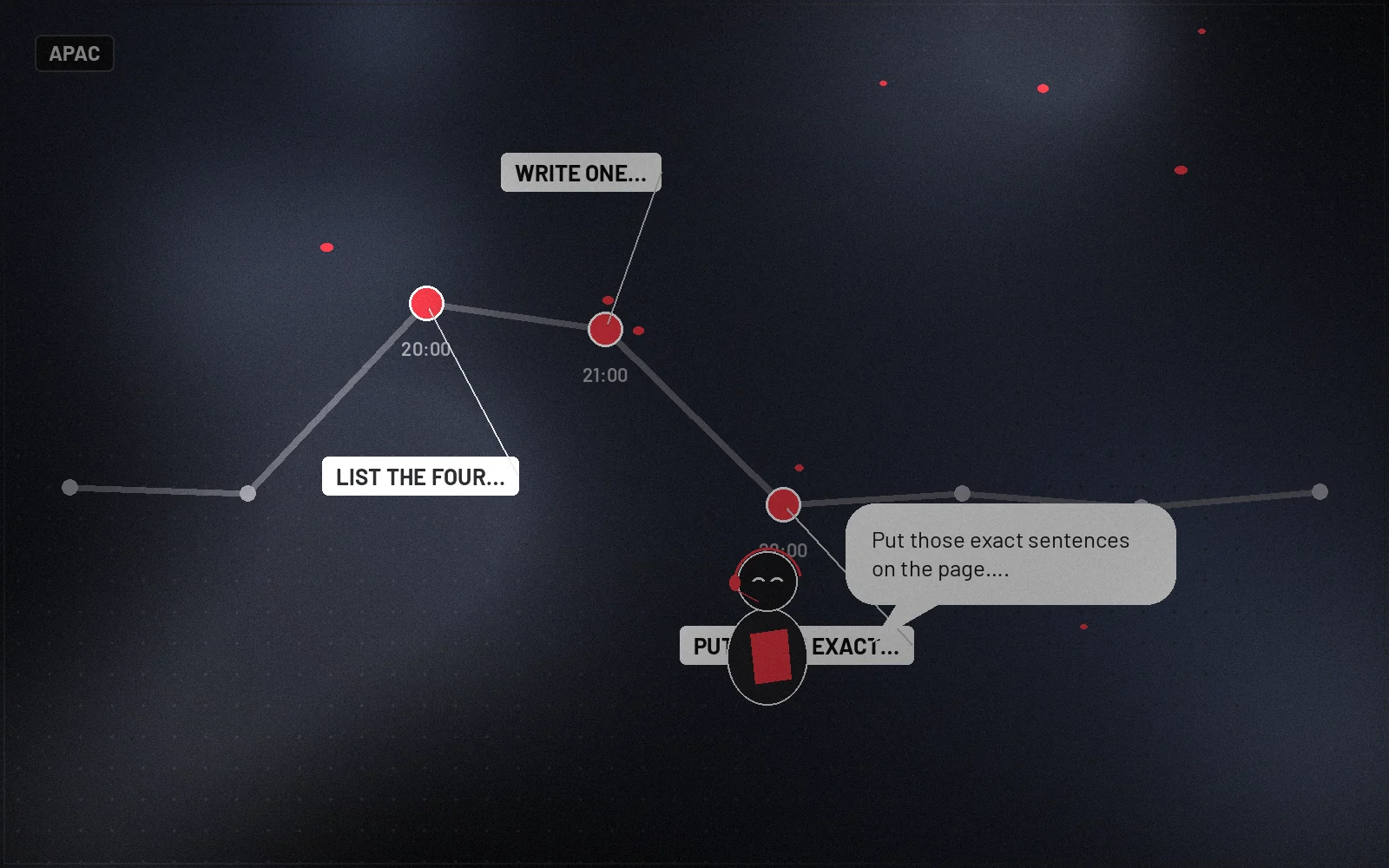
- List the four questions people actually type.
- Write one two-sentence answer each.
- Put those exact sentences on the page as H3 plus answer.
- Mark up only those four pairs, from one source.
- Validate, then compare the validator output to the screen, word for word.
- Do not add a fifth pair “for coverage.”
FAQs
What is FAQPage schema English APAC?
FAQPage schema English APAC is the wording lock that makes a visible FAQ and its FAQPage markup say the same thing. It uses the words a searcher types and nothing the page does not show.
Is this the same as a GEO FAQ page?
No, the GEO FAQ page is the public answer block, and FAQPage schema is how that block gets labeled for machines. Write the block first and mark it up second.
Will FAQPage schema get us a rich result?
FAQPage schema will probably not get most advocacy sites a rich result, because Google narrowed FAQ rich results in 2023. Use it for clean labeling and parity, not as a traffic promise.
Which language should the markup use?
The markup should use the language of the visible page. If the page is in English for APAC desks, keep the schema in that English, and do not slip a second language into the code.
What to do this week
Pick one live Insights URL that already has a FAQ. Make the schema questions identical to the visible questions. Ship. Then stop.
Neuwark Communications builds search-ready content systems under Digital & Social and Research & Insights. If your FAQ markup and your FAQ copy have drifted, talk to us at Contact. More desks: Insights.
Communications craft, not legal advice. Check platform, privacy and disclosure rules with counsel in each market before you publish.
Related: GEO FAQ answer block English · People Also Ask English APAC · HowTo step English APAC · AI Overview source English