

A how-to page that opens with a manifesto will not get numbered.
HowTo step English is a numbered list an answer engine can lift without rewriting your policy. Each step is one action. Each step names who does it.
Street-smart APAC English: short sentences a tired operator can say out loud.
Markup without language is theatre. If step 2 is a paragraph of values, the engine will invent a shorter step and put your logo next to it.
One honest note before the steps. Google no longer shows HowTo rich results in search. So this is not about winning a badge. It is about numbered steps that a reader can follow and an answer engine can lift. This sits next to our GEO FAQ answer English, which shapes answer blocks, and our AI Overview source English, which writes the one paragraph a page is bet on. This piece writes the steps.
What does a cite-ready step look like?
| Part | Length | Job |
|---|---|---|
| Step name | 3–7 words | The action, not the vibe |
| Who | 1 clause | Role, not “the team” |
| Do | 1 sentence | The verb the operator performs |
| Proof or stop | 1 sentence | How they know it is done, or when to halt |
Five to nine steps. Not twenty. A twenty-step ritual is a PDF you hoped nobody would read.
Paste-ready single step (illustrative):
Step 4. File on the official form.
Who: the policy lead.
Do: submit the comment on the agency’s form and save the confirmation.
Stop line: if the form rejects the file, stop and call counsel. Do not post publicly yet.
The stop line is what makes a step safe to lift. It tells the reader, and any machine quoting you, where the step ends and a human decision begins.
Kill this / say this
| Kill this | Say this (illustrative) |
|---|---|
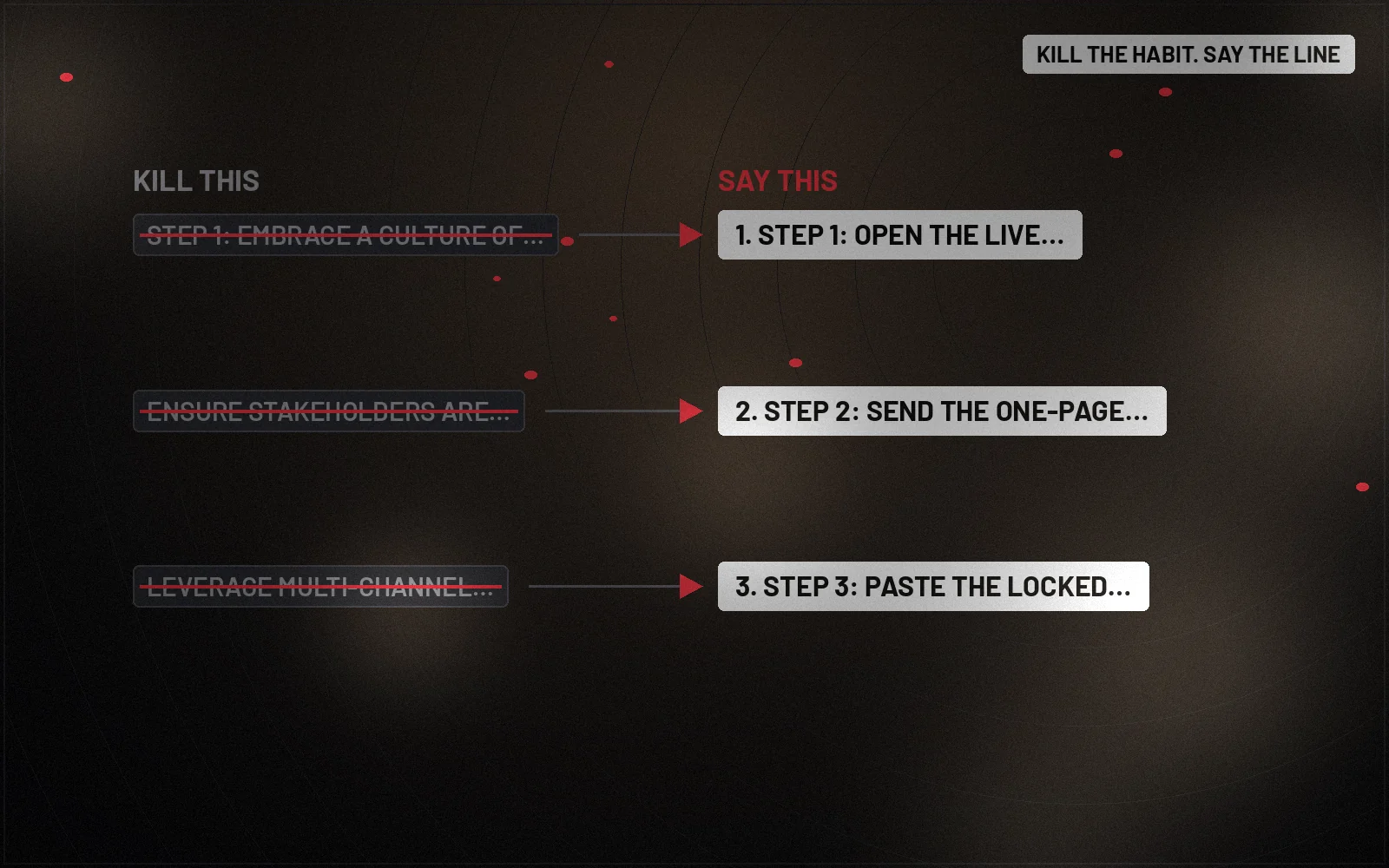
| “Step 1: Embrace a culture of compliance.” | “Step 1: Open the live exclusion list the buyer signed this week.” |
| “Ensure stakeholders are aligned before proceeding.” | “Step 2: Send the one-page brief to Legal, Paid, and the comms owner. Wait for three names.” |
| “Leverage multi-channel amplification.” | “Step 3: Paste the locked caption. Do not add a second claim in the comments.” |
| A step that hides a second task in a subordinate clause | Split it. One verb per step. |
Illustrative block: file a consultation comment (not legal advice)
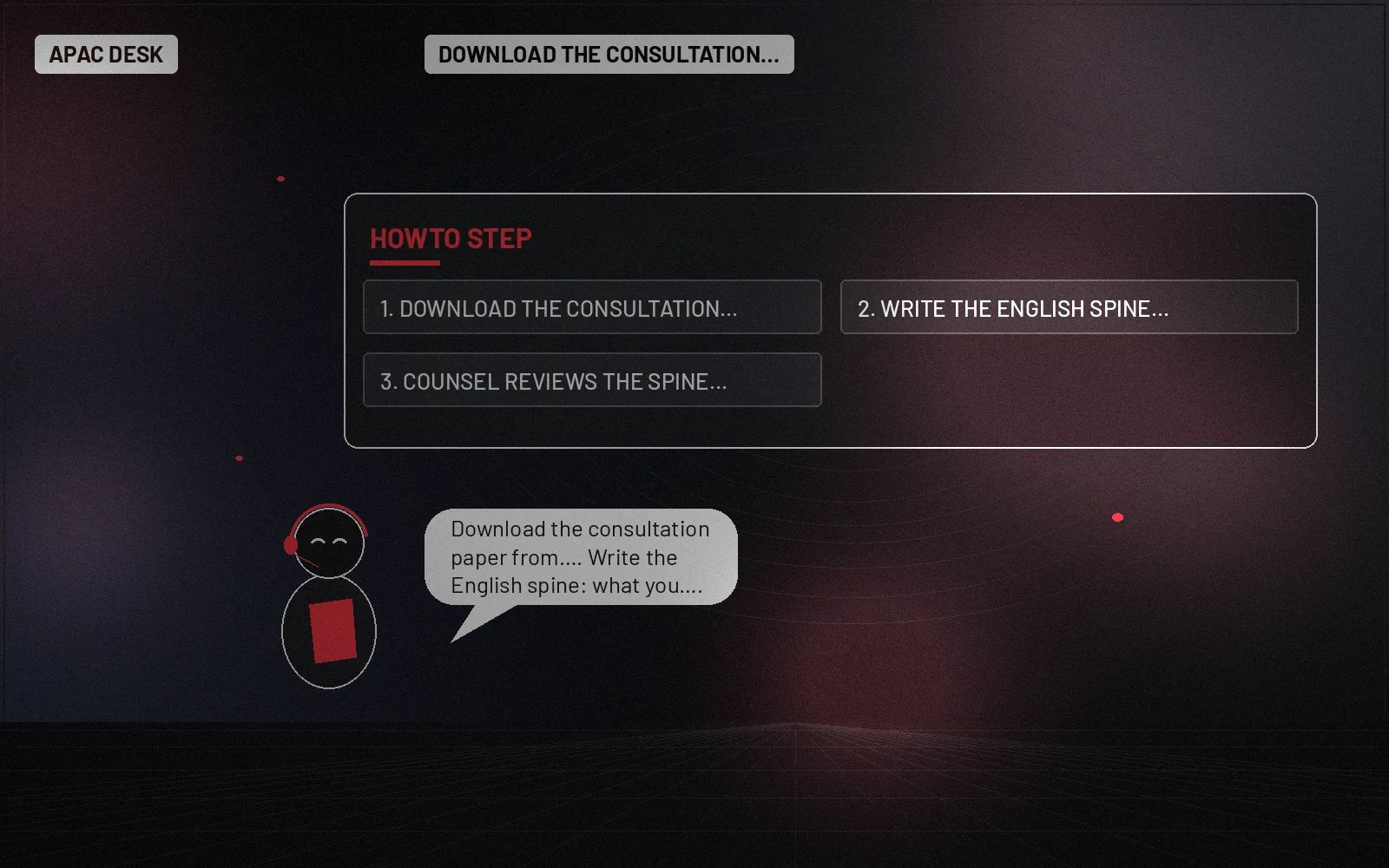
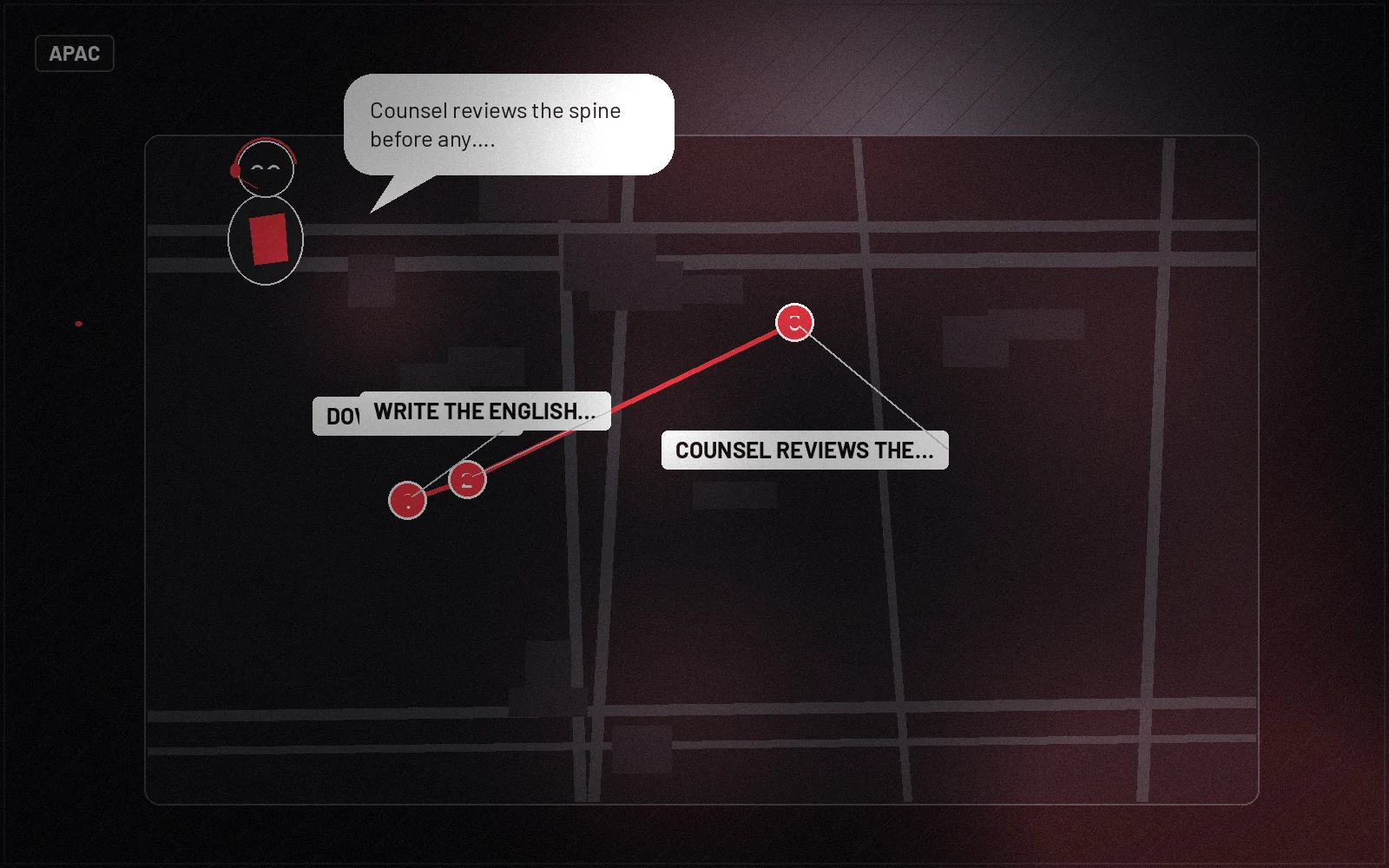
- Download the consultation paper from the agency page.
- Write the English spine: what you support, what you oppose, one proof.
- Counsel reviews the spine before any public post.
- File on the official form. Keep the timestamp.
- Publish the public explainer only after the file lands.
- Freeze social if a reporter asks for a line that is not on the spine.
That is HowTo language. It is not a submission. Counsel owns the live filing.
Why does HowTo step English still matter without a rich result?
Because people still search “how to” and still follow numbered lists. The badge went away. The question did not.
A clean numbered list near the top of a page is the easiest thing for a reader to follow on a phone, and the easiest thing for an answer engine to quote without inventing a verb. That is the whole job.
Kill: “Add HowTo schema and watch the steps appear in Google.” Say: “Write steps a stranger can follow. Markup is optional. The English is not.”
If you add HowTo markup at all, it must describe steps that are actually on the page, and it should never be the reason the page exists.
Where do the steps sit on the page?
First. Above the context, the history and the values.
Open with one line that says what the steps achieve and who they are for. Then the numbered list. Then the why. A reader who needs the steps at 11pm should not scroll past three paragraphs of mission to find step one.
Kill: a how-to page that opens with “Our commitment to civic participation.” Say: “Six steps to file a consultation comment. Allow one working day. Counsel reviews step 3.”
How do translated steps stay the same steps?
Copy the step count. Copy the verbs. Copy the stop lines.
A translation that turns six steps into eight has added a promise. A translation that drops the stop line has removed a safety rail. Back-translate the steps, not only the intro.
Monday field kit
- Pick one money how-to: “how to RSVP,” “how to file a comment,” “how to check a disclaimer.”
- Write steps a night operator can perform without a decoder ring.
- Give every step a named role and a stop line where a mistake would cost you.
- If you add HowTo schema at all, add it only after the English is locked, and expect no Google rich result.
- Translations copy the step count. Do not add colour that becomes a new promise.
Paste-ready editor note:
Steps check: five to nine steps, one verb each, named owner, stop lines where needed, steps at the top of the page.
FAQs
What is HowTo step English?
It is numbered action lines with a named owner, written so a machine can quote the step without inventing a verb. Each step is one action a tired operator can do.
Does HowTo schema still get a rich result?
No. Google no longer shows HowTo rich results, so do not promise one. The steps still have to be clear actions, because that is what readers and answer engines lift.
Can one page mix a manifesto and a how-to?
Put the how-to first. The manifesto can wait, and a numbered list near the top is the easiest thing to lift.
Who signs the steps?
The comms owner signs the verbs. Counsel signs anything that touches a filing, a disclosure, or a ban.
What to do this week
Find your most-used “how to” page. Count the steps. If there are more than nine, or any step has two verbs, rewrite it before you add anything new.
Neuwark Communications builds GEO how-to systems under Digital & Social and Strategy & Messaging. If your how-to pages open with a mission statement, talk to us at Contact. More language companions: Insights.
Communications craft, not legal advice. Confirm filings and disclosures with counsel in each market.
Related: GEO FAQ answer English · AI Overview source English · People Also Ask English APAC · NewsArticle schema English