
A silent edit is not a correction. It is a second incident waiting for a screenshot.
Correction note English is four lines you add to the page you got wrong: what we said, what is true, when we learned it, and what we will not guess next.
Street-smart APAC English: short sentences a tired operator can say out loud.
Answer engines cache the first version. Journalists cache the first version. Diaspora group chats cache the first version. If you only swap the number and hope, the old number keeps walking.
Our AI Overview source English covers what to write when a machine summary gets you wrong. This piece is the harder case: you got it wrong yourself, on your own page.
The four-line correction
| Line | Job | Pattern (illustrative) |
|---|---|---|
| 1. What we said | Quote yourself | “On 28 September we wrote that 12 sites were affected.” |
| 2. What is true | One corrected fact | “The figure is 9, from the agency’s published list.” |
| 3. When we learned it | Timestamp | “We updated this page on 30 September 2026, 4:10pm PHT.” |
| 4. Boundary | Kill the next invention | “We will not estimate the cost until the agency posts it.” |
Put the note at the top, not in a footnote. The people you owe can see it without scrolling past the error.
Paste-ready note (illustrative):
Correction: On 28 September we wrote that 12 sites were affected. The agency’s published list shows 9. We updated this page on 30 September 2026, 4:10pm PHT. We will not estimate the cost until the agency posts it.
Kill this / say this
| Kill this | Say this (illustrative) |
|---|---|
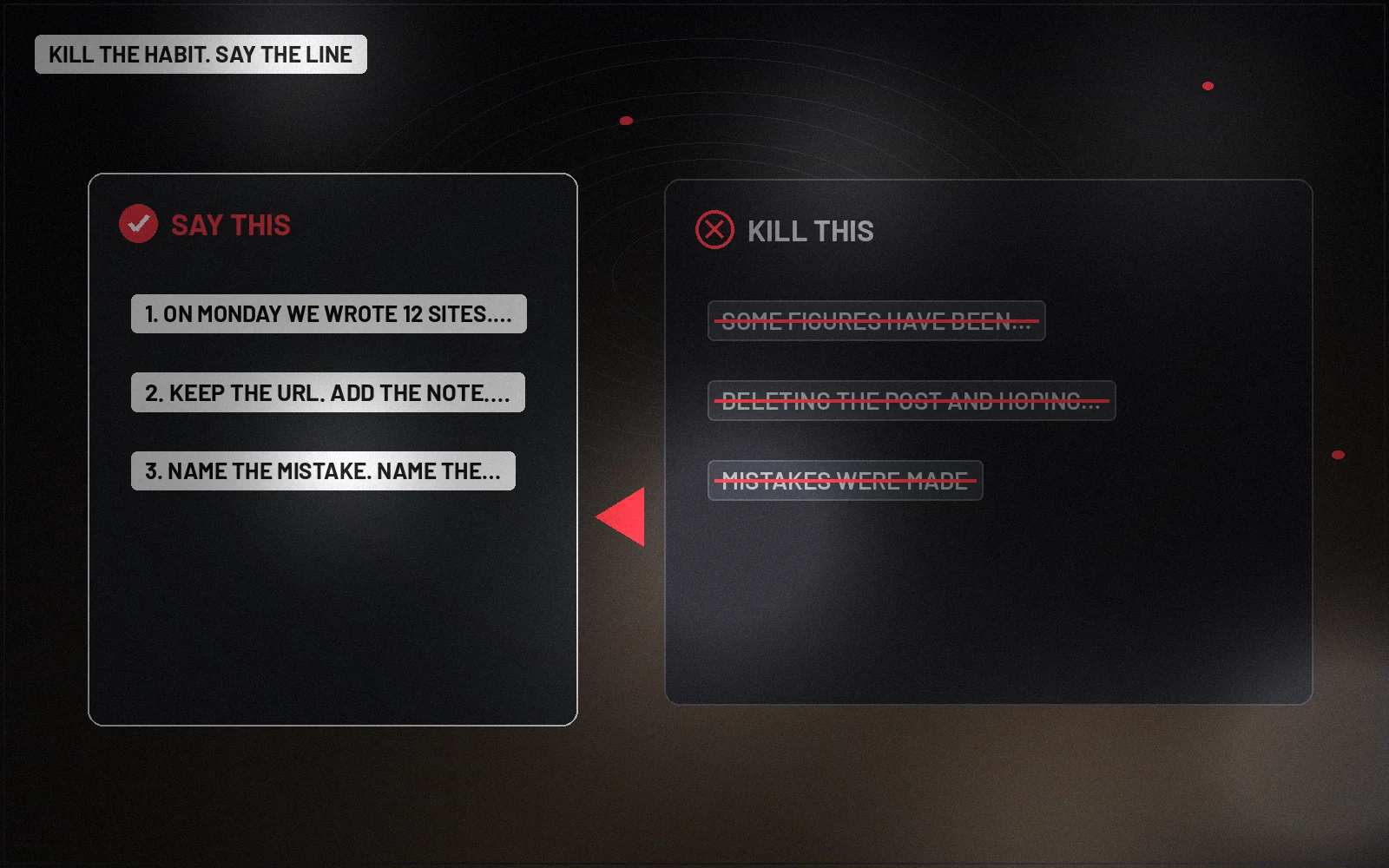
| “Some figures have been updated for clarity.” | “On Monday we wrote 12 sites. The agency list is 9. We changed the page at 4:10pm PHT.” |
| Deleting the post and hoping the cache dies | Keep the URL. Add the note. Ping IndexNow. |
| “Mistakes were made.” | Name the mistake. Name the fix. Name the time. |
| A new boast in the same paragraph as the correction | Correction first. The campaign can wait one hour. |
On the IndexNow line: the ping tells Bing and other participating engines that the page changed. Google does not use IndexNow, so the corrected page also needs to be in your sitemap. Our IndexNow publish note has the six-line record to write after the fix.
Where the note must travel
- The live URL
- The OG description if the wrong claim sat in the card
- The caption if the wrong claim sat in a paid post
- The partner kit if anyone pasted your number
Do not send a sixth channel “for awareness” if that channel never ran the error.
Match the correction to the reach of the error. If the wrong number ran in a paid post seen by thousands, a quiet edit on a page seen by dozens is not a correction. Put the fix where the error travelled, in the same format, as close to the same audience as you can. Then log where each fix went, so Monday’s check has a list to work through.
How is correction note English different from a crisis hold?
A correction fixes a claim you published and can now check. A crisis hold covers a fact you do not have yet.
Mixing them causes damage both ways. A correction written like a hold (“we are looking into it”) sounds evasive about a mistake you already understand. A hold written like a correction (“the figure is X”) commits you to a number you have not checked.
| Situation | Use | Kill this |
|---|---|---|
| You published 12, the record says 9 | Four-line correction | “We are reviewing the figures.” |
| Something happened and you do not know the scale | Holding lines | “The figure is 9” before anyone checked |
For the hold side, see our doorstep holding English.
What does the team hear before the page changes?
One line in the team chat, before the fix goes live. So nobody defends the old number in a reply while the page is being corrected.
Team line (illustrative): We got the site count wrong on the budget page. The correct figure is 9. The note goes up at 4:10pm. Do not reply to anyone quoting 12 until it is live, then point them to the page.
Staff who find out from a screenshot will improvise. Staff who get the line first will not.
Monday field kit
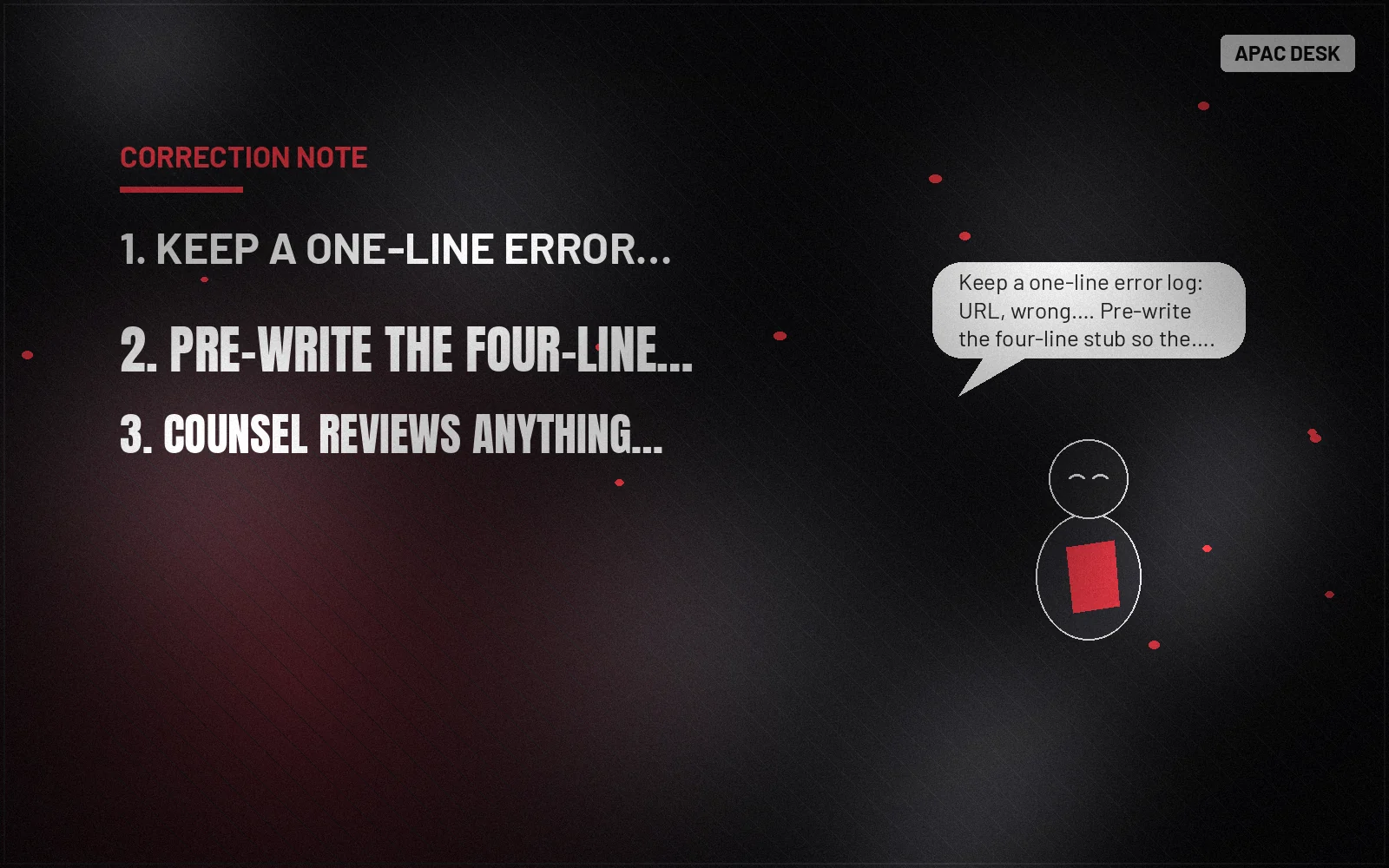
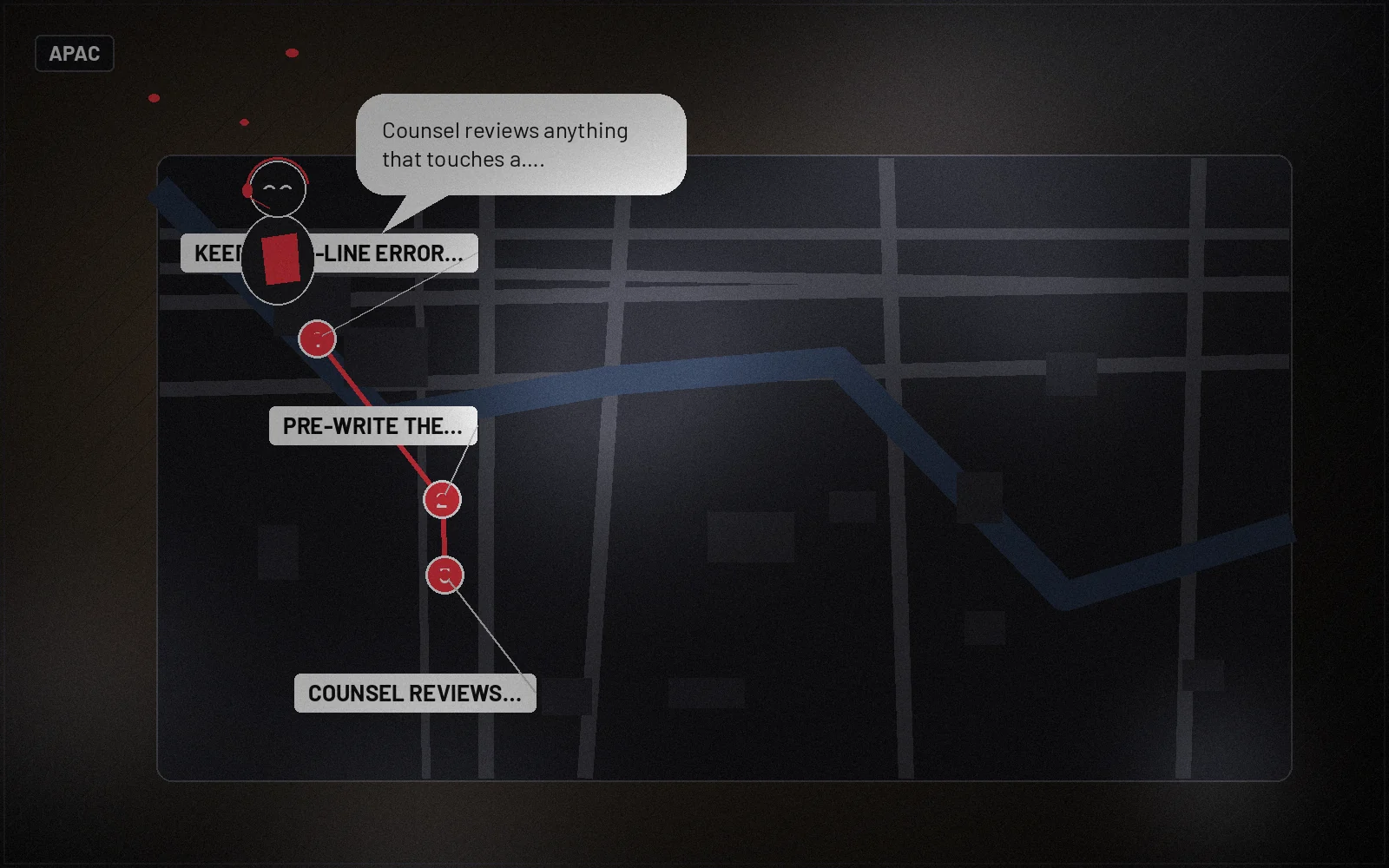
- Keep a one-line error log: URL, wrong claim, correct claim, time.
- Pre-write the four-line stub so the night desk is not inventing tone at 1am.
- Counsel reviews anything that touches a legal filing, a market-sensitive number, or a named person.
- After 24 hours, check whether the SERP and the AI overview still show the old line. If they do, tighten the source block and ping again.
Paste-ready stub for the error log:
Correction stub: what we said, what is true and its source, when we updated (with time zone), what we will not guess. Top of page. Same note in every language that carried the error.
FAQs
What is correction note English?
It is four lines that quote the error, state the fact, timestamp the fix, and refuse the next guess. The note sits at the top of the page that carried the error.
Should we leave the wrong sentence in the body?
Strike or replace the wrong sentence. Do not hide the history: the note at the top is the record.
Is this the same as a crisis statement?
No. A correction is for a published claim you can fix, and a crisis hold is for a fact you do not have yet. Do not mix them.
Do translations need their own note?
Yes. Correct every language that carried the error, with the same claim set and the same timestamp.
What to do this week
Open your error log. If you do not have one, start it today with one line. Then write the four-line stub and pin it where the night desk can find it.
Neuwark Communications writes holding and correction language under Crisis & Rapid Response and Digital & Social. If your last correction said “updated for clarity,” talk to us at Contact. More desks: Insights.
Communications craft, not legal advice. Defamation, securities, and platform rules belong to counsel.
Related: AI Overview source English · IndexNow publish note · Doorstep holding English · OG card English APAC